
‘From uncertain waters to safe shores’: Gujarat Dy CM hails evacuation of fishermen from Iran
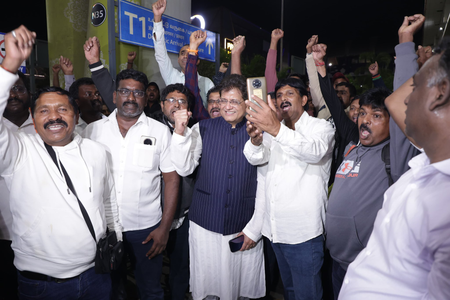
Gandhinagar/Chennai, April 11 (IANS) Gujarat Deputy Chief Minister Harsh Sanghavi on Saturday described the return of fishermen stranded in Iran as “a moment of relief, gratitude and pride”, as a fresh batch of evacuees reached India following an ongoing government-led evacuation from the conflict-hit region.
Taking to X, Sanghavi said: “From uncertain waters to safe shores, hundreds of Indian fishermen stranded along the Iranian coast are finally on their way home. Now safely boarded to Ahmedabad, their journey reflects resilience and the unwavering commitment of India to its people, wherever they may be."
He thanked Prime Minister Narendra Modi and Union Minister Piyush Goyal, adding, “This is India that cares. This is India that delivers.”
Goyal said 74 fishermen from Gujarat were among those rescued from Iran and had been provided onward transport after their return.
“They were very anxious to go home. We have arranged two buses,” he said.
The latest return comes amid a continuing evacuation exercise by Indian authorities, with External Affairs Minister S. Jaishankar announcing today that another 312 Indian fishermen had been safely evacuated from Iran to India through Armenia, with assistance from the Armenian government.
The evacuations are part of a wider effort undertaken over recent days as the conflict in West Asia disrupted maritime activity and left Indian nationals, including fishermen working along the Iranian coast, stranded.
Earlier this month, 345 fishermen were brought back to India via Armenia, while the government said it had facilitated the return of at least 1,777 Indian nationals, including students and fishermen, through coordinated operations involving Iran, Armenia and Azerbaijan.
Officials said many of those evacuated had endured difficult conditions, including prolonged uncertainty and disruption to work, before being moved out via transit routes that often involved long journeys to Armenia, followed by flights back to India.
The ongoing operation reflects sustained diplomatic coordination by Indian authorities to secure the release and safe passage of citizens caught in the West Asia conflict, with groups of evacuees continuing to return to different parts of the country in batches.
--IANS
mys/dan
Congress legal fellowship: Singhvi says interviews to be completed tomorrow
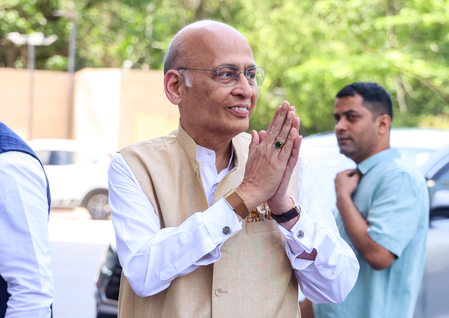
New Delhi, April 11 (IANS) Chairman of Congress party’s Law, Human Rights and RTI Department, Abhishek Manu Singhvi, announced that the interviews of shortlisted applicants for the INC Legal Fellowship will be completed by Sunday.
Pointing to the overwhelming response to the fellowship programme, Singhvi said, “Encouraged by the response, the Department is committed to significantly expanding the Fellowship in the coming years.”
“We received 2, 000 applications, and following a rigorous screening process, a select group of meritorious candidates has been shortlisted for final interviews, scheduled between April 11 and 12,” he said in a statement.
Singhvi said the final interviews will be conducted by a panel comprising Prashanto Chandra Sen, Senior Advocate, Supreme Court of India; Apar Gupta, Advocate and Founder of the Internet Freedom Foundation; and Aaliya Waziri, Advocate and Author.
The three-month scholarship for law graduates will come with a monthly stipend of Rs 50,000.
Singhvi said the Congress party’s Law, Human Rights and RTI Department has a clear focus on building a strong, future-ready pipeline of legally trained professionals equipped to meaningfully contribute to constitutional governance.
The Congress launched the inaugural edition of the INC Legal Fellowship on March 3, 2026.
This initiative marked a significant step towards engaging young legal minds in parliamentary and constitutional work, the statement said.
Envisioned as a platform to bridge legal training with legislative engagement, the Fellowship offers young professionals the opportunity to work closely with Members of Parliament on key legal, constitutional, and policy issues, it said.
The scholarship was announced for law graduates who have completed a three- or five-year LL.B. from UGC-recognised universities and are aged 24 to 30.
According to the fellowship brochure, the three-month scholarship is likely to be held between June and August.
The fellows will be engaged in legislative research on Bills, amendments, and committee reports; drafting parliamentary questions, interventions, and debate briefs and monitoring key legal and policy developments impacting governance and rights, said the statement.
--IANS
rch/dan
Bengal: Humayun Kabir accuses Trinamool, AIMIM of Rs 20 crore deal
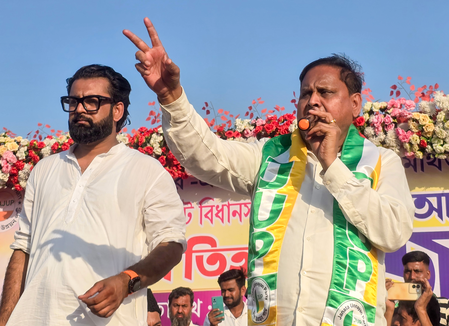
Kolkata, April 11 (IANS) As soon as the 19-minute controversial video came out, Asaduddin Owaisi’s party AIMIM broke its alliance with Humayun Kabir’s party Aam Janata Unnayan Party (AJUP).
In the face of controversy, AJUP chairman Humayun Kabir accused Trinamool Congress of making a “deal” against them. He claimed that Trinamool had released a “fake video” in collusion with AIMIM to corner Aam Janata Unnayan Party before the Assembly elections. He also threatened to take this to court.
On Saturday afternoon, Humayun targeted the state's ruling party and a section of the AIMIM leadership in a press conference in Beldanga, Murshidabad district.
He alleged that Trinamool had made large financial transactions with a few AIMIM leaders. The outgoing MLA from Bharatpur claimed that his video, which has caused a stir in state politics, is not true.
Blaming AIMIM West Bengal President Imran Solanki and Murshidabad District President Asadul Sheikh for the breakup of the alliance, Humayun said, “Trinamool MP Khalilur Rahman of Jangipur and a Trinamool representative had a ‘deal’ of Rs 20 crore with two leaders of AIMIM. They have already received an ‘advance’ of Rs 2 crore.”
He further alleged, “Without verifying the authenticity of my video that has come out in the open, those AIMIM leaders took money from the Trinamool leaders and sent it to Asaduddin Owaisi Saheb, and that is why this alliance has broken up.”
AIMIM Murshidabad District President Asadul has refuted Humayun’s allegations. He recently took a dig at his former alliance partner, saying, “Humayun Kabir’s head is not working. Until he can prove that the video is ‘fake,’ AIMIM cannot be by his side. After the video came out, we sent a report to Asaduddin Sahib. Based on that, our party has decided to break the alliance.”
Asadul further said, “We will not give even an inch of land to the Trinamool Congress in the upcoming elections. On April 13, 14, and 15, Asaduddin Sahib will campaign in support of our party candidate, Imran Solanki, in the Raghunathganj Assembly constituency. We will win multiple seats in the state.”
Trinamool Congress released a video on Thursday alleging the BJP’s “secret collusion” with Humayun Kabir. In it, the Aam Janata Unnayan Party chairman is heard asking the BJP for Rs 1,000 crore.
He is heard saying that he will give Rs 200 crore immediately. IANS did not verify the authenticity of the video.
Humayun, however, has been threatening to file a case in the Calcutta High Court since the beginning, claiming that the video was created with AI.
On the other hand, a total of three police complaints have been filed against Humayun. FIRs have been registered against him at the Maidan police station in Kolkata, Rejinagar police station in Murshidabad, and Suri police station in Birbhum. Allegedly, Humayun is trying to polarise the election by inciting communal hatred.
On the other hand, several leaders of the Aam Janata Unnayan Party have left the party amid the video controversy.
--IANS
sch/dan
Bihar bans private practice of government doctors
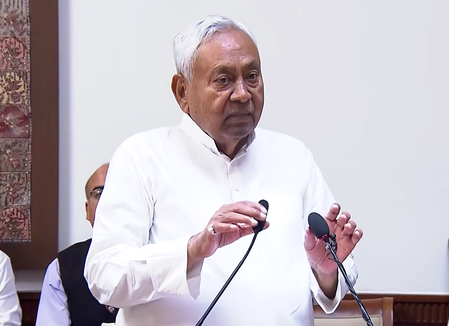
Patna, April 11 (IANS) Amid the ongoing political churn in Bihar over leadership changes and Nitish Kumar’s impending move to the Rajya Sabha, the state government has taken a major decision that has sparked concern among thousands of government doctors.
In a significant policy move, the Bihar Health Department has issued a resolution imposing a complete ban on private practice by government doctors.
The decision is being seen as a strong administrative step aimed at reforming the state’s public healthcare system.
According to the official order, doctors employed in government service will no longer be allowed to operate private clinics or engage in private practice alongside their public duties.
The move has been taken in line with the government’s Saat Nishchay-2 initiative, which focuses on strengthening public services, including healthcare.
Officials indicate that the decision stems from long-standing concerns about the poor condition of government hospitals, allegations of doctors’ absenteeism, and complaints that patients are being diverted to private clinics.
By enforcing a strict separation between public duty and private practice, the government aims to ensure better availability of doctors and improved patient care in government facilities.
To offset the financial impact, the government has announced that doctors will receive a Non-Practicing Allowance (NPA) as compensation for giving up private practice.
However, the move has triggered strong reactions within the medical community.
Many doctors argue that the decision may affect morale, lead to staffing challenges, and put the overall healthcare system under unintended strain.
Despite the backlash, the government’s stance remains firm — public servants drawing salaries from the state exchequer will not be permitted to run parallel private practices.
The Bihar Health Department has clarified that the ban will not be limited to district-level doctors.
It will also apply to the Bihar Medical Education Service cadre, including senior professors and faculty members serving in government medical colleges.
Notably, the order extends to specialist doctors at premier institutions, including the Indira Gandhi Institute of Cardiology (IGIC).
Under the new rules, none of these doctors will be allowed to provide services at private nursing homes or clinics.
Issued just days ahead of the proposed swearing-in of the new government on April 15, the directive has quickly become the central topic of discussion within the state’s health administration and medical fraternity.
--IANS
ajk/dan
Kolkata: ED files charge sheet against 5 in Rs 650 crore coal theft, extortion
Kolkata, April 11 (IANS) The ED filed a charge sheet against five accused in a Special Court (PMLA) in Kolkata over a Rs 650 crore racket involving illegal coal mining, theft, illegal coal transportation, illegal sale of coal, use of forged documents and extortion, an official said on Saturday.
The Directorate of Enforcement (ED), Kolkata Zonal Office, named Chinmoy Mondal, Kiran Khan and their associates in the chargesheet filed on Thursday, the official said in a statement.
The investigation also uncovered evidence of bribes being paid to various officials of the government of West Bengal and local political functionaries to facilitate the movement of coal and the continuation of the syndicate's activities, the ED said.
The ED initiated an investigation based on 54 FIRs registered by various police stations in the Durgapur–Asansol region of West Bengal, on complaints from Eastern Coalfields Limited (ECL), CISF, and local police authorities.
Investigation revealed that Chinmoy Mondal, Kiran Khan and their associates were part of an organised coal syndicate operating in the Durgapur-Asansol region and adjoining areas.
Chinmoy Mondal and Kiran Khan were arrested under Section 19 of the PMLA on February 2, the ED said.
The syndicate was involved not only in illegal coal-related activities, including dealing in coal procured through illegal means and illegally transported from Jharkhand into West Bengal, but also in systematic extortion of levies from valid D.O. (Delivery Order) holders, transporters, and coal purchasers, the ED said.
Such illegal levy, commonly referred to as 'GT,' 'Gunda Tax,' or 'Rangdari Tax,' was collected to permit coal lifting and transportation and was disguised as lifting charges, handling charges or donations, the ED said.
Investigation revealed that the extortion rates ranged from Rs 275 per tonne to Rs 1,500 per tonne, amounting to an exorbitant 20–25 per cent of the actual value of the auctioned coal, the ED said.
Due to such illegal levies, a significant amount of allocated coal remained unlifted, causing substantial financial loss to ECL as well, it said.
As of date, the Proceeds of Crime generated by this syndicate through such extortion alone over the last five years have been estimated at more than Rs 650 crore.
During the investigation, searches under Section 17 of the PMLA were conducted on various dates at multiple premises linked to the accused persons and their associates, the statement said.
During searches, various incriminating documents, digital devices, WhatsApp chats, records of coal lifting, levy collection sheets, bank account details and other material were recovered and seized, it said.
The searches on November 21, 2025 and February 3, 2026, led to the seizure of cash, bank balances, and valuable amounts to approximately Rs17.57 crore, in addition to the huge physical stock of coal and coke from the premises of the accused persons and their accomplices, the ED said.
Investigation revealed that the accused used a number of proprietorship concerns and companies as fronts for routing, layering, and projecting Proceeds of Crime as untainted, the statement said.
An analysis of bank accounts revealed substantial cash deposits and large fund movements among closely connected persons and entities, it said.
--IANS
rch/dan
Rajasthan: Three smugglers arrested, 74.13 grams of MD seized
Jaipur, April 11 (IANS) In a significant breakthrough under the Rajasthan government’s “Drug-Free Rajasthan” campaign and the ongoing crackdown on narcotics, the Pali Police on Saturday arrested three suspected smugglers and seized 74.13 grams of the illicit synthetic drug MD.
The action was taken after the Anti-Gangster Task Force (AGTF) in Jaipur provided precise technical intelligence.
Pali Superintendent of Police Monika Sen informed that early Saturday morning, based on intelligence shared by ASI Rakesh Jakhar of the AGTF, a joint team from Siriyari and Marwar Junction police stations conducted a planned raid in Bithoda Kalan village.
The team, led by the SHO of Siriyari, surrounded the residence of Sher Khan, identified as a key suspect. A search was carried out in accordance with legal procedures.
During the raid, police apprehended three individuals from a rooftop room of the house. The search led to the recovery of 74.13 grams of MD hidden beneath a sofa.
The team also seized equipment used in the preparation and packaging of the drug, including electronic weighing scales, empty pouches, and mobile phones.
The arrested accused have been identified as Sher Khan (25), son of Ibrahim Khan, resident of Bithoda Kalan; Rahul Meena (20), son of Sukharam of Chelawas (Marwar Junction area); and Ajay alias Ravi (23), son of Chhagan Chand of Sinchana (Siriyari Police Station area).
To ensure transparency during the operation, videography and photography were conducted using the ‘E-Sakshya’ digital evidence app.
During preliminary interrogation, the accused confessed to procuring the narcotics from two suppliers, Laxman Wadi and Motisingh Rajput, both residents of Bithoda Kalan.
Police teams have been dispatched to arrest them. A case has been registered against the accused under relevant sections of the Narcotic Drugs and Psychotropic Substances (NDPS) Act.
As per the directions of the Superintendent of Police, the case has been transferred to Sojat City SHO, Devendra Singh, who will probe the backward and forward linkages of the supply chain to dismantle the network.
--IANS
arc/dan
Seers support Nripendra Misra’s remarks on 1990s Ayodhya events; slam Mulayam Singh for police firing on ‘Karsevaks’
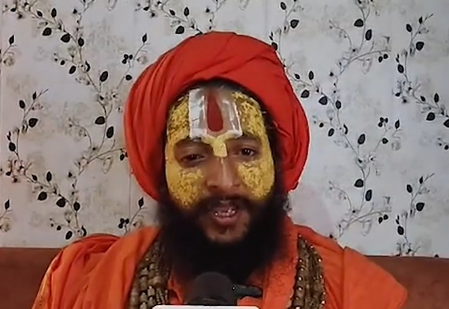
Ayodhya, April 11 (IANS) After a row erupted over remarks by the Ram Mandir Construction Committee Chairman Nripendra Misra that decisions during critical events like the 1992 Babri Masjid demolition were largely driven by political leadership rather than bureaucratic officials, Hindu saints and religious figures in Ayodhya came out in his support. They accused the then Uttar Pradesh Chief Minister late Mulayam Singh Yadav of passing orders to open fire at the 'Karsevaks'.
Recalling the developments of that period, Misra had said that in 1992, despite reports indicating a collapse of law and order in Ayodhya, the then Chief Minister Kalyan Singh had issued clear instructions that police should not open fire on 'Karsevaks'.
He also referred to his tenure serving under different political administrations, including that of former Chief Minister Mulayam Singh Yadav, noting the contrast in approaches adopted by the two leaders during moments of crisis.
Calling Misra's statement "commendable", Mahant Sitaram Das Ji Maharaj of Saket Bhavan Temple, told IANS, "Administrative decisions are influenced by those in power, they are not taken independently."
"Nripendra Misra did not have the authority to take decision when gunshots were fired at the 'Karsevaks', neither were those fired with his decision. The gunshots were fired on the orders of the then Uttar Pradesh Chief Minister Mulayam Singh Yadav. The Samajwadi Party founder has accepted this several times on various public platforms."
Mahant Sitaram Das also accused Mulayam Singh Yadav of being "against Ram Bhakts".
Mahant Sitaram Das added that irrespective of the government that comes to power, Misra will keep on working for the benefit of the country.
"His (Nripendra Misra's) emotions towards God reflect that he is and will forever remain a 'Ram Bhakt'," he said.
He alleged that the Samajwadi Party and "those who involve in appeasement politics" are framing a conspiracy to accuse Misra.
"He (Misra) will not be held guilty on the basis of their allegations because at that time gunshots were fired on Mulayam Singh Yadav's orders," Mahant Sitaram Das reiterated.
Mahant Raju Das, a prominent priest of Hanumangarhi, also echoed similar view.
He mentioned that whatever Nripendra Misra said was correct because "senior government officials holding top positions are naturally influenced by the Chief Minister of the state. They have to follow the instructions of the Chief Minister of the state. "
"Like right now Yogi Adityanath is the Uttar Pradesh Chief Minister, so all orders must have been discussed with him. It is the Chief Minister who is responsible for taking decisions," he said.
Mahant Raju Das also accused Mulayam Singh Yadav of working for the Muslims and hence "firing bullets was his (Mulayam Singh Singh's) decision."
Another saint of a temple in Ayodhya, added, "Mulayam Singh Yadav's government was in power in Uttar Pradesh at that time. Government officials functioned according to his orders. It was a very condemnable incident."
--IANS
cg/khz
Gujarat CM, State BJP chief to lead local poll campaign in 15 civic bodies
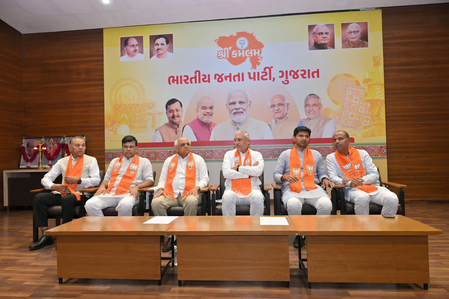
Gandhinagar, April 11 (IANS) The Bharatiya Janata Party (BJP) will launch a synchronised election campaign across 15 municipal corporations in Gujarat on Sunday, with candidates collectively taking a pledge of public service under the 'Janseva Sankalp' programme, marking the formal start of its campaign for upcoming local body elections.
According to BJP leaders on Saturday, the programme will begin at 9.30 a.m. on Sunday across all 15 municipal corporations simultaneously.
The party said the initiative has been planned after the completion of nomination filing by its candidates on Saturday and is being carried out as per the instructions from the State BJP President Jagdish Vishwakarma.
The BJP candidates will collectively take a pledge of public service as part of the campaign launch process.
The party added that senior BJP leaders will be deployed across all municipal corporations in line with the organisational plan.
Gujarat Chief Minister Bhupendra Patel will participate in the programme in Ahmedabad, while state BJP President Vishwakarma will be present in Rajkot.
Deputy Chief Minister Harsh Sanghavi and State BJP General Secretary (Organisation) Ratnakar Pandey will attend the programme in Vadodara.
Union Jal Shakti Minister C.R. Paatil will be present in Surat, while BJP MP Parshottam Rupala will be in Jamnagar.
Former State BJP President R.C. Faldu will participate in Bhavnagar.
In Vapi, State BJP Scheduled Tribe Morcha President Ganpat Vasava will represent the party, while State Minister Kanu Desai will attend in Navsari.
Former Minister Bhupendrasinh Chudasama is scheduled to be present in Mehsana.
State BJP General Secretary Aniruddh Dave will attend in Gandhidham, while former Minister Gordhanbhai Zadafia will be present in Anand.
Former Deputy Chief Minister Nitin Patel will attend a programme in Nadiad.
Former BJP MP Ramesh Dhaduk will participate in Porbandar, former Minister I.K. Jadeja will be present in Morbi, and State Minister Jitu Vaghani will attend in Surendranagar.
As per schedule announced by the State Election Commission for the local body elections, voting for the municipal corporations and other local bodies is scheduled to be held on April 26, with polling conducted in a single phase across the state.
The elections will cover 15 municipal corporations, 84 municipalities, 34 district panchayats and 260 taluka panchayats, involving lakhs of voters.
The vote counting will take place on April 28, two days after polling, and results will be declared on the same day, completing the electoral process within a short post-poll window.
--IANS
mys/khz
India-Myanmar borderlands reveal ground realities beyond official policy: Report
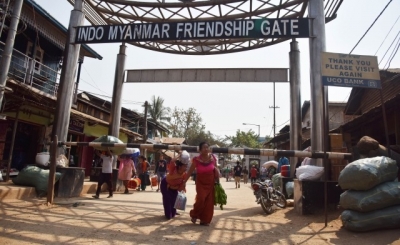
Naypyidaw/New Delhi, April 11 (IANS) India's recent engagement with Myanmar has remained cautious shaped by security, strategic and economic concerns and the need to counter-balance China’s growing influence in the region.
However, the ground realities present another picture driven by borderland communities and deeply inter-linked local economies, a report said on Saturday.
Writing for Myanmar's Institute for Strategy and Policy, Ophelia Yumlembam of Organisation for Research on China and Asia (ORCA) opined that this is most evident in India's north-eastern state of Mizoram.
Although India's central government has directed states to restrict cross-border influx, the state government has instead sheltered thousands fleeing, especially from Myanmar’s Chin State.
“This response is rooted in the deep ethnic and cultural affinities between the Mizo people of Mizoram and the Chin communities in Chin state, both of whom identify under the Chin-Kuki-Mizo ethnolinguistic family. Official estimates suggest over 32,000 refugees are currently in Mizoram, though the actual number may be higher. Local organisations and church groups have been central in providing food, shelter, and basic healthcare despite limited resources,” Yumlembam mentioned.
“In towns like Zokhawthar in Mizoram, just across from Myanmar’s Rikhawdar, the movement of people has remained steady since violence intensified in Chin state following Operation 1027 and the subsequent airstrikes by the junta. Many displaced families fleeing the atrocities under the military junta have settled in border districts such as Lawngtlai and Zokhawthar. For Mizoram, extending asylum and aid is not seen merely as humanitarian assistance, but as a responsibility toward an extended community bound by history and identity,” she added.
According to the researcher, beyond cultural affinities, especially in states like Mizoram and Manipur, local economies are closely interconnected and have long dependent on designated trading points for access to goods.
For decades, she said, small traders, transporters, and households have made regularly crossed these trading points, with livelihoods built on a steady flow of informal and semi-formal trade.
Yumlembam stressed that the India-Myanmar border reveals not just “a story of crisis” but also showed shows how relationships can evolve beyond conventional diplomatic frameworks.
In this context, she said, the borderlands provide key insights into how regional ties endure through periods of uncertainty.
“For India, this underscores the need to complement its broader strategic approach with sustained sensitivity to local realities. Recognising the role of border communities and the changing dynamics on the ground can help ensure that its engagement remains responsive and forward-looking, particularly as Myanmar’s political situation evolves. The extent to which these connections are recognised and integrated into future policy frameworks will be critical in shaping bilateral relations, particularly since the bordering states in Myanmar are now under the control of local ethnic armed groups," Yumlembam noted.
--IANS
scor/as
BJP will bring outsiders from Jharkhand to influence polling in Bengal’s Jhargram: Mamata Banerjee
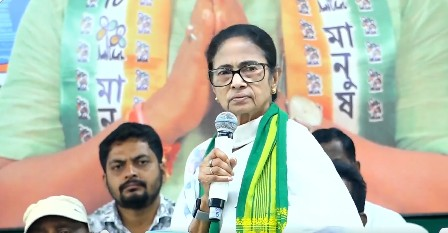
Kolkata, April 11 (IANS) Trinamool Congress supremo Mamata Banerjee on Saturday warned people of Jhargram to remain vigilant as the Bharatiya Janata Party (BJP) would try to bring in outsiders from neighbouring Jharkhand to influence the upcoming Assembly elections in West Bengal.
Addressing an election rally in Jhargram, Chief Minister Banerjee sent a message to the Trinamool Congress to be more careful before the upcoming state elections.
She gave instructions to the Trinamool Congress workers and leaders to keep the electronic voting machines (EVMs) safe even if the lights go out.
"The BJP will try to influence the West Bengal election by bringing money and people from Jharkhand. Keep a check on all the railway stations here. They will try to bring money and drugs. They will try to create unrest again. There is an attempt to bring people from outside West Bengal to spoil the environment before the election as well," Chief Minister Banerjee said.
The Chief Minister also gave an important message about the tribal vote bank in the poll-bound state.
She said that a Bill has been passed in the State Assembly to recognise the Sari and Sarna religions, but the Centre has not yet implemented it.
She also spoke about the Kurmali language and culture, adding that an academy has been formed for this language and the Trinamool Congress-led state government promises to stand for the tribal community.
Taking a jibe at the BJP, Chief Minister Mamata Banerjee said, "They (BJP) make many promises before the elections, but they are not seen again after the elections."
The Trinamool Congress supremo also targeted the BJP on cultural issues.
She alleged that the tradition and history of West Bengal are being distorted without showing respect.
The Chief Minister's message from the Jhargram meeting was clear.
She warned the Trinamool Congress workers and said that the ruling party is not willing to take any risks until the counting of votes on May 4.
"Guard the EVM with your lives. Don't leave counting centres until the last of the votes are counted," Chief Minister Banerjee added.
Polling in Jhargram will take place in the first phase of West Bengal Assembly polls on April 23.
--IANS
sch/khz