
PM Modi likely to address two major rallies in Assam on April 1
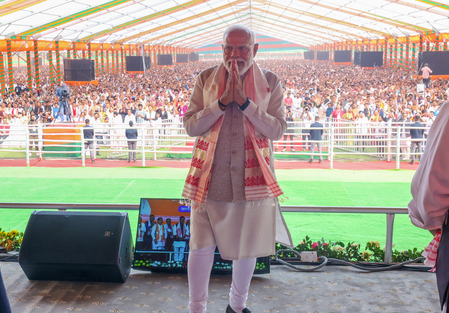
Guwahati, March 25 (IANS) Prime Minister Narendra Modi is scheduled to visit Assam on April 1, where he will address two major election rallies as part of the BJP’s campaign for the upcoming Assembly polls, party sources said on Wednesday.
According to a senior BJP leader, PM Modi will first address a rally at Bihpuria in Lakhimpur district, followed by another public meeting in Gohpur.
Both constituencies are considered politically significant, and the Prime Minister’s visit is aimed at energising party workers and consolidating voter support in Upper Assam.
The senior BJP leader mentioned that elaborate preparations are underway to ensure a massive turnout at both venues.
“The Prime Minister’s visit will give a major boost to our campaign in Assam. There is tremendous enthusiasm among party workers and the public. We are confident that these rallies will further strengthen our position in the state,” the leader said.
He added that the BJP is focusing on highlighting development initiatives undertaken by the central and state governments over the past few years. “From infrastructure growth to welfare schemes, the people of Assam have witnessed significant progress. The Prime Minister’s rallies will reinforce our message of development and stability,” the leader said.
Party insiders said leaders from alliance partners are also expected to join the campaign in the coming days, as the BJP looks to put up a united front in the elections.
The ruling party is aiming to retain power with a strong mandate.
Meanwhile, security arrangements are being tightened in both locations in view of the Prime Minister’s visit, with coordination between state police and central agencies underway.
The April 1 visit is part of PM Modi’s broader nationwide campaign outreach, as the BJP intensifies its efforts in poll-bound states ahead of the Assembly elections.
Polling for the 126-member Assembly will take place in a single phase on April 9, with counting scheduled for May 4.
--IANS
tdr/dpb
K’taka deficit under control compared to other Southern states: CM Siddaramaiah
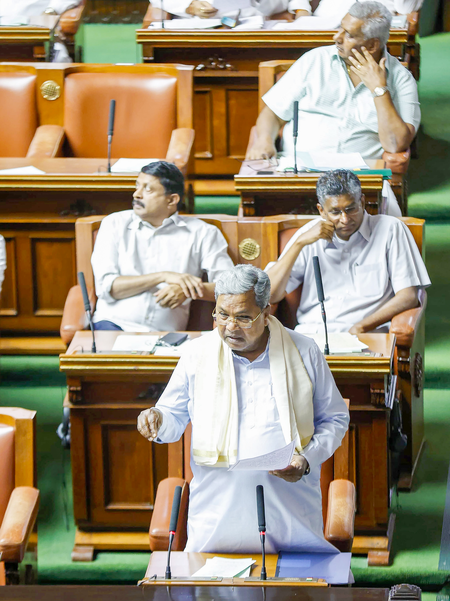
Bengaluru, March 25 (IANS) Defending the State Budget 2026–27, Karnataka Chief Minister Siddaramaiah, responding to criticism from the Opposition, said, “Even when compared to the progressive states around us in South India, our fiscal deficit remains within the prescribed limits. Opposition leader R. Ashoka has not studied the budget in depth. All his efforts seem to be focussed on getting headlines.”
Speaking at the Legislative Assembly on Wednesday, CM Siddaramaiah stated, "As per the revised estimates for 2025–26, the state’s fiscal deficit will be 2.95 per cent. In comparison, it is 3.0 per cent in Maharashtra, 4.5 per cent in Andhra Pradesh, 3.8 per cent in Kerala, and 3.5 per cent in Tamil Nadu."
"Ideally, there should be no revenue deficit. However, a revenue deficit exists not only in states like Maharashtra and other southern states, but also at the level of the Union government. Among them, Karnataka and Maharashtra have relatively lower revenue deficits," CM Siddaramaiah noted.
"Opposition leaders such as BJP State President and MLA, B.Y. Vijayendra, have alleged that the budget is being revised every year due to poor revenue collection. Compared to budget estimates, the actual or revised own revenue collections of neighbouring states have been lower.
"This is not a problem unique to Karnataka. It is a result of immature economic policies of the Union government. Even so, compared to neighbouring states, our own revenue collection has been better," CM Siddaramaiah criticised.
The Union government’s sudden rationalisation of GST rates in the middle of last year adversely impacted the state’s economy. Before the GST rate rationalisation in 2025–26, the state’s average monthly GST revenue had recorded a growth of 10 per cent.
However, after the rationalisation, the monthly growth in GST collections dropped to 4 per cent. It is estimated that the shortfall will be around Rs 10,000 crore in 2025–26 and may rise to Rs 15,000 crore in 2026–27. As a result, the revised estimate for 2025–26 projects a revenue deficit of Rs 22,957 crore, the CM said.
He further stated, "Did the GST rate revision benefit the public? Not significantly. Apart from a slight reduction in the prices of cars and bikes, there has been little benefit. Neither the public nor welfare measures have gained much, while multinational companies and corporate entities have benefited. Despite all this, we estimate that revenue collection will be higher by about Rs 22,573 crore compared to last year’s budget. The estimate of Rs 2.92 lakh crore last year is expected to increase to Rs 3.15 lakh crore this year."
He stated that the state’s share in central tax devolution has reduced from 4.713 per cent as per the 14th Finance Commission to 3.647 per cent under the 15th Finance Commission — a reduction of about 23 per cent.
"The state had urged the 16th Finance Commission to adopt a formula that balances equity and growth while ensuring fair tax distribution. The 16th Finance Commission has recommended a 4.131 per cent share for Karnataka. While this is a 13 per cent increase over the 15th Finance Commission’s recommendation and partially addresses our demand, it still falls short of a fair share," he said.
Opposition leaders have claimed that during the BJP government’s tenure, there were surplus budgets, whereas the current government is presenting deficit budgets with revenue shortfalls, he maintained.
"I have reviewed all state budgets since 2000. Every budget has had a fiscal deficit, including during BJP's four-year tenure. The surplus during that period was due to the lump-sum release of GST compensation. Opposition members are speaking without understanding these facts," CM Siddaramaiah chided.
"As per the Karnataka Fiscal Responsibility Act, the state had been maintaining a revenue surplus. However, due to the Union government’s failure to fully compensate for GST-related revenue losses, exclusion of cesses and surcharges from the divisible tax pool, and the reduced tax share under the 15th Finance Commission, the state has faced financial challenges," CM Siddaramaiah stated.
With the discontinuation of GST compensation from 2023–24, the state’s GST collections fell short of the protected revenue by Rs 30,871 crore in 2023–24 and Rs 40,368 crore in 2024–25. Additionally, due to the reduced tax share under the 15th Finance Commission, the state incurred a loss of Rs 39,500 crore between 2023–24 and 2025–26. As a result, the state has been facing a revenue deficit since 2023–24, CM Siddaramaiah stated.
During the BJP government’s tenure (2019–2022), the Union government provided GST compensation, amounting to a total of Rs 57,351 crore. However, after our government came to power, the Union government stopped providing GST compensation from 2023 onwards. This led to reduced revenue collection and a revenue deficit, CM Siddaramaiah stated.
Since the implementation of GST in 2017, due to the injustice of the 15th Finance Commission, non-implementation of its recommended grants, denial of GST compensation, and what we consider betrayal by the Union government, the state has suffered losses exceeding Rs 2,00,000 crore, he underlined.
In such a situation, how can state economies sustain themselves? Despite all these challenges, we are continuing to manage the state effectively. Meanwhile, Gujarat, which does not spend on welfare guarantee schemes like ours, is borrowing around Rs 1,00,000 crore this year, CM Siddaramaiah stated.
"It is clear that the revenue deficit has arisen due to multiple reasons: Reduced tax devolution under the 15th Finance Commission, denial of recommended grants by the Union government, discontinuation of GST compensation, GST rate rationalisation, and inadequate funding for centrally-sponsored schemes such as the Jal Jeevan Mission," he stated.
--IANS
mka/rad
Centre releases over Rs 1,142 crore to strengthen rural local bodies in 4 states
New Delhi, March 25 (IANS) The Centre on Friday announced the release of over Rs 1,142 crore to strengthen rural local bodies in Madhya Pradesh, Jharkhand, Punjab and Mizoram during FY 2025–26 as part of the 15th Finance Commission’s untied grants.
For Madhya Pradesh, a sum of Rs 631.91 crore has been released as the second instalment of Untied Grants of FY 2025-26 for 51 eligible district panchayats, 300 block panchayats and 22,933 gram panchayats (GPs). Further, Rs 1.26 crore of withheld portion of the first instalment of untied grants for FY 2025-26 has also been released to some panchayats.
Similarly, for Jharkhand, the first instalment of untied grants of the financial year 2025-26 amounting to Rs 269.03 crore have been released. These funds are for eligible 23 district panchayats, 264 block panchayats and 4,344 gram panchayats. Further, Rs. 3.65 crore of withheld portion of first and and second instalment of untied grants for FY 2024-25 have also been released to 13 panchayats.
In the case of Punjab, the second instalment of untied grants for FY 2025–26 amounting to Rs. 222 crore has been allocated for 13,262 eligible gram panchayats, 150 eligible block panchayats and all 22 district panchayats. While for Mizoram, the second instalment of untied grants amounting to Rs 14.80 crore have been released. These funds are for all 816 eligible Village Councils of the State.
The Government of India, through the Ministry of Panchayati Raj and the Ministry of Jal Shakti (Department of Drinking Water and Sanitation), recommends release of 15th Finance Commission grants to states for panchayati raj institutions, which are then released by the Ministry of Finance. The allocated Grants are recommended and released in two instalments in a financial year.
Untied Grants may be utilised by panchayati raj institutions and rural local bodies to meet location-specific needs under the 29 subjects listed in the Eleventh Schedule, excluding salaries and establishment costs.
Tied grants can be used for the basic services of sanitation and maintenance of ODF (open defecation-free) status, and this should include management and treatment of household waste, and human excreta and faecal sludge management in particular. These grants can also be used for the supply of drinking water, rainwater harvesting and water recycling.
--IANS
sps/na
CM Fadnavis directs secretary-level panel to assist onion farmers
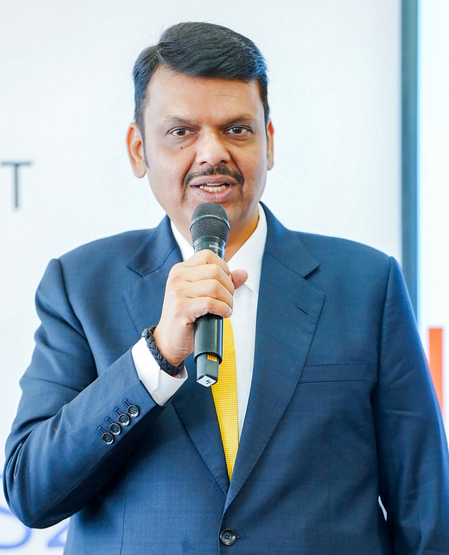
Mumbai, March 25 (IANS) Chief Minister Devendra Fadnavis on Wednesday directed the formation of a high-level secretary committee to address the recurring onion crisis in Maharashtra.
The committee, comprising Additional Chief Secretaries of the Agriculture and Finance Departments and the Secretary of the Marketing Department, has been tasked with suggesting immediate relief measures for onion producers. The decision was made during a high-stakes meeting at Vidhan Bhavan, aimed at finding a permanent solution to the volatility of onion prices and production.
Emphasising the need for a sustainable shift, the Chief Minister instructed agencies to implement long-term alternatives to resolve the onion issue once and for all. "Every year, the state faces an onion crisis. While we must provide immediate assistance to farmers in the current situation, we also need to move beyond temporary fixes. The committee must review the current landscape and propose immediate measures, followed by a robust long-term implementation plan within the next two to three months," CM Fadnavis stated.
CM Fadnavis noted that traders often buy onions from farmers only to resell them to NAFED or other agencies, depriving farmers of fair profits. He called for a permanent end to this practice. A meeting will be scheduled with Union Commerce Minister Piyush Goyal to discuss stabilising rates, increasing exports, and addressing issues related to central regulations, he said.
“The committee will explore 'Crop Diversification' in major onion-producing districts such as Nashik, Pune, Ahilyanagar, and Solapur. This pilot project is expected to launch as early as the upcoming Kharif season, focusing on variety selection and yield management,” said the chief minister.
The CM highlighted that despite high production, a disrupted supply chain often forces the government to provide aid, which is not a sustainable model for farmers.
The Chief Minister concluded by stating that over the next two to three years, the goal is to streamline the production and supply process so that it remains consistently profitable for farmers, reducing their dependence on emergency government aid.
--IANS
sj/dpb
Panic buying of petrol/diesel in Kashmir triggers chaos; Indian Oil Corp says no fuel shortage
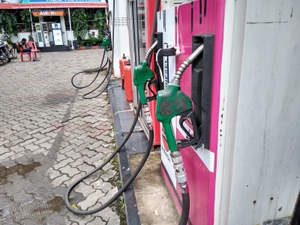
Srinagar, March 25 (IANS) Panic gripped people across the Kashmir Valley on Wednesday as motorists, trucks and owners of other conveyances mobbed petrol/diesel pumps trying to buy fuel.
This is happening despite announcements made by the Indian Oil Corporation that there is no shortage of petroleum products in Jammu and Kashmir.
People started mobbing refilling stations in Kashmir as news spread from one area to another, saying that acute energy crisis was gripping the Valley.
At many places, police personnel were seen regulating the rush while those reporting with jerrycans, tins and other carrying vessels were refused any fuel supply.
Chaos was worst confounded in Srinagar city as one after the other petrol/diesel pumps shut down, claiming that they had run out of supplies.
Authorities have been asking people not to resort to panic buying as stocks of petrol/diesel and LPG are enough to last for 20 days in the Valley.
Greed and panic made official statements fall on deaf ears in Srinagar and elsewhere in the Valley.
Owners of refilling stations told IANS that panic buying by vehicle owners was likely to create an artificial crisis that would not be taken care of by routine and normal tanker arrivals carrying fuel at their stations.
The most confusing situation was that instead of advising and motivating vehicle owners not to resort to panic and unwarranted buying, police was busy trying to ensure smooth and regulated buying at petrol pumps without making announcements that such knee-jerk buying was fraught with risks of creating an artificial scarcity of fuel.
People are already lined up in long queues trying to buy LPG cylinders as officials said one LPG cylinder per authorised connection would be issued in 25 days in urban areas and in 35 days in rural areas.
With complete dependence in both rural and urban areas on LPG for cooking requirements, the probability of an impending crisis in LPG demand and supply is already in the offing if not already hitting the Valley.
Reports of unscrupulous LPG outlets selling cooking gas in the black market are also doing the rounds as authorities have warned people not to sell or buy LPG in the black market.
Authorities are taking regular review of stock position of LPG supply in Jammu and Kashmir, but they still express apprehension that unless people cooperate and understand to buy cooking gas only as much as needed for their day-to-day needs and not for stockpiling it, the gap in demand and supply would continue to widen further in the coming days.
--IANS
sq/khz
CAPF Bill tabled in RS, Oppn questions statuary competence
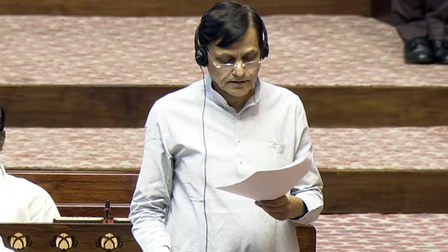
New Delhi, March 25 (IANS) The Rajya Sabha on Wednesday began discussion on the Central Armed Police Forces (General Administration) Bill, 2026, which seeks to ensure a dominant role for Indian Police Service officers in the top leadership of the country's paramilitary forces.
The move has drawn sharp criticism from opposition parties and retired CAPF officers. They argue that the Bill undermines a Supreme Court judgment delivered on May 23, 2025. In that verdict, the apex court granted Organised Group A Service status to CAPF officers and directed the government to progressively reduce IPS deputation in the forces up to the rank of Inspector General over the next two years.
The Bill aims to bring the five central forces -- Central Reserve Police Force (CRPF), Border Security Force (BSF), Indo-Tibetan Border Police (ITBP), Sashastra Seema Bal (SSB) and Central Industrial Security Force (CISF) -- under a unified administrative framework.
It provides that 50 per cent of the total posts in the rank of Inspector General, at least 67 per cent of the posts in the rank of Additional Director General, and all posts in the ranks of Special Director General and Director General in the CAPFs shall be filled by IPS officers on deputation.
Till now, such postings were governed by executive orders. The proposed legislation aims to codify these provisions into law.
The Bill was tabled in the Upper House by Union Minister of State for Home Affairs Nityanand Rai.
CPI(M) MP John Brittas strongly opposed the Bill, stating that it travels beyond the legislative competence of the government acting under an ordinary piece of legislation.
He added, "While Parliament is competent, it cannot by mere declaration annul operative judicial orders without genuinely addressing the legal basis."
The Chair asserted that Parliament has the legislative competence to enact the law. However, Brittas countered that Parliament cannot override a judicial order merely by declaration without properly addressing its legal foundation.
Trinamool Congress MP Derek O'Brien and other opposition members also voiced their disapproval during the proceedings.
Eight hours have been allocated for the introduction and discussion of the Bill in the Upper House. A member of an opposition party confirmed the schedule.
Retired CAPF officials have termed the Bill unjust, saying it goes against the spirit of the Supreme Court ruling that recognised the cadre strength and aspirations of officers from the forces themselves.
The government maintains that IPS leadership at senior levels is essential for better coordination between the Centre and states, especially in matters of internal security and law and order.
The discussion is expected to continue with spirited exchanges between the ruling side and the opposition.
The Bill, if passed, will have far-reaching implications for the structure and command of the Central Armed Police Forces, including the CRPF, BSF, CISF, ITBP and SSB.
--IANS
sktr/dpb
Akashvani to air full 6-stanza Vande Mataram from tomorrow in revamped national broadcast
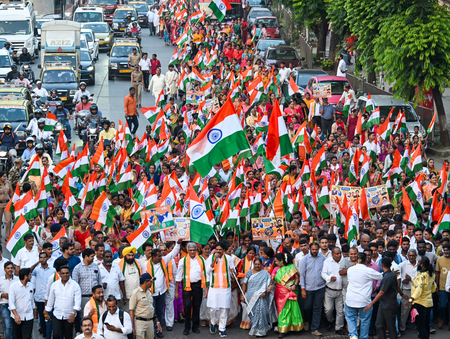
New Delhi, March 25 (IANS) Akashvani will begin broadcasting a new and complete six-stanza version of the national song Vande Mataram from Thursday, the government announced on Wednesday, marking a significant shift from the long-followed two-stanza rendition.
Officials said that in addition to the primary version, the full six-stanza composition is also being recorded in multiple regional formats to reflect India's diverse musical traditions.
Since Independence, it has been customary for Akashvani stations to commence their morning transmission with the iconic signature tune followed by a two-stanza version of Vande Mataram, which typically runs for about 65 seconds.
"In view of the Ministry of Home Affairs guideline dated January 28, 2026, on the National Song containing six stanzas, all stations of Akashvani will start broadcasting the new version of the song with effect from March 26, 2026. The new version has a duration of 3 minutes 10 seconds," the Ministry of Information and Broadcasting said in a statement.
The first version to be aired has been rendered by noted Hindustani classical vocalist Pt. Chandrashekhar Vaze in Raag Des, officials added.
Authorities further stated that additional renditions of the national song are being produced using region-specific instruments and musical styles, and these versions will be broadcast by Akashvani stations in different states to ensure wider cultural representation.
Earlier, on February 11, the Centre issued fresh comprehensive guidelines establishing the official protocol for the rendition of India's national song Vande Mataram, specifying how and when it should be performed at government functions and the expected conduct of the audience, especially concerning the national anthem.
The new directives, issued by the Union Home Ministry, are intended to formalise the status and ceremonial role of the national song in public and official events across the country, placing greater emphasis on its observance during state functions and institutional gatherings.
As per the guidelines, the complete official version of Vande Mataram, comprising six stanzas and lasting approximately 3 minutes and 10 seconds, is to be performed or played during major state occasions.
These include events such as the unfurling of the Tricolour, formal arrival and departure ceremonies of the President and Governors at official programmes, and before and after their scheduled addresses at such functions.
A key aspect of the directive stated that whenever both Vande Mataram and the national anthem are part of a programme, the national song must be rendered before the national anthem.
--IANS
sd/rad
Egg prices crash in TN’s Namakkal, farmers stare at Rs 7 crore daily loss
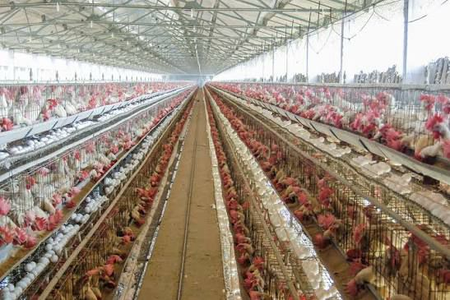
Namakkal, March 25 (IANS) A sharp fall in egg prices in Namakkal, one of India’s largest poultry hubs, has triggered alarm among farmers, with producers reporting heavy financial losses over the past few days.
The price of eggs has dropped by 40 paise within just three days, raising concerns about a prolonged slump in demand.
Namakkal, which produces over seven crore eggs daily, plays a pivotal role in supplying eggs across Tamil Nadu, multiple Indian states, and key export markets. The region also serves as the benchmark centre for egg pricing in the country, making any fluctuation here significant for the national poultry industry.
The current price decline comes amid weakening demand, which industry stakeholders partly attribute to global uncertainties, including the ongoing tensions involving the United States, Israel, and Iran.
Export orders have reportedly slowed, while domestic consumption has not been strong enough to absorb the surplus. In response to the situation, the National Egg Coordination Committee (NECC) convened an urgent meeting in Namakkal to assess market conditions.
Following deliberations, the committee decided to lower prices in an attempt to stimulate demand and clear mounting stock. The benchmark price of eggs, which was 445 paise on March 22, has now dropped to 405 paise.
The most recent revision alone saw a reduction of 20 paise from 425 paise, underscoring the rapid pace of decline.
Farmers say the current price levels are unsustainable, with production costs significantly higher than the prevailing market rate.
According to industry estimates, producers are incurring losses of nearly Rs one per egg. With daily production exceeding seven crore eggs, this translates to an estimated loss of around Rs 7 crore per day for the region.
Poultry farmers have expressed fears that the situation could worsen if demand does not recover soon. Many are calling for government intervention or support measures to stabilise prices and protect the sector from further distress.
Despite the drop in farm-gate prices, retail egg prices in Namakkal remain steady at around Rs 85 per tray. Meanwhile, chicken prices in nearby Palladam have shown resilience, holding firm at Rs 129 per kilogram. Industry observers say the coming days will be crucial in determining whether prices stabilise or continue their downward trend, with demand revival seen as the key factor.
--IANS
aal/dpb
People coming out in large numbers to support BJP: Assam CM
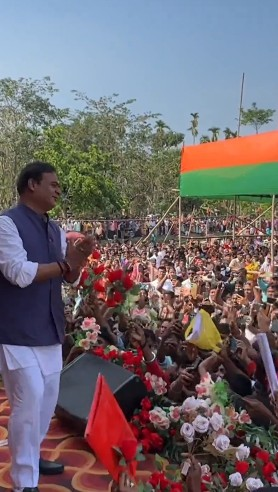
Guwahati, March 25 (IANS) Assam Chief Minister Himanta Biswa Sarma on Wednesday expressed confidence of a strong electoral performance in lower Assam, saying people have come out for the rally in large numbers to support the BJP candidate.
Addressing a public rally in Lumding, Sarma said the enthusiastic turnout reflected public backing for the ruling party’s governance over the past five years. “The people of Lumding have come out in large numbers to bless our BJP candidate Sibu Misra for yet another victory. We are seeking the people’s mandate based on five years of solid work in this constituency,” he said.
The Chief Minister asserted that the response from voters indicated a positive mood on the ground, adding that the BJP was confident of retaining the seat. Lumding Assembly constituency has been a BJP stronghold in recent elections, with Sibu Misra winning back-to-back polls.
In the 2016 Assembly elections, Misra secured victory with 72,072 votes, defeating his nearest Congress rival by a margin of over 30,000 votes. The BJP retained the seat in 2021, although with a reduced margin.
Misra polled 89,108 votes, securing around 51 per cent vote share and defeating Congress candidate Swapan Kar by 11,731 votes.
At the state level, the BJP has maintained a consistent electoral performance over the last two Assembly elections. The party won around 60 seats in both 2016 and 2021, forming the government with the support of its allies in the Northeast Democratic Alliance (NDA).
In 2021, the BJP-led alliance returned to power for a second consecutive term, marking a significant consolidation of its political base in Assam.
With the Assembly elections approaching, the BJP is banking on its governance record and organisational strength, while leaders like Sarma continue to highlight constituency-level performance to consolidate voter support across key seats like Lumding.
Polling for the 126-member Assembly will take place on April 9, with counting scheduled for May 4.
--IANS
tdr/skp
FCRA Amendment Bill suffers from constitutional maladies: Manish Tewari
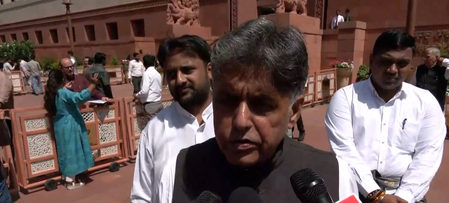
New Delhi, March 25 (IANS) Congress MP Manish Tewari on Wednesday criticised the introduction of the Foreign Contribution (Regulation) Amendment Bill, 2026, in the Lok Sabha, stating that the proposed legislation suffers from “serious constitutional maladies”.
The Bill was introduced by Union Minister of State for Home Affairs Nityanand Rai during the ongoing Budget Session.
Tewari said that the Congress would request the Speaker to refer the Bill to either a Standing Committee or a Joint Parliamentary Committee for detailed scrutiny when it comes up for discussion.
Speaking to reporters, Tewari argued that the Bill raises significant constitutional concerns. “The Foreign Contribution (Regulation) Amendment Bill suffers from serious constitutional maladies, particularly because Article 300A of the Constitution guarantees the right to property. The provisions of the Bill undermine that constitutional guarantee by allowing immovable property to be disposed of in an arbitrary manner,” he said.
He further alleged that the legislation could have a chilling effect on civil society organisations that receive partial foreign funding.
“It grants arbitrary and unbridled powers to the executive, which could lead to targeted and selective action against organisations that may not align with the government’s agenda,” Tewari added.
Highlighting additional concerns, he said there are several other problematic provisions in the Bill that require closer examination.
“Therefore, when the Bill is taken up for discussion, we will recommend that it be referred to either a Standing Committee or a Joint Parliamentary Committee,” he reiterated.
Meanwhile, introducing the Bill in the Lok Sabha, MoS Home Nityanand Rai stated that the legislation aims to enhance transparency and ensure the proper utilisation of foreign contributions.
Moving the Bill, Rai said its primary objective is to make the use of foreign funds more transparent and accountable. He emphasised that the government would not tolerate any activities that go against the spirit of the Constitution, the law, or the national interest, and would take necessary action accordingly.
Rai further clarified that the legislation is not intended to hinder genuine institutions. “Any organisation, whether an educational institution or an NGO, that works in line with the sovereignty and integrity of India and seeks to serve the nation will not face any obstruction,” he said.
Responding to opposition criticism that the Bill is “dangerous”, Rai asserted that it would only be “dangerous” for those involved in forced religious conversions using foreign funds or those misusing such contributions for personal gain.
--IANS
jk/dpb