
TN looks to Rabi recovery as Kharif paddy acreage falls 28 pc
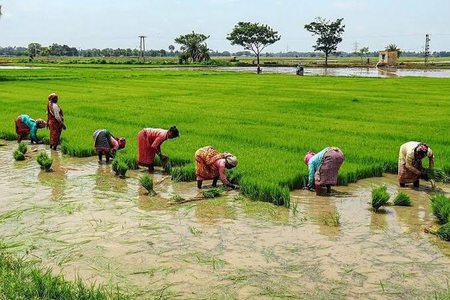
Chennai, Oct 12 (IANS) A sharp contraction in Kharif paddy cultivation has left Tamil Nadu relying on the rabi season to meet its annual foodgrain target. A delayed opening of Mettur Dam and lower Cauvery inflows have been identified as the principal reasons for the decline.
Paddy acreage during April-September stood at 12.52 lakh hectares, compared with 17.5 lakh hectares in 2025-26. The loss of 4.98 lakh hectares represents a 28 per cent fall, underscoring the impact of water shortages on cultivation.
The agriculture department is counting on increased sowing during October-March to bridge the shortfall. It has kept the state’s 2026-27 foodgrain production target at 125 lakh metric tonnes, with paddy expected to contribute 79 lakh metric tonnes.
Normal rainfall forecast for the Rabi season has reinforced expectations of a recovery. The cultivation target for the season remains 30.26 lakh hectares. In 2025-26, Tamil Nadu produced 122.43 lakh metric tonnes of foodgrains against a target of 130.23 lakh metric tonnes. Districts have received crop contingency plans, with farmers encouraged to adopt direct sowing instead of transplantation. The method requires less water and could also reduce the risk of crop damage during northeast monsoon rains.
Samba cultivation has begun gathering momentum, and the department considers the next 45 days crucial for the season’s progress. Officials maintain that the reduction in kharif acreage does not indicate an impending foodgrain shortage.
Kuruvai cultivation also suffered a substantial decline. Statewide acreage dropped from 5.05 lakh hectares last year to 3.91 lakh hectares, a loss of 1.14 lakh hectares. In the delta districts, the cultivated area fell from 2.55 lakh hectares to 1.85 lakh hectares.
The slowdown has affected agricultural supplies and cooperative lending. Fertilisers and seeds valued at Rs 300 crore have accumulated across the state’s 4,400 primary agricultural cooperative credit societies as demand weakened.
The cooperative marketing federation has widened access to fertilisers, allowing supplies to farmers outside cooperative society membership. The move seeks to stimulate cultivation and clear accumulated stocks. Subsidised fertilisers had previously been available only to society members who obtained crop loans.
Meanwhile, the cooperation department has put crop loan recovery on hold as cooperative banks report substantially lower disbursements. The lending slowdown reflects reduced cultivation, while the department continues to bank on the rabi season to restore agricultural activity and help meet the annual production target.
--IANS
aal/dpb
Assam CM links Nijut Moina scheme to fight against child marriage, early dropouts
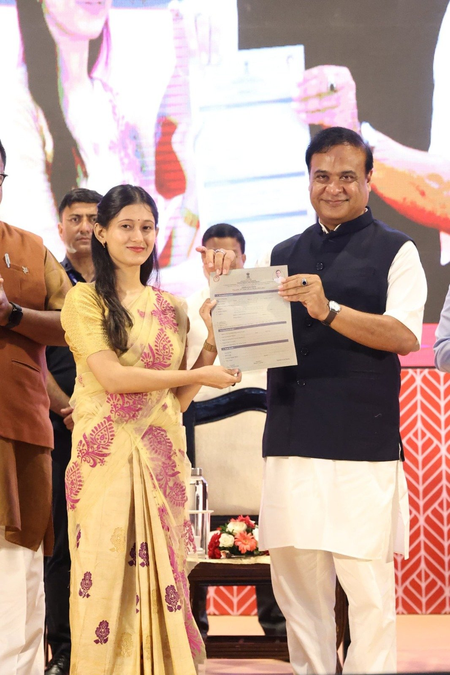
Guwahati, Oct 12 (IANS) Assam Chief Minister Himanta Biswa Sarma on Monday highlighted the Mukhya Mantrir Nijut Moina scheme, describing it as a significant step towards combating child marriage and preventing girls from dropping out of education.
In a post on X marking the second day of Navratri, dedicated to Maa Brahmacharini, Sarma drew a parallel between the deity's teachings and the determination of girls pursuing education in Assam.
The Chief Minister said that under the Nijut Moina scheme, girl students enrolled in Higher Secondary, undergraduate and postgraduate courses at government and government-aided institutions receive monthly financial assistance for 10 months annually.
Under the scheme, students at the Higher Secondary School level receive Rs 1,000 per month, undergraduate students Rs 1,250, while postgraduate students are entitled to get Rs 2,500 per month.
"This is not just a scholarship. It is a firm stand against child marriage and early dropout," Sarma said in his post.
He emphasised that the initiative seeks to reinforce the importance of girls' education among families and ensure that the state government supports young women as they pursue their academic ambitions.
According to Sarma, the scheme sends a message that educating daughters is a worthwhile investment and that financial assistance can help them continue their studies instead of being pushed into early marriage.
Drawing on the religious significance of Navratri, the Chief Minister said that when a girl chooses books over an early marriage, she is undertaking her own form of tapasya, or penance.
He also invoked Maa Brahmacharini's blessings for beneficiaries of the scheme, wishing them focus, wisdom and the courage to pursue their aspirations without limitations.
The Nijut Moina scheme is among the Assam government's initiatives aimed at encouraging girls to continue their education and addressing social challenges associated with early marriage and educational discontinuation.
The scheme's financial assistance is intended to ease some of the costs associated with pursuing education and encourage families to support their daughters' academic progress.
Sarma's message combined the religious significance of Navratri with the state government's emphasis on women's education, presenting educational empowerment as both a social priority and a means of enabling girls to shape their own futures.
--IANS
tdr/skp
TVK’s Madurantakam, Dharapuram bypoll winners take oath as MLAs
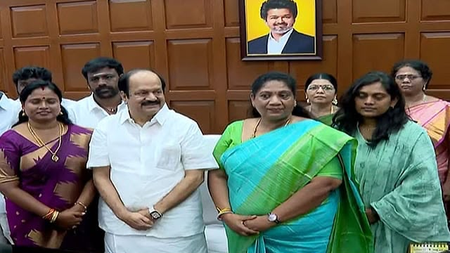
Chennai, Oct 12 (IANS) Tamilaga Vettri Kazhagam (TVK) representatives Maragatham Kumaravel and Sathyabama were sworn in as members of the Tamil Nadu Legislative Assembly on Monday after winning the Madurantakam and Dharapuram by-elections, respectively.
The ceremony took place in the Speaker’s chamber at the Secretariat in Chennai. Both legislators took oaths in the presence of the Speaker, completing the process following their election to the Assembly.
Ministers N. Anand, Sengottaiyan, Aadhav Arjuna and K.G. Arunraj attended the ceremony as the two representatives began their legislative tenure.
The swearing-in followed emphatic victories for TVK in both constituencies. The results gave the party a start in its first by-election contest. Having secured both seats, TVK emerged from the electoral exercise with a result that reinforced its position in the two constituencies.
Maragatham Kumaravel polled 74,048 votes in Madurantakam. She and Sathyabama will now represent their respective constituencies in the Assembly, where they can raise local issues and participate in legislative proceedings.
Polling in the two constituencies was held on October 6 following a campaign involving TVK, the DMK, AIADMK, Naam Tamilar Katchi and the Left parties.
The contests drew attention as an electoral test for TVK after its Assembly election performance.
Chief Minister and TVK leader C. Joseph Vijay campaigned in both constituencies. His campaign included public appearances and roadshows aimed at mobilising support for the party’s candidates ahead of polling.
In Madurantakam, CM Vijay held a roadshow on October 1 after a campaign visit on September 25. He also visited the Melmaruvathur temple during his campaign in the constituency.
For the Dharapuram contest, CM Vijay addressed voters on September 30 and returned for a roadshow on October 4, the final day of campaigning. The constituency had 22 candidates in the fray.
Opposition parties also mounted campaigns, with DMK leaders M.K. Stalin and Udhayanidhi Stalin and AIADMK leader Edappadi K. Palaniswami seeking support for their candidates.
The presence of several parties made the elections a closely watched political contest.
Monday’s ceremony shifted the focus from campaigning and election results to the work of the newly elected legislators. Their responsibilities include representing voters, bringing constituency concerns before the government and contributing to Assembly debates.
For TVK, the occasion marked the completion of the by-election process, with both successful candidates taking their places as elected representatives of Madurantakam and Dharapuram.
--IANS
aal/dpb
‘Political movement aimed at destabilising govt’: Harish Salve on Oppn’s protest (IANS Exclusive)
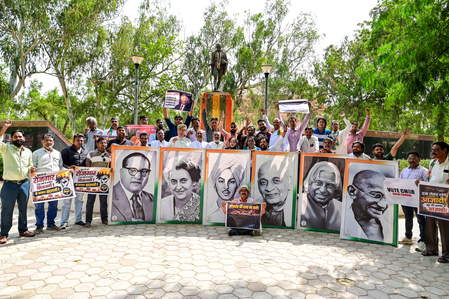
New Delhi, Oct 12 (IANS) Senior advocate and former Solicitor General of India Harish Salve has criticised the Opposition over its repeated protests and its approach towards constitutional institutions, alleging that political parties were attempting to use the judiciary as a political tool and undermine public faith in established institutions and trying to destabilise the government.
In an interview with IANS, Salve questioned the Opposition’s attempts to meet the Chief Justice of India (CJI) and its continued criticism of the judiciary and the Election Commission. He said political parties must follow constitutional procedures instead of creating public disturbances or questioning institutions whenever their demands are not met.
Salve described the movement as an attempt to destabilise the system and called on the government to respond firmly.
“In my opinion, this is a political movement aimed at destabilising the system. It is the government’s responsibility to confront it firmly. I believe it should continue to do so,” he said.
He alleged that the Supreme Court was increasingly being used for political purposes and said that judges were performing their duties while examining matters brought before them.
“Absolutely. In my opinion, they are trying to use the Supreme Court as a political tool every day,” he said.
Salve also criticised the Opposition’s approach towards judicial verdicts, arguing that disappointment with a particular judgment should not be confused with losing faith in the judiciary.
“When they do not get the order they want, they say that they have lost faith in the judiciary,” he said.
“This is a very unfortunate situation for India’s future. You cannot say that if the court does not deliver a judgment of your choice, you will lose faith in the judiciary,” he added.
Emphasising the importance of constitutional institutions, Salve said political differences should not lead to attempts to weaken the judiciary, the legislature, the elected executive or the Election Commission.
“We must not weaken or target our institutions. The Constitution has established separate institutions, including the judiciary, the legislature, the elected executive and the Election Commission. Each has its own jurisdiction, and the courts maintain a system of checks and balances,” he said.
Salve also questioned the need for repeated protests when legal proceedings were already underway, arguing that political parties should allow courts to examine allegations and deliver their decisions.
“Is it necessary to create a commotion every day? Is it necessary to inconvenience the people of Delhi?” he said, referring to protests over issues involving the Election Commission.
He added that political leaders must consider the impact of demonstrations on ordinary citizens, particularly during the festive season, when disruptions could affect businesses and livelihoods.
On the right to protest, Salve said constitutional freedoms must be exercised within the framework of the law and cannot be used to justify defiance of lawful restrictions.
“The main point is that the right to protest is subject to the applicable police laws. It does not exist outside the law,” he said.
Salve further questioned the strategy adopted by Congress despite its access to several senior lawyers, saying the party itself should explain whether its actions were being taken on legal advice.
“This question should be put to Congress leaders. From a legal perspective, I am surprised that a party with such extensive legal expertise is choosing this course of action,” he said.
--IANS
rs/dpb
Two killed as motorcycle collides head on with SUV in MP’s Maihar

Maihar (Madhya Pradesh), Oct 12 (IANS) Two men, including a microfinance branch manager and a colliery employee, were killed after their motorcycle collided head-on with a Scorpio SUV on the Tamas River bridge on National Highway-30 in Madhya Pradesh's Maihar district, police said on Monday.
According to police, the tragic accident occurred around 11.30 p.m. on Sunday on the Maihar-Rewa route. The motorcycle was heading towards Rewa, while the SUV was travelling in the opposite direction towards Maihar.
The collision was so severe that the front portion of the SUV was completely damaged. The occupants of the SUV allegedly abandoned the vehicle and fled the scene, police said.
Both motorcycle riders sustained critical injuries and were taken to the Civil Hospital in Maihar with police assistance. Doctors declared them dead on arrival, following which their bodies were shifted to the hospital mortuary.
The deceased were identified as Shivam Bathre (28), a resident of Shahpura Bhitauni in Jabalpur district, and Sujit Kol (32), a resident of Mauhari village in Satna district.
“Both men sustained critical injuries in the head-on collision. They were rushed to the Civil Hospital in Maihar, where doctors declared them dead,” a police official said.
Bathre worked as a branch manager at Swatantra Micro Finance in Amarpatan and lived in rented accommodation there. He was the only son in his family and had married in 2024. His wife gave birth to a son just 15 days before the accident.
Kol was employed as a supervisor at a colliery in Ambikapur. He had been married for five years and is survived by his wife and daughter.
According to preliminary information, Bathre had visited his home in Jabalpur on leave and parked his motorcycle at Maihar railway station. While returning to Maihar by train, he met Kol. The two then set out for Amarpatan on Bathre's motorcycle, where the accident occurred.
“The occupants of the Scorpio fled after abandoning the vehicle. We are investigating the accident, and efforts are being made to trace those involved,” a police officer said.
The vehicles involved in the accident were a motorcycle bearing registration number MP 20 X 2815 and a Scorpio SUV with registration number UP 37 F 9818.
Police said further investigation was underway.
--IANS
pd/skp
Human rights bodies must reach those least able to make themselves heard: CJI on NHRC Foundation Day
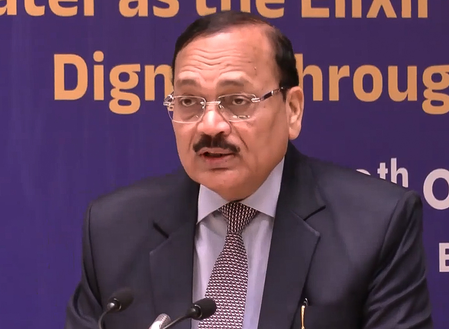
New Delhi, Oct 12 (IANS) Chief Justice of India (CJI) Justice Surya Kant on Monday said the true measure of a human rights institution lies not merely in the number of cases it decides, but in whether it can be heard by those who are least able to make themselves heard.
Addressing the 33rd Foundation Day function of the National Human Rights Commission (NHRC) at Vigyan Bhawan in New Delhi, CJI Kant said the Commission had evolved from a new idea into a trusted institution for those seeking justice, while stressing the need to ensure that constitutional guarantees of dignity, equality, liberty and justice translate into everyday realities.
"Institutions, like people, are best understood on their birthdays. We look back at where they began, we look around at where they stand, and we look ahead at what they owe the people they serve," the CJI said.
Recalling the NHRC's journey over the past 33 years, he said it had registered more than 24 lakh cases and disposed of over 23 lakh, with a disposal rate exceeding 98 per cent.
"These figures represent not merely institutional output, but the many instances in which a grave violation has been brought into the public eye," CJI Kant said.
He said the NHRC's role was particularly significant for people living in remote districts who might find it difficult to approach a courtroom, describing the Commission as one of the institutions responsible for ensuring that the promises made by the Constitution reach those who need them most.
"If the Constitution is the promise, the Commission is one of its keepers. It listens to those who cannot easily speak, and it can act on its own without waiting to be asked," he said.
The CJI said that the protection of human rights must extend beyond identifying violations to ensuring accountability, meaningful relief for those affected and changes to prevent the recurrence of such incidents.
Referring to the apex human rights body's interventions in cases involving custodial torture and deaths, bonded labour, industrial exposure to silicosis and the rights of marginalised communities, he said such work illustrated the importance of institutional intervention in addressing violations and systemic failures.
Stressing the need to focus on the most vulnerable sections of society, CJI Kant said that a right that works for the powerful but fails the powerless cannot be regarded as a right in its true sense. "It is a privilege with better branding," he remarked.
He identified undertrial prisoners who had never met their advocates, migrant workers without documents, elderly persons abandoned by their families, persons with disabilities facing barriers and women whose concerns remained invisible to the systems meant to protect them as examples of people whose rights required greater institutional attention.
The CJI stressed that State Human Rights Commissions had a particularly important role in addressing violations at the local level, given their proximity to communities affected. "In a country as large and diverse as India, the experience of rights is often determined not in the capital, but in a remote village, a particular neighbourhood or even in the household," he said.
CJI Kant said that while the National Commission could set standards and draw attention to broader patterns, State Commissions were often better placed to hear complaints in local languages, reach the affected areas and understand the circumstances in which violations occurred.
CJI Kant also highlighted the complementary responsibilities of different institutions in protecting human rights, saying that courts must intervene when constitutional rights are violated, while Human Rights Commissions must investigate complaints, identify systemic failures and ensure that otherwise overlooked concerns receive institutional attention.
The CJI's address came as the NHRC marked its 33rd Foundation Day with a national conference on the theme, "Water as the Elixir of Life: Advancing Human Dignity through the Right to Water".
The conference featured discussions on the protection and restoration of water bodies and the safeguarding of drinking water sources to ensure safe and sustainable access to water for all.
Commending the NHRC for marking its Foundation Day with a national conference on water, CJI Kant said that human rights were not merely abstract principles but were closely connected with people's everyday lives. "They are as concrete as a glass of clean water in the hands of a child and as urgent as the thirst that child feels," he said.
The Foundation Day function was attended by NHRC Chairperson Justice V. Ramasubramanian, Members Justice (Dr.) Bidyut Ranjan Sarangi, Vijaya Bharathi Sayani and Priyank Kanoongo, Secretary General Piyush Goyal, senior officers and other dignitaries.
--IANS
pds/dpb
UP govt to raise monthly honorarium of 60,000 village watchmen by Rs 1,000
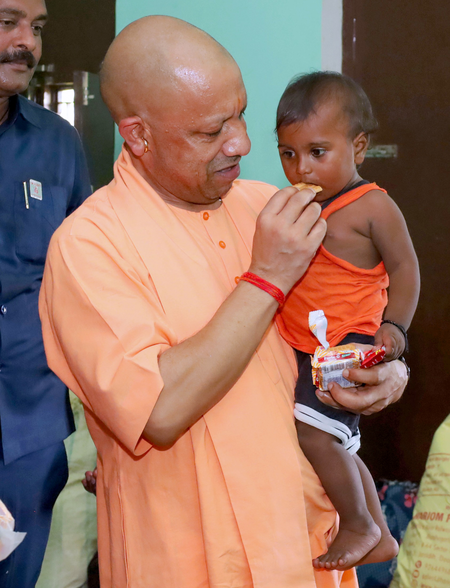
Lucknow, Oct 12 (IANS) The Uttar Pradesh government is set to increase the monthly honorarium of around 60,000 village watchmen, or ‘gram praharis’, by Rs 1,000, starting October 13.
The proposed increase will raise their monthly honorarium from Rs 2,500 to Rs 3,500, marking a 40 per cent hike. Each village watchman will receive an additional Rs 12,000 annually following the increase.
Chief Minister Yogi Adityanath is expected to announce the decision during an event in Bareilly on October 13.
The Chief Minister is also scheduled to felicitate village watchmen at the Bareilly Police Lines during the programme.
The move comes after the state government raised the honorarium of cooks, Anganwadi workers and panchayat assistants in recent months. The government is now preparing to provide financial relief to village watchmen, who form an important link in the rural policing and information network.
Attached to local police stations, village watchmen relay information about suspicious activities, local disputes, and law-and-order issues to the police. They also help maintain communication between villages and police stations. They have been demanding an increase in their honorarium, and the proposed announcement is expected to address that demand.
With an estimated 60,000 village watchmen across the state, the proposed hike is expected to impose an additional financial burden of around Rs 7 crore per month and Rs 84 crore annually on the state exchequer.
Funds for the increase are likely to be provided for in a supplementary budget.
The government has taken similar decisions to increase the earnings of other categories of workers receiving an honorarium or allowance.
The monthly honorarium of around 3.53 lakh cooks preparing midday meals in government-run basic education schools has been increased from Rs 2,000 to Rs 3,000.
The honorarium of Anganwadi workers has been raised by Rs 4,000 per month, while that of Anganwadi helpers has been increased by Rs 2,000 per month.
Similarly, the monthly honorarium of more than 57,000 panchayat assistants has been raised from Rs 6,000 to Rs 9,000. The daily allowance of Provincial Guards (Prantiya Rakshak Dal) volunteers has also been increased from Rs 500 to Rs 600.
Separately, the government is considering increasing monthly pensions for senior citizens, destitute women and persons with disabilities from Rs 1,000 to Rs 1,500. The proposal, which has received in-principle approval from Chief Minister Yogi Adityanath, is likely to be placed before the state Cabinet in the second half of November.
The schemes currently cover more than 67 lakh senior citizens, 42 lakh destitute women and 12 lakh persons with disabilities. If approved, beneficiaries would receive an additional Rs 6,000 annually.
--IANS
sud/sd/
ED raids multiple locations in Kolkata in chit fund case
Kolkata, Oct 12 (IANS) The Enforcement Directorate (ED) was conducting simultaneous raids and search operations in eight locations in Kolkata on Monday in connection with a major chit fund scam in West Bengal.
The ED teams were accompanied by the Central Armed Police Forces (CAPF) personnel.
Sources aware of the development said that a chit fund entity lured thousands of investors to invest in their multi-level marketing scheme by promising lucrative returns.
Initially, some investors received returns as promised, prompting them to invest more in such schemes. However, the returns stopped coming gradually, which resulted in severe losses for investors.
Later, the same money, as paid by the people, was illegally invested in several real estate projects in the city run by influential promoters extremely close to the previous ruling dispensation in the state.
It is learnt that the eight locations, where simultaneous raids and search operations are being conducted since this morning, are mainly concentrated in South Kolkata, such as Tollygunge and Sarat Bose Road.
However, further details on the matter are awaited.
Last month, the ED launched raid and search operations in this particular financial fraud case. At that time, the investigating officers of the Central agency raided various offices of the investment company and the residences of several officials of the company.
Based on the information received in the operation last month, the ED launched another operation on Monday, sources said.
It is learnt that during the raid and search operations last month, the investigating officials of the ED examined various transactions and bank-related documents of the said entity and came to know that although originating in Kolkata, the said entity had spread its activities to other states as well.
For the last few months, ED has become active again in West Bengal in several cases related to money laundering and bank loan fraud, among others, with raids and search operations by Central agency officials having become regular.
--IANS
src/dpb
Rahul Gandhi’s move to meet CJI ‘childish attempt’ to pressure judiciary: Bihar BJP chief
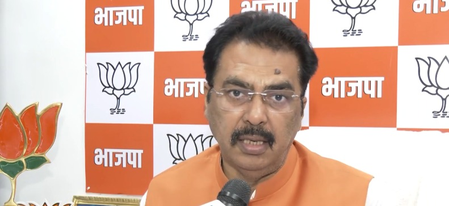
Patna, Oct 12 (IANS) BJP Bihar President Sanjay Saraogi on Monday criticised Leader of the Opposition in Lok Sabha Rahul Gandhi’s proposed march to the Supreme Court to submit a memorandum to Chief Justice of India (CJI) Surya Kant, calling it a "childish attempt" to put political pressure on the judiciary.
Saraogi said the alleged stone-pelting by protesters on security officials in Delhi and Rahul Gandhi’s attempt to approach the Chief Justice to submit a memorandum were unacceptable.
The remarks came amid plans by Rahul Gandhi and other INDIA bloc leaders to march to the Supreme Court to submit a memorandum to the CJI. However, CJI Surya Kant had declined their request.
Speaking to IANS, Saraogi said, “This is a childish attempt to put political pressure on the judiciary. These are immature acts. The unruly mob that pelted stones at the police and Rahul Gandhi going to the Chief Justice’s doorstep to submit a memorandum are unacceptable. The country’s Supreme Court is not a platform for political rallies.”
“If you have the courage, file a legal petition. Congress lawyers have filed petitions several times. Therefore, do not turn this into a political spectacle on the streets. The Chief Justice has already said that your case can be heard in court and that you should present your legal arguments there,” he said.
Saraogi further accused the opposition of creating chaos on the streets and attempting to put pressure on the Election Commission.
“The country is witnessing this cheap spectacle of creating chaos on the streets and putting pressure on the Election Commission. Surrounding Jantar Mantar without permission, breaking barricades and pelting stones at Akashvani Bhawan are unacceptable under any circumstances,” he said.
Referring to Cockroach Janata Party (CJP) spokespersons Saurav Das and Ashutosh Ranka, Saraogi said their visit to the Parliament Street police station, where they allegedly demanded time and created a disturbance while claiming to maintain peace, was also objectionable.
“If they have any evidence, let them present it. This is not a one-day process. It is a process that takes 120–150 days, involving more than 35 lakh government and political party officials,” he said.
--IANS
jk/sd/
‘SC doors open to everyone’: CJI Surya Kant reveals reason for declining INDIA bloc meet
He also reiterated that the doors of the Supreme Court, as the country's highest judicial body, are "open 24 hours a day for all" and that it remains "committed to protecting the fundamental rights of every citizen".
Despite the refusal, the INDIA bloc's proposed march is likely to proceed on Monday. The demonstration is part of a series of protests by Opposition parties, which have demanded the resignation of Chief Election Commissioner Gyanesh Kumar over alleged irregularities in the Special Intensive Revision (SIR) of electoral rolls, among other issues.
Leader of the Opposition in the Lok Sabha, Rahul Gandhi, has maintained that the planned march is "not of a political party, but of all Indians". The Congress leader is seeking to broaden the campaign's reach and build pressure on both the Chief Election Commissioner and the Narendra Modi-led BJP government at the Centre.
Rahul Gandhi has alleged that the government has benefited from the SIR exercise, which has become a major point of contention between the Opposition and the Election Commission.
The INDIA bloc had submitted a charter of demands to President Droupadi Murmu last Friday, outlining four key demands related to electoral reforms and alleged vote manipulation.
--IANS
jk/dpb