
Punjab CM opens 50-bed hospital in Dhuri
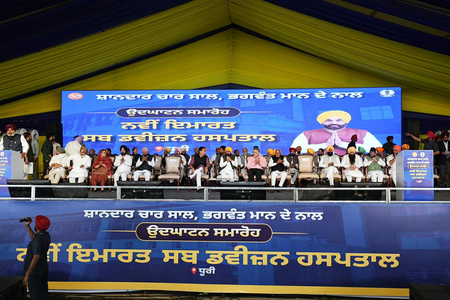
Dhuri, March 18 (IANS) Punjab Chief Minister Bhagwant Mann on Tuesday dedicated a 50-bed Sub-Divisional Hospital, along with a 30-bed Maternal and Child Health Block, at Dhuri, marking a significant milestone in strengthening the public healthcare system and giving a major boost to healthcare infrastructure in Sangrur district.
Addressing the gathering, CM Mann stated, “This project reflects our firm commitment to building a strong, accessible, and patient-centric healthcare system by strengthening infrastructure, expanding medical services, and improving the availability of skilled healthcare professionals.
“The new facilities will cater not only to the residents of Dhuri city but also to people from nearly 70 surrounding villages, benefiting thousands of residents by bringing modern healthcare closer to their homes.”
He added, “Constructed for Rs 21.65 crore, the hospital complex features a state-of-the-art building spread across approximately 73,000 square feet and will prove to be a boon for the region. It will significantly strengthen secondary-level healthcare services by providing comprehensive outpatient and inpatient care, emergency services, diagnostic facilities, and specialised consultations.”
Highlighting the dual-facility structure, the Chief Minister said, “The 50-bedded Sub-Divisional Hospital has been developed to provide comprehensive secondary-level healthcare services, while the 30-bedded Maternal and Child Health Block will significantly strengthen maternal, neonatal and child healthcare services, ensuring better care for mothers and newborns in the region.”
Tracing the hospital’s journey, CM Mann said, “Originally established in 1978 with a capacity of 30 beds and later upgraded to 50 beds, this hospital has now evolved into a modern healthcare facility with a total capacity of 80 beds, reflecting our government’s continuous efforts to strengthen public healthcare infrastructure.”
Detailing the infrastructure, he said, “The new facility includes 13 OPD rooms, a well-equipped emergency block, two registration counters, and seven operating theatres for both major and minor surgeries. It houses modern diagnostic facilities such as ECG, ultrasound, and X-ray rooms, along with three laboratories to ensure timely and accurate medical testing.”
He further added, “The hospital has 12 private rooms, six general wards, a fully functional drug store, an SMO office, 11 nurse stations, and two lifts, all designed to improve patient care and operational efficiency. The upgraded infrastructure will enable doctors to handle emergency cases, accident victims, and critically ill patients with greater efficiency.”
--IANS
vg/dan
Rs 25,403 crore health budget cleared in Gujarat
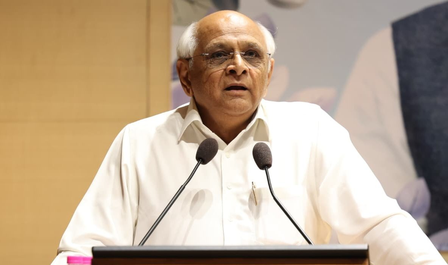
Gandhinagar, March 17 (IANS) A significant expansion of Gujarat’s public health system, including higher financial support for mothers, wider insurance coverage, and plans for large-scale medical infrastructure, was outlined as the state Assembly approved Rs 25,403.23 crore for the Health and Family Welfare Department for 2026-27.
Presenting the budgetary demands in the Assembly on Tuesday, Health Minister Praful Pansheriya said the allocation marked an 8.63 per cent increase over the previous year, with an additional Rs 2,017 crore aimed at extending quality healthcare to remote areas.
“With a firm commitment to delivering quality healthcare services to even the remotest areas of the state, the health budget has been increased significantly this year,” he said.
The minister said the government, under Chief Minister Bhupendra Patel, was focused on ensuring access to healthcare for every citizen.
He highlighted that 9,231 sub-health centres, 1,539 primary health centres, and 353 community health centres are currently operational across the state.
Efforts to strengthen diagnostic services include expanding free laboratory tests under the 'Mukhyamantri Nidan Yojana' from 71 to 134.
In addition, 132 mobile healthcare units are functioning in underserved regions to improve last-mile access.
A provision of Rs 5,733.01 crore has been made for the Family Welfare wing.
As part of maternal health initiatives, Rs 15.62 crore has been allocated to procure 250 new ‘Khilkhilat’ vans.
Under the 'Namo Shree Yojana', pregnant and lactating women will receive financial assistance of Rs 12,000, with 3.95 lakh beneficiaries expected this year.
The state’s 108 ambulance service, which provides free emergency care to around 5,000 patients daily, will be strengthened by replacing 71 ambulances.
Under the PMJAY-MA scheme, the annual cashless treatment limit per family has been raised to Rs 10 lakh, covering approximately 2,300 medical procedures.
The scheme currently covers around 2.73 crore citizens, with a total allocation of Rs 3,471.78 crore.
The minister said Rs 9,877.16 crore has been allocated for medical education. The number of medical colleges in Gujarat has increased from 41 to 43, while MBBS seats have reached 7,525.
Plans have been announced to establish large ‘Medicity’ projects in Ahmedabad (Vasai) and Surat (Kamrej), each featuring a 1,500-bed broad speciality hospital with advanced cardiac, kidney, and cancer care facilities.
"These projects would contribute to the growth of medical tourism and provide high-end treatment infrastructure within the state," he said.
He also announced the expansion of IVF services to government hospitals in Surat, Bhavnagar, and Jamnagar.
New Special Newborn Care Units will be set up to reduce neonatal mortality, while a rehabilitation centre for neuro, orthopaedic, and sports injuries is planned in Ahmedabad.
For critical care services, new radiotherapy centres will be established in Porbandar, Himmatnagar, Valsad, and Godhra.
Satellite centres are also planned to improve access to treatment for cancer and kidney patients closer to their homes.
In Rajkot, the existing P.D.U. Hospital building will be replaced with a new 12-storey, 1,000-bed facility at an estimated cost of Rs 360 crore.
The minister said financial support under the 'Nikshay Poshan Yojana' for tuberculosis patients has been increased from Rs 500 to Rs 1,000 per month as part of efforts to eliminate the disease.
Additional provisions include new district Ayurvedic offices in Vav-Tharad, Botad, and Porbandar, and Rs 10.17 crore for upgrading dialysis infrastructure by replacing old machines in 282 centres and installing 113 new units.
The Assembly subsequently passed the full budgetary demands of Rs 25,403.23 crore for the department for the financial year 2026-27.
--IANS
mys/dan
In Jharkhand’s Palamu, beneficiaries heap praise on Ayushman Bharat scheme for free treatment
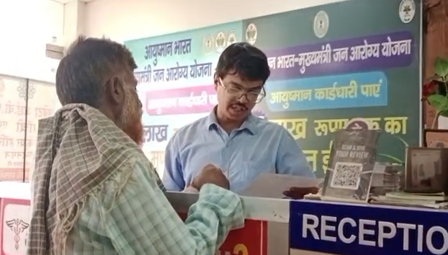
Ranchi, March 17 (IANS) The Ayushman Bharat-Pradhan Mantri Jan Arogya Yojana (AB-PMJAY) has proved to be life-changing experience for many residents of Jharkhand's Palamu district because of the free and cashless medical treatment as provisioned under the Central welfare scheme.
Under the scheme, eligible beneficiaries are entitled to get a mandatory health coverage of Rs 5 lakh per family per year.
Thousands of Palamu residents have got free and cashless medical treatments.
Patients and their relatives said that this scheme has eliminated their biggest worry -- the cost of medical treatment -- thereby ensuring access to quality care in a timely manner while simultaneously resolving financial difficulties.
A couple of beneficiaries also shared their experiences with IANS.
Shakir Alam, a relative of a patient, told that shortly after his wife's delivery, the newborn's health suddenly deteriorated.
Following an examination, doctors diagnosed an infection and immediately initiated treatment to which he said -- had not been possible if there was no Ayushman scheme. It was because of this scheme, affording expensive medical treatment became possible for him.
He says that he has received financial relief amounting to 70 to 80 per cent of the medical costs and has not had to incur any expenses out of his own pocket so far.
He praised the conduct of the hospital staff, emphasising that this health scheme is immensely beneficial for the poor.
Dhananjay Vishwakarma, another Ayushman Bharat beneficiary, said that his son is currently undergoing treatment under this very scheme.
"Previously, the worry over funds for medical treatment was the most significant challenge, however, this (Narendra Modi-led BJP) government's initiative has now brought immense relief to poor families," he added.
Ravi Kumar, while speaking to IANS, said that the Ayushman Bharat scheme has brought about a profound transformation in the lives of impoverished patients.
"While many people previously suffered due to a lack of access to medical care, they are now receiving timely and superior healthcare facilities," he added.
Manish Tiwari, a hospital administrator and President of the Private Hospitals Association, said that about 10 patients are currently admitted to his hospital under the Ayushman scheme.
Elaborating on the simple procedure of availing the health scheme's benefits, Tiwari added, "The procedure for availing the scheme is quite simple; a patient merely needs to possess an Aadhaar card, a Ration card, or an Ayushman card. Subsequently, as soon as the patient's name is verified on the Ayushman portal, they are admitted, and their treatment is provided completely free of cost."
He also said that this health scheme covers general surgeries, Neonatal Intensive Care Unit services for newborns, Pediatric Intensive Care Unit services for children, emergency services, and the treatment of various critical illnesses.
While the poor previously had to ask for loans or sell their assets to access medical treatment, they are now receiving dignified and high-quality care, even in private hospitals.
--IANS
mr/khz
Aurobindo Pharma unit gets USFDA ‘OAI’ status after inspection

New Delhi, March 17 (IANS) Aurobindo Pharma on Tuesday said that the US Food and Drug Administration (USFDA) has classified one of its subsidiary units as “Official Action Indicated” (OAI) following an inspection conducted last year.
In a regulatory filing, the company said that the USFDA inspected Unit-II of Eugia Pharma Specialities Limited, its wholly-owned subsidiary, located in Bhiwadi, Rajasthan, between November 3 and 14, 2025.
At the end of the inspection, the regulator had issued a Form 483 with nine observations.
“At the end of the inspection, a ‘Form 483’ was issued with nine observations,” Aurobindo Pharma said in its exchange filing.
“Subsequently, US FDA has now determined the inspection classification status of this unit as ‘Official Action Indicated’ (OAI),” it added.
The OAI classification means that the regulator believes certain issues found during the inspection may require regulatory action.
However, the company clarified that it does not expect any immediate impact on its business operations due to this development.
“At this point in time, the Company doesn’t foresee any impact on the business. The Company is committed to maintaining the highest quality manufacturing standards at all of its facilities across the globe,” Aurobindo Pharma stated.
Aurobindo Pharma said it remains committed to maintaining high standards of manufacturing quality across all its facilities and will inform exchanges about any further updates.
Despite the regulatory development, the company’s financial performance has remained strong.
For the December quarter, Aurobindo Pharma reported a 7.5 per cent year-on-year increase in net profit to Rs 909.8 crore, compared to Rs 846 crore in the same period last year.
The profit figure includes a one-time cost of Rs 65 crore due to changes in the labour code.
Revenue during the quarter rose 8.4 per cent year-on-year to Rs 8,646 crore from Rs 7,979 crore a year ago.
The company’s EBITDA also increased by 12.4 per cent to Rs 1,773.6 crore, while EBITDA margin improved to 20.5 per cent from 19.8 per cent in the corresponding quarter last year.
Shares of Aurobindo Pharma closed 0.80 per cent higher at Rs 1,289.80 on Tuesday, ahead of the announcement.
--IANS
pk
Delhi HC issues contempt notice to CDSCO over delay in acting on diabetes drugs used for weight management
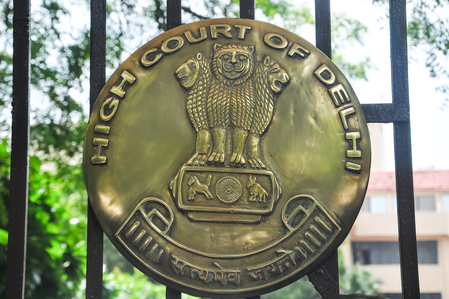
New Delhi, March 17 (IANS) The Delhi High Court, on Tuesday, issued notice on a contempt petition alleging non-compliance with its earlier order directing Central Drugs Standard Control Organisation (CDSCO) to examine safety and regulatory concerns regarding the use of certain diabetes drugs for weight loss.
A single-judge bench of Justice Sachin Datta sought responses from the Drugs Controller General of India (DCGI) and the Union Health Secretary Punya Salila Srivastava, and granted them four weeks to file their replies.
The matter has been listed for further hearing on May 21.
The contempt plea, filed through advocate Rohit Kumar, alleged that the authorities failed to comply with the Delhi High Court's July 2025 direction requiring them to decide on a representation raising regulatory concerns about the use of GLP-1 receptor agonist drugs for weight management and aesthetic treatment.
According to the petition, a bench of Chief Justice Devendra Upadhyaya and Justice Tushar Rao Gedela had earlier permitted the petitioner to submit a supplementary representation along with relevant material and directed the competent authority to consider the same in accordance with law, consult experts and stakeholders, including manufacturers, and take a decision within three months of its submission.
Appearing for the petitioner, the counsel submitted that despite clear judicial directions, "no substantive steps" were taken for several months.
It was said that although a supplementary representation had been filed on July 13, 2025, the authorities failed to act on it within the prescribed three-month period.
The representation, the contempt plea said, highlighted issues, including waiver of India-specific clinical trials, under the New Drugs and Clinical Trials Rules, 2019, alleged gaps in pharmacovigilance safeguards, regulatory inconsistencies, and aggressive marketing practices.
It also added that even after reminders, including an email sent on January 29, 2026, no response was received from the authorities.
Saying that nearly eight months had passed since submission of the representation, the petitioner contended that the continued inaction amounts to wilful disobedience of the Delhi High Court's binding directions.
The petition said that the order passed on July 2, 2025, imposed a "clear and time-bound obligation" on CDSCO to take a decision within three months, and that "mere internal processing or informal emails saying that the matter is under consideration do not constitute compliance with a binding judicial direction".
--IANS
pds/khz
Gujarat allocates Rs 59.14 crore for women-focused ‘pink toilets’
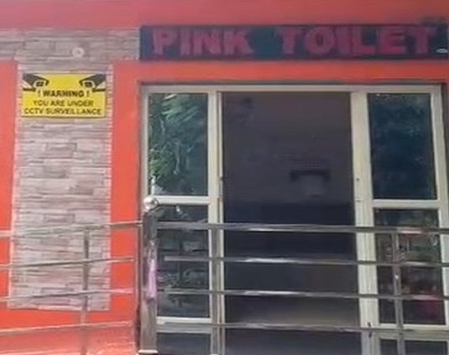
Gandhinagar, March 17 (IANS) Gujarat has allocated Rs 59.14 crore in the 2026-27 state budget for the construction of “pink toilets” for women across urban areas, as part of an expanded push under the 'Nirmal Gujarat 2.0' programme to strengthen sanitation infrastructure and public hygiene.
The initiative, to be implemented in municipal corporations, municipalities and urban pilgrimage sites, is among four new components introduced under the cleanliness campaign for the upcoming financial year.
The facilities are intended to provide safe, clean and modern sanitation spaces for women in high-footfall urban locations.
The Nirmal Gujarat scheme, launched in 2007 by then chief minister and current Prime Minister Narendra Modi, has expanded in scope over the years beyond basic cleanliness drives.
Under Chief Minister Bhupendra Patel, Nirmal Gujarat 2.0 was introduced in 2024 with the objective of enhancing public awareness on cleanliness and positioning the state among the leading performers in sanitation.
According to officials, each pink toilet unit will include four standard toilet seats, one seat designed for differently-abled women, a changing room, a baby feeding room and a designated area for a female caretaker.
The facilities are designed to address hygiene, accessibility and safety requirements for women in urban settings.
The provision for pink toilets forms part of a wider allocation of Rs 329.54 crore for the four newly added components under Nirmal Gujarat 2.0.
These include strengthening door-to-door solid waste collection in urban local bodies, construction of women-focused sanitation facilities, improved operation and maintenance of public toilets, and river cleaning initiatives.
Officials stated that the measures are aimed at ensuring 100 per cent door-to-door waste collection in urban areas and facilitating effective implementation of 'Swachh Bharat Mission-Urban 2.0' targets.
They added that the operation, maintenance and management of all public toilets in municipal areas will also be strengthened under the programme.
The announcement comes shortly after International Women’s Day was observed globally, with the state government indicating that the decision reflects its continued focus on women’s hygiene, safety and access to essential public amenities.
--IANS
mys/dan
Different-abled in Andhra Pradesh to get free bus travel facility
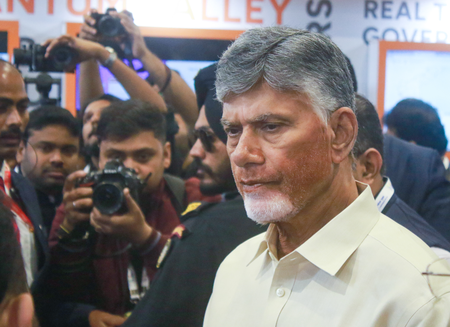
Amaravati, March 17 (IANS) The Andhra Pradesh government is set to launch a scheme, offering free bus travel to differently-abled citizens across the state.
Chief Minister N. Chandrababu Naidu will launch the ‘Divyang Shakti’ scheme on Wednesday as a special Ugadi gift for 12.7 lakh differently-abled people.
The government said that the scheme underscores its renewed focus on social equity, mobility, and last-mile dignity, while also reinforcing its governance narrative of “welfare with scale.”
The Chief Minister will formally inaugurate the programme in Amaravati in the presence of Deputy Chief Minister Pawan Kalyan, Minister Nara Lokesh, and BJP state president PVN Madhav - signalling a coordinated NDA political messaging around inclusive governance, said an official release.
Chief Minister Naidu and senior leaders will travel alongside beneficiaries on RTC buses post-launch. The Chief Minister will also host a community lunch for people with disabilities, reinforcing the administration’s emphasis on empathy-led governance.
The Divyang Shakti Scheme is expected to benefit over 12.76 lakh individuals, including 11.16 lakh persons with disabilities and their attendants, making it one of the largest state-led mobility support programmes for the differently-abled in India.
Key features of the scheme include free bus travel for persons with disabilities across Andhra Pradesh State Road Transport Corporation (APSRTC) services, 50 per cent fare concession for attendants accompanying beneficiaries, and eligibility for individuals with over 40 per cent disability.
The scheme’s coverage expanded across 21 categories of disabilities. The government will annually provide Rs 207 crore to APSRTC for the implementation of ‘Divyang Shakti’.
In a coordinated statewide rollout, MLAs will simultaneously launch the scheme in their constituencies, travel with beneficiaries, and participate in community outreach events.
The launch of ‘Divyang Shakti’ builds on the success of the ‘Stree Shakti’ scheme, under which women in Andhra Pradesh have undertaken over 52 crore free bus journeys, backed by a government outlay exceeding Rs 1,826 crore.
By extending similar mobility rights to persons with disabilities, the Naidu government is broadening its welfare template beyond gender to disability inclusion, a move that is likely to resonate strongly in both social and political discourse, the release added.
--IANS
ms/dan
SC urges Centre to recognise paternity leave
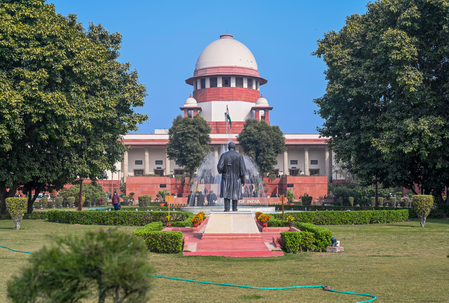
New Delhi, March 17 (IANS) The Supreme Court on Tuesday urged the Union government to enact a law recognising paternity leave as a social security benefit, while striking down a provision that limited maternity benefits for adoptive mothers based on the child’s age.
A bench of Justices J.B. Pardiwala and R. Mahadevan observed that the question of granting paternity leave, including its duration and conditions, falls within the policy domain of the Centre, but stressed the need for a legal framework acknowledging fathers as equal caregivers.
"We urge the Union to come out with a provision recognising paternity leave as a social security benefit. The duration of such leave must be determined in a manner that is responsive to the needs of both the parent and the child," the Justice Pardiwala-led Bench said.
The observations came while the top court delivered its verdict on a public interest litigation (PIL) challenging the constitutional validity of provisions that limited maternity leave for adoptive mothers.
In its judgment, the Supreme Court struck down Section 60(4) of the Social Security Code, 2020, which provided that adoptive mothers would be entitled to maternity leave only if the adopted child was below three months of age.
The bench held that the provision created an unreasonable classification and violated the guarantee of equality under Article 14 of the Constitution.
"The needs of an adoptive child are no different from those of a biological child. Although biology has traditionally been the predominant lens through which kinship is understood, adoption is an equally valid pathway. Biological factors by themselves do not determine family. An adopted child is not different from a natural child," the apex court said.
The PIL had originally challenged Section 5(4) of the Maternity Benefit Act, 1961, introduced through the 2017 amendment, which granted 12 weeks of maternity leave to adoptive mothers only when the adopted child was below three months old.
During the pendency of the PIL, a similar provision was incorporated under the Social Security Code, 2020.
Holding the restriction to be unconstitutional, the bench held that the benefits of maternity leave must extend uniformly to all adoptive mothers, irrespective of the age of the child at the time of adoption.
The apex court further highlighted that the needs of an adoptive child are no different from those of a biological child, particularly in the early stages of integration into a new family environment. It also highlighted the broader importance of shared parenting and the need to recognise fathers’ role in early childcare, observing that such recognition could contribute to better developmental outcomes for children while promoting greater gender equality in caregiving responsibilities.
At present, Indian law provides for paid maternity leave of up to 26 weeks under the Maternity Benefit Act for eligible women, but there is no comprehensive statutory framework governing paternity leave.
--IANS
pds/vd
FSSAI analyses over 5.18 lakh food samples in 3 years; 88,192 penalties imposed
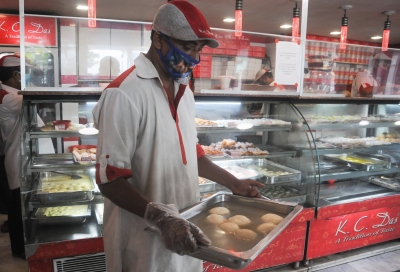
New Delhi, March 17 (IANS) Surveillance drives, inspections and random sampling of food products, done by the Food Safety and Standards Authority of India (FSSAI), include 5,18,559 sample analysis which led to 88,192 penalties and 3,614 convictions, the government said on Tuesday.
The measures taken by FSSAI led to 1,161 licence cancellations over 2022–23 to 2024–25 after random sampling of various food products including milk, ghee, spices, honey, paneer and other foods, Minister of State for Health and Family Welfare, Prataprao Jadhav, said in a written reply in the Rajya Sabha.
The surveillance drives are conducted throughout the year by the officials of Food Safety Departments of the respective States/UTs and Regional Offices of FSSAI to check compliance with the quality and safety parameters and other requirements as laid down under Food Safety and Standards Act, 2006.
A total of 56,259 risk‑based inspections were carried out in the period, where frequency of inspection is decided based on risk associated with Food businesses and issued guidelines, the minister said. Annual inspections are to be conducted for all food categories identified as high risk.
Further, FSSAI has notified 252 food testing laboratories and 24 Referral Food Laboratories for the analysis of appellate samples.
It also funded Mobile Food Testing Laboratories — “Food Safety on Wheels” (FSWs) -- and deployed 305 of them across 35 states or UTs, to combat adulteration as FSWs are equipped with basic infrastructure for on spot testing of adulteration in various food commodities.
FSSAI extends financial and technical assistance to states/UTs which includes strengthening enforcement and compliance such as licensing and registration, consumer grievance redressal, capacity building for officers.
Strengthening of the food testing ecosystem such as high end or basic equipment for labs and promotion of FSSAI initiatives such as ‘Eat Right Campus’, ‘Eat Right School’ are some other activities.
FSSAI is mandated to lay down science‑based standards for articles of food and to regulate their manufacture, storage, distribution, sale and import to ensure availability of safe and wholesome food for human consumption, the minister said.
However, he added that the state food safety authorities are primarily responsible for enforcement at the field level.
—IANS
aar/na
India’s immunisation journey one of verified, milestone-by-milestone achievement
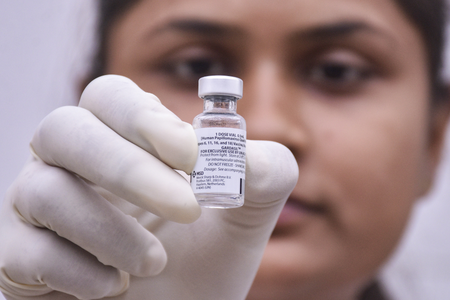
New Delhi, March 17 (IANS) From eradicating smallpox in 1977 to eliminating polio and neonatal tetanus, administering 200 crore COVID-19 doses, and now pursuing Measles-Rubella elimination — India's immunisation journey is one of verified, milestone-by-milestone achievement, an official fact-sheet said on Tuesday.
India has eradicated smallpox, polio and maternal and neonatal tetanus through vaccination, and continues to expand its immunisation programme — most recently launched HPV and indigenous Td vaccines in 2026.
India’s robust Universal Immunisation Programme (UIP), a wide-spread network of publicly funded healthcare centres, workers and cold-chain infrastructure, and a strong digital network, have delivered results.
“The UIP is one of the world's largest immunisation programmes, reaching 2.9 crore pregnant women and 2.54 crore newborns every year, free of cost. Full immunisation coverage has risen from 62 per cent in 2015 to 98.4 per cent in January 2026,” the fact-sheet said.
Percentage of zero-dose children to the total population has declined from 0.11 per cent in 2023 to 0.06 per cent in 2024.
In the past decade, various new vaccines were added to the programme – Inactivated Polio Vaccine (IPV) (2015), Rotavirus Vaccine (RVV) (2016), Measles-Rubella (MR) vaccine (2017) and Pneumococcal Conjugate Vaccine (PCV) (2017).
A nationwide Human Papillomavirus (HPV) vaccination campaign was launched on February 28, 2026. The campaign was launched from Ajmer, Rajasthan by Prime Minister Narendra Modi.
It targets 14-year-old girls to protect them from cervical cancer. Around 1.15 crore girls across India are expected to receive the vaccine free of cost at government health facilities.
India's vaccine cold chain is one of the largest in the world — spanning nearly 30,000 cold chain points, from Government Medical Supply Depots at the national level down to Primary Health Centres at the sub-district level.
According to the statement, these storage points at hospitals, community health centres, primary health centres and other health facilities are equipped with over 1.06 lakh ice-lined refrigerators and deep freezers, and 432 walk-in cooler and walk-in freezers for bulk vaccine storage.
Conducting over 1.3 crore immunisation sessions annually across this network, maintaining temperature integrity at every point is critical to ensuring vaccines reach the last beneficiary in potent condition, the statement added.
--IANS
na/