
India restructures public health delivery by integrating AI into unified strategy
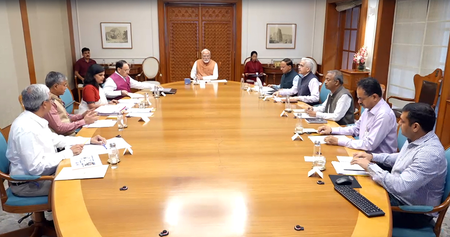
New Delhi, Feb 13 (IANS) India has fundamentally restructured its public health delivery by integrating AI into a unified strategy, that bridges specialist shortages and scales proactive care, an official statement said on Friday.
By deploying AI-enabled tools within the National TB Elimination Programme, the National Diabetic Retinopathy Screening Programme, and the Media Disease Surveillance System, the government has empowered non-specialists to perform high-level screenings, resulting in a 27 per cent decline in adverse TB outcomes and over 4,500 outbreak alerts.
This transformation is further solidified through the e-Sanjeevani, which has supported 282 million consultations with AI-assisted differential diagnosis, and the UdyogYantra AI System for malnutrition monitoring, the statement said.
This has created a comprehensive ecosystem that spans from infectious disease management and cancer care to the modernisation of traditional Ayurvedic medicine and the National One Health Programme.
India will host the Global South's first international AI summit in New Delhi from February 16-20, bringing together global leaders, policymakers, technology firms, innovators, and experts.
The summit will cover AI-centred policy, research, industry, and public engagement.
According to the government, AI is helping address gaps in healthcare delivery, improve the quality of medical devices, services and drugs and make it more accessible and affordable. AI-enabled healthcare ecosystem is helping in early detection and screening, enhanced clinical decision support and providing remote care.
Notably, in March 2024, the Cabinet, chaired by Prime Minister Narendra Modi, approved the comprehensive national-level IndiaAI mission with a budget outlay of Rs 10,371.92 crore for promoting India’s socio-economic development using AI. The IndiaAI Mission initiatives are supporting innovation in AI-enabled healthcare applications.
“One of the pillars of the mission is the IndiaAI Application Development Initiative. This scheme aims to develop, scale, and promote the adoption of impactful AI solutions designed to tackle significant national challenges. Advanced and efficient AI-enabled healthcare delivery is one of the many outcomes of this initiative,” said the statement.
--IANS
na/
Cereal, sugar, fats dominate Pakistan’s food system causing malnutrition: Report

New Delhi, Feb 12 (IANS) Pakistan's food system is excessively reliant on cereals, sugar as well as fats and lacks healthy, nutritious and diverse foods, a new report has said, citing United Nations findings.
The Food and Agriculture Organisation (FAO) of the United Nations indicated deep structural imbalances in food availability that undermine nutrition, public health, and long-term development outcomes, according to a report by Dawn.
"Significant gaps persist in the availability of fruits and vegetables, pulses and legumes which weaken efforts to address malnutrition, micronutrient deficiencies, and diet-related diseases," the report said.
Results tabled at National Results Dissemination Workshop on the Integrated Roadmap for Sustainable Food Systems Transformation in Pakistan urged strategic reallocation of subsidies by the government to boost production, accessibility of nutrient-rich foods.
While Pakistan’s overall food energy availability is adequate, the quality of food falls short in terms of "healthy diets in line with the National Food-Based Dietary Guidelines of 2018."
Pakistan's food supply is characterised by a substantial oversupply of cereals, grains, sugar, and edible oils, far exceeding levels recommended for healthy diets.
This imbalance reinforces cereal-heavy consumption patterns, limits dietary diversity, and contributes to the rising burden of non-communicable diseases (NCDs), the analysis showed.
Grains and cereals dominate food consumption, across geographies, with rural households being more dependent on them. Milk and dairy products were the second most consumed food category nationally, the report said.
Consumption of vegetables remains moderate, and fruit intake is consistently low, especially in rural areas signalling widespread micronutrient gaps. Protein sources beyond dairy remain limited, including consumption of meat, poultry, and eggs. Consumption of pulses remains insufficient to make up for protein from lack of animal-based foods, it added.
Rural households consume more free sugar and fats than urban households, reflecting reliance on inexpensive, energy-dense foods.
Further, sales of processed foods have nearly doubled in recent years, and poor dietary patterns are contributing to Pakistan’s double burden of malnutrition, where undernutrition coexists with rising obesity and diet-related non-communicable diseases (NCDs).
The report cited several independent estimates such as 34.5 million people in Pakistan, including one in three adults being diabetic. NCDs now account for 58 per cent of all deaths nationwide, the report said, adding cardiovascular disease alone claims nearly 4 lakh lives annually.
--IANS
aar/pk
India’s medical devices market likely to hit $50.1 bn by 2030

New Delhi, Feb 12 (IANS) India’s medical devices industry is projected to reach $50.1 billion by 2030 from $15.2 billion in 2025, at a compound annual growth rate of 26.9 per cent, a report has said.
The report from Rubix Industry Insights attributed the growth to government initiatives such as the National Medical Devices Policy, Production‑Linked Incentive Scheme, Scheme for Promotion of Medical Devices Parks, and MedTech Mitra.
The report noted that medical devices exports reached $4.1 billion in FY25 while imports touched $8.6 billion, leaving 70-80 percent of domestic demand being met through imports, particularly for technologically advanced devices.
Consumables accounted for around 47 per cent of exports between April‑September FY25, while electro‑medical equipment made up nearly 60 per cent of imports, the report noted.
India currently ranks as the fourth‑largest medical devices market in Asia and among the top 20 globally.
The government aims to raise India's share in global market from 1.6 percent to around 12 percent in the coming years. The US and Germany are the key export destinations, while the US and China are major import sources, the report further said.
Union Budget-FY27's had stressed the support for bio-pharma research in the country. The report also highlighted rising income levels, widening health insurance penetration, expansion of healthcare infrastructure and medical tourism growth, as drivers of affordable mass-use devices and advanced solutions for specialised care.
The domestic manufacturing base comprises about 800 manufacturers, while private equity and venture capital deal sizes have risen from $56 million in 2022 to $137 million in 2024. UP, Maharashtra, Haryana and Karnataka are playing a critical role by offering shared infrastructure, skilled labour, and supplier networks, the report noted.
A recent report said that the India-EU Free Trade Agreement (FTA) is a positive step for the Indian medical device sector and access to life-saving drugs will be a major advantage for both sides.
Experts noted that zero tariffs on medical devices are good, but non-tariff barriers need to be addressed.
--IANS
aar/pk
India now has market access to 70 pc of global GDP at mostly zero duty: Piyush Goyal
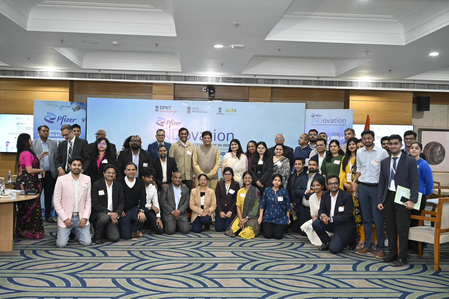
New Delhi, Feb 12 (IANS) India now has market access to 70 per cent of global GDP, in most cases at zero duty for domestic products, Union Commerce and Industry Minister Piyush Goyal said on Thursday.
Speaking at an event here, Goyal said that nine Free Trade Agreements (FTAs) have been concluded in the last three years, covering 38 countries with strong per capita incomes, and most developed markets now have trade arrangements with India.
“Agreements include the 27-nation EU bloc, four-nation EFTA bloc, the UK, Australia and New Zealand, the United States of America, while Japan and Korea were concluded earlier, along with ASEAN nations,” the minister said.
He also urged medtech startups to look beyond the domestic market, leverage India’s expanding trade agreements covering nearly 70 per cent of global GDP, and scale affordable innovations to serve both India and the world.
The minister emphasised that affordable, scalable medical technology can help reach the remotest parts of India and also access global markets across Africa, Latin America, Central Asia, Southeast Asia and developed economies.
According to the minister, startups should not limit themselves to the domestic market and should participate in global fairs and exhibitions.
He assured that Commerce Ministry would support delegations and that India’s missions in over 190 countries are available to assist innovators. He also encouraged collaboration with global companies, present in over 100 countries, to access developed markets.
Affordable and scalable medtech products can reduce costs and improve quality through economies of scale. Referring to startups present at the programme, he noted that many had secured CDSCO approvals and some were on the verge of receiving FDA approvals, enabling them to expand internationally.
Innovation must address India’s day-to-day needs and ground-level imperatives.
The minister underlined the importance of showcasing success stories and urged ‘Startup India’, the private sector and the media to encourage entrepreneurs, including those who may not succeed initially.
Three more National Institutes of Pharmaceutical Education and Research (NIPERs) are being established alongside the upgradation of seven existing NIPERs. A new National Institute of Design (NID) will be set up in East India, with states competing to provide the best proposal.
--IANS
na/
Shorter 6‑month all oral TB regimens found cost effective in India
New Delhi, Feb 12 (IANS) Shorter, six‑month and all‑oral treatment regimens for multidrug‑resistant and rifampicin‑resistant tuberculosis (MDR/RR‑TB) are cost‑effective and deliver better health outcomes than longer regimens, an ICMR study said on Thursday.
With shorter regimen, "for each additional Quality Adjusted Life Year (QALY) gained, the health system spends Rs 379 less per patient compared to the standard regimen, indicating better health outcomes at lower costs,” said the study, according to a Ministry of Health and Family Welfare statement.
The study compared cost-effectiveness of bedaquiline-based regimens—BPaL (bedaquiline, pretomanid and linezolid) with the existing bedaquiline-containing shorter (9–11 months) and longer (18–20 months) treatment regimens used under the National TB Elimination Programme (NTEP).
It also compared BPaLM (with moxifloxacin) with existing regimen and found the former highly cost‑effective, costing only Rs 37 more per patient per additional QALY gained compared with the standard regimen.
Both regimens were associated with lower or comparable overall healthcare costs, including medicines, hospital visits, and follow-up care.
Multidrug‑resistant and rifampicin‑resistant tuberculosis (MDR/RR‑TB) poses significant treatment challenges due to prolonged treatment duration, adverse effects, and higher costs.
Shorter all-oral regimens can improve treatment adherence, reduce patient morbidity, and enable faster return to normal life, while also lowering the burden on the health system, said the findings.
“The findings provide important economic evidence to support the use of shorter, all-oral regimens for MDR or RR-TB management in India. By reducing treatment duration from 9–18 months or longer to six months, these regimens align with national priorities to optimise resource utilisation and accelerate progress towards TB elimination,” the statement said.
Current options for treating tuberculosis (TB) that are resistant to rifampicin (RR-TB) are limited and available regimens are often lengthy and poorly tolerated.
Delhi’s Intermediate Reference Laboratory, Tuberculosis Centre, recently received its first certification from the Central Tuberculosis Division (CTD) to conduct Drug Susceptibility Testing (DST) for bedaquiline (BDQ) and Pretomanid (Pa), used globally for the treatment of drug-resistant tuberculosis.
—IANS
aar/na
Medicinal plant sector to drive Viksit Bharat vision: Ayush Minister
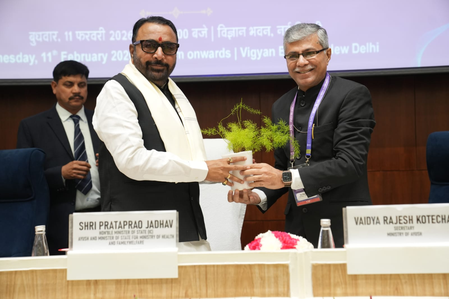
New Delhi, Feb 11 (IANS) Medicinal plants are not merely the foundation of India’s traditional knowledge systems but also a vital component of its biological and economic heritage, said Ayush Minister Prataprao Jadhav on Wednesday, adding that the growing global recognition of Ayurveda and other Ayush systems highlights India’s potential to become a global supplier of quality medicinal plants and plant-based wellness products.
Inaugurating a Chintan Shivir on Medicinal Plants here, the minister observed that the theme perfectly aligns with the government’s focus on Viksit Bharat at 2047 and the Atmanirbhar Bharat vision by empowering rural communities through sustainable livelihoods.
He emphasised that the medicinal plants sector provides unique opportunities for farmers, entrepreneurs, and researchers to collaborate for a healthy, self-reliant India.
The National Medicinal Plants Board (NMPB), Ministry of Ayush, organised a one-day Chintan Shivir here.
The minister appreciated the dedicated efforts of NMPB in strengthening backward and forward linkages, expanding market access, and ensuring quality and authenticity in the supply chain.
The minister urged all stakeholders to continue their collective work toward developing a globally competitive, environmentally sustainable, and economically vibrant medicinal plants sector that serves both the nation’s farmers and the health needs of society.
Vaidya Rajesh Kotecha, Secretary, Ministry of Ayush, underlined that NMPB’s silver jubilee is not just a milestone of achievement but also an opportunity for introspection and innovation.
He said that the next phase of the journey must focus on scientific validation, traceability, and climate resilience to ensure that India’s diverse medicinal flora is conserved and optimally utilised in alignment with international standards.
The Ministry is working toward strengthening regional facilitation centres, research partnerships, and digital linkages for better coordination among stakeholders.
Emphasising collaboration between academia, industry, and farmers, Kotecha added that outcomes of this Chintan Shivir will guide a five-year roadmap to make the sector more productive, inclusive, and globally competitive.
Dr Mahesh Kumar Dadhich, CEO, NMPB, stated that the Board remains committed to strengthening the entire value chain — from cultivation to market — through innovation, stakeholder participation, and sustainable practices.
--IANS
na/
AstraZeneca Pharma India receives CDSCO approval for Durvalumab indication in cancer treatment

New Delhi, Feb 10 (IANS) AstraZeneca Pharma India Limited on Tuesday said it has received permission from the Central Drugs Standard Control Organisation (CDSCO) to sell and distribute Durvalumab solution for infusion used in cancer treatment for an additional indication.
In its latest stock exchange filing, the drug company said that through this approval, “Durvalumab in combination with carboplatin and paclitaxel is indicated for the first-line treatment of adults with primary advanced or recurrent endometrial cancer who are candidates for systemic therapy, followed by maintenance treatment with Durvalumab as monotherapy in endometrial cancer that is mismatch repair deficient (dMMR)”.
According to the filing, “This is to inform that AstraZeneca Pharma India Limited has received permission from the Central Drugs Standard Control Organisation, Directorate General of Health Services, Government of India to import for sale and distribution of Durvalumab Solution for Infusion 120 mg/2.4 mL and 500 mg/10 mL (Brand Name: Imfinzi) for an additional indication,” said AstraZeneca Pharma India Ltd.
The receipt of this permission paves way for the marketing of Durvalumab Solution for “Infusion 120 mg/2.4 mL and 500 mg/10 mL (Imfinzi) in India for the specified additional indication, subject to the receipt of related statutory approvals, if any,” the filing further said.
Earlier, AstraZeneca Pharma India had announced the CDSCO approval for Durvalumab in combination with FLOT chemotherapy (fluorouracil, leucovorin, oxaliplatin and docetaxel) as the first and only perioperative immunotherapy approach for adult patients with resectable gastric or gastroesophageal junction adenocarcinoma (GC/GEJC), showing survival benefit.
Based on the results from the ‘phase III MATTERHORN’ study, the approval allows the addition of Durvalumab to FLOT chemotherapy for patients in the neoadjuvant and adjuvant settings, followed by single agent durvalumab, reflecting a comprehensive perioperative approach aimed at reducing recurrence risk and improving long-term outcomes.
Gastric cancer remains a major health challenge in India, ranking as the seventh most common cancer with over 64,000 new cases diagnosed annually, and the sixth leading cause of cancer-related deaths.
Around half of gastric and gastroesophageal junction cancers are diagnosed at a resectable stage, where surgery combined with peri-operative chemotherapy is the standard of care. Despite treatment with FLOT, five-year survival remains below 50%, and recurrence rates are high within two years of surgery, underscoring the need for more effective peri-operative options.
“We are transforming cancer care in India. Patients with resectable gastric and gastroesophageal junction cancers face high recurrence risk. Backed by the MATTERHORN study, this approval brings immunotherapy earlier in the treatment pathway, significantly improving survival,” said Praveen Rao Akkinepally, Country President and Managing Director, AstraZeneca Pharma India Limited.
--IANS
na/
India, Sri Lanka to boost health technology assessment
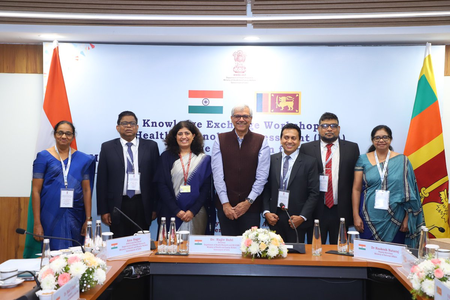
New Delhi, Feb 10 (IANS) The five-day India-Sri Lanka workshop on Health Technology Assessment (HTA) is a significant strategic milestone in bilateral healthcare diplomacy and HTA knowledge exchange, underscoring India's commitment to supporting regional health initiatives, senior government officials have said.
The knowledge exchange workshop on HTA formally commenced at the Sushma Swaraj Bhawan here, hosted by the Department of Health Research (DHR), Ministry of Health and Family Welfare, in collaboration with the Ministry of External Affairs.
It aims to develop a strategic pathway for advancing and institutionalising HTA in Sri Lanka, according to Ministry of Health and Family Welfare.
Dr. Rajiv Bahl, Secretary DHR and DG of Indian Council of Medical Research (ICMR), welcomed the delegates and addressed the inaugural session.
According to a ministry statement, Anu Nagar, Additional Secretary, DHR, highlighted the impactful contributions of HTAIn (Health Technology Assessment in India) to India's healthcare landscape, and expressed confidence that this knowledge exchange will benefit the institutionalisation of HTA in Sri Lanka.
The official statement further said that HTAIn plays a pivotal role in evaluating healthcare technologies and ensuring cost-effective, evidence-based health interventions across India.
“The five-day workshop will cover a wide range of topics, including HTA institutional frameworks, governance, methodologies, pricing, and procurement decisions,”it added.
The objectives include identifying potential collaborative initiatives to strengthen HTA capacities and systems in both nations.
To facilitate the process of transparent and evidence informed decision making in the field of health, the government has created an institutional arrangement called the Health Technology Assessment in India (HTAIn) under the Department of Health Research (DHR).
HTAIn is entrusted with the responsibility to collate and where needed generate evidence related to the clinical effectiveness, cost-effectiveness, and safety of medicines, devices and health programs using the Health Technology Assessment (HTA) approach.
—IANS
na/
Sharad Pawar undergoes preliminary check-up at Ruby Hall Clinic (Lead)

Pune, Feb 9 (IANS) Nationalist Congress Party (Sharad Pawar faction) president Sharad Pawar was admitted to Ruby Hall Clinic around 4 pm on Monday.
Accompanying him were his wife, Pratibha Pawar, daughter Supriya Sule, son-in-law Sadanand Sule, and grandson Rohit Pawar. Dr Abhijeet Lodha is treating Pawar, and a preliminary medical examination has been conducted.
Sule in her post in X said, “Baba has developed chest congestion and will need a 5-day course of antibiotics. Fortunately, all other vital parameters are normal. Thank you all for your good wishes and constant support. A heartfelt thank you to all the doctors from the bottom of my heart.”
The initial assessment shows that Pawar’s heart rate and oxygen levels are stable. However, his respiratory rate is slightly elevated. There is a possibility that he may be kept under hospital observation for a day. Meanwhile, party workers have been requested not to crowd the hospital. Supriya Sule also spoke to the doctors, requesting that treatment be carried out strictly in accordance with the hospital’s protocol, the NCP SP release said.
Ruby Hall Clinic’s Dr Abhijeet Lodha addressed the media, stating, “Sharad Pawar’s condition is stable. His preliminary examination has been completed. Since his oxygen levels and heart rate are normal, there is no cause for concern at present. Due to continuous travel and engagements over the past few days, he has experienced fatigue. As there is some chest congestion, a respiratory examination has also been conducted. He has been admitted to a private room and does not require oxygen support or a ventilator. Reports of further tests will be available in the next two to three hours, after which the Pawar family will decide on the next steps.”
NCP SP legislator Rohit Pawar said, “Over the past ten to twelve days, Sharad Pawar has had a very hectic schedule. Due to physical exhaustion and mild breathing discomfort, he was admitted to Ruby Hall Clinic in his private vehicle. Doctors have conducted all necessary tests, and the reports have come back normal. I personally spoke to the doctors. Supriya Sule also stated that treatment should be carried out strictly in accordance with the hospital’s protocol. Once the remaining test reports are received, a decision will be taken on whether he should stay in Pune or be shifted to Mumbai.”
As Ruby Hall Clinic treats many patients every day, an appeal has been made to party workers not to gather in the hospital area and create inconvenience for other patients, Rohit Pawar stated while speaking to the media.
--IANS
sj/dan
Special camp under PMSMA ensures comprehensive health check-ups for pregnant women in Burhanpur
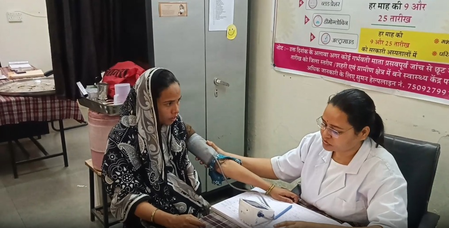
Burhanpur (Madhya Pradesh), Feb 9 (IANS) Under the Pradhan Mantri Surakshit Matritva Abhiyan (PMSMA), a special health camp was organised at the OPD of the District Hospital in Burhanpur on Monday, during which comprehensive physical and mental health check-ups of over 40 pregnant women were conducted.
During the camp, more than six women were identified as high-risk pregnancies and were provided timely medical treatment, necessary diagnostic tests and expert consultations to prevent complications and ensure safe deliveries.
As part of the initiative, pregnant women and their family members were educated about the importance of four mandatory antenatal check-ups, the need for mental health care during pregnancy, its early identification and overall significance. Special emphasis was laid on institutional deliveries to ensure maternal and neonatal safety.
Information was also shared about the 24×7 free assistance services available under the CCP, FCC and PMH programmes, including prenatal, postnatal and mental-emotional counselling. Beneficiaries were guided on accessing support from home through Tele-MANAS, the Manhit App and the Suman Sakhi helpline.
The PMSMA campaign is conducted on the 9th and 25th of every month, with the objective of strengthening maternal and child safety, promoting institutional deliveries and reducing maternal and infant mortality rates.
Beneficiaries expressed satisfaction with the services and gratitude towards Prime Minister Narendra Modi for prioritising women’s health through such initiatives.
Manisha Awase, a beneficiary said, “Here, all facilities are free, medicines and treatment are provided without any cost.”
Another beneficiary, Yogita Dipesh Bhalerao, said that all medical tests, which are usually expensive at private hospitals, were conducted free of cost. “The Prime Minister has launched many schemes for women, and they have been very beneficial,” she added.
Dr Poonam Singhal, Gynaecologist, said special camps are organised twice a month under PMSMA to closely monitor high-risk cases such as women with hypertension, diabetes or previous C-section deliveries.
Echoing similar views, Dr Rehana Bohra said the scheme prioritises high-risk patients and plays a crucial role in ensuring safe motherhood.
District PMSMA In-charge Seema David said the programme is well-structured and aimed at strengthening maternal healthcare services at the grassroots level.
--IANS
sn/rad