
100 US lawmakers seek H-1B fee relief, citing potential staffing crises
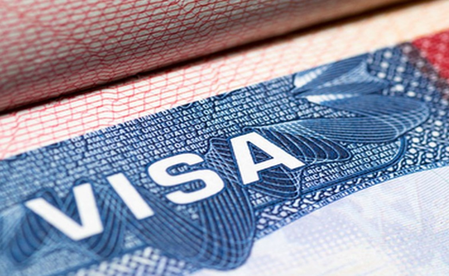
Washington, Feb 12 (IANS) A bipartisan group of 100 members of Congress has urged Homeland Security Secretary Kristi Noem to exempt the health care sector from a new $100,000 fee on employers petitioning for H-1B visas, warning it could deepen staffing shortages and limit access to care across the US.
In a letter dated February 11, lawmakers said they were “deeply concerned about the impact of the September 19 Presidential Proclamation, ‘Restriction on Entry of Certain Nonimmigrant Workers,’ on the health care workforce.”
The proclamation imposes a $100,000 fee on employers seeking new H-1B visas but allows the DHS secretary to grant sector-wide exemptions if it “is in the national interest and does not pose a threat to the security or welfare of the United States.”
“We urge you to create a health care sector exemption to prevent additional strain on the health care workforce,” the lawmakers wrote.
Citing federal data, the letter said workforce shortages are already affecting millions.
“According to the Health Resources and Services Administration, nearly 87 million Americans live in areas Federally designated as lacking enough medical professionals to address the community’s health care needs.” Physician demand “could exceed supply by up to 86,000 in the next decade,” and clinical laboratory science programmes are “educating less than half the number of clinical laboratory professionals needed.”
“These shortages cannot be filled by the domestic workforce alone, and projections will worsen if health care employers cannot continue to recruit and retain international health care workers,” the members said.
The letter noted that for more than three decades, health care employers have used the H-1B visa programme to recruit physicians, advanced practice professionals, laboratory workers, and researchers. Many serve in underserved communities and contribute to biomedical research.
“Health care organisations must be able to recruit staff in the most cost-effective manner so they can use their financial resources to hire as many caregivers as possible to take care of their communities,” the letter said. Rural hospitals and urban safety-net hospitals “will most acutely feel the effects of the $100,000 fee.”
“Imposing a $100,000 fee for new H-1B visa petitions will exacerbate hospitals’ existing staffing challenges and could push chronically underfunded hospitals to their financial brink,” the members wrote. “Critically needed open positions will simply go unfilled, leaving rural and high-poverty urban areas without adequate access to care.”
“We strongly urge you to exempt the health care sector from this burdensome fee.”
The letter was led by Representatives Yvette D. Clarke and Michael Lawler and signed by a broad bipartisan group in both chambers, including Senator Kirsten Gillibrand.
It has the backing of major health organisations, including the American Hospital Association, the Association of American Medical Colleges, the Greater New York Hospital Association, and the California Medical Association.
The H-1B visa programme allows US employers to hire foreign professionals in speciality occupations. Indian nationals account for the majority of H-1B approvals each year, with many working in technology, health care and research roles.
Debates over H-1B policy have intensified in recent years amid broader immigration restrictions and workforce concerns. Health care leaders have repeatedly argued that international medical graduates and specialists play a critical role in staffing rural and underserved areas across the country.
--IANS
lkj/dpb
Trump backs coal as critical minerals source
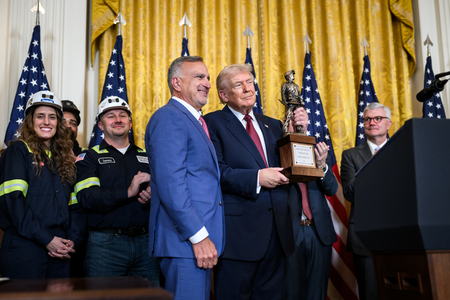
Washington, Feb 12 (IANS) US President Donald Trump and industry leaders described coal as a strategic source of rare earth elements and critical minerals, expanding its role beyond traditional power generation.
At the White House “Champion of Coal” event on Wednesday (local time), Jim Grech, CEO of Peabody Energy, said the industry was working closely with the administration on new opportunities.
“We are working with your administration on the potential to build new coal-fueled power plants, and coal emerges as a source of rare earth elements and critical minerals that are essential for our national security and economic future,” Grech said.
Trump tied coal directly to advanced manufacturing and defence. “Coal is also critical to our national security, vital to everything from steel production to shipbuilding and artificial intelligence,” he said.
Grech underscored the scale of US reserves. “The US has more energy in its coal than any nation has in any single energy source,” he said. “We have more energy than Russia has in its gas, and we have more energy than Saudi Arabia has in its oil.”
The administration’s focus comes as critical minerals -- including rare earth elements -- have become central to global supply chains for electronics, defence systems, and emerging technologies.
Grech said mining communities were seeing renewed investment. “Mining towns that once feared for their futures are seeing new investment, renewed optimism, and a sense of pride restored,” he said.
The renewed push to extract strategic minerals from coal adds a new dimension to U.S. industrial policy. Rare earth elements are key components in advanced electronics, renewable technologies, defence equipment, and artificial intelligence infrastructure.
The Trump Administration has prioritised securing domestic supplies of critical minerals amid growing concerns over supply chain concentration and strategic competition.
Its emphasis on coal as a potential source reflects broader efforts to strengthen domestic production and reduce vulnerabilities in high-tech industries.
--IANS
lkj/sd/
Republican pick Indian American lawyer to run for high-profile New York attorney general
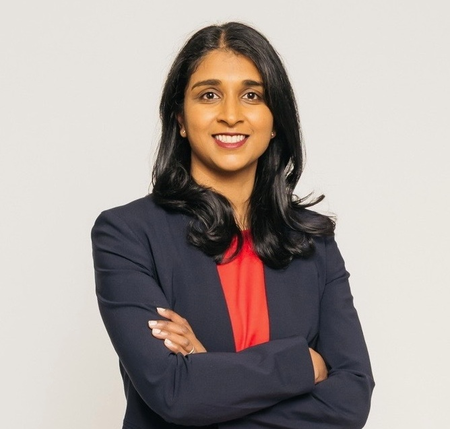
New York, Feb 12 (IANS) Republicans have picked Saritha Komatireddy, a lawyer who prosecuted terrorists, to take on New York State Attorney-General Letitia James, a nemesis of President Donald Trump, in elections this year.
Accepting the nomination at the Republican Party State Convention on Tuesday, she declared, “From now until November, I will prosecute the political case against Letitia James, and unlike her, I win my cases".
James had relentlessly pursued Trump, members of his and his enterprise alleging fraud, winning his resolute hostility.
When Trump returned as president, his administration charged James with fraud over a mortgage that she had received, but the case was thrown out when a grand jury refused to indict her.
While she was a prosecutor, Trump nominated Komatireddy to be a federal judge in 2020, but the nomination lapsed when the Senate did not act on it before the end of its session and his first term.
In her decade as a federal prosecutor, she specialised in terrorism, cybercrime, transnational criminal enterprises, money laundering, and foreign public corruption and built up a formidable reputation, taking on leaders of Al Qaeda, the Islamic State, and the Mexican drug cartels.
She said that the 9/11 terrorist attack on the US in 2001 made her choose law as a career to go after terrorists.
“While I was chasing terrorists across the Middle East, I saw right here in my backyard in New York, public safety completely deteriorated,” she said.
She has also served as the chief of staff of the Drug Enforcement Administration.
Komatireddy has bachelor’s and law degrees from Harvard University and now teaches at Columbia University law school, while also practising with a law firm.
Early in her career, she was a law clerk for Supreme Court Justice Brett Kavanaugh when he was a judge on the federal court of appeals in Washington.
The state attorney general's position in New York is an elected office and has a high national profile.
Komatireddy’s opponent, James, is considered a hero by Democrats for prosecuting Trump and winning a multi-million-dollar judgement against him.
In the civil case, while Trump was out of office in 2023, a judge found Trump guilty and issued a penalty of $364 million that ballooned to about $500 million.
An appeals court, however, voided the penalty as excessive, but not the guilty verdict.
James alleged that Trump and his associates committed fraud by overstating the value of his assets.
However, he had repaid the loans, and the lenders did not question the valuation of his collateral.
--IANS
al/dpb
US optimistic as Nepal heads to elections after Gen Z protests
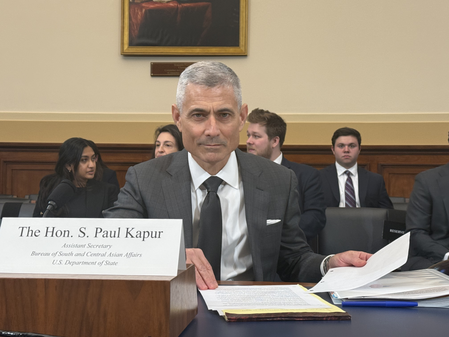
Washington, Feb 12 (IANS) The Trump Administration expressed optimism about Nepal’s upcoming election, as a senior official told lawmakers that the recent political upheaval there is part of a broader wave of democratic transitions across South Asia.
During a House subcommittee hearing on South and Central Asia on Wednesday (local time), Assistant Secretary of State for South and Central Asian Affairs Paul Kapur said Washington is prepared to work with Nepal’s next government following months of unrest.
“Our approach to Nepal is similar,” Kapur said, referencing democratic developments elsewhere in the region.
“These are both examples of youth movements, overthrowing older governments and now creating the opportunity for democratic participation in their country,” he said.
In September, Nepal experienced widespread anti-corruption Gen Z protests that led to the prime minister’s resignation and set the stage for new elections next month, lawmakers noted.
Kapur said Washington expects a smooth process.
“With Nepal, we also trust that we’ll have a secure and peaceful electoral process, and we’re prepared to work with whoever wins,” he said.
Subcommittee Chair Bill Huizenga framed the changes in Nepal and neighbouring Bangladesh as strategic turning points.
“Both of these instances offer new chapters for engagement in South Asia. Defining US relations with these new governments,” he said.
Democratic Ranking Member Sydney Kamlager-Dove described the broader transitions as opportunities.
“These major political transitions present a rare opportunity for the US to strategically leverage our democracy assistance to support growing regional demand for accountable government governance,” she said.
The discussion reflected bipartisan recognition that Nepal -- strategically located between India and China -- occupies a sensitive geopolitical position.
Kapur earlier emphasised that preventing domination by any single power in South Asia is a core US objective.
“A hostile power dominating South Asia could exert coercive leverage over the world economy,” he said.
The testimony suggested that Washington views Nepal’s political reset not only as a domestic democratic development but also as part of the larger strategic contest shaping South Asia.
Nepal has long navigated a delicate balance between India and China while undergoing its own internal political transformations since the end of its monarchy.
--IANS
lkj/sd/
Trump orders Pentagon to buy coal power
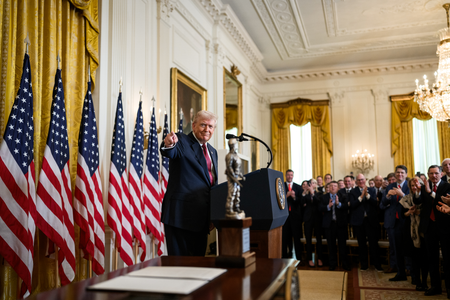
Washington, Feb 12 (IANS) President Donald Trump has signed an executive order directing the US military to enter into power purchasing agreements with coal plants, arguing the move would strengthen grid resilience and national security.
“I will sign an executive order that directs the Department of War to work directly with coal plants on the new power purchasing agreements, ensuring that we have more reliable power and stronger and more resilient grid power,” Trump said at a White House event before signing the order on Wednesday (local time).
“We’re going to be buying a lot of coal through the military now,” he added. “It’s going to be less expensive and actually much more effective than what we have been using for many, many years.”
Trump described coal as “the most reliable, dependable form of energy that we have,” saying it had proved its worth during recent winter storms. “Coal generation surged 31 per cent, while solar and wind totally collapsed,” he said.
The President also framed coal as vital to strategic industries. “Coal is also critical to our national security, vital to everything from steel production to shipbuilding and artificial intelligence,” he said.
Industry leaders at the event welcomed the move. Jim Grech, CEO of Peabody Energy and chairman of the National Coal Council, said recent policy changes had restored confidence in mining communities.
“We saw the impact of your wise policy in real time during the recent winter storm,” Grech said. “The coal plants you directed to keep open provided the stability and resilience that the grid needed.”
Grech added that the administration’s actions had sent “a powerful message” that coal remained central to the nation’s energy mix.
The executive order signals a shift toward deeper integration between energy production and defence procurement. By linking military purchasing agreements to coal-fired generation, the administration is emphasising grid stability as a national security priority.
--IANS
lkj/sd/
Awami League warns of instability in Bangladesh, calls election a ‘farcical poll’

Dhaka, Feb 12 (IANS) As polling began for high-stakes Parliamentary elections in Bangladesh on Thursday, the Awami League appealed to the international community to save the country from collapsing, calling the polls a “sham”.
The party stated that this “staged exercise” is not just about sidelining the Awami League but also excludes several political parties that oppose radical ideology and advocate for a liberal Bangladesh.
It claimed that millions of voters aligned with the political belief of the Awami League are subjected to death threats, intimidation and state-sponsored violence, forcing them to cast the ballot “against their will, a meticulous design to inflate voter turnout”.
“Rampant mob terror, including lynching and a wave of brutal torture, has dominated the climate of these sham polls. Jails have been overflowing not only with supporters of the Awami League. Alongside scores of journalists, rights activists and anti-war crimes campaigners were framed in false murder charges and languishing behind bars,” read a statement issued by the Awami League.
Highlighting the plight of minorities following the ouster of the Awami League government, the party said, “In the run-up to this farcical polls, millions of minorities have been pushed to the verge of extinction as sweeping impunity has been granted for killing and violence, branding them as supporters of the Awami League. Women, who constitute half of the voters, await a grim future as they are also excluded from national policy making to a new low, in the name of democracy building.”
The Awami League alleged that visuals have emerged showing election engineering efforts by contesting parties, in blatant disregard of the code of conduct.
Emphasising that all the past elections were not ideal, the party warned that the outcome of this exercise “will tear apart the syncretic fabric” that sets Bangladesh apart from other nations.
Slamming the interim government, the party said that in the name of a referendum, the Yunus regime “squandered public money and campaigned for a yes vote, a clear sign of dictating the outcome instead of relying on the public verdict”.
“The referendum, which seeks to scrap secularism, is an outright unconstitutional exercise plotted to erase the founding constitution that has been born out of the blood of millions of war heroes who fought and own this flag and freedom from the Pakistani occupational army.”
The Awami League called on the foreign observers and all international stakeholders to objectively highlight the “flaws and sheer abuses” unfolding in this election.
“Legitimacy to this exercise by relying on lofty words from Yunus will drag the country into prolonged instability. In the last seventeen months, the regime proved to have trampled on the tall pledges, reducing the country into a dangerous place and a safe haven for intolerant outfits,” it noted.
Meanwhile, voting in Bangladesh is underway. Polling is being conducted across 299 parliamentary constituencies, with the counting of votes scheduled to commence immediately after voting concludes.
The political landscape is now expected to undergo a significant shift with the formation of a democratically elected government, with many analysts projecting the Bangladesh National Party (BNP) as the likely winner.
Following the recent death of former Prime Minister Khaleda Zia, the BNP is currently being led by her son Tarique Rahman, who is widely seen as the frontrunner for the Prime Minister’s position.
The BNP’s principal challenger in the election is the Bangladesh Jamaat-e-Islami, a hardline Islamic party that previously shared an alliance with the BNP. Although political observers largely predict a BNP victory, many believe Jamaat-e-Islami could deliver its strongest electoral performance to date.
--IANS
scor/sd/
US eyes Cold War trade repeal in Central Asia
Washington, Feb 12 (IANS) Lawmakers urged the State Department to back the repeal of the Cold War-era Jackson-Vanik amendment for Central Asian nations, arguing that the outdated provision hampers US investment and undercuts strategic competition with Russia and China.
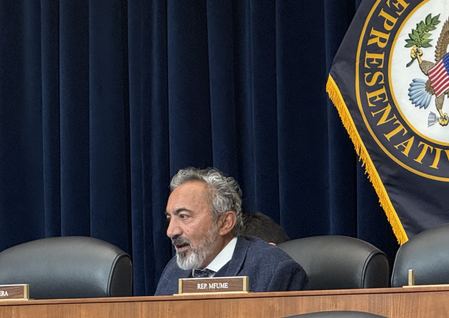
During a House subcommittee hearing on South and Central Asia, Democratic Rep. Ami Bera pressed Assistant Secretary of State for South and Central Asian Affairs Paul Kapur to support legislative efforts to remove the trade restriction.
“The repeal of Jackson-Vanik, which really is a Cold War relic that doesn't really apply to today's world,” Bera said, arguing that it “does inhibit US companies from fully investing in some of the Central Asian nations.”
He described the issue as bipartisan, noting that administrations of both parties have acknowledged that the measure is outdated.
“It hasn't been a partisan issue,” Bera said, adding that Secretary of State Marco Rubio had also recognised that it “is a relic of the past.”
Bera framed the repeal as strategically necessary.
“They want our companies investing in their critical minerals, energy resources, etc. And they're in a tough neighbourhood between Russia and China,” he said.
Kapur agreed with the characterisation.
“Yes, sir, this is a great example of a bipartisan issue,” he responded.
“We believe that Jackson-Vanik is a relic of the Cold War. As you said, the secretary has said the same thing, and we appreciate bipartisan support here,” Kapur added.
Bera urged swift action. “Let's get it done,” he said.
The exchange highlighted growing congressional interest in strengthening US economic engagement in Central Asia, a region increasingly viewed through the lens of strategic competition.
Central Asian states, rich in critical minerals and energy resources, sit between Russia and China and have sought greater diversification of trade and investment partners.
Kapur’s broader testimony framed US engagement as helping regional partners build “strategic capacity” and integrate into the global economy while preserving sovereignty.
By removing trade-era restrictions, lawmakers argued, Washington could unlock greater US private-sector participation and offer alternatives to Chinese and Russian influence.
The bipartisan tone of the discussion stood out in a hearing otherwise marked by sharper exchanges over Afghanistan and Indo-Pacific priorities.
The Jackson-Vanik amendment, enacted in 1974, tied US trade relations to freedom-of-emigration requirements in Soviet-bloc countries.
While many former Soviet states have since received permanent normal trade relations status, the amendment’s lingering application to parts of Central Asia has been viewed by policymakers as an outdated barrier to deeper economic engagement in a region of growing geopolitical significance.
--IANS
lkj/sd/
Trump signs order to boost coal use
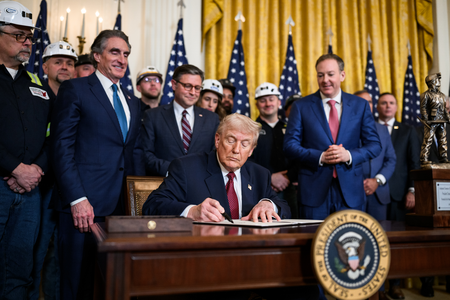
Washington, Feb 12 (IANS) US President Donald Trump declared himself the “undisputed champion of beautiful, clean coal” as he signed a new executive order aimed at expanding coal use and keeping ageing plants online.
“Clean, beautiful coal, clean, beautiful coal,” Trump said at the White House on Wednesday (local time), welcoming miners and industry executives to what was billed as a “Champion of Coal” event. “You’ve never had a better friend in the Oval Office than me.”
Trump said he would sign an executive order directing the “Department of War to work directly with coal plants on the new power purchasing agreements,” to ensure “more reliable power and stronger and more resilient grid power.” He added, “We’re going to be buying a lot of coal through the military now.”
He also announced that the Tennessee Valley Authority would keep open two plants -- the Cumberland Fossil Plant in Cumberland City and the Kingston Fossil Plant in Harriman, Tennessee -- which he said were “slated for termination.” The move, he said, would “save over 450 jobs.”
“In addition, I’m directing the Department of Energy to issue funds to coal plants in West Virginia, Ohio, North Carolina and Kentucky to keep them online,” Trump said.
The President sharply criticised his predecessor. “The Biden administration, he had no clue what he was doing, shut down dozens of coal plants,” Trump said, adding that he had “ended the war on coal” on “day one.”
He claimed that under his leadership, “coal production is up by nearly 4 million tons a month” and that “coal power generation is up by nearly 15 per cent in my first year.” He said he had “already approved over 70 permits for very big, very powerful mines.”
Trump argued that coal proved its value during a recent winter storm. “Coal generation surged 31 per cent, while solar and wind totally collapsed,” he said. “The only reason most were able to take a hot shower was thanks to the power provided by the most reliable, dependable form of energy that we have.”
Kayla Blackford, a haul truck driver at Bear Run Mine in Indiana, said, “It’s the best job I’ve ever had.”
She told the President that his “common sense policies to keep coal plants running” meant that she and her husband could “keep working” and “continue raising our son in our community.”
Jim Grech, CEO of Peabody Energy and chairman of the National Coal Council, thanked Trump for “the actions you’ve taken to support our industry.” He said, “We have a president who more than any other deeply understands the importance of coal.”
Trump also linked coal to national security. “Coal is also critical to our national security, vital to everything from steel production to shipbuilding and artificial intelligence,” he said.
He added that the United States had made “historic trade deals with Japan, Korea, India and others to increase our coal exports dramatically.”
Coal has long been central to US energy policy debates, especially in states such as West Virginia and Wyoming, where mining remains a major employer.
Environmental groups argue that coal-fired power plants contribute significantly to carbon emissions, while industry leaders say advances in technology have made coal generation cleaner and more efficient.
The Tennessee Valley Authority, a federally owned utility, has faced debate in recent years over plant retirements and grid reliability. Trump’s latest order underscores his administration’s emphasis on energy production and exports as pillars of economic and national security policy.
--IANS
lkj/sd/
India reducing Russian oil buys, claims US
Washington, Feb 12 (IANS) The United States has claimed India has been “reducing” its purchases of Russian oil and diversifying energy imports, as lawmakers pressed the State Department on enforcement challenges tied to Moscow’s war in Ukraine.
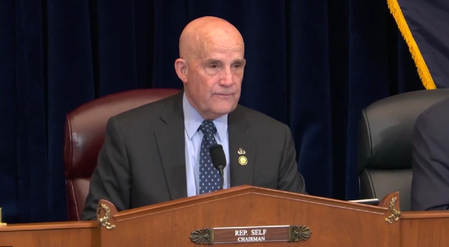
During a House subcommittee hearing on South and Central Asia on Wednesday (local time), Republican Rep. Keith Self raised concerns that continued Russian oil sales were helping finance the war.
“The sale of Russian oil continues to fund the Ukraine war,” Self said, questioning how Washington would ensure compliance if India pledged to scale back purchases.
“Does that include third-party traders, blended cargo, ship-to-ship, ghost ships?” Self asked, referring to mechanisms used to obscure energy origins.
Assistant Secretary of State for South and Central Asian Affairs Paul Kapur said enforcement questions would fall outside his bureau but acknowledged the broader issue.
“I don't know the details of how that's going to be worked out. I'm happy to stay in touch with you about it,” Kapur said.
However, he emphasised a shift underway in India’s energy sourcing.
“The Indians have been reducing their purchases of Russian oil and diversifying away, which is what we wanted them to do,” Kapur said.
“They've actually been buying more US energy,” he added.
Kapur suggested that substituting US supplies could offer a constructive path forward.
“That's, I think a promising possibility is to substitute some US energy for the Russian energy, but other -- and buying from other places around the world too, of course,” he said.
Self argued that enforcement complexities could undermine sanctions.
“We have credible reports … that Russia sold energy to India, which turned around and then exported it to Europe,” he said, warning that indirect trade flows could blunt Western efforts to restrict Moscow’s revenues.
The exchange underscored the delicate balance in US-India relations, where Washington has sought to expand trade and defence cooperation while encouraging New Delhi to reduce reliance on discounted Russian crude. However, India has not yet made any official comments on this.
India has historically maintained strategic autonomy in foreign policy and energy sourcing, even as it deepens ties with Washington through the Quad and other Indo-Pacific frameworks.
Kapur did not offer specific figures but framed India’s diversification as aligned with US objectives.
The issue highlights the broader geopolitical crosscurrents shaping US engagement in South Asia -- strengthening partnerships with India while navigating the global ramifications of the Ukraine conflict and sanctions enforcement.
Since Russia’s invasion of Ukraine in 2022, Western nations have imposed sweeping sanctions on Moscow’s energy exports.
India increased purchases of discounted Russian crude in the early phases of the conflict, arguing energy security concerns, but has faced sustained diplomatic pressure from the United States and European partners to diversify supply sources.
--IANS
lkj/sd/
Diego Garcia vital for Indo-Pacific security, countering China, says US
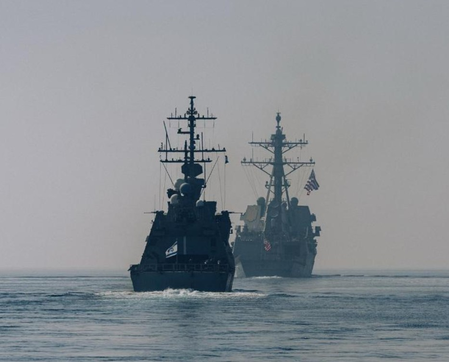
Washington, Feb 12 (IANS) Underscoring the strategic importance of the US naval support facility at Diego Garcia, lawmakers and a senior State Department official have said that safeguarding Indian Ocean sea lanes is central to countering China’s growing influence in the Indo-Pacific.
During a House subcommittee hearing on South and Central Asia, Congressman Bill Huizenga said: “The Indian Ocean is one of the busiest maritime corridors on the earth, carrying the lifeblood of global commerce and energy, including more than 80 per cent of global seaborne oil trade.”
“Safeguarding these sea lanes through enhanced naval cooperation with partners and allies will only serve to counter China's growing influence and limit its malign behaviour in the region,” he added.
Huizenga stressed the importance of the US naval base in the region. “I see the importance of our naval base on Diego Garcia in the middle of the Indian Ocean,” he said, adding that “Preserving America's military fortitude in the region will deter Chinese coercion, prevent piracy, and ensure the free flow of American and world trade.”
Assistant Secretary of State for South and Central Asian Affairs Paul Kapur echoed the strategic framing, placing the Indian Ocean at the heart of broader Indo-Pacific policy.
“The Indian Ocean is actually the -- the Indo piece of the Indo Pacific,” Kapur said. “One of the insights of that term is that it recognises that this is a holistic -- we have to take a holistic approach to the region.”
“We think about the Pacific, it's not in isolation, but it actually connects all the way to the -- to the Indian Ocean and even to the east coast of Africa,” he added.
On Diego Garcia specifically, Kapur said: “Diego Garcia is in kind of in the -- in the middle of the ocean, but it's a very important outpost for projecting air power, particularly.”
“The President has said that it's a crucial asset,” he said.
Lawmakers also raised concerns about China’s expanding infrastructure footprint across Indian Ocean states.
Kapur warned that smaller regional countries can have “outsized impact on trade and energy flows” because of their geography and stressed the importance of strategic autonomy.
“It’s very important that those countries are able to maintain their freedom of action and not be coerced by China by predatory lending,” he said.
Citing Sri Lanka’s Hambantota Port, he noted: “If you think about Sri Lanka and Hambantota Port, they have a 99-year lease on it. Those are the kinds of dangers that we see with Chinese development schemes.”
Asked about Chinese activity in the Maldives, Kapur acknowledged: “There’s been some Chinese investment there,” adding Beijing is “interested for sure.”
He said Washington must provide viable alternatives.
“We need to be able to offer alternatives, high-quality, transparent, non-coercive alternatives,” Kapur said, pointing to US financing tools, technology, and private sector engagement.
The exchanges highlighted bipartisan concern over China’s efforts to expand economic and strategic leverage across maritime chokepoints in the Indian Ocean -- a region critical to global energy supplies and trade flows.
Diego Garcia, located in the British Indian Ocean Territory, has served for decades as a key US logistics and air operations hub supporting missions across the Middle East, Africa and Asia.
The Indian Ocean’s sea lanes connect energy producers in the Gulf with markets in Asia and beyond, making control and access to maritime infrastructure central to strategic competition between Washington and Beijing.
--IANS
lkj/sd/