
Lashkar pushes Talha Saeed’s acceptance as PMML gradually gains ground in Pakistan

New Delhi, Nov 10 (IANS) The Lashkar-e-Taiba is aggressively pushing its political agenda into Pakistan's politics. The idea is to be part of the mainstream so that this acts as a cover for the terror-related activities it undertakes.
The plunge into the political ecosystem was taken quite a few years ago. It began with the now-banned Jamaat-ud-Dawa (JuD) and now the party that is being run by the Lashkar-e-Taiba is called the Pakistan Markazi Muslim League (PMML).
There has been talk about finding a replacement for Hafiz Saeed. His age and the losses incurred by the outfit during Operation Sindoor have put the founder on the back foot. The Lashkar-e-Taiba has been desperate to find a replacement for Saeed and has been on the lookout for the same for the last year.
An official said Talha Saeed, the son of Hafiz Saeed, is the natural choice. Many favour him to lead the outfit after his father, and while the cadre connect with him on many aspects, the ideological factor in him is missing.
Saeed is strong both on the ideological and operational front. Saeed handles operations, but he is yet to command the respect that his father does, the official said.
Around ten days ago, the Lashkar-e-Taiba leadership took an important decision with regard to the leadership of the outfit. It unanimously agreed that Hafiz Saeed would continue to be the chief. It also decided that Talha would be in charge of operations and would be in the number 2 position.
The meeting, however, acknowledged that Hafiz Saeed cannot go on forever and that Talha would soon have to take over the mantle. For Talha to fit the role of his father, he would need to focus a lot on the ideological aspect. Currently, he is on an outreach programme using his political platform, the PMML, to achieve the same, an official said.
In the last week, Talha Saeed has made many public appearances. During his speeches, he has highlighted the need for Pakistan to remain united to fight against India. During a November 8 rally, he not only tried to project himself as his father’s successor, but also added that the PMML would carry forward the legacy of the Muslim League that heralded the campaign for a separate Pakistan carved out of India.
Talha Saeed's stressed remaining united during the rally. He cited the Muslim League and said that it was time to transform the divided landscape of Pakistan into a united national movement. He said a unified Pakistan is the best bet when it comes to beating India.
Another official said that if one goes through Talha Saeed’s speech, he is trying to hit two birds with one stone. On the one hand, he wants to drive across the message that he is as mature or exactly like his father, and on the other, he is trying to create a political space for the PMML so that it acts as a shield against the activities of Lashkar-e-Taiba, the official said.
His references to Pakistan being the protector of the Muslim Umma are indicators of his intentions. He called on the Pakistanis to unite and said that this is important to protect the Muslim world. He also said that Pakistan is the protector of Mecca and Medina.
Officials say is a lot that is going on within Lashkar-e-Taiba. While the cadre are aware that Talha Saeed is the de facto heir, there is still some reluctance in accepting him as the one who would replace Saeed.
Talha has a lot of hard work to do. Not only does he have to prove a point that he can also LeT's ideological head, but will also have to ensure that the PMML makes a mark in Pakistan. The PMML’s success is very important if the Lashkar-e-Taiba has to mask its terror-related operations against India.
Counterterrorism experts warn that the PMML has been gaining ground in Pakistan. In the National Assembly seat of Gujranwala, which was held due to the death of PML-N lawmaker Chaudhry Mehmood Bashir Virk, the PMML finished second.
The PML-N’s Rashid Bashir Virk polled 43,365 votes and finished with a vote share of 58.9 per cent. The PMML’s Muhammad Ibrahim finished second with a vote share of 41.1 per cent and 30,218 votes.
The PMML may have benefited from the absence of the PTI and Pakistan Peoples Party, but its performance has been hailed as impressive.
The Indian agencies are watching these developments closely. There are signals of a major shift by Lashkar-e-Taiba using its political front, which has a decent amount of following. The growth of the PMML would directly help LeT to boost its operations, which, in the long run, is counterproductive for India’s national security, an official said.
--IANS
vn/skp
India remains critical drug supplier to US as it seeks pharma self-reliance: Report

New Delhi, Nov 10 (IANS) India's vast pharmaceutical manufacturing network has emerged as a critical pillar of the US healthcare system, highlighting the challenges facing American President Donald Trump's efforts to bring generic drug production back to the United States, according to a report.
A report by The Star highlighted a manufacturing facility operated by a leading pharmaceuticals firm in Hyderabad, nearly 1,900 workers produce more than 100 generic medicines, ranging from cholesterol and allergy treatments to antidepressants.
The plant manufactures close to one billion oral doses every month with roughly three-quarters of output destined for the US market, it added.
The scale of India's generic drug industry has made the country indispensable to global medicine supplies.
Generic medicines account for about 90 per cent of prescriptions dispensed in the United States, while Indian manufacturers supply around 40 per cent of those medicines.
Trump has proposed steep tariffs on imported generic drugs, including a 100 per cent levy from 2028 and a 200 per cent tariff a year later as part of a broader push to expand domestic manufacturing.
However, industry executives and healthcare experts said that cost advantages built over decades make large-scale reshoring difficult, according to the report.
According to industry estimates, producing most generic medicines in the United States could cost four times more than manufacturing them in India. Lower labour costs, faster factory construction timelines and extensive technical expertise continue to give Indian drugmakers a competitive edge.
The industry's rise dates back to the 1970s, when India prioritised affordable access to medicines and developed strong capabilities in reverse-engineering and manufacturing pharmaceutical products at scale.
While concerns over manufacturing quality once clouded the industry's reputation, leading drugmakers say regulatory oversight has strengthened significantly.
Major producers now face frequent inspections by global regulators and have invested heavily in compliance systems.
Industry leaders argue that rather than decoupling, the United States and India should deepen cooperation, particularly as both countries seek to reduce dependence on China for pharmaceutical ingredients and strengthen supply-chain resilience, according to The Star.
--IANS
ag/
How India, UAE are strengthening bilateral energy ties

New Delhi, Nov 10 (IANS) As part of the strengthening bilateral energy ties, India’s imports from the UAE have risen sharply over the years from less than one million barrels a day in the 1990s to about 4.4 million barrels a day in 2018, after which the Gulf nation has become the fourth largest crude supplier for India in 2026, according to an article in Gulf News.
India’s energy ties with the UAE took a quantum jump in 2018 with public sector ONGC Videsh, Indian Oil Corporation and Bharat PetroResources bought a 10 per cent interest in Abu Dhabi’s Lower Zakum offshore oilfield with an investment of $600 million.
India’s petroleum ministry told Parliament that it was the country’s first investment in Gulf oil production. It estimated that the stake would give the consortium an average of 1.75 million tonnes of crude a year over the 40-year concession, states the report by journalist Justin Varghese.
By 2026, Ministry of External Affairs listed the UAE as the country’s fourth-largest source of crude and its second-largest source of both liquefied natural gas and liquefied petroleum gas.
In May 2026, New Delhi and the UAE signed an agreement enabling India to hold part of its strategic oil reserve in Fujairah, where tankers can load outside the Strait of Hormuz. The same agreement opened the door for Abu Dhabi National Oil Company (ADNOC) to store up to 30 million barrels in India.
India has chosen Visakhapatnam in Andhra Pradesh as a site where ADNOC could participate in an existing oil storage facility. It also identified Chandikol, in Odisha, as a location where the two sides could work on developing reserve facilities. The proposed 30 million barrels is the potential total for ADNOC crude storage in India under the agreement.
The memorandum also covers possible cooperation on storage facilities in India for liquefied natural gas (LNG), and liquefied petroleum gas (LPG).
The port already gives Abu Dhabi a way to ship oil without passing through Hormuz. ADNOC’s existing 406-km pipeline carries crude from its onshore operations to Fujairah, where tankers can load for India. The route took on greater significance in 2026 as the conflict in the Gulf disrupted shipping through the strait, a risk India’s finance ministry highlighted in its May economic report, the article points out.
ADNOC is building a second route to the port. In May, the company said its West–East Pipeline was under construction and expected to become operational in 2027. ADNOC expects the project to double its export capacity through Fujairah, the article added.
--IANS
sps/na
French FM accuses Iran’s IRGC for cyberattacks on supermarket fridges

Paris, Nov 10 (IANS) French Foreign Minister Jean-Noel Barrot has accused Iran's Islamic Revolutionary Guard Corps (IRGC) for the cyberattacks on French supermarket fridges on the night of October 11-12, a report has claimed.
Speaking after a G7 Foreign Ministers' Meeting in Paris, Barrot said that that Iran's ambassador to France has been summoned. He further said that France would impose sanctions against those responsible and take measures that they deem necessary to respond to these attacks.
In a statement shared on X, Barrot said, "On October 11 and 12, nearly 700 distribution sites were hit by a cyber campaign of unprecedented scale and aggression. Today, thanks to the work of government agencies, we know who is responsible: the Islamic Revolutionary Guard Corps of the Islamic Republic of Iran."
"Iran’s ambassador has been summoned. We will sanction those responsible and take all measures we deem necessary and proportionate to respond to these attacks and deter anyone who might consider repeating them," he added.
Refrigeration units in more than 700 French retailers, including Carrefour, Monoprix, Intermarche and Cooperative U, were targeted on October 11-12. The attackers manually overrode temperature of fridge. Euro News reported.
Meanwhile, French Foreign Affairs Ministry said that cyberattacks caused "significant material damage, including fires, and the estimated loss of food and other goods amounting to tens of millions of euros."
The ministry said that the cyberattacks were a major threat to the interests of France and the security of French nationals, Euro News reported.
French authorities said that this was not the first time France was targeted by Iran with "destabilisation acts", citing a hack on satirical newspaper Charlie Hebdo in 2023 and hostile actions during the 2024 Olympic Games.
The European Union (EU) Foreign Policy chief Kaja Kallas said that the upcoming Foreign Affairs Council meeting on November 16 would provide an opportunity to discuss cyberattacks taking place in Europe.
She said, "If they are attributed, our response should be stronger."
--IANS
akl/rs
Pakistan government accused of invoking IMF for justifying unpopular levies: Report
New Delhi, Nov 10 (IANS) The Pakistan government is being accused of using its commitments to the International Monetary Fund (IMF) as a blanket defence for every unpopular economic decision such as the hike in the levy on petroleum products, according to an article in the Directus news portal.
According to a parliamentary response reported on October 30, the government collected Rs 4.4 trillion (Pakistan's currency) through the levy over four fiscal years, from 2022 to 2026. Provisional collections in the financial year ending in 2026 reached Rs 1.567 trillion, exceeding the target of Rs1.468 trillion. These figures make the levy more than a dispute over fuel prices. They place the fairness of Pakistan’s fiscal choices at the centre of the debate over economic recovery, the article states.
The intervention of Jamaat-e-Islami Emir Hafiz Naeemur Rehman has made this issue more complex. In October, he accused the government of invoking the IMF to justify petroleum charges while failing to reduce its own expenditure and privileges.
Transparency on the part of the government must extend to the levy itself, and it would be inaccurate to claim that no information is available, since the parliamentary response disclosed substantial collection figures and targets. Citizens need to understand the relationship between the levy, the overall budget, debt obligations and relief expenditure.
They should also be able to distinguish the petroleum levy from climate charges, customs duties and the underlying cost of fuel. Without that clarity, aggregate revenue figures reveal how much the state collects without adequately explaining why this particular burden remains necessary, the article points out.
Rehman’s allegation that rulers have failed to reduce their own privileges is a political claim that should be tested through expenditure records and independent scrutiny. A government asking citizens to accept painful adjustment must demonstrate that discretionary spending, official benefits and administrative waste face comparable examination. Visible restraint cannot solve every fiscal problem, but its absence weakens the credibility of appeals for shared sacrifice, the report states.
Pakistan’s leadership must own the distributional consequences of its economic programme. The IMF influences the fiscal framework, but that does not transfer political accountability away from the government that negotiates commitments, prepares budgets and implements taxation.
It should publish an understandable account of its obligations, explain the alternatives it rejected, and demonstrate measurable restraint in its own expenditure. Economic stabilisation will command greater legitimacy when citizens can see that adjustment reaches beyond household budgets. Until then, invoking the IMF risks functioning less as an explanation of policy than as a shield against responsibility, the article added.
--IANS
sps/na
Drone, IED attacks rock Pakistani forces in Balochistan, resulting in multiple casualties
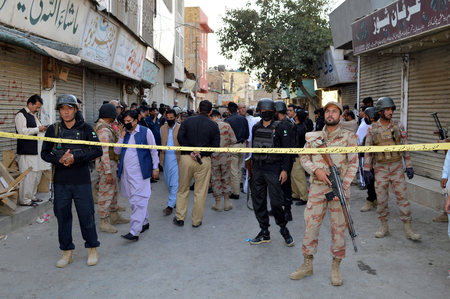
Quetta, Nov 10 (IANS) Pakistani forces came under a series of drone and improvised explosive device (IED) attacks across Balochistan’s Mastung and Kalat districts, resulting in multiple casualties and significant material losses, according to local media reports citing sources.
Reports suggest that at least two drones struck the main military camp in the Khadkocha area of Mastung on Monday, with initial information indicating casualties among Pakistani personnel and damage to the facility.
In a separate incident, a Pakistani forces vehicle was reportedly destroyed in an IED attack in the Marjan area of Kalat, The Balochistan Post reported.
Meanwhile, armed fighters intercepted and seized two commercial vehicles during a road blockade in the Nokchah area of Chagai along the Quetta–Taftan highway. One of the vehicles was reportedly transporting precious stones.
However, the identities of those behind the latest attacks and the seizure remain unclear, with no group claiming responsibility.
These incidents came a day after the Baloch Republican Guards (BRG) claimed responsibility for killing five Pakistani security personnel and injuring several others in a drone attack and an ambush on a military convoy in Balochistan's Kachhi district, local media reported.
In a statement, the BRG spokesperson Dostain Baloch said that the group's drone unit 'Aamir Aero Guardians' attacked a joint Pakistani military and police camp in the Bagh area of Kachhi district on Sunday, killing one security personnel and leaving another seriously injured.
The spokesperson claimed that approximately two hours later, the BRG launched an ambush on a military convoy in the Bolan area of Kachhi with rockets and other heavy weapons. He added that the attack killed four personnel and injured several others, while military vehicles sustained severe damage, The Balochistan Post reported.
The BRG announced the establishment of its drone warfare unit, Aamir Aero Guardians, on October 30, claiming that it carried out a strike on a Pakistani military installation in Kachhi district, causing casualties and material losses.
These attacks come amid a series of drone strikes targeting Pakistani security forces in recent days, with both the Baloch Liberation Army (BLA) and BRG claiming operations carried out by their respective dedicated drone units.
The BLA announced the launch of its aerial wing, "QAHR" (Qazi Aero Hive Rangers), earlier this year during the second phase of its "Operation Herof", claiming to have targeted Pakistani forces in several locations, including Gwadar Port.
--IANS
scor/rs
Top diplomats of South Korea, France discuss ties, Ukraine war
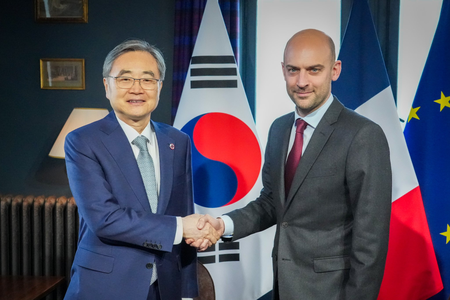
Seoul, Nov 10 (IANS) South Korean Foreign Minister Cho Hyun has met his French counterpart in Paris and discussed bilateral ties and international issues, including the war in Ukraine, Seoul's foreign ministry said Tuesday.
Cho held talks with French Foreign Minister Jean-Noel Barrot on Monday (local time) on the sidelines of a Group of Seven (G7) foreign ministers' meeting, according to the ministry.
The two reviewed relations that were elevated to a "strategic partnership" this year, the 140th anniversary of diplomatic ties, and agreed to expand practical and mutually beneficial cooperation in high-tech industries and other areas, Yonhap News Agency reported.
Cho asked France to continue its support for and interest in Korean companies doing business in Europe.
The G7 ministerial meeting, the second this year, is taking place Monday and Tuesday in Marseille, southern France. South Korea is attending the meeting at the invitation of France, which holds the G7 presidency, following its participation in the first ministerial meeting in March.
“The participation is aimed at strengthening our partnership with G7 members and enhancing our standing as a globally responsible country,” South Korea foreign ministry spokesperson Park Doo-soon told a press briefing.
It is expected to address key global challenges, including artificial intelligence (AI) and developments in the Middle East, following the G7 leaders' summit in June, according to the ministry.
Also on the margins of the G7 gathering, Cho met bilaterally with Saudi Foreign Minister Faisal bin Farhan and agreed to further expand cooperation in nuclear energy, cutting-edge technologies and the defense industry, the ministry said.
The two ministers also agreed on the importance of restoring the principle of freedom of navigation in the Strait of Hormuz, a key shipping route that has effectively been choked off amid the ongoing Iran war.
Cho expressed sympathy to Saudi Arabia following recent Houthi militant attacks on the country that caused casualties and damage to civilian and economic infrastructure.
--IANS
akl/
Indian American Priya Sundareshan wins Senate top job
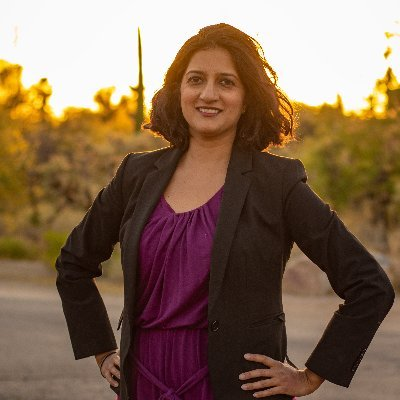
Washington, Nov 10 (IANS) Indian American Democrat Priya Sundareshan has been chosen to lead the Arizona Senate as her party prepares to take control of the chamber for the first time since 1992, promising lower costs for families and greater attention to Southern Arizona.
Senate Democrats selected the Tucson lawmaker and outgoing minority leader as president-elect on November 6. She is set to take the gavel when the new Legislature convenes in January 2027.
Democrats won 20 of the Senate’s 30 seats. That would give the party a two-thirds majority, up from its current 13 seats.
“We heard you loud and clear. Arizonans rejected partisan extremism and chose a new direction,” Sundareshan said in the leadership announcement.
“I am proud of what we accomplished together during my time as minority leader, and I'm ready to lead us into the next chapter.”
The election also put Democrats on track to win about 37 of the House’s 60 seats and returned Democratic Governor Katie Hobbs to office. Together, those results would give Democrats control of the governorship and both legislative chambers for the first time since 1966.
House Democrats chose Oscar De Los Santos as speaker-elect.
In an interview published Monday by KJZZ/Capitol Media Services, Sundareshan said her selection offered Southern Arizona a stronger voice in decisions made at the state Capitol in Phoenix.
“Southern Arizona has often complained about not having a representation in the majority at the legislature,” she said. “Well, here we are.”
She is the first Tucsonan chosen to lead the Senate in nearly 20 years. The last Democrat to serve as Senate president was Pete Rios, who held the post from 1991 to 1992.
University funding and roads are among the regional concerns facing the incoming leadership.
Sundareshan said Democrats would seek to avoid further university funding cuts and ensure that areas outside Maricopa County received fair treatment in the budget.
The incoming majority has identified lowering costs for working families as its leading priority.
“We're united in our commitment to earn your trust every day by delivering results you can feel in your daily life,” she said.
Sundareshan won re-election in District 18 with about 66 per cent of the vote.
Born and raised in Tucson in an Indian American family, Sundareshan attended local public schools and earned a chemical engineering degree from the Massachusetts Institute of Technology in 2006. She received a law degree and a master’s degree in agricultural and resource economics from the University of Arizona in 2011.
Before entering the Legislature, she taught natural resources law at the University of Arizona and directed its Natural Resource Use and Management Clinic. She also worked on sustainable resource management with the Environmental Defense Fund. First elected in 2022, she took office in January 2023.
--IANS
lkj/rs
Ex-US diplomat says OPCON transfer may not move rapidly
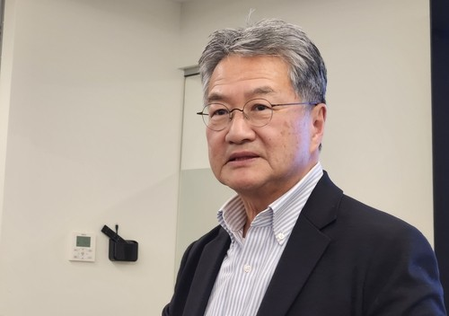
Seoul, Nov 10 (IANS) A former US diplomat said Tuesday that the envisioned transfer of wartime operational control (OPCON) from Washington to Seoul may not move forward swiftly, citing "no consensus" on the key alliance issue in the United States.
Speaking virtually at a forum, Joseph Yun, former acting US ambassador to South Korea and special representative for North Korea, also said that there is no consensus in Washington over Seoul's push to secure rights to enrich uranium for peaceful civilian purposes and acquire nuclear submarines.
Yun offered his forecasts over what will happen during the remaining two years of US President Donald Trump's administration, particularly in the wake of this month's US midterm elections, in which Democrats won control of both the Senate and the House of Representatives, Yonhap News Agency reported.
"I cannot imagine (the OPCON transfer efforts) moving very rapidly," Yun said during the forum hosted by the Korea-US Parliamentarians' Union. "Same thing with nuclear issues. There is no consensus in Washington that Korea ought to have enrichment or nuclear submarines."
South Korea and the US have been working on the "conditions-based" OPCON transfer without a target year for the transition. Seoul wants to retake wartime OPCON before the five-year term of South Korean President Lee Jae Myung's administration ends in 2030, while Washington highlights the importance of fulfilling the conditions for the transfer.
The allies have also agreed on bilateral cooperation on the uranium enrichment issue, as well as the nuclear submarine project, as stipulated in a joint fact sheet released last year to outline bilateral summit agreements between Lee and Trump.
Commenting on the OPCON transfer efforts, Yun raised concerns that the transition could weaken the bilateral alliance, arguing that South Korea views the transfer as a "political" issue while it is a "technical" issue in the U.S.
"In South Korea, people want to have the OPCON back with no weakening of the alliance. That is impossible," he said. "Of course, if the Korean capability is so great, a little bit of weakening of the alliance is OK. Then, that's OK. But that's a political decision South Korea has to make."
His remarks appear to align with a view that after the US transfers wartime OPCON to Seoul, its security burden would lessen, potentially weakening its military commitment to the Asian ally -- a development that some say could be offset by South Korea's growing military capabilities.
In Seoul, the OPCON transfer has long been a divisive issue. Proponents say that the transfer is equated with the "restoration" of the country's "military sovereignty," while opponents argue that the transfer could undercut the bilateral alliance amid North Korea's evolving nuclear threats.
South Korea handed over operational control of its troops to the U.S.-led U.N. Command during the 1950-53 Korean War. It was then transferred to the allies' Combined Forces Command when the command was launched in 1978. Seoul retook peacetime OPCON in 1994, but wartime OPCON still remains in US hands.
--IANS
akl/
Nepal seeks mountain-specific measures to address climate change risks
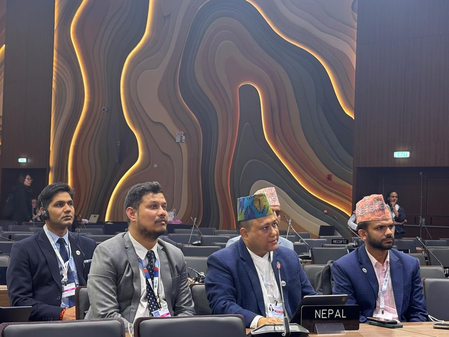
Kathmandu, Nov 10 (IANS) Nepal's Foreign Minister Shishir Khanal has urged the international community to prioritise three key measures to address the growing impacts of climate change on mountain regions, highlighting the devastating floods that hit Nepal on August 26 as evidence of the country's vulnerability.
He called for ensuring the 1.5 degrees Celsius warming limit for the Himalayas, establishing a dedicated work programme on mountains and climate change, and incorporating mountain-specific indicators into global climate finance and adaptation frameworks.
Addressing the opening session of the 31st Conference of the Parties (COP31) to the United Nations Framework Convention on Climate Change (UNFCCC) on Monday (local time) in Turkey, Khanal said concrete international commitments and effective implementation were essential to protecting the Himalayan region and mitigating the impacts of climate change.
Khanal's call for mountain-specific measures comes at a time when devastating floods along the Bhote Koshi and Trishuli rivers on August 26 killed more than 1,400 people, while over 5,000 remain unaccounted for.
The floods also caused extensive damage to public and private property, estimated at 1.66 billion US dollars, according to the World Bank. Human settlements, a dozen hydropower projects, a solar power project, roads and buildings suffered extensive damage.
An avalanche blocked a tributary of the Bhote Koshi River near the Nepal-China border, creating a natural dam that subsequently burst and triggered devastating floods downstream along the Bhotekoshi and Trishuli rivers.
Recovery and reconstruction needs following the disasters are estimated at more than 4.77 billion US dollars, according to the Rapid Disaster Needs Assessment report prepared by Nepali government agencies.
Khanal also drew the international community's attention to the devastating climate-related disasters Nepal has experienced in recent months.
"On 26 August, mountain collapse unleashed what we have called a Himalayan Tsunami," he said, adding that more than 1,400 people had lost their lives, while over 5,000 remained missing.
Critical infrastructure was swept away within minutes, and the cost of rebuilding was estimated at around one-tenth of Nepal's entire economy, he said, adding that scientific evidence confirmed the role of climate change in the disaster.
Nepal experienced three major disasters between August and October alone, he said.
Khanal said Nepal had received widespread sympathy from the international community following the disasters but stressed the need to translate that support into concrete action.
"Now is the time to turn sympathy into systems and commitments into implementation," he said.
In recent years, major infrastructure projects in Nepal, including the multimillion-dollar Melamchi Drinking Water Project, which aims to supply water to the Kathmandu Valley, as well as several hydropower projects, have suffered repeated damage from devastating floods and landslides.
These incidents have raised concerns about the growing economic costs of climate change for the country.
Following the latest disasters, Nepal has been calling for climate justice, arguing that the country has contributed negligibly to global climate change despite suffering disproportionately from its impacts.
"We come here seeking climate justice," Khanal said, stressing that the Himalayan region, despite contributing negligibly to global greenhouse gas emissions, is melting at an alarming rate.
He said the Himalayas sustain the lives and livelihoods of around one-third of humanity, while mountain regions cover approximately 27 per cent of the world's land area and are home to 15 per cent of its population.
Khanal said Nepal remained committed to working with international partners to protect mountain communities, strengthen climate adaptation and advance climate justice. He called on all countries participating in COP31 to demonstrate strong solidarity with Nepal and mountain communities worldwide.
Khanal also highlighted Nepal's efforts to pursue climate-friendly development, noting that nearly half of the country's land area is covered by community-conserved forests, its energy generation relies on hydropower, and more than 70 per cent of newly purchased consumer vehicles are electric.
--IANS
scor/sd/