
India and France deepen cooperation in space, critical technologies and economic security
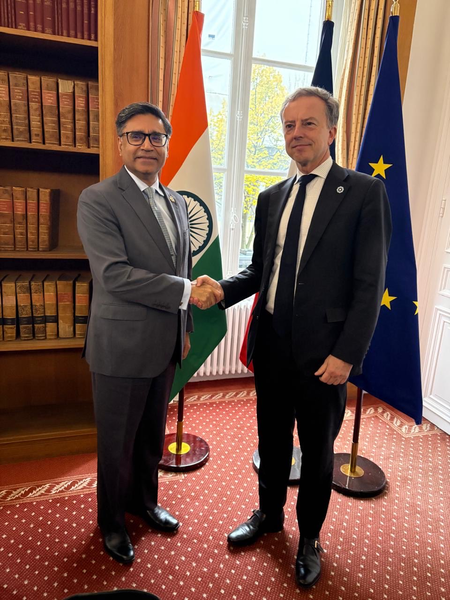
Paris, Nov 10 (IANS) India and France on Tuesday held the 3rd Strategic Space Dialogue and the inaugural meeting of the India-France Economic Security and Critical Technologies Dialogue in Paris, co-chaired by Foreign Secretary Vikram Misri and Martin Briens, Secretary General of the French Ministry for Europe and Foreign Affairs, the Indian Embassy in France said.
“Today, Foreign Secretary Shri Vikram Misri co-chaired with Secretary General of French Ministry for Europe and Foreign Affairs Mr Martin Briens the 3rd India-France Strategic Space Dialogue as well as the inaugural meeting of India-France Economic Security and Critical Technologies Dialogue, respectively,” the Embassy posted on X.
The two sides also reviewed the full range of relations between the two countries.
“Both sides also held bilateral talks, reviewing the entire gamut of bilateral relations. They also exchanged views of regional and global issues of mutual interest,” the Embassy said.
Misri arrived in Paris on Monday for the dialogues, which are aimed at expanding cooperation between the two countries, with a particular focus on resilient supply chains.
“These discussions will deepen cooperation between India and France in space, critical technologies and economic security, particularly in the area of resilient supply chains,” the Embassy had said.
In September, Minister of State for Science and Technology and Earth Sciences Jitendra Singh met his French counterpart, Philippe Baptiste, and said that cooperation in the space sector between India and France has entered a new phase, with a focus on human spaceflight, start-ups, and a new space ecosystem.
India-France space cooperation has evolved from the early sounding rocket experiments of the 1960s into a broad and expanding partnership encompassing joint satellite missions, launch vehicle technologies, human spaceflight and emerging space applications, the minister had said.
The third joint satellite, TRISHNA, will soon be developed, the minister had said, and appreciated CNES support to India’s Gaganyaan programme, including supply of consumables and training of flight surgeons.
On September 10, Prime Minister Narendra Modi had invited France and other countries to partner with India in its next phase of space exploration, while addressing the first International Space Summit in Paris via video conferencing.
“Cooperation over confrontation, sustainability over short-term gain, and inclusion over exclusion” should guide the future of the global space sector, the Prime Minister had said.
--IANS
ksk/as
India to remain only major economy with workforce surplus through 2030: Report

New Delhi, Nov 10 (IANS) India will emerge as a key source of skilled talent for the global economy as it is projected to remain the only major economy with a surplus workforce through 2030 even as 85 million jobs worldwide could remain unfilled by then because of skill shortages, a new report has said.
The report from India Narrative cited Korn Ferry estimates that global skills shortages could result in $8.5 trillion in unrealised annual revenue.
India's demographic profile is expected to play a major role in this advantage, the report said, adding that the country's median age is nearly 28 years, against 38 years in the United States and 39 years in China.
Over 40 per cent of India's population is under 25 years of age, while around 68 per cent, or nearly 961 million people, are of working age, the report said.
Global Capability Centres (GCCs) will play a key role in transforming India's position in the global economy. India had 2,117 GCCs in FY26, employing 2.36 million professionals and generating $98.4 billion in revenue, up from $64.6 billion in FY24.
GCCs added nearly 2 lakh net employees during FY26, driven by demand for artificial intelligence, machine learning engineers, cloud experts and product developers.
The report said that India's projected skilled workforce surplus of 45 million by 2030 could address roughly 53 per cent of the anticipated global talent shortfall.
The talent can either work from established hubs such as Hyderabad or Pune for clients abroad, or it can move to Frankfurt, Toronto or Houston on a work visa.
Overseas Indians sent home a record $129.4 billion in remittances in 2024, accounting for 14.3 per cent of global remittance flows and the number of Indians working abroad has increased to 18.5 million from 6.6 million in 1990.
“Universities and vocational programmes must teach AI, cloud, cybersecurity, healthcare and advanced manufacturing, not only coding. The 2025–26 Union Budget announced a national framework to promote GCCs in tier II cities. That should be funded and carried out,” the report noted.
--IANS
ag/
Another Awami League leader dies in Bangladesh jail, a day after being granted bail
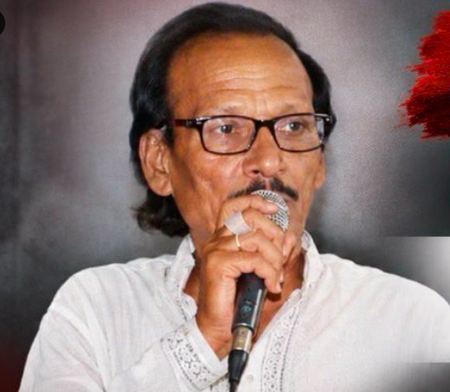
Dhaka, Nov 10 (IANS) Amid concerns over growing custodial deaths of Awami League members in Bangladesh, another party leader died in custody at Kishoreganj District Jail, just a day after being granted bail, local media reported.
The deceased, identified as 75-year-old Ranjit Kumar Ghosh, general secretary of the Awami League's Chowddoshata union unit in Kishoreganj Sadar upazila, was taken to Shaheed Syed Nazrul Islam Medical College Hospital in Kishoreganj on Monday after falling ill, where doctors pronounced him dead shortly after his arrival.
Jahanara Begum, superintendent of Kishoreganj District Jail, said that Ranjit's health suddenly deteriorated on Monday morning, following which prison authorities rushed him to the hospital, where he was declared dead.
The jail superintendent also said that although Ranjit was granted bail on Sunday, he remained behind bars as the prison authorities did not receive the required release clearance by the end of the day, Bangladesh's leading newspaper The Daily Star reported.
According to his relatives, Ranjit was taken into police custody in connection with a case linked to the 2024 July Uprising and was subsequently sent to jail on court orders. He had remained incarcerated at Kishoreganj District Jail since August this year.
His death comes amid a growing number of custodial deaths involving Awami League leaders in Bangladesh since the 2024 political upheaval.
On Tuesday, the Awami League condemned the failure to release Ranjit despite being granted bail, saying the elderly leader's death reflected an increasingly disturbing pattern of fatalities inside Bangladesh's prisons.
"An elderly political leader, suffering from serious medical conditions, spent months behind bars. Even after being granted bail, he was not released. Instead of returning home to his family, he was taken to a hospital, where he was pronounced dead. His death adds to an increasingly disturbing pattern of deaths in Bangladesh's prisons," the party posted on X.
The party claimed that a country where political affiliation can mean prolonged imprisonment, where bail does not necessarily bring freedom, and where deaths in custody continue at such an alarming rate cannot credibly claim to uphold democratic values.
"This is the reality of Bangladesh today: a profound crisis of justice, accountability and the rule of law. Not democracy, but lawlessness. Ranjit Kumar Ghosh deserved dignity, adequate medical care and the protection of the law. His death demands an independent investigation, full accountability for any wrongdoing, and urgent scrutiny of the treatment of political detainees throughout Bangladesh. The right to life is not a political privilege. It is a fundamental human right," the Awami League stated.
--IANS
scor/sd/
Defence without combat: Why Turkey and Pakistan will guard Saudi Arabia, but not fight its war
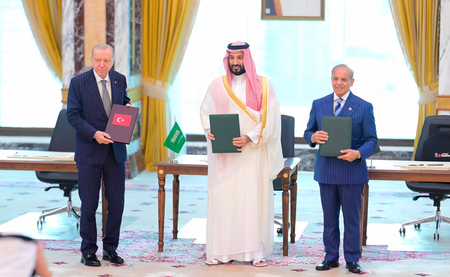
Islamabad: Saudi Arabia believed it had purchased the loyalty of two of the Islamic world's largest armies. What it acquired instead were extraordinarily expensive security guards, contracted to stand watch, but never to leave their barracks. When Riyadh assembled the Mecca Joint Defence Agreement in August 2026, the arrangement was marketed as a NATO-style collective security architecture. An attack on one would be treated as an attack on all. Three Sunni-majority powers, including a nuclear-armed state and NATO's second-largest military had bound themselves together in the birthplace of Islam. The symbolism was potent. The substance has proven far more modest. The first genuine test of the alliance has revealed that neither Ankara nor Islamabad has any intention of fighting Riyadh's war.
The distinction that matters is between defence and combat. Turkish Foreign Minister Hakan Fidan has been explicit: the Mecca agreement is "defensive, not offensive," and Turkey "will not send forces to the territory of another state to launch an attack from there," he told the media in Ankara on October 8.
Defence Minister Yasar Guler was blunter still when asked a few days later whether Turkish soldiers would engage the Houthis: "We absolutely do not foresee entering into any conflict with the Houthis," he told Turkey's Star TV in an interview.
Turkey's contribution will consist of military technology, air-defence systems, drone operators, and intelligence-sharing rather than combat brigades. Ankara is leveraging the pact to deepen defense-industrial ties with Riyadh. In 2023, Turkey signed its largest-ever defense export contract with Saudi Arabia, centred on Akinci combat drones. The Mecca agreement extends that commercial and strategic logic. It is not a blank cheque for Saudi military adventures.
Pakistan's position is even more constrained. Islamabad has deployed roughly 8,000 troops to the Kingdom, including a squadron of JF-17 fighter jets and a Chinese HQ-9 air-defence system, but these forces are officially characterised as serving an advisory and training role. Pakistan has drawn a firm line at putting boots on the ground for offensive operations. It declined to join the Saudi war in Yemen in 2015, and it has ruled out sending troops to help Riyadh retake territory from the Houthis. The reason is not wanted of will but want of capacity and the sheer weight of competing interests. Pakistan's economy remains acutely dependent on Saudi financial support. Islamabad cannot afford a rupture with Riyadh, but neither can it afford to be dragged into a war that would inflame domestic pressures, strain its military across multiple fronts, and damage its delicate relationship with Iran, with which it shares a long and volatile border.
For Islamabad, an offensive strike against the Houthis would be an existential threat at home. Geography is the first constraint. Pakistan shares a porous 900-kilometre border with Iran. In early 2024, cross-border missile strikes between the two nations demonstrated just how fragile that frontier is. If Pakistan launches offensive operations against Tehran's most active proxy in Yemen, Iran need not fight Pakistan in the Arabian Sea. It can destabilise Balochistan tomorrow.
Domestic stability is the second constraint. Pakistan has the world's second-largest Shia population, roughly 10 to 15 per cent of the country. Openly entering a Middle Eastern sectarian shooting war on behalf of Riyadh risks triggering violent internal strife across Pakistani cities. The Pakistani parliament unanimously rejected joining the Saudi-led Yemen intervention in 2015 for precisely this reason. Pakistan's military doctrine exists to maintain deterrence on its eastern border with India, not to bleed in Arabian deserts. They will guard Saudi air bases to secure Riyadh's bailout loans, but they will not fire into Yemen.
Ankara's refusal to go on the offensive is driven by cold pragmatic calculation. Turkey relies on Iranian natural gas pipelines to heat its cities and fuel its industrial grid. According to reports, Iran supplied roughly 13 per cent of Turkey's natural gas imports in 2025, approximately 7.7 billion cubic meters. Antagonising Tehran by attacking its key regional asset jeopardises that energy supply. More importantly, Turkey requires tactical coordination with Iran in northern Iraq and Syria to contain Kurdish militant groups. Torching its relationship with Iran over Yemen dismantles Ankara's primary national security priority on its own southern border.
There is also the ideological paradox. Turkish leadership has built its regional soft power on being the vocal champion of the Palestinian cause. The Houthis have spent recent years framing every missile they launch into the Red Sea and Saudi Arabia as resistance against Western and Israeli trade. If Turkish forces conduct offensive strikes against the Houthis, Ankara completely destroys its standing with the wider Muslim public just to protect Saudi shipping lanes. This is why the defense pact is strictly, permanently defensive.
Saudi Arabia's allies are extracting maximum financial leverage while offering the bare minimum in return. Turkey and Pakistan will operate radar stations, maintain air-defence batteries, and cash Saudi investment cheques. Neither will risk their domestic stability, their borders, or their energy supplies to fight an offensive war against Iran's axis. Saudi Arabia wanted an offensive coalition. What it got was a shield that refuses to swing a sword.
If geography, sectarian balance and regional diplomacy explain why Ankara and Islamabad will not swing the sword, economics explains why they hold the shield so firmly. Their restraint is often read as reluctance, or as a way of drawing Saudi support while offering little in return. A closer look at the economic foundations of the Mecca agreement suggests something more deliberate. For both capitals, the pact is an instrument of economic security as much as military security, and the logic of that economic security points firmly towards defense rather than offense.
Pakistan offers the clearest illustration. Its partnership with Saudi Arabia rests on deep and mutual economic interdependence. The Kingdom holds roughly $8 billion in deposits at the State Bank of Pakistan, and in 2026 it moved its $5 billion facility onto a three-year horizon running to December 2028, a sign of long-term confidence in Pakistan's stabilisation programme. Pakistan, for its part, is implementing a $7 billion IMF programme and steadily rebuilding its reserves. For an economy in recovery, predictability is the most valuable asset of all. A defensive posture protects that predictability; an offensive war in Yemen would put it at risk, along with the reform gains Islamabad has worked hard to secure.
Beyond finance, the human dimension reinforces this calculation. Local media reported that Pakistani workers sent home a record $41.6 billion in the 2026 fiscal year, and Saudi Arabia was the single largest source at $9.78 billion, close to a quarter of the total. These workers are central to the bond between the two countries, and their safety is a national priority for Islamabad. The Houthi campaign has already struck Abha airport and the Jazan refinery, and three Pakistani seafarers lost their lives in a Red Sea attack in August. Pakistani forces in the kingdom guard air defences and critical infrastructure, precisely the role that best protects both Saudi assets and the Pakistani community living alongside them. Carrying the war into Yemen would widen the zone of danger rather than reduce it.
The same reasoning extends to energy. After the Strait of Hormuz effectively closed in early 2026, Pakistani Prime Minister Shehbaz Sharif admitted that the country's weekly oil import bill had risen from $300 million to $800 million. Most Saudi crude now reaches the world through the Red Sea. Defending that route serves Pakistan's direct interest; escalating against the Houthis would expose it to further retaliation and push prices higher still. Long-term Saudi projects in Pakistan, including the proposed $10 billion refinery at Gwadar and interest in Reko Diq, also need a stable regional environment to move from planning to construction. The economic indicators Islamabad watches most closely all favor de-escalation.
Turkey reaches the same conclusion by a different route. Where Pakistan's interests are anchored in finance and labour, Ankara's are anchored in industry. Reports reveal that Turkish defence exports rose from $7.15 billion in 2024 to around $10 billion in 2025, and reached $11.2 billion over the 12 months to mid-2026. Saudi Arabia is a key partner in this growth, with advanced talks on the KAAN fighter programme and a memorandum on assembling Gokbey helicopters within the Kingdom. Technology, co-production and air defence are Turkey's comparative advantage, and they are also the natural contributions of a partner in a defensive alliance.
Turkey's dependence on Iranian gas, noted above, is only one part of a wider economic sensitivity. According to reports, inflation stood at 29.7 per cent in October 2026, with the policy rate at 36 per cent. Brent crude rose by half between late February and May, and the energy think tank Ember estimates the shock could add $14 billion to Turkey's import bill. Turkish exports to the Gulf fell 21 per cent in the first seven months of 2026, while tourism, worth a record $65 billion in 2025, depends on regional calm. For Ankara, de-escalation is sound economic policy.
Nor is this calculus confined to Riyadh's partners. Saudi Arabia's own finances favor a defensive framework. The Kingdom recorded a deficit of about SAR 244 billion in the first nine months of 2026, and its public debt rose by around 17 per cent to roughly $473 billion. Under these conditions, deterrence and the protection of infrastructure are a more cost-effective strategy than an extended offensive campaign.
This is where the two halves of the argument meet. Political and strategic constraints explain why the sword stays sheathed; economic interests explain why the shield is held so firmly. Pakistan and Turkey are protecting the very foundations of their partnership with Saudi Arabia: its workers, its energy flows, its investment and its industrial cooperation. Seen through this lens, the defensive character of the Mecca agreement is not a weakness but a rational design. A shield preserves all of these foundations. A sword would put them at risk.
(Mahmud Bin Morshad is Program Officer, Department of Political Science and Sociology, North South University, Bangladesh. Muhammad Atta Annus is a researcher and economics student at the National University of Sciences and Technology, Pakistan. Views expressed are personal)
Funding crunch in Brussels puts EU-Asean connectivity plans at risk
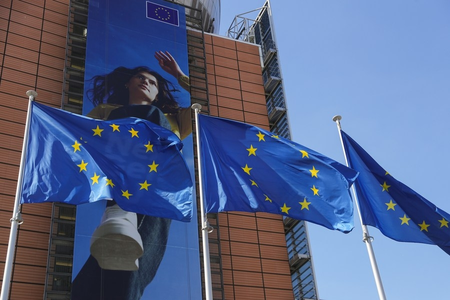
New Delhi, Nov 10 (IANS) The European Union's ambitions to expand its presence in Southeast Asia through large-scale infrastructure and sustainability projects are facing fresh uncertainty as a prolonged budget dispute in Brussels threatens funding for overseas development initiatives, a report has said.
At the centre of the debate is the EU-Asean Global Gateway strategy, launched in 2022 to strengthen connectivity, green transition projects and infrastructure development across Southeast Asia, according to the South China Morning Post.
Backed by 10 billion euros in public funding through 2027, the initiative is a key part of the bloc's effort to deepen engagement with the Association of Southeast Asian Nations (Asean) and offer an alternative source of investment in a region where China's economic influence remains dominant.
However, the programme's future has been clouded by disagreements over the EU's 2028-2034 Multiannual Financial Framework (MFF), the bloc's long-term budget.
The European Commission had proposed an overall budget of nearly 2 trillion euros, including 200 billion euros for its Global Europe external financing instrument, a substantial increase from the current 79.5 billion euros allocation, as per the report.
The proposal has faced resistance from several fiscally conservative member states, including Germany, Austria, Denmark, the Netherlands, Finland and Sweden, which have called for significant reductions before approving the package. The opposition reflects growing concerns among net contributor countries over rising EU spending commitments amid mounting domestic economic pressures, it said.
To break the deadlock, the Irish presidency of the Council of the EU has proposed cutting Global Europe funding to 148.9 billion euros, about 25 per cent below the European Commission's original proposal.
The compromise, however, has drawn strong criticism from members of the European Parliament, who argue that reducing external funding could weaken Europe's influence at a time of increasing geopolitical competition and global instability.
--IANS
pk
China’s pharmaceutical dominance raises supply chain resilience, quality concerns
New Delhi, Nov 10 (IANS) China's growing dominance in pharmaceutical manufacturing, particularly in active pharmaceutical ingredients (APIs) and critical medical supplies, creates concerns about supply-chain concentration and strategic dependence on a single country, a report has said.
Meanwhile, concerns over quality control and regulatory compliance continue, with recent inspections at some manufacturing facilities identifying deficiencies involving documentation, manufacturing processes and quality assurance systems, the report from Maldives Insight said.
"While such findings do not represent the entire Chinese pharmaceutical industry, they highlight the challenges regulators face in monitoring complex global supply chains that span multiple countries and thousands of facilities," the report said.
China has established itself as one of the world's largest producers of APIs, supplying thousands of ingredients used in medicines sold across North America, Europe and Asia, supported by government backing, large industrial clusters and lower production costs.
The report highlighted a recent concern surrounding GLP-1 drugs, used to treat diabetes and obesity, which stemmed from the world’s growing dependence on Chinese pharmaceutical manufacturing.
Though the surge in China’s pharmaceutical sector is often presented as a new economic opportunity or industrial innovation, critics argued that Beijing’s deeper objective extends beyond commercial success to creating global dependence on Chinese pharmaceutical manufacturing.
China views pharmaceuticals, biotechnology and healthcare innovation as the core of its long-term industrial strategy, but the sector also provides Beijing with influence in areas linked to public health and national security.
“A medicine may be designed by a company in the United States, tested in Europe, manufactured in Asia and distributed globally. In such a system, any disruption at a critical link can create shortages affecting millions of patients,” the report explained the new global scenario.
Policymakers in the United States, Europe, Japan and other countries have since Covid-19 pandemic promoted domestic manufacturing and diversified sourcing strategies for essential medicines.
Some Chinese manufacturers have allegedly failed to meet established production standards, while concerns were raised periodically about the quality of certain active pharmaceutical ingredients (APIs) and medical devices exported to overseas markets.
—IANS
aar/pk
Balochistan medical students protest ‘unjustified’ viva failures, demand accountability
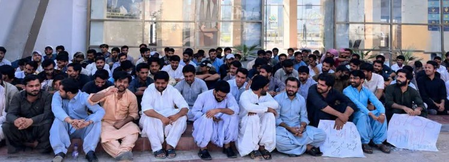
Quetta, Nov 10 (IANS) Students at Makran Medical College in Balochistan's Turbat staged protests over alleged irregularities in viva examinations, alleging that the unjustified failures had resulted in the loss of an academic year and taken a serious toll on their mental well-being, local media reported.
The protest entered its third consecutive day on Monday, with students demanding a transparent and impartial examination system and an end to what they described as unjustified failures. They said repeated demonstrations and class boycotts had failed to bring about a permanent resolution.
"It is unfortunate that every year we hold protests, boycott classes and take other peaceful protest measures for our legitimate demands, yet no lasting solution to students' basic problems has been found," The Balochistan Post quoted the students as saying.
They called on the college authorities and relevant officials to address their grievances and ensure that their academic future was not jeopardised.
"We call on the college administration and the relevant authorities to take students' problems seriously and provide an immediate, practical and lasting solution, so that students do not lose any more valuable time or jeopardise their future," the protesters said.
Expressing concern over the academic future of students at Makran Medical College, the Baloch Students Action Committee (BSAC) questioned the Pakistani authorities' continued inaction over allegations of unfair evaluation in viva-based annual examinations.
"Students' futures at stake -- when will the authorities take notice? The voices raised by students at Makran Medical College, Turbat, are not merely a protest but a serious appeal to protect their academic future, rights, and justice. Every year, issues concerning the examination system, particularly Viva-based Annual Examinations, have come to light...," BSAC posted on X.
The latest protest comes amid wider concerns over the safety and security of educational institutions in Balochistan.
Last month, at least three female students were injured after masked gunmen opened fire inside the Girls Degree College in Balochistan's Nushki district, local media reported, citing the college administration.
According to the college administration, three armed men stormed the college premises on Tuesday, damaged surveillance cameras and vandalised the principal's office before firing at the students.
The injured were shifted to Mir Gul Khan Naseer Teaching Hospital in Nushki for treatment, with one of them reported to be in critical condition, The Balochistan Post reported.
The victims were identified as Mehmoona and Maryam, both from Qaziabad, and Rukhsana from Killi Mengal region in Balochistan.
The attack drew widespread condemnation from rights groups and student organisations, which raised concerns over the safety of students and the deteriorating security situation in educational institutions across Balochistan.
--IANS
scor/sd/
Chinese vloggers misrepresent Dhaka’s impoverished neighbourhoods as New Delhi, make disparaging remarks about India
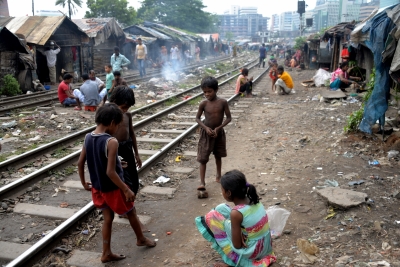
Dhaka, Nov 10 (IANS) Over 150 Chinese nationals have been filming and livestreaming from economically disadvantaged neighbourhoods of Bangladesh’s capital, Dhaka, falsely depicting them as parts of New Delhi, India, according to several reports.
While recording footage from these locations, they made disparaging comments about India's living standards, sanitation, food habits, and poverty.
The misleading portrayal has sparked concerns over the deliberate distortion of geographical locations and the possible use of deceptive online content to create negative perceptions about India among international audiences.
The incident underscored the growing threat posed by misinformation and manipulated content on social media, where sensationalised posts can spread widely before their authenticity is established.
The activities have reportedly been taking place in Dhaka’s Tekpara and Uttara areas for several months, with streamers remaining active from early morning until late at night.
One Chinese woman identified as 'Mianmian', who claimed to be from China's Sichuan province, livestreamed from beside a canal in Uttara Sector 12 of Dhaka on November 1. She reportedly presented the area to her online audience as New Delhi and described the residential buildings and surrounding areas as dirty, underdeveloped, and unhygienic.
“This is New Delhi. Their homes are extremely dirty. There isn't even a fan inside the tin-roofed houses. This place is quite underdeveloped, dirty and unhygienic, and the law-and-order situation is poor,” leading Bangladeshi daily 'Prothom Alo' quoted her as saying.
In another instance, a Chinese national was seen live streaming from tea stalls in the Tekpara locality of Dhaka, making the offensive remarks that the tea consumed by locals was made using “cow urine”.
“Look, they are drinking tea. Do you know what kind of tea this is? This is cow urine tea. They drink cow urine tea,” Prothom Alo quoted him as saying.
The footage also contained derogatory comments on the residents’ lifestyles, with repeated references to poor hygiene, lack of sanitation, and substandard living conditions.
These are not isolated incidents, as reports of Chinese content creators recording videos in Dhaka’s underprivileged neighbourhoods have been emerging since May 2026.
The recurring pattern of Chinese content creators repeatedly filming in the same low-income neighbourhoods, along with allegations of geographical misrepresentation and intrusive filming, raises concerns about attempts to undermine India's image internationally.
These recent developments point to a coordinated anti-India campaign. The issue is not merely the recording of impoverished neighbourhoods, but the calculated misrepresentation of locations in another country as parts of India, coupled with disparaging remarks intended to influence how international audiences perceive Indian society.
--IANS
scor/as
Why Asia is a key growth engine for world economy
New Delhi, Nov 10 (IANS) Asia remains one of the world’s most important engines of economic growth with its manufacturing networks, expanding digital economy and large consumer markets. However, it is important for economic expansion to translate into higher purchasing power and stronger household savings, according to an article in India Narrative.
The article cites the IMF’s Regional Economic Outlook for Asia and the Pacific which highlights the macroeconomic pressures that external shocks can create for regional economies. The problem is not international integration itself, but excessive dependence on external demand without sufficiently strong domestic foundations.
When export orders weaken, businesses may reduce production and recruitment. If household purchasing power is already constrained, domestic consumption may not be strong enough to offset the decline.
The article observes that investment should do more than increase output: it should raise productivity, develop local suppliers, improve worker skills, and strengthen small businesses.
The quality of growth should be assessed through real wages, employment quality, household debt, savings, and consumption — not GDP alone. Inflation can undermine the benefits of expansion when food, energy, housing, and transport costs rise faster than household incomes.
It highlights that China illustrates why productive capacity does not automatically translate into stronger consumption. Weak household confidence and difficulties in the property sector have complicated efforts to strengthen domestic demand.
The broader lesson for Asia is that economic security influences spending decisions. When households fear future income losses, they postpone purchases and save more cautiously, affecting business sales and investment.
The article also observes that Asia has a distinctive advantage in today’s increasingly fragmented global economy: it combines manufacturing depth, resource-rich economies, large consumer markets, technological capabilities, and expanding regional trade.
China remains a major industrial centre, India offers a vast domestic market and growing services sector, and Southeast Asian economies connect production networks with natural resources, logistics, and emerging consumer demand. Australia and other regional partners contribute energy, minerals, agricultural products, and specialised industrial capabilities.
These complementary strengths could allow Asia to build more diversified and resilient supply chains by strengthening practical regional cooperation rather than relying exclusively on any single external market or major power.
Better cross-border infrastructure, predictable investment rules, technology transfer, and cooperation in energy and digital systems can reduce vulnerabilities while expanding economic opportunities, the article added.
--IANS
sps/na
Wave of bomb blasts, arson attacks rocks Dhaka amid deteriorating security situation
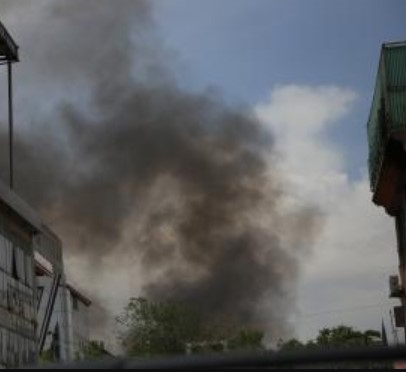
Dhaka, Nov 10 (IANS) Amid mounting security concerns in Bangladesh, a fresh wave of crude bomb blasts and bus arson attacks rocked Dhaka, as educational institutions, court premises and busy transport hubs were among the locations targeted, local media reported.
The incidents on Monday further heightened concerns over public safety in the capital.
These attacks came a day after a wave of explosions at Dhaka University, police facilities and other locations across the capital, alongside multiple bus arsons in the city and its outskirts.
In the latest incident, unidentified assailants set a bus ablaze beneath the Farmgate metro rail station on Monday evening, leading to heightened security in the area.
Tejgaon Police Station Officer-in-Charge Moniruzzaman said that police rushed to the spot after receiving information about the incident and were taking steps to identify and apprehend those involved, Bangladeshi daily Dhaka Tribune reported,
The violence spread to several more parts of Dhaka, with crude bombs exploding near Dhaka University's Teacher-Student Centre and outside the District Judge Court, where suspects were detained in connection with the attacks.
Government Bangla College in Mirpur was also targeted, with a crude bomb exploding at its main gate on Monday evening as several adjoining shops were set ablaze.
In further arson attacks, a bus was torched in the Pallabi area of the capital, while a van carrying gas cylinders was set on fire on Postogola Bridge in South Keraniganj. Additional blasts were reported in Shyampur and near Shanto-Mariam University, World University and Southeast University.
Another attack was reported on Monday morning, with crude bomb explosions near Titumir College and in the Rampura-Banasree area, indicating that the spate of violence continued throughout the day.
The incidents came a day after a particularly volatile Sunday, when crude bombs exploded at multiple locations across the Dhaka University campus, including near the Teacher-Student Centre.
Further explosions were reported near the Criminal Investigation Department (CID) headquarters in Malibagh and Pallabi Police Station.
A member of the Special Response Battalion was injured after a crude bomb was hurled into the Pallabi police station compound, reportedly from a nearby flyover. Another person sustained injuries in an explosion in Mirpur-11.
As Dhaka grapples with escalating violence and a deteriorating law-and-order situation, at least eight buses have been set ablaze, and more than 50 crude bomb explosions rocked different locations across the capital over the past few days, according to a local media report.
Addressing the media at the Dhaka Metropolitan Police (DMP) Media Centre on Sunday, Deputy Police Commissioner Md Akhtar Hossain said that police were closely monitoring incidents of crude bomb explosions and vehicle arson and conducting investigations into each of them.
Several suspects, including members of banned organisations and their affiliated outfits, have been taken into custody.
He said police suspected that a particular group was deliberately orchestrating sabotage activities to create panic among the public.
--IANS
scor/sd/