
Nine killed in shooting in US Pennsylvania

New York, Oct 11 (IANS) Nine people, including two children, were dead following a shooting in Erie, Pennsylvania, US media reported.
Police were called to Perry Street on Friday evening after eyewitnesses reported seeing a man firing a gun before he entered a home, according to media reports on Saturday (local time).
Two women were found dead in the street, and more victims were later found dead inside the home, reports Xinhua, quoting Erie News Now.
Police said that the suspect was also found dead with an apparent self-inflicted gunshot wound.
The City of Erie authorities said Saturday that all nine deaths occurred before police arrived at the scene. No additional gunshots were fired after police arrived.
Police have not yet released the identities of those killed or discussed a possible motive.
Further details are awaited.
Earlier this month, an 18-year-old Minnesota man was charged with a firearm offence in connection with an alleged plot to attack the Mall of America, the largest shopping centre in the United States, according to court documents.
An FBI affidavit alleges that Sheikhdoon Abdullahi Mohamud planned a shooting at the mall in support of the Islamic State. The mall is located in Bloomington, Minnesota.
Mohamud appeared in the US District Court for the District of Minnesota in St. Paul, Minnesota Public Radio reported. A preliminary hearing was scheduled for October 19, according to Fox 9.
On Tuesday, Mohamud allegedly paid 600 US dollars to an undercover FBI employee for an AK-47 rifle, four magazines and about 200 rounds of ammunition. Agents arrested him shortly after he left the employee's vehicle carrying the items, according to the affidavit.
The rifle had been rendered inert for safety before the transaction, while the ammunition was live, according to the filing.
The affidavit alleges that Mohamud knew or had reasonable cause to believe that the firearm and ammunition would be used to commit a felony and a federal crime of terrorism.
The FBI began investigating Mohamud in December 2024, according to the affidavit. He exchanged hundreds of messages with a confidential source through social media and encrypted messaging applications, the affidavit said.
In July, Mohamud allegedly discussed carrying out a shooting at the mall and said he might kill 30 to 60 people. In September, he identified October 24 as the date of the planned attack and sent the source a link to a Hmong Arts Celebration at the mall, according to the affidavit.
In a statement reported by Minnesota Public Radio, the mall said it maintained multiple layers of security and would continue working with law enforcement.
--IANS
sd/
British PM reiterates solidarity with Zelensky amid US-Ukraine tensions

London, Oct 11 (IANS) British Prime Minister Andy Burnham reiterated his "complete solidarity" with Ukrainian President Volodymyr Zelensky amid tensions between Washington and Kyiv over a US-Russia agreement on diesel supplies.
During a phone call with Zelensky, Burnham acknowledged that the past 24 hours had been difficult for Ukraine and reiterated his complete solidarity, according to a statement from 10 Downing Street.
Burnham said Britain would continue to strengthen sanctions against Russia. The two leaders also agreed to meet in person in the coming days to continue their discussions, Xinhua news agency reported quoting the statement.
The phone call came after US President Donald Trump said Saturday that Ukraine should have a new president, accusing Zelensky of failing to reach a peace agreement with Russia and blaming him for high diesel prices in the United States.
On Friday, Washington announced measures to ease sanctions on Russian diesel trade. Zelensky criticised the move, saying that allowing Russia to sell petroleum products would amount to investing in the war.
Zelensky has strongly criticised Trump's agreement allowing Russia to supply diesel to the United States and global markets, arguing that the move would provide Moscow with additional funds to sustain its war against Ukraine and undermine ongoing efforts to secure peace.
In a lengthy post on social media platform X, Zelensky said that allowing Russia to generate revenue through petroleum product exports would strengthen the Kremlin's ability to continue military operations rather than encourage an end to the conflict.
"Gifts to Putin will not bring peace or any benefit to the civilised world," Zelensky wrote.
"Russia will 'repay' the diesel with further terror and perfidy. Allowing Russia to sell petroleum products is an investment in a war that must be ended, not prolonged," he added.
Trump on Friday announced a major agreement with Russian President Vladimir Putin under which Moscow would supply millions of tonnes of diesel to the United States and global markets, saying the move would bring down fuel prices sharply.
--IANS
rs/
Iran’s IRGC says ‘violating’ supertanker exploded after hitting mines in Hormuz Strait
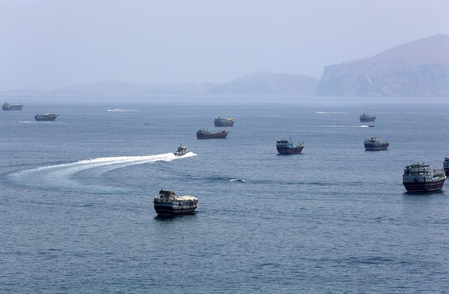
Tehran, Oct 11 (IANS) The navy of Iran's Islamic Revolutionary Guard Corps (IRGC) said that a "violating" supertanker attempting to exit the Strait of Hormuz via an "unauthorized" route suffered a massive explosion after hitting naval mines.
In a statement published on the IRGC's official news outlet Sepah News, the navy said on Saturday that the vessel, carrying crude oil with its navigation and GPS systems switched off, caught fire after the blast.
It said the route had been designated high-risk, warning that such a fate awaits any violating oil tanker seeking to "disregard" Iran's regulations, reports Xinhua news agency.
Earlier on Friday, the IRGC navy said its forces had hit a "giant" liquefied petroleum gas carrier identified as NV Sunshine as it sought to cross the strait through an "illegal" route south of the waterway.
The vessel's engine room and propulsion system caught fire, it said.
The navy said the US military was responsible for such incidents and rising maritime tensions in the region.
It also warned that actions against violating vessels will no longer be limited to the Strait of Hormuz, and any vessel crossing unauthorized routes will be "punished."
Separately, Iranian President Masoud Pezeshkian on Thursday stressed that his country will not abandon the negotiating table although the United States has attacked it twice amid previous talks between the two sides, according to a statement issued by his office.
In a meeting with Russian President Vladimir Putin in Turkmenbashi, Turkmenistan, Pezeshkian said, "We are negotiating. However, whenever we engage in dialogue with the United States, they attack again. Nevertheless, we will not abandon the negotiating table and dialogue."
Pezeshkian added that Iran had put forward some proposals, in response to which the United States also presented new proposals, noting, "We have made our revisions to these proposals, and once finalised, the plan is to sit down and conclude them through the existing mediators."
Iran tightened its grip on the Strait of Hormuz on February 28, barring safe passage of vessels belonging to or affiliated with Israel and the United States following their joint strikes on Iranian territory.
--IANS
rs/
12 killed, 309 injured in attack on Riyadh airport as Houthis, Saudi Arabia trade strikes
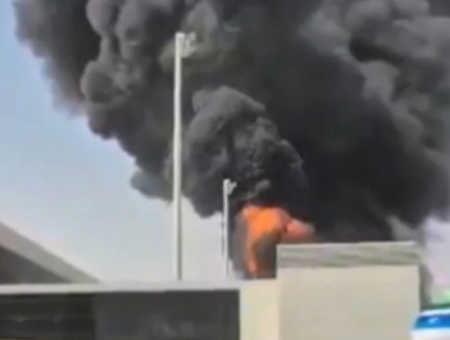
Riyadh, Oct 11 (IANS) An attack targeting King Khalid International Airport in the Saudi capital Riyadh on Saturday afternoon has killed 12 people and injured 309 others, the Saudi General Authority of Civil Aviation said, as Yemen's Houthi group and Saudi Arabia continued exchanging strikes on major airports.
The Saudi aviation authority said in a statement early Sunday that the fatalities included four Saudi citizens and eight foreign residents -- two Bangladeshis and one each from the United States, Egypt, Jordan, Syria, Palestine and Sudan, Xinhua news agency reported.
The injured are receiving treatment at several hospitals, with some in serious condition, the authority said.
The authority said in an earlier statement that operations at the airport had been temporarily suspended pending damage assessments and safety checks.
Following the Saturday attack, the Houthi group said in a statement that it was ready for reciprocal measures with Saudi Arabia to keep airports, seaports and other facilities with humanitarian functions outside the escalating military confrontation.
Houthi-run al-Masirah TV reported Saturday that Saudi Arabia launched a new wave of air and missile strikes across Houthi-held areas in Yemen, targeting Sanaa International Airport in the Houthi-held capital, areas near the strategic Bab al-Mandab Strait and several northern provinces.
Also on Saturday, Yemen's government forces said that more than 1,150 Houthi fighters had been "neutralized" and over 180 military and logistical vehicles destroyed or damaged in over 1,900 strikes across multiple fronts in Yemen in the past 24 hours.
The figures could not be independently verified.
Around Yemen's southwestern city of Taiz, Houthi advances have put increasing pressure on government forces defending the city and disrupted key roads connecting it with government-held areas in southern Yemen, government military sources told Xinhua, adding that fierce clashes were underway south of the city.
Supported by Saudi airstrikes, the Yemeni government launched a large-scale offensive on Monday, seeking to retake Houthi-held territory, with some of the fiercest fighting concentrated around the strategic Bab al-Mandab Strait.
Yemen has been mired in conflict since late 2014, when the Houthis seized the capital Sanaa and much of the country's north. A Saudi-led coalition intervened in 2015 in support of the internationally recognised Yemeni government, now based in the southern port city of Aden. The renewed fighting marked a major escalation after a UN-brokered truce in 2022 largely halted major hostilities.
--IANS
int/rs
Rabindranath Tagore’s graffiti defaced in Dhaka, four detained for questioning
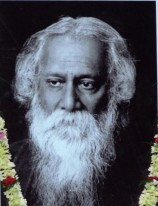
New Delhi, Oct 11 (IANS) A graffiti mural of Nobel laureate poet Rabindranath Tagore was defaced outside the Bangladesh Shilpakala Academy in Dhaka. Following this act of vandalism, police detained four people, including a woman, for questioning.
The Detective Branch (DB) of police is interrogating the detainees in connection with the incident.
The graffiti, located on a wall in front of the Shilpakala Academy in the Segunbagicha area of the capital, was defaced with black ink on Saturday. The incident took place ahead of the Sharadiya Durga Puja festival and has raised concerns over the possibility of unrest during the religious celebrations.
Dhaka Metropolitan Police (DMP) Ramna Division Deputy Commissioner Sheikh Zahidul Islam confirmed the detention of the four people to the Dhaka Tribune on Saturday evening.
“Four people, including a woman, have been detained. They are now at the DB for questioning. Their names and identities cannot be disclosed at this stage in the interest of the investigation,” Dhaka Tribune quoted him saying.
Earlier on Saturday, Shahbagh police detained ANM Ayas, member secretary of the Rashtra Sanglap Forum, in connection with the incident. Two other people, including a woman, were also detained over the same matter.
Several videos circulating on social media showed a woman using a brush to smear black ink across Tagore’s mural. A police officer from Shahbagh Police Station intervened and moved her away from the spot. Following a commotion involving the woman and her associates, police detained them and took them away in a van. The group was also heard chanting slogans during the incident.
Speaking to the media initially, the woman claimed that Tagore had opposed the establishment of the University of Dhaka and had asked, “What need do paupers have of education?” Describing the poet as “against Bangladesh”, she said she had defaced the portrait in protest.
However, she later offered a different explanation, claiming that she had been suffering from a fever and had gone to the Shilpakala Academy area under the pretext of attending a regular protest programme.
The incident has drawn attention to the circumstances surrounding the defacement of the mural ahead of the religious festival. However, police have yet to establish whether the act was linked to any planned provocation.
The four detainees are being questioned by the Detective Branch as part of the ongoing investigation.
--IANS
rs/
Bangladesh’s NCP convenor, whose leader threatened India’s Northeast, backs CJP protests
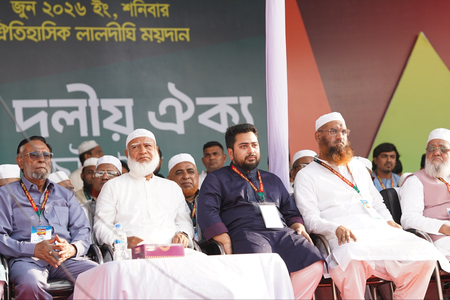
Dhaka, Oct 10 (IANS) Bangladesh’s National Citizen Party (NCP) convener Nahid Islam, whose party has allied with the radical Islamist Jamaat-e-Islami and one of whose leaders had reportedly threatened to capture India’s ‘Seven Sisters’ and the Siliguri Corridor, on Saturday weighed in on India’s internal affairs, backing the Cockroach Janta Party (CJP)-led protests.
Nahid, whose party’s leaders were at the forefront of the violent unrest that led to the ouster of the Sheikh Hasina government in August 2024, issued a statement from Dhaka claiming solidarity with protesters in India over “electoral accountability”.
He went on to claim that “no society is truly democratic while minorities live in fear”, even as Bangladesh has witnessed repeated attacks on its Hindu minority.
In December 2025, Dipu Chandra Das, a 27-year-old Hindu youth who worked in a garment factory in Bangladesh, was dragged into the streets, brutally thrashed to death by a frenzied mob, and then his lifeless body was set ablaze after being tied to a tree in Mymensingh.
He was accused of blasphemy by a coworker, following which the murderous mob, comprising radicals and extremist elements, barged into the factory, dragged him to the streets and killed him ruthlessly.
NCP leaders have also been accused of making anti-India remarks.
In December 2025, Youth Tipra Federation (YTF) President Suraj Debbarma, who led protests near the Bangladesh Assistant High Commission in Agartala, had said that NCP leader Hasnat Abdullah, Muhammad Yunus, the Chief Adviser of Bangladesh’s interim government and other leaders of that country have been continuously making baseless and manufactured “anti-India” comments and encouraging activities hostile to India.
Debbarma had said that protests and demonstrations had been held in front of the Indian High Commission in Dhaka and at other places in Bangladesh, where participants allegedly raised “anti-India” slogans.
“NCP leader Hasnat Abdullah earlier this week reportedly claimed that they would capture India’s ‘Seven Sisters’ and the Siliguri Corridor and make the region part of their country,” he had added.
--IANS
ksk/uk
India, Africa share deep linkages built on Global South solidarity, strategic autonomy: EAM Jaishankar
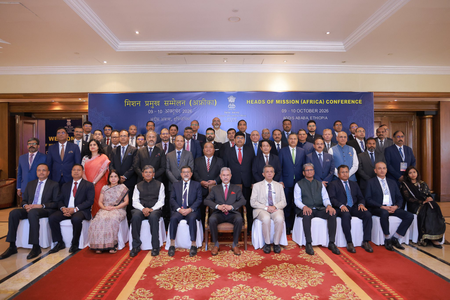
Addis Ababa, Oct 10 (IANS) External Affairs Minister (EAM) S. Jaishankar on Saturday chaired a conference of India’s Heads of Mission in Africa in Addis Ababa, saying India and Africa share deep linkages built upon Global South solidarity, strategic autonomy, multipolarity and common development aspirations.
“Chaired today in Addis Ababa a conference of our Heads of Mission in Africa. India and Africa share deep linkages built upon Global South solidarity, straategic autonomy, multipolarity and common development aspirations,” EAM Jaishankar posted on X.
“We held in depth discussions on taking forward our partnership across trade, investments, connectivity, development partnership, and capacity building,” he added.
The conference came a day after the EAM laid out his vision for the India-Africa partnership in an address in the Ethiopian capital.
On Friday, EAM Jaishankar said partnerships of the future must “help create capabilities, not promote dependencies”, and called for a reformed UN Security Council with fair representation for Africa, while speaking on the India-Africa partnership at the Adwa Memorial Museum in Addis Ababa.
While the vocabulary and the challenges may have changed, the essential question remained “who gets to decide our future,” EAM Jaishankar said, adding that “this is the question that brings the global South, especially India and Africa, together.”
“It is no longer sufficient to describe India and Africa only through the vocabulary of historical solidarity. History has given us trust,” EAM Jaishankar said, stressing that the relationship must now evolve.
He said development partnerships could be built on mutual respect.
“They need not be prescriptive, condescending or conditional. They can be based on respect and equality, shared capabilities, and most of all, shared prosperity,” he said.
On global governance, EAM Jaishankar said India worked resolutely during its G20 Presidency in 2023 to secure permanent membership for the African Union, and “the same logic now applies to the reform process of the UN Security Council”.
Reform, he said, “is not merely to add more seats around an old table. It is to make global governance more democratic, more responsive, and more representative”, adding that Africa must be represented fairly in both categories of Council membership, in line with the Ezulwini Consensus and the Sirte Declaration.
--IANS
ksk/uk
Your heroics place you in ranks of Indian troops who liberated Holy Land: Israel Prez writes to Capt Smit Machchhar
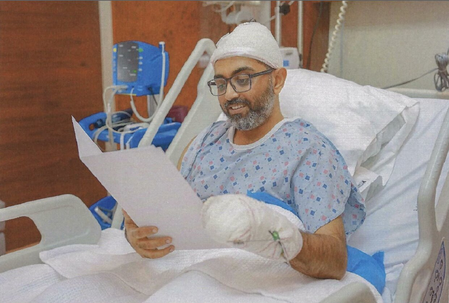
New Delhi, Oct 10 (IANS) Israeli President Isaac Herzog on Saturday wrote to brave Indian pilot Captain Smit Machchhar, likening his heroics to those of the Indian troops who risked their lives over a century ago to liberate cities in the Holy Land, calling the Indian pilot a hero of Israel, India and all of humanity.
“Your heroics place you in the distinguished ranks of Indian troops, who risked their lives over 100 years ago to liberate cities in the Holy Land, forever becoming a part of Israel’s history. You too, Captain Machchhar, will henceforth be a treasured part of our people’s history, further amplifying the warmth and connection between the Republic of India and the State of Israel,” Herzog wrote in a letter.
The Israeli President said the pilot had received the letter over the weekend.
“Captain Smit Machchhar, you are a hero of Israel, India, and all of humanity! In my letter to you, which you received over the weekend, I shared our prayers for your full and speedy recovery,” Herzog posted on X.
“As I wrote in my letter, I look forward to welcoming you to Jerusalem once you regain your strength. On behalf of the people of Israel, I would be honoured to present you with Israel’s highest recognition of civilian heroism, the Israeli Presidential Award for Civilian Heroism,” he added.
In the letter, Herzog thanked the pilot for steering the aircraft to safety and said his actions showed the strength of his character.
“Your ability to find the strength to rise above the pain, to combat the immediate threat to your life, and to operate sound judgment demonstrates the strength of your character and the great valour you possess,” he wrote.
Herzog announced on Friday that Captain Machchhar, who fought against the attacking co-pilot in a Flydubai aircraft and helped save 174 people onboard, will receive Israel’s Presidential Award for Civilian Heroism, the country’s highest bravery award for civilians, once he recovers.
“Alongside the Israeli heroes whom we honour today, we send our heartfelt wishes for the full and speedy recovery of Captain Smit Machchhar of India. Captain Machchhar’s sheer courage and bravery and sound professionalism helped avert a catastrophe. Once he regains his strength, it will be my honour and privilege to award him, on behalf of the people of Israel, the State of Israel’s Presidential Award for Civilian Heroism,” Herzog said.
According to the United Arab Emirates probe, Hamam Al-Hammami, the co-pilot of the Dubai-Tel Aviv flydubai flight, attacked Indian pilot Captain Machchhar with the cockpit’s crash axe in what the UAE authorities have described as a “terrorist attack”.
--IANS
ksk/uk
India stands with govt and people of Panama following earthquake: EAM Jaishankar
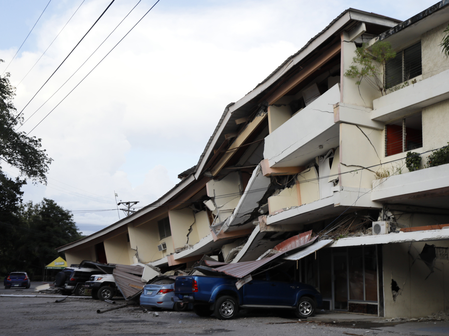
New Delhi, Oct 10 (IANS) External Affairs Minister (EAM) S. Jaishankar on Saturday said that India stands with the Government and people of Panama following the earthquake in the Central American country, and extended his thoughts and prayers to all those injured and affected.
“India stands with the Government and people of Panama following the earthquake. Our heartfelt thoughts and prayers are with all those injured and affected, especially the families who have suffered loss and hardship,” EAM Jaishankar wrote on X, tagging Panama’s Foreign Minister Javier Martinez-Acha Vasquez.
A 7.2-magnitude earthquake struck Panama, with its epicentre 39 kilometres northwest of Tonosi, a town in Los Santos province, according to a revised report from the University of Panama's Institute of Geosciences.
Strong shaking was felt locally on Friday (local time). Videos shared on social media showed the roof of the Albrook bus terminal swaying and windows shaking violently in several buildings.
Tremors were felt in the capital, Panama City, a Xinhua correspondent in the city reported, with strong side-to-side jolts while sitting and a hanging light in a room swaying intensely.
The United States Geological Survey, which initially reported a magnitude of 8.0, later revised its estimate to 7.7.
The US Tsunami Warning System issued a tsunami threat following the earthquake, warning that hazardous tsunami waves were possible along parts of the coasts of Panama, Colombia, Costa Rica, Ecuador, Peru, Nicaragua, Guatemala, El Salvador and Mexico within the next three hours. The US tsunami warning was later revoked.
The tsunami warning department of the Chilean Navy's Hydrographic and Oceanographic Service issued an alert, saying the earthquake could trigger a tsunami affecting the country's Easter Island, reports Xinhua news agency.
The Panama Canal Authority said operations were continuing normally after the earthquake struck. Emergency protocols had been activated, and technical teams were inspecting canal facilities for possible damage, it said in a statement.
--IANS
ksk/uk
MoS Kirti Vardhan Singh plants sacred sapling under ‘Ek Ped Maa Ke Naam’ initiative in Iceland
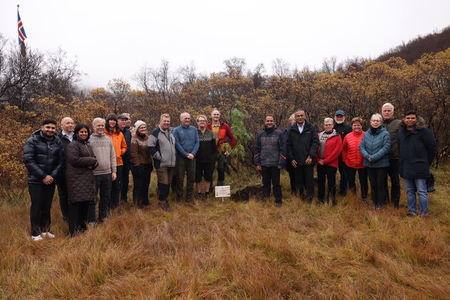
Reykjavik, Oct 10 (IANS) Minister of State (MoS) for External Affairs and Environment, Forest and Climate Change, Kirti Vardhan Singh, on Saturday visited Porsmork Forest in Iceland and planted a Rowan sapling as part of Prime Minister Narendra Modi’s ‘Ek Ped Maa Ke Naam’ initiative.
“Visited the Porsmork Forest in Iceland and witnessed the inspiring conservation efforts to restore and protect its unique ecosystem. Planted a Rowan sapling, a native Icelandic species, as part of Prime Minister Shri Narendra Modi ji’s ‘Ek Ped Maa Ke Naam’ initiative,” MoS Singh stated on X.
“The Rowan tree is historically considered sacred in Icelandic folklore and often protected from harvesting,” he added.
On Friday, MoS Singh met Iceland’s Minister for the Environment, Energy and Climate, Johann Pall Johannsson, in Reykjavik and discussed opportunities to strengthen bilateral cooperation in clean and renewable energy, climate action and sustainable development, the minister said on Friday.
“Pleased to meet H.E. Johann Pall Johannsson, Minister for the Environment, Energy and Climate of Iceland, in Reykjavik today, who had just returned from India after attending the 2nd India-EFTA Prosperity Summit. Had a productive exchange on opportunities to strengthen bilateral cooperation in clean/renewable energy, climate action and sustainable development,” Singh posted on X.
“Look forward to deepening our engagement in these important areas and advancing practical cooperation between our two countries,” he added.
The minister also visited the Hellisheioi Power Plant, one of the world’s leading geothermal energy facilities.
“Visited the Hellisheioi Power Plant in Iceland, one of the world’s leading geothermal energy facilities. An insightful visit showcasing Iceland’s innovative use of geothermal resources for clean and sustainable energy. Valuable lessons for strengthening India-Iceland cooperation in geothermal energy and the broader clean energy transition,” he said in another post.
MoS Singh also interacted with officials of the Embassy of India in Reykjavik and encouraged them to pursue diplomatic priorities with dedication and purpose, advancing PM Modi’s vision of the 3Ts—Trade, Technology and Tourism—and deepening India-Iceland engagement across key areas of cooperation.
–IANS
ksk/uk