
Indigenous 4G stack for BSNL puts India among select nations: Scindia
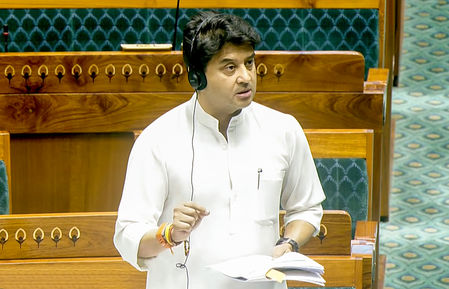
New Delhi, March 18 (IANS) Union Minister Jyotiraditya Scindia on Wednesday said the development of an indigenous 4G telecom stack for Bharat Sanchar Nigam Limited marks a major step towards India’s self-reliance in telecom equipment, placing the country among a select group of nations with such capabilities.
Speaking in the Lok Sabha, Scindia said India is steadily moving towards technological independence in the telecom sector under the leadership of Prime Minister Narendra Modi.
“The development of an indigenous 4G telecom stack for BSNL represents a strategic move towards domestic manufacturing of critical telecom equipment, placing India among a select group of nations with such capabilities,” he stated.
The minister also highlighted the revival of BSNL, saying the public sector telecom company has posted quarterly net profits for the first time in nearly 18 years in FY 2024–25.
He added that BSNL’s subscriber base has increased from 8.55 crore to 9.27 crore, showing growing consumer trust.
“Around 1 lakh 4G towers have already been rolled out, and 5G services will be introduced after the 4G network stabilizes,” the minister stated.
Scindia further informed the House about the government’s efforts to expand mobile connectivity, especially in border and remote areas.
He said villages within 50 kilometres of the international border are now being seen as the “first villages” of the country under the Vibrant Villages Programme, reflecting a shift in development thinking.
The government is also supporting telecom expansion through the Digital Bharat Nidhi, which funds connectivity projects in rural and difficult areas.
In Rajasthan, he said, over 97 per cent of border villages already have mobile coverage.
Highlighting progress in Uttarakhand, the minister said 684 out of 705 border villages have already been connected, with efforts ongoing to cover the rest.
“India now has one of the world’s largest telecom networks, supporting services like digital payments and direct benefit transfers,” Scindia added.
He also pointed to the success of the BharatNet programme, under which more than 2.15 lakh Gram Panchayats have been connected with broadband.
--IANS
pk
APSEZ’s Colombo terminal crosses key 1 million container mark in first year operations
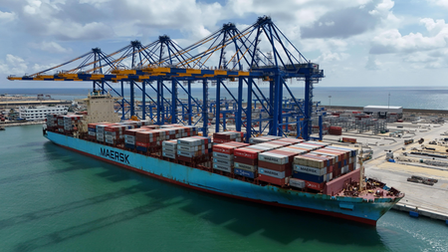
Ahmedabad, March 18 (IANS) A rapid first-year ramp-up at the Port of Colombo in Sri Lanka underscores the expanding global footprint of India’s Adani Ports and Special Economic Zone Ltd (APSEZ), highlighting both the growing importance of the Indian Ocean region in global trade flows and its emerging role in the blue economy.
In a milestone that signals both operational discipline and strategic intent, the Colombo West International Terminal (CWIT) in Sri Lanka, which commenced operations in April 2025, has crossed one million TEUs (Twenty-foot Equivalent Units) in its first year, an APSEZ statement said. The achievement marks the fastest ramp-up recorded at the Port of Colombo, placing the CWIT among a select group of global facilities to reach such scale in its inaugural year.
The Colombo West International Terminal is a partnership between Adani Ports and Special Economic Zone Ltd (APSEZ), which handles nearly 45 per cent of India’s container cargo, John Keells Holdings PLC, one of the most respected conglomerates in Sri Lanka, and the Sri Lanka Ports Authority. With an investment of about $800 million, it represents one of the most significant port infrastructure commitments in Sri Lanka in recent years.
The milestone comes in the backdrop of Colombo strengthening its role as a key transshipment hub, linking cargo flows across Asia, the Middle East and Europe. Its location, close to the world’s major east-west shipping route, has long made it a preferred stop for mainline vessels and feeder networks.
Container terminals typically take several years to stabilise operations and build throughput. CWIT’s performance reflects strong early alignment with shipping lines, efficient berth productivity and the advantage of operating within an established transshipment ecosystem. Large ports operate at far greater scale, but their expansions have historically ramped up in phases. Even newer automated terminals in Europe and East Asia have taken longer to reach comparable utilisation levels.
CWIT is the first fully automated deep-water terminal at the Port of Colombo, built to handle the latest generation of ultra-large container vessels. Its 1,400-metre quay and water depth of around 20 metres allow it to berth some of the largest ships operating on the Asia–Europe trade route.
With an annual capacity of about 3.2 million TEUs, the terminal significantly expands Colombo’s handling capability. Digitally integrated systems, modern cranes and electrified yard equipment are designed to reduce turnaround times and improve operational efficiency.
This aligns with broader global trends, where ports are investing in automation and energy-efficient systems to enhance productivity while managing environmental impact.
The terminal’s early success reinforces Colombo’s importance in global shipping networks. A significant share of its volumes continues to be transshipment cargo, much of it linked to India, making efficiency and connectivity critical to sustaining growth.
For APSEZ, which operates a portfolio of 15 ports in India and four overseas, the project marks a notable step in expanding its international footprint, reinforcing its position as India’s largest private port network. The partnership with John Keells Holdings PLC and the Sri Lanka Ports Authority combines global operational expertise with local institutional alignment.
--IANS
sps/vd
North India emerges as India’s Green Building powerhouse: Experts

New Delhi, March 18 (IANS) Strong momentum was witnessed in green building adoption across North India, with NCR emerging first followed by Uttar Pradesh, experts said on Wednesday.
Uttar Pradesh recorded 1,673 IGBC‑registered projects covering 1.78 billion sq. ft. at the GreenTech Summit 2026 convened by the council reflecting the state’s rapid progress in embedding sustainability into its urban growth, the CII Indian Green Building Council (IGBC) said.
Delhi saw 794 projects spanning 0.63 billion sq. ft., and the region reinforced its position as a key contributor to India’s green building movement.
The broader NCR region has demonstrated even more significant scale, with a total of 2,475 registered projects covering 2.81 billion sq. ft. of green building footprint.
Uttar Pradesh's growth is distributed across major urban centres, with Noida and Greater Noida contributing 748 projects, Gurugram accounting for 651 projects as well as Faridabad and Ghaziabad together contributing 282 projects.
The event brought together industry leaders, policymakers, technology innovators, and sustainability experts to accelerate the adoption of climate technologies across India’s built environment, the release said.
As India advances toward its Net Zero ambitions and the vision of Viksit Bharat by India@2047, the summit underscored the growing importance of green technologies, low-carbon materials, digitalization, and integrated design approaches in shaping a sustainable and resilient future, it added.
"As India moves towards Viksit Bharat 2047, with much of its infrastructure yet to be built, we have a unique opportunity to shape our cities through climate-resilient design, low-carbon technologies and digital innovation. The solutions we adopt today will determine the sustainability and resilience of our future cities,” said Baljit Singh, Co-Chair, IGBC Delhi Chapter & Executive Vice President, Brookfield Properties.
The accelerated adoption of green buildings is supported by progressive policy frameworks, particularly in Uttar Pradesh, it noted.
These include an additional Floor Area Ratio (FAR) for projects that are pre-certified or provisionally certified as IGBC Gold or above, along with an additional 5 per cent FAR offered free of charge by the Greater Noida Industrial Development Authority (GNIDA) for projects achieving similar ratings.
Across Asia-Pacific, green building certifications, energy monitoring, and tighter material compliance are raising baseline fit-out costs, a recent report has said.
—IANS
aar/pk
All Indian seafarers, ships in Persian Gulf region are safe: Govt
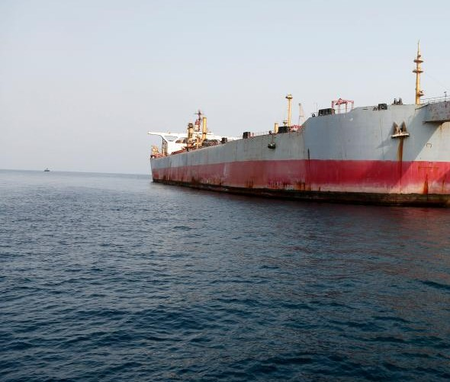
New Delhi, March 18 (IANS) All Indian seafarers in the Middle East region are safe, and no shipping incident involving Indian-flagged vessels has been reported in the past 24 hours, the Ministry of Ports, Shipping and Waterways said on Wednesday.
At present, 22 Indian-flagged vessels with 611 Indian seafarers remain in the western Persian Gulf region, with the Directorate General of Shipping continuing close monitoring in coordination with ship owners, RPSL agencies and Indian Missions, a ministry statement said.
LPG carrier vessels Shivalik and Nanda Devi, which have returned from the Middle East, are currently discharging cargo as per the schedule of oil handling companies.
The DG Shipping control room continues to operate 24×7 and has handled 3,305 calls and 6,324 emails since activation, including 125 calls and 449 emails in the past 24 hours. The safe repatriation of more than 472 Indian seafarers so far, including 25 in the past 24 hours, from airports and regional locations, has been facilitated, according to the statement.
India’s maritime sector continues to operate smoothly with no congestion reported at ports, including confirmation from State Maritime Boards such as Gujarat and Maharashtra, the statement said.
Ports are closely monitoring vessel movements and cargo operations and have adequate spare capacity, with additional storage space created, including around 2,260 square metres at Visakhapatnam Port Authority. At the JNPA, the situation remains normal with the number of stranded containers reducing further from about 1,000 to around 770.
The Ministry of Ports, Shipping and Waterways continues to monitor shipping movements, port operations, safety of seafarers and continuity of maritime trade in view of the evolving situation in West Asia, the statement added.
Meanwhile, flight operations are gradually improving with additional services being introduced between India and the Middle East region, according to an official statement.
In the UAE, around 70 flights operated on March 17 and about 75 flights are expected today to various destinations in India. Over 50 flights have been operating daily since 5 March 2026, indicating improved connectivity.
Flights continue to operate from Saudi Arabia and Oman to India. The Qatar airspace remains partially open, with 5 flights operated on Tuesday and services to nine Indian destinations announced from Wednesday
However, the Kuwait airspace has remained closed since February 28. Special non-scheduled flights by Jazeera Airways are expected from Al Qaisumah Airport in Saudi Arabia.
--IANS
sps/vd
Odisha govt approves 23 industrial projects worth Rs 4,510 crore
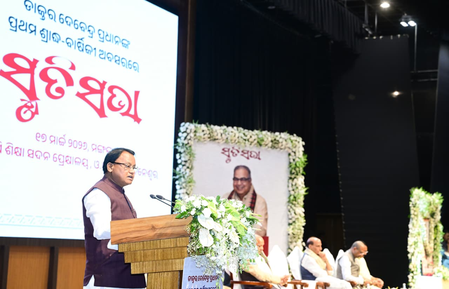
Bhubaneswar, March 18 (IANS) In a significant development, the Odisha government on Tuesday approved 23 industrial projects with a total investment of Rs 4,510.65 crore.
These projects were approved at the 145th meeting of the State Level Single Window Clearance Authority (SLSWCA) held here under the chairmanship of Chief Secretary Anu Garg.
According to an official statement, the approved projects are expected to generate 10,122 employment opportunities, significantly contributing to inclusive economic growth and reinforcing Odisha’s emergence as a leading industrial destination in eastern India.
“The approvals reflect the State’s strategic focus on employment-led industrialisation, sectoral diversification, and regional equity, aligned with the broader national vision of Purvodaya. By catalysing investments across both established and emerging sectors, Odisha continues to position itself as a key driver of industrial growth in the eastern region,” added the state government.
The approved projects span a wide spectrum of sectors, including Wood-based Industries, Chemicals, Apparel, Technical Textiles, Pharmaceuticals, Medical Devices, Manufacturing, Aluminium Downstream Industries, Electrical Equipment, Steel & Metal Downstream Industries, Food Processing, Agro Processing, Gemstones & Jewellery, Infrastructure, IT & ITES, and Tourism & Hospitality. This diverse portfolio underscores the State’s commitment to building a resilient, sustainable, and innovation-driven industrial ecosystem.
These projects will be implemented across eleven districts—Balasore, Bolangir, Cuttack, Jagatsinghpur, Kalahandi, Keonjhar, Khordha, Koraput, Puri, Sambalpur, and Sundargarh—ensuring balanced regional development and deeper industrial penetration across the State.
Among the major investment proposals are in Koraput with an investment of Rs 870.82 crore, generating 1,000 employment opportunities; a tile adhesives manufacturing unit in Balasore; a pharmaceutical product manufacturing unit in Cuttack with an investment of Rs 236.90 crore, generating 549 jobs; a Sulphuric Acid Plant in Jagatsinghpur with an investment of Rs 425 crore; and a grain-based ethanol unit along with a co-generation power plant in Kalahandi, etc.
“Aligned with the vision of Samruddha Odisha 2036, these approvals mark another significant step towards transforming Odisha into a leading industrial and economic powerhouse of eastern India, contributing meaningfully to India’s growth story,” noted the state government.
--IANS
gyan/dan
RBI wins global Initiative of the Year Award
Mumbai, March 17 (IANS) The Reserve Bank of India has been selected for the prestigious 'Initiative of the Year Award' by London-based Central Banking in recognition for its launching the '.bank.in' domain, making India the first country globally to mandate a secure and exclusive Internet domain for the banking system.
The award recognises the initiative as a global benchmark in financial cybersecurity and digital infrastructure management.
The transition enhances consumer confidence, helps reduce digital payment fraud, and strengthens financial stability. This has been implemented through the involvement of multiple stakeholders, including the Indian government, the NIXI, the IDRBT, and banks, according to an official statement.
By mandating a domain name for the country’s banks, the RBI has struck a major blow against cyber fraud. Only RBI-regulated entities are permitted to use the .bank.in domain, which helps to strengthen cybersecurity and protect customers from phishing and look-alike website frauds. Banks were instructed to migrate to the new domain to boost trust in digital banking.
"Digitisation has transformed all aspects of financial infrastructure – from the ways in which individuals and businesses make and receive payments, to the ways in which investment capital is allocated, and the performances of individual securities are monitored in real time. But it has come with a cost: a large increase in cybercrime," Central Banking said.
"In emerging economies such as India’s, where digitisation is seen as a key tool for financial inclusion, the threats posed by cyber crime are particularly acute,” the statement added.
The Reserve Bank of India has announced the exclusive .bank.in domain for all licensed banks in India to enhance cybersecurity and reduce phishing scams. Banks were mandated to migrate their net banking websites to this secure domain by October 31, 2025.
Major banks, including SBI, HDFC, and ICICI, have migrated their websites to the new domain, often resulting in URLs like www.bankname.bank.in.
Separate, specialised domains are being utilised for other non-bank financial entities to differentiate from banking institutions.
--IANS
sps/vd
Entire increase in local LPG production is going to households: FM Sitharaman
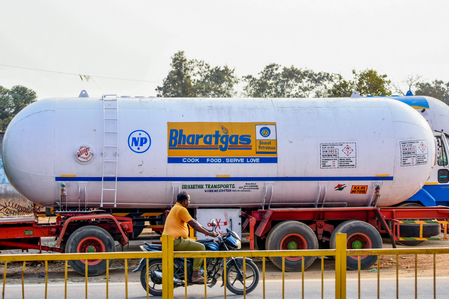
New Delhi, March 17 (IANS) Finance Minister Nirmala Sitharaman clarified on Tuesday that the entire 25 per cent increase in domestic LPG production is being supplied to households as cooking gas.
Speaking in the Rajya Sabha, the Finance Minister also highlighted that 65 per cent of the total LPG consumed in India is imported, and as much as 90 per cent of this quantity is shipped through the Strait of Hormuz.
The government is ensuring a steady flow of LPG even in these turbulent times, she said, and further clarified that there is no energy shortage in India today.
In order to address the shortage from imports, refineries have maximised their output, she noted.
Talking about the economy, she said that despite the war raging in the Middle East, India has been able to maintain its economy. "We're able to stand up and face such situations," she remarked.
She went on to say that it is the position of the Indian economy today that gives it the strength to meet unforeseen problems.
In addition, the capital outlay for infrastructure projects such as highways, ports and railways that spur growth and create jobs in the economy has been increased to Rs 12.2 lakh crore, she pointed out.
India’s domestic refineries have stepped up LPG production to fill the gap in imports caused by the disruption due to the closure of the Strait of Hormuz because of the Iran war, according to a statement issued by the Ministry of Petroleum and Natural Gas.
"LPG supply continues to be monitored in view of the prevailing geopolitical situation. No dry-outs have been reported at LPG distributorships. Delivery Authentication Code (DAC) coverage has been expanded from 53 per cent before the crisis to about 72 per cent to prevent diversion of cylinders at the distributor level," the statement said.
Two Indian-flagged LPG carriers safely crossed the Strait of Hormuz before arriving in India on March 16 and 17, as the government continues to closely monitor maritime operations in the Persian Gulf region amid the evolving geopolitical situation in West Asia. MT Shivalik and MT Nanda Devi — carrying approximately 92,712 metric tonnes of LPG - crossed the Strait of Hormuz early Friday.
Major ports are prioritising berthing for LPG vessels to ensure the timely discharge of cargo and continuity in energy supply. Over the past few days, six LPG vessels have been received at major Indian ports. Additionally, ports are providing safe anchorage areas for vessels loaded with cargo bound for the Gulf region that are currently unable to transit due to prevailing conditions.
The online bookings of LPG cylinders have increased from about 84 per cent to around 90 per cent, which will enable a more orderly distribution of the cooking gas to households.
--IANS
sps/vd
Konkan mango, cashew relief to be announced before Budget session ends: Maha CM
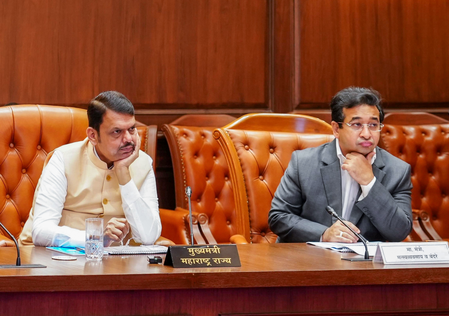
Mumbai, March 17 (IANS) Maharashtra Chief Minister Devendra Fadnavis on Tuesday said the government is committed to supporting affected mango and cashew farmers from the Konkan region, adding that a relief package will be announced in the House before the end of the ongoing budget session of the legislature.
At a meeting held at Vidhan Bhavan, the Chief Minister said mango and cashew nuts are the identity of the Konkan region. Due to the shedding of blossoms (mohal), these vital fruit crops have suffered significant damage.
He noted that current data highlights the intensity of the crop loss.
He said the government would study previous relief models and consult Deputy Chief Ministers, the Agriculture Minister and Konkan’s public representatives to finalise the aid.
Vikas Chandra Rastogi, Additional Chief Secretary (Agriculture), presented a detailed report on the extent of the damage.
Meanwhile, Agriculture Minister Dattatray Bharne on Tuesday directed concerned agencies to work in coordination and provide training, technical guidance and necessary facilities to beneficiaries, especially from the Dhangar community, under the Semi‑Stall Fed Sheep Rearing Project of the ‘Nanaji Deshmukh Krishi Sanjivani (PoCRA)’ scheme.
During the meeting, various measures were discussed to ensure the effective implementation of the project.
These included formation of shepherd groups or Farmer Producer Organisations (FPOs), setting up an effective marketing system to prevent fraud in sheep sales, providing healthcare facilities and insurance coverage, establishing Common Facility Centres for processing in each district and handing them over to shepherd groups to operate, and formulating proposals to make Forest Department land or other government fallow lands available for grazing in a planned manner.
Earlier today, the Maharashtra government passed a Bill in the Legislative Assembly to repeal 80 obsolete acts and laws, marking a significant step towards strengthening good governance and streamlining administrative processes.
The Maharashtra Repealing Bill, 2026 (Assembly Bill No. 17), aimed at repealing outdated Acts in the state, was introduced by Minister of General Administration Ashish Shelar.
After a detailed discussion, the Bill was passed by the House.
Presenting the government’s stance, Minister Shelar said that, due to constitutional changes, state reorganisation, and the enactment of new laws, several Acts in Maharashtra had become obsolete.
He said retaining references to such outdated laws was creating ambiguity in governance.
--IANS
sj/dan
Middle East conflict hits China’s exports as shipping costs soar
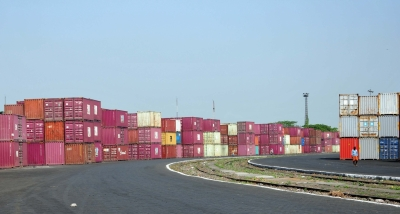
New Delhi, March 17 (IANS) The conflict in the Middle East has hit China’s exports due to the disruption in shipping, which has caused goods to pile up in the local warehouses, according to media reports.
The report in CBC news came from the Chinese city of Yiwu, which is known as the world’s supermarket, as it is a key supplier of household goods and electronic products to US commerce giants such as Amazon and Walmart, as well as to the Middle East.
The report by Chris Brown states that due to the sharp rise in shipping costs as well as the danger to commercial ships due to the Iran war, importers are not lifting Chinese goods, as a result of which the inventory is piling up. Shipping costs are reported to have gone up fivefold from $1,200 per container to $6,000, the report cited a local businessman as saying.
Apart from the high shipping costs, some importers do not want to take the risk of transporting goods, as it is not considered safe due to the attacks taking place on commercial shipping amid the Middle East war. Another oil tanker was hit in the Persian Gulf on Tuesday, which appears to show that their fears are well-founded.
The report points out that the city in Eastern China provides an insight into how the Iran war and the blocking of the Strait of Hormuz are disrupting global supply chains.
The report cites some local businessmen as saying that the Middle East consumes about 30 per cent of the goods exported from the Chinese city.
Apart from the exports being adversely impacted due to the war, China has also been hit on the energy front, as it is one of the biggest buyers of Iranian oil, the report points out.
Similarly, a lot of liquified natural gas (LNG) imported by China comes from Qatar. The Middle East country has shut down some operations due to air attacks on its gas facilities, and this has disrupted supplies.
--IANS
sps/vd
3 lakh metric tonnes LPG stranded at Strait of Hormuz: Govt official
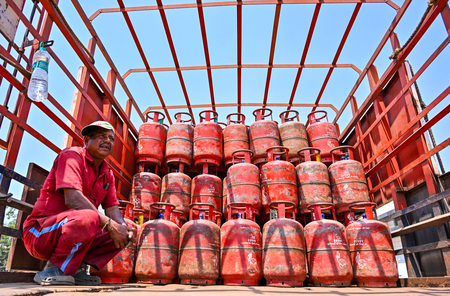
New Delhi, March 17 (IANS) Nearly 3 lakh metric tonnes of liquefied petroleum gas (LPG) is currently stranded at the Strait of Hormuz, Rajesh Kumar Sinha, Special Secretary in the Ministry of Ports, Shipping and Waterways, said on Tuesday.
During a key briefing, the senior government official said that multiple vessels carrying LPG are unable to move due to the situation in the crucial shipping route.
He explained that six ships are currently stuck in the Strait of Hormuz, with each vessel carrying around 45,000 metric tonnes of LPG.
“Six ships are currently stuck in the Strait of Hormuz, with each vessel carrying around 45,000 metric tonnes of LPG,” Sinha mentioned.
Together, this accounts for roughly 3 lakh metric tonnes of fuel that is yet to reach its destination.
The Strait of Hormuz is one of the world’s most important maritime routes for energy supplies, connecting the Persian Gulf to the Arabian Sea.
Any disruption in this narrow passage has a direct impact on global energy trade and supply chains.
Meanwhile, the second Indian‑flagged LPG tanker 'Nanda Devi' arrived at Vadinar Port in Gujarat during first half on Tuesday.
A day back on Monday, the first Indian-flagged 'Shivalik' docked at Mundra Port in Gujarat.
Officials said that the LPG carrier Shivalik arrived at the Mundra Port, carrying a total cargo of about 46,000 metric tonnes (MT) of liquefied petroleum gas (LPG), with 20,000 MT set to be unloaded at Mundra and the remaining 26,000 MT to be discharged at Mangaluru.
Both vessels were transporting critical LPG supplies to India following an unusually hazardous passage through the Strait of Hormuz, where maritime traffic has been disrupted by the ongoing conflict involving Iran, the US and Israel.
However, While Nanda Devi and Shivalik have arrived, another ship, 'Jag Laadki', carrying nearly 81,000 tonnes of crude oil from the UAE, is en route to India.
--IANS
pk