



New Delhi, April 18 (IANS) The Archaeological Survey of India (ASI) currently safeguards 3,686 centrally protected monuments, supported by strengthened conservation systems, scientific restoration methods and modern technologies like AI, an official fact-sheet said on Saturday.
India’s global heritage profile has expanded, with 44 UNESCO World Heritage Sites, including the recent addition of the Maratha Military Landscapes.
“Heritage and monument preservation has advanced through large-scale digitisation, creation of national heritage databases, and wider adoption of scientific and digital tools for documentation and conservation,” the fact-sheet said.
Notably, technology has become an increasingly important pillar in India’s conservation ecosystem, complementing ASI’s traditional practices with tools that improve documentation, diagnostics and long-term preservation.
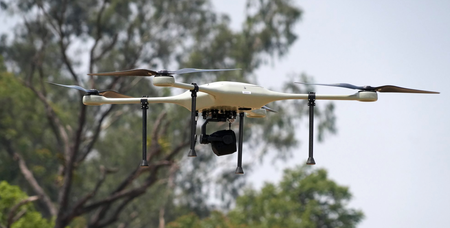
Modern technologies/tools such as LiDAR scanning, GIS-based mapping and drone-based surveys etc. are used as per requirement for proper documentation. There has been a growing use of scientific laboratory techniques to study heritage materials, understand patterns of deterioration and determine the most suitable conservation treatments.
“In parallel, India has expanded the application of digital and spatial technologies that support accurate recording and proactive conservation planning,” according to the statement.
Key tools now used across heritage documentation and assessment include 3D laser scanning, photogrammetry, drone-based surveys and Geographic Information Systems or GIS-based mapping.
In addition to these technologies, the government has begun integrating Artificial Intelligence (AI) within the broader cultural and heritage ecosystem, particularly in areas such as digitisation, documentation, and accessibility of cultural assets. AI-enabled platforms are being used to process and organise large volumes of heritage data, including manuscripts and cultural knowledge systems, and to enhance public access through digital interfaces and language technologies.
Notably, drone-based surveys have been undertaken in collaboration with institutions such as the National Institute of Science Education and Research (NISER), demonstrating the integration of scientific institutions in heritage conservation efforts.
“India’s growing presence on the global heritage map demonstrates the country’s ability to present its cultural legacy with renewed confidence,” said the statement.
—IANS
na/