

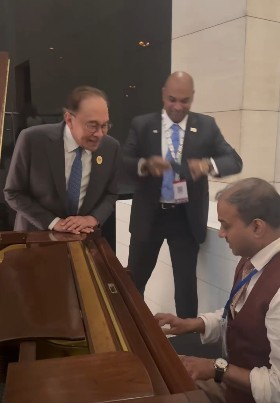
New Delhi, Sep 12 (IANS) Diplomacy usually speaks in carefully measured sentences. On Saturday night, it briefly broke into song. Malaysian Prime Minister Anwar Ibrahim, in the capital for the 18th BRICS Summit, chose a Kishore Kumar classic to lighten the evening.
Seated at dinner, with a pianist providing the melody, he began singing “Khwab Ho Tum Ya Koi Haqeeqat” from the 1965 film “Teen Devian”. The song, composed by SD Burman and written by Majrooh Sultanpuri, floated across the room as Anwar’s voice carried the familiar, dream-like lines that generations of Indians still hum.
In an age when summits are remembered for joint statements and photo-ops, Anwar’s choice of song felt almost rebellious in its simplicity. No grand cultural programme was needed. A single, well-loved melody did the work of reminding everyone that soft power sometimes arrives wearing a smile and an old film song. He later shared the video on his X account, a quiet digital encore that quickly travelled far beyond the dinner table. This was not a first for the Malaysian leader.
In 2024, during an interview in India, he had already revealed his soft spot for Kishore Kumar by rendering the same number. The affection is long-standing and unforced—an unexpected cultural thread between Kuala Lumpur and Bollywood’s golden era.
Earlier in the day, Anwar had held a warm bilateral meeting with Prime Minister Narendra Modi on the sidelines of the summit. The two leaders, who address each other with easy familiarity, discussed trade, semiconductors and deeper partnership. Yet it was the evening’s musical interlude that added a human note to the formal schedule.
Kishore Kumar’s voice has crossed borders for decades. On this night, a visiting Prime Minister simply handed it the microphone again—and for a few minutes, the serious business of geopolitics took a back seat to a tune that still refuses to fade. As the final courses settled and conversation softened, the lights dimmed for something far more eloquent than speeches.
“Navarasa – The Universe of Shared Emotions” reached across the stage, a living canvas of feeling that needed no translation. Then came the BRICS Symphony – “One Rhythm, Many Cultures.” Musicians from member and partner nations gathered as one ensemble, their instruments speaking in different tongues yet answering the same call. Strings from one continent answered percussion from another; melodies that had travelled oceans found common ground in a single, breathing rhythm. The music did not merely play — it conversed, argued gently, then embraced.
–IANS
sktr/uk