

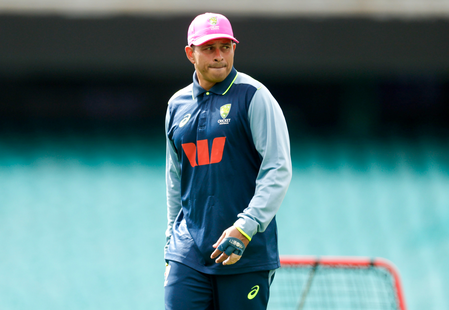
New Delhi, Nov 16 (IANS) Usman Khawaja has explained why he waited eight years to publicly detail his perspective on Australia’s 2018 ball-tampering scandal, revealing that he was previously persuaded by Steve Smith not to speak independently and that a promise to David Warner eventually prompted him to put his account in writing.
The former Australia opener, whose autobiography Sabr revisits the Cape Town Test controversy, said the book gave him the space to examine the events carefully and explain why he believed the sanctions imposed on Smith, Warner and Cameron Bancroft were excessive.
Khawaja said his initial intention was to address the issue as a team rather than issue a separate public statement. However, he recalled that Smith had spoken to him at the time and had convinced him not to go out on his own.
“It’s not what I wanted, but I felt that right from the very start I gave an account of me wanting to take it as a team… wanting to come out, but being talked out of coming out by myself from Steven Smith and then wanting to come out in 2021,” Khawaja said, speaking on the They Used To Be… podcast, as quoted by The Daily Mail.
The scandal erupted during the 2018 Test against South Africa in Cape Town, when Bancroft was caught on camera using sandpaper on the ball. Smith and Warner received 12-month bans from Cricket Australia, while Bancroft was suspended for nine months. Khawaja has since questioned the findings that limited prior knowledge of the plan to the three sanctioned players.
He said the punishments went well beyond the penalties handed down by the International Cricket Council and argued that Cricket Australia had imposed disproportionate sanctions.
“The penalties that happened to these guys were grotesquely overboard. No one had ever gotten these penalties before… the benchmark should be ICC penalties. Cricket Australia went over the top and I go into details about why I think that happened and the context of what made that happen,” he said.
Khawaja said the decision to revisit the incident in his autobiography was not taken lightly. He had to repeatedly reconsider what he wanted to make public, but felt that writing a book offered a degree of control and reflection that a media interview could not provide.
“I had a safe space to write it in my book, I wrote it down and went over it over and over again, to make sure that what I put out at the end was what I wanted to say to the public,” he said.
He also clarified that his original notes on the controversy were not written with the intention of publishing a book. Instead, he documented his thoughts soon after the incident so his recollection of what happened would not fade over time.
“Sandpaper didn’t just happen overnight; I wrote a whole bunch of stuff down days after it happened. Part of me was also like, I don’t want to forget what happened. I didn’t write it down because I wanted to write a book… I didn’t look at it again for years,” he said.
Khawaja said his promise to Warner, made in 2020, stayed with him over the years and was a factor in his eventual decision to publish his account. He believes the three players who were punished bore a disproportionate share of the scandal’s consequences.
The former opener’s claims have reignited debate over how much the Australian camp knew during the Cape Town Test. Cummins and Starc have denied knowing sandpaper would be used, while Khawaja’s account has also received public support from Warner and former teammate Chadd Sayers.
–IANS
vi/bc