

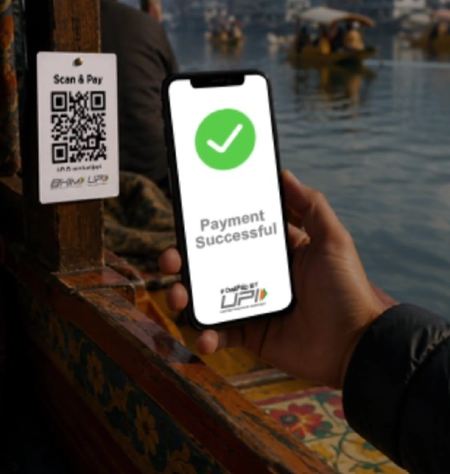
Washington, June 25 (IANS) US lawmakers debating the future of the country’s payment system pointed to India’s Unified Payments Interface (UPI) as an example of how modern public payment infrastructure can drive private-sector innovation, as fintech firms urged Congress to overhaul regulations governing access to America’s payment network.
The comparisons with India came during a hearing of the House Financial Services Committee’s Subcommittee on Financial Institutions on Wednesday (local time), where lawmakers examined whether the United States should modernise its regulatory framework to give qualified non-bank payment companies direct access to the Federal Reserve’s payment infrastructure instead of relying on traditional banking intermediaries.
Eileen O’Mara, Vice Chair at Stripe, told lawmakers that countries that have opened access to payment infrastructure have seen significant innovation, citing both Brazil and India.
“The UK did it in 2017, the EU in 24, and the results are real,” she said, before adding: “We saw the very same thing happen with UPI in India on an even larger scale.”
She argued that although the United States has the FedNow instant payment system, “it lacks a product layer on top — exactly what payment companies like Stripe would build, with the direct access that could drive significant adoption.”
Congresswoman Rashida Tlaib highlighted India’s digital payments success. Referring to UPI, she noted that it is operated by the National Payments Corporation of India and processes billions of transactions each month.
She contrasted that with the US system, saying the achievements of India and Brazil demonstrated that “large-scale payment systems offering free instant transactions” are already a reality for millions of users.
Much of the hearing focused on whether the United States should create a dedicated federal payments charter allowing regulated fintech companies such as Stripe to access Federal Reserve payment rails directly, rather than operating through a patchwork of state licenses and banking partners.
O’Mara said the existing framework was designed around whether a company is “a bank or you’re not a bank”, while payment firms operate under a different business model.
“We do not take deposits, and we do not lend,” she said. “What we’re advocating for is that we are regulated for the business and activity that we do, which is payment processing.”
Tara Flynn of the National Community Reinvestment Coalition also urged lawmakers to ensure that any non-bank receiving access to the banking and payments system should be subject to strong consumer protections, community investment obligations and rigorous regulatory supervision.
The hearing reflected a broader debate in Washington over how to modernise America’s payment infrastructure without weakening safeguards built into the traditional banking system. Members from both parties agreed that faster, more efficient payments are becoming increasingly important as digital commerce expands, but differed on how far access to the Federal Reserve’s payment system should be extended.
–IANS
lkj/sd/