

New Delhi/Mumbai, Sep 28 (IANS) With nearly two-thirds of Maharashtra grappling with severe drought conditions, the Union government has stepped in to assess the crisis first-hand.
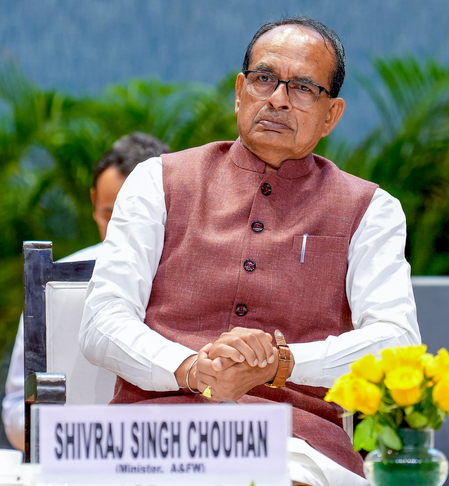
Union Minister for Agriculture, Farmers’ Welfare, and Rural Development Shivraj Singh Chouhan on Monday announced that Central teams alongside senior officials will deploy to assess crop and water damage, with Chouhan himself leading high-level inspection visits across affected regions in Western and Southern India.
The Central team will first arrive in Karnataka on October 3 before heading to Maharashtra to perform ground-level assessments.
Recognising the gravity of declining soil moisture and shrinking reservoir levels, the Union Agriculture Ministry has issued a comprehensive action plan for the upcoming Rabi cropping season.
State and district administrations have been directed to map available irrigation supplies and soil moisture before finalising Rabi sowing plans.
High-water-consuming crops are strictly discouraged in water-stressed pockets to avoid mid-season crop failure, the Agriculture department sources said.
The Centre has ordered a major push toward low-water-requiring crops — specifically gram, lentil, and mustard.
Farmers are encouraged to utilise fallow paddy fields post-harvest for these drought-resilient varieties to boost national self-reliance in edible oils and pulses.
State governments must set strict targets for pulse production and put procurement mechanisms in place early.
To shield farmers from distress sales, central agencies NAFED (National Agricultural Cooperative Marketing Federation of India) and NCCF (National Cooperative Consumers’ Federation of India) will step in for direct on-farm procurement if state systems lag.
Agricultural universities, ICAR institutions, and Krishi Vigyan Kendras (KVKs) have been tasked with supplying climate-suitable seed varieties.
State administrations must prepare advance plans for the distribution and lifting of seeds and fertilisers.
To reduce input costs and maintain soil health, the Centre is extending its balanced fertilisation drive into the Rabi cycle.
Over-application of synthetic fertilisers will be countered through targeted scientific guidance.
The Agriculture Ministry is fast-tracking the rollout of Farmer IDs, AgStack infrastructure, and expanded Kisan Credit Card (KCC) coverage to streamline direct benefit deliveries and credit access.
To maintain real-time oversight, states will track weekly progress across crop sowing, seed germination, pest risks, and market price fluctuations.
The strategy comes as Union Minister Chouhan prepares to host all State Agriculture Ministers on September 29, the second day of the National Agriculture Conference, to finalise an integrated execution plan for the Rabi season.
–IANS
sj/khz