

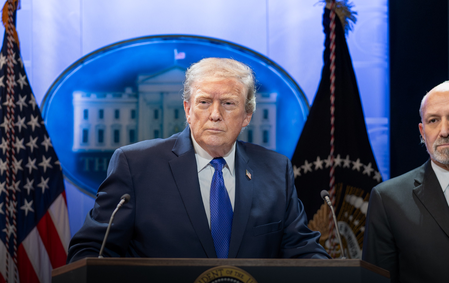
Washington, May 29 (IANS) The Trump administration has laid down three non-negotiable conditions for any agreement with Iran, Treasury Secretary Scott Bessent said, insisting that Tehran must surrender its highly enriched uranium, abandon any pursuit of a nuclear weapon and restore free navigation through the Strait of Hormuz.
Discussions between the two sides are continuing, but Bessent repeatedly declined to confirm reports that a tentative agreement had already been reached.
“The teams have been going back and forth,” Bessent told reporters during a White House briefing.
He said Trump had made his position clear during a Cabinet meeting a day earlier.
“Iran has to turn over their highly enriched uranium. They cannot pursue a nuclear weapon. And the Strait of Hormuz has to free transit. Navigation of the seas has to be free and open as it was before,” Bessent said.
“He’s not going to take a bad deal. He’s going to make a great deal for the American people.”
Asked several times whether a temporary agreement, including a reported 60-day ceasefire extension and continuation of nuclear talks, had already been reached, Bessent refused to provide specifics.
“Everything depends on what the president wants to do,” he said.
“It’s always a mistake to get out ahead of the president.”
The Treasury Secretary argued that the administration’s strategy of military and economic pressure had succeeded in bringing Iran back to the negotiating table.
“President Trump has done something that no other administration is able to do. We have gotten the Iranians to talk about their nuclear program and to perhaps commit to not having one,” Bessent said.
“That has never happened before.”
He also suggested that sanctions relief would remain tied to concrete Iranian concessions.
“Nothing is going to be on the table until we see the Strait of Hormuz open and the Iranians agree that they have to turn over the highly enriched uranium and that they can’t have a nuclear program,” he said.
Bessent indicated that Washington was prepared to continue negotiations but warned that the administration’s patience was not unlimited.
Referring to recent tensions and alleged ceasefire violations, he said the United States remained focused on diplomacy.
“President Trump always prefers a peace deal,” Bessent said.
At the same time, he cautioned that if diplomacy failed, military options could return to the forefront.
“If President Trump doesn’t think he can get a peace deal, then kinetic is back,” he said.
Bessent also claimed that pressure on Tehran had disrupted the Iranian leadership’s decision-making process.
“The Iranian government, such as it is, is three pillars. It is the elected government, it is the IRGC, and it is the clerics, and they are having trouble communicating,” he said.
–IANS
lkj/rs