

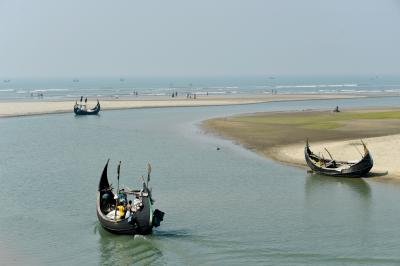
Dhaka, July 16 (IANS) As the Bay of Bengal gains strategic prominence in the Indo-Pacific, it offers India and Bangladesh an opportunity to redefine their bilateral relationship. The region has evolved beyond a shared maritime boundary into one of the most strategically significant regions supporting trade, energy, fisheries and blue economy initiatives, while drawing increasing attention from major powers, a report has stated.
“For India and Bangladesh, however, the Bay should not become another theatre of geopolitical rivalry. Instead, it should remain a space for cooperation. Maritime domain awareness, humanitarian assistance, disaster relief, marine environmental protection, sustainable fisheries, offshore renewable energy, and coastal resilience are areas where the interests of both countries naturally converge. These are practical initiatives capable of generating mutual confidence while delivering tangible benefits to ordinary citizens,” a report in Bangladeshi media outlet BD Digest detailed recently.
“Economic cooperation also deserves to be viewed through a wider lens. Bilateral trade has expanded considerably over the years, but recent global disruptions have demonstrated that resilience matters as much as growth. Bangladesh’s globally competitive manufacturing sector and India’s expanding industrial ecosystem are complementary in many respects. Better connectivity through rail, roads, inland waterways, ports, and digital infrastructure can help create regional value chains that reduce dependence on distant markets while generating employment and investment across eastern South Asia,” it added.
The report noted that few countries share such deep cultural and linguistic connections as India and Bangladesh, with literature, music, cinema, cuisine, and intellectual traditions travelling freely across their borders for generations.
Despite political boundaries, it said, families continue to maintain close ties, with the Bengali language serving as a powerful bridge between communities. While governments may occasionally disagree, cultural memory has consistently survived changing political cycles.
“In this context, the recent appointment of India’s High Commissioner to Bangladesh, Dinesh Trivedi, offers an opportunity that extends beyond diplomacy in its conventional sense. His appointment is significant because he becomes the first political leader in recent years to be entrusted with this responsibility while also being accorded Cabinet rank, a distinction that signals the importance New Delhi attaches to its relationship with Dhaka,” the report noted.
Emphasising that the recent resumption of visa services marks a welcome and encouraging development in bilateral ties between the two countries, it said, “Easier mobility for students, researchers, entrepreneurs, artists, and families has the potential to restore confidence at a time when both societies would benefit from greater interaction rather than greater distance. Trust is often rebuilt not through official communiqués but through everyday human connections.”
According to the report, India and Bangladesh face a clear choice amid an evolving global order: remain weighed down by recurring differences or acknowledge that the defining challenges of the future can only be addressed through shared solutions.
“Geography made the two countries neighbours. History made them partners. The future should make them collaborators in building resilience against an increasingly uncertain world,” it noted.
–IANS
scor/as