

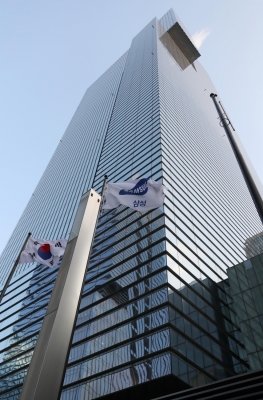
Seoul, May 20 (IANS) Samsung Electronics’ union said on Wednesday it will proceed with the strike scheduled for later this week, arguing management has rejected a government-mediated proposal.
“We accepted the mediator’s proposal,” the company’s largest union said, adding that it will go ahead with the legally scheduled general strike as planned, reports Yonhap news agency.
The two sides have been holding government-mediated talks over performance-based bonuses, with nearly 48,000 workers scheduled to walk off the job for 18 days.
Samsung management, meanwhile, expressed “deep regret” and urged the union to continue negotiations.
“Despite the company largely incorporating the union’s demands, it continues to insist on an unreasonably large compensation package even for loss-making business units,” the company said in a press release.
Labour and management have been deadlocked since late last year over performance-based bonuses tied to earnings from the tech giant’s artificial intelligence (AI)-related semiconductor business amid an ongoing global memory supercycle.
The company has proposed maintaining the current excess profit incentive system while allowing the bonus pool to be calculated based on 10 percent of operating profit. It also proposed introducing a special compensation system, saying it would create a more flexible incentive structure.
In contrast, the union is demanding fixed performance bonuses equal to 15 percent of the semiconductor division’s operating profit, along with the removal of payout caps.
During government-mediated talks, the two sides reached understanding on eliminating bonus caps set at 50 percent of annual salary, according to an industry source.
However, they remained divided over how bonuses should be distributed across loss-making business units and whether any agreement should be formally institutionalised.
Concerns have grown within the South Korean government that a prolonged union strike could hurt the country’s export-driven economy. Semiconductor exports account for roughly 35 percent of the country’s total outbound shipments.
Global companies reliant on South Korea’s semiconductor supply chain have also expressed concern over potential disruptions.
—IANS
na/