
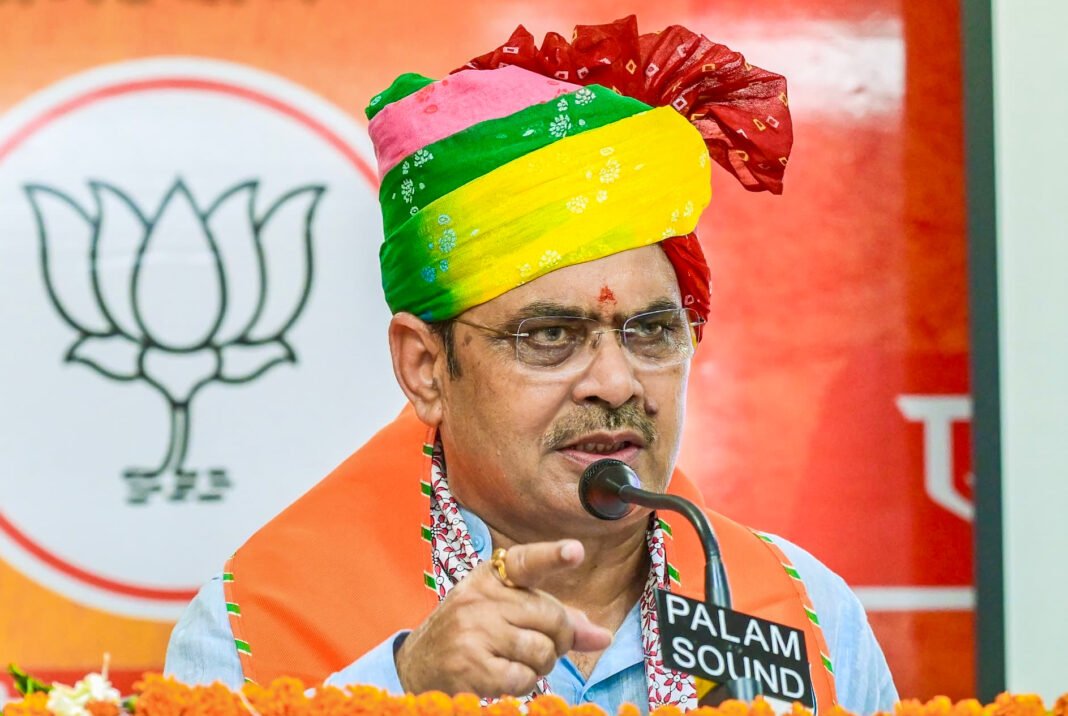

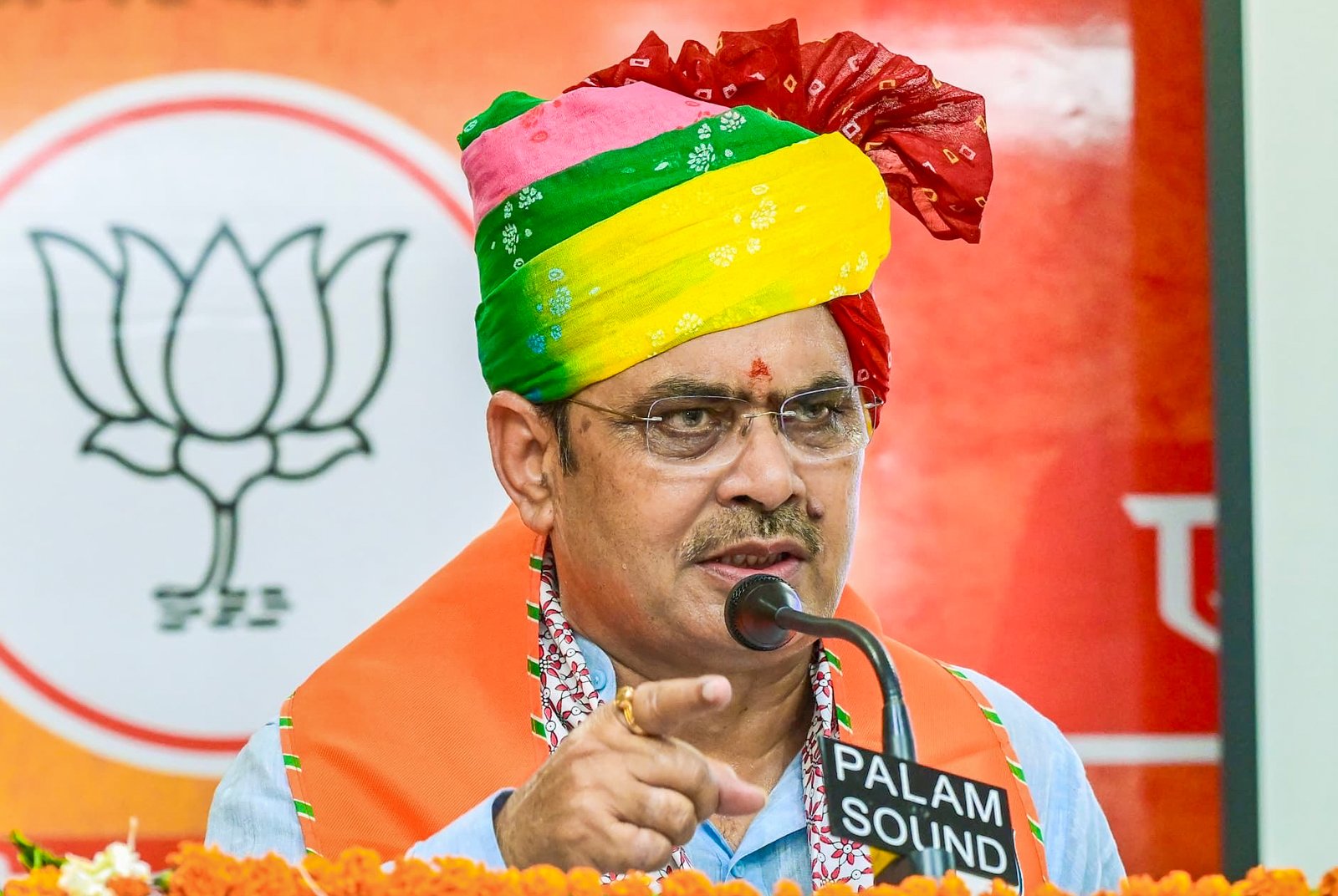
Jaipur, Nov 21 (IANS) The BJP’s poor performance in the Rajasthan Panchayat elections under the leadership of Chief Minister Bhajan Lal Sharma, has exposed the limits of its ministers’ influence at the grassroots level. In the constituencies and home districts of 17 state ministers and three Union ministers, the party suffered major setbacks, with several candidates failing to put up a strong fight.
Despite intensive campaigning by ministers, the BJP could not translate their political influence into electoral victories.
The results have reportedly prompted the central leadership to seek a performance report on members of the Rajasthan Cabinet.
In the Dudu Assembly constituency, represented by Deputy Chief Minister Premchand Bairwa, the BJP slipped to third position across three Panchayat Samitis. In Phagi, not a single BJP candidate managed to win.
Urban Development and Housing Minister Jhabar Singh Kharra reportedly pushed for tickets for his wife and son. He fielded his son and his brother’s wife, but all four candidates associated with the family lost the election.
The BJP also failed to make a significant impact in the Shrimadhopur and Ajitgarh Panchayat Samitis. In the Lohawat Panchayat Samiti, which falls under the Assembly constituency of Health Minister Gajendra Singh Khimsar, not a single BJP candidate managed to win.
The outcome points to a disconnect between the party’s electoral campaign and voter sentiment at the local level. Even the government’s welfare schemes failed to translate into electoral gains for the BJP in this area. Agriculture Minister Kirodi Lal Meena also could not ensure a strong BJP performance in his own Assembly constituency, Sawai Madhopur.
The party managed to win only six of the 23 wards and also suffered a setback in the Zila Parishad elections. The BJP faced setbacks in several other constituencies represented by members of the state Cabinet.
In Jhadol, the constituency of Tribal Area Development Minister Babulal Kharadi, the BJP won only five of the 15 wards. The party also suffered defeats in Jaitaran, represented by Social Justice Minister Avinash Gehlot; Sumerpur, represented by Animal Husbandry Minister Joraram Kumawat; and Luni and the Jodhpur Zila Parishad areas associated with Law Minister Jogaram Patel.
The saffron party also faced setbacks in Lunkaransar, represented by Food and Civil Supplies Minister Sumit Godara; Badi Sadri, represented by Cooperation Minister Gautam Kumar Dak; Nagar, represented by Minister Jawahar Singh Bedham; and Ajmer Rural, associated with Water Resources Minister Suresh Rawat.
Public Health Engineering Minister Kanhaiyalal Choudhary managed to secure a victory in Malpura, but the BJP lost in two other Panchayat Samitis. In Jhotwara, the Assembly constituency of Industries Minister Rajyavardhan Singh Rathore, the BJP could win only one of the 15 Panchayat Samiti wards. The BJP’s setback was not limited to the state Cabinet.
The party also performed poorly in the home districts associated with three Union ministers, raising questions about its electoral strength in areas considered politically significant for its senior leaders.
In the home district of Union Law Minister Arjun Ram Meghwal, the BJP won only eight of the 41 Zila Parishad wards. In the home district of Union Tourism Minister Gajendra Singh Shekhawat, the BJP managed to win just eight of the 43 Zila Parishad wards. BJP’s performance was particularly poor in Alwar, associated with Union Environment, Forest and Climate Change Minister Bhupender Yadav. The party won only four of the 39 Zila Parishad wards.
The results have made it difficult for the BJP to rely solely on the influence of its senior leaders to secure victories in local elections. The party’s performance across several ministerial constituencies points towards a combination of local dissatisfaction, organisational weaknesses and broader political concerns including disconnect between Ministers, MLAs and the public, impact of the UGC Act and Economically Weaker Section related issues as well as poor implementation of health schemes, said party workers.
The results suggest that several ministers and MLAs may have failed to maintain regular contact with voters and party workers. The inability to convert their political influence into electoral victories indicates growing dissatisfaction at the grassroots level.
Concerns over the implementation and management of government health schemes may have contributed to the BJP’s poor performance, particularly in constituencies where voters expected better delivery of public services.
The government appears to have struggled to establish a widely recognised flagship initiative that could translate into strong public support, particularly in rural areas.
The BJP’s campaign also faced the challenge of highlighting visible achievements in rural constituencies. Local concerns relating to infrastructure, employment, agriculture and basic amenities may have overshadowed the government’s development narrative.
Despite being in government, the BJP appears to have struggled with organisational coordination in several areas. Discontent among local leaders, inactive party workers and inadequate grassroots mobilisation may have further weakened its electoral prospects.
–IANS
arc/rad