

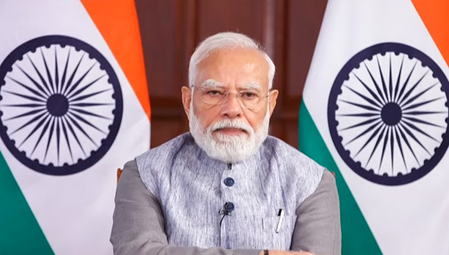
New Delhi, Nov 13 (IANS) Prime Minister Narendra Modi on Thursday participated in the Kisan Tak Bharat Agriculture Conference 2026, emphasising that agricultural development, smarter farming and farmer empowerment are essential to achieving the vision of a Viksit Bharat. Addressing agricultural scientists, entrepreneurs and farmers from across the country, PM Modi called for modernising agriculture, diversifying crops and transforming farmers into agricultural entrepreneurs.
Highlighting the close connection between agriculture and India’s cultural heritage, PM Modi noted that festivals such as Bihu, Pongal, Onam, Baisakhi, Sarhul and Pola reflect the country’s deep-rooted agrarian traditions. He stressed that India’s national development cannot be achieved without strengthening agriculture and improving farmers’ incomes.
The PM highlighted India’s agricultural achievements over the past decade, noting that the sector recorded average annual growth of over 4 per cent for the first time in a decade since Independence. India now ranks first globally in milk, pulses, jute, rice and millet production, and second in wheat, cotton, fruits, vegetables and fish. Agricultural exports have also crossed Rs 4 lakh crore annually.
Highlighting the expansion of allied agricultural sectors, PM Modi said milk production has increased by nearly 70 per cent, egg production by around 90 per cent and fish production has more than doubled. Honey production has risen from approximately 80,000 tonnes to 1.5 lakh tonnes, while horticulture output has grown from 280 million tonnes to over 350 million tonnes.
Underscoring the importance of crop diversification beyond wheat, rice and sugarcane, the Prime Minister highlighted initiatives such as the PM-KUSUM Yojana, which has provided nearly 12 lakh solar pumps. He said the solar power revolution has transformed farmers from ‘Annadatas’ into ‘Urjadatas’, creating additional income opportunities alongside agricultural production.
Addressing the economic impact of the ongoing war in West Asia, the Prime Minister revealed how the government protected Indian farmers and citizens from a sharp rise in international fuel prices. He said escalating tensions in the region had pushed crude oil prices from around $70 to $122 per barrel within a matter of weeks, creating pressure to increase diesel prices by at least Rs 50 per litre.
However, instead of transferring the entire burden to consumers, the government limited the diesel price increase to just Rs 7 per litre while absorbing Rs 43 per litre itself. According to the Prime Minister, this support has involved an expenditure of approximately Rs 14,000 crore per month. He pointed out that several neighbouring countries had increased fuel prices by 40 to 50 per cent, whereas India took measures to shield its farmers and citizens from international market volatility.
Emphasising the government’s ‘Lab to Land’ approach, PM Modi highlighted the expansion of soil testing facilities from a few hundred in 2014 to over 8,400 laboratories, supported by more than 725 Krishi Vigyan Kendras. He also noted that free vaccination against Foot and Mouth Disease has benefited livestock belonging to more than eight crore farmers.
The Prime Minister praised Namo Drone Didis for demonstrating how advanced technology can benefit rural communities through drone-based fertiliser and pesticide applications. He also highlighted opportunities in agri-engineering, artificial intelligence, sensor-based farming equipment and agricultural startups.
Referring to the development of 10,000 Farmer Producer Organisations (FPOs), PM Modi said collective farming initiatives are helping small farmers access value addition, food processing and export markets.
Reaffirming the government’s commitment to reducing cultivation costs, he said Rs 16 lakh crore had been spent over 12 years to provide affordable fertilisers. DAP fertiliser costing around Rs 5,000 internationally is supplied to farmers at Rs 1,300, while urea costing Rs 3,000 is made available for less than Rs 300.
He also highlighted measures to protect farmers from international crude oil price fluctuations, stating that the government absorbed a substantial portion of the fuel price increase rather than passing the entire burden to consumers.
PM Modi called for greater collaboration among farmers, scientists, engineers and entrepreneurs to build a modern, profitable and sustainable agricultural ecosystem, reaffirming that prosperous farmers and thriving villages are fundamental to a developed India.
–IANS
brt/dan