

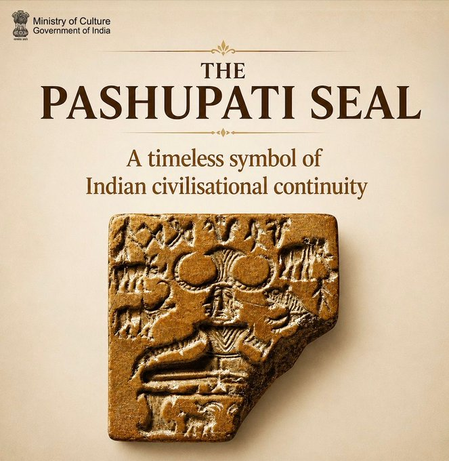
Ayodhya, May 30 (IANS) A row erupted after American-based historian Audrey Truschke challenged a social media post by the Ministry of Culture, which described a Harappan Pashupati seal as “Shiva-Pashupati”. Truschke claimed that the figure is that of an Eurasian deity “lord of animals”.
Criticising the historian’s claim, Hindu seers in Ayodhya, on Saturday, alleged that it is an attempt to tarnish India’s history and culture and is “completely unacceptable”.
Speaking to IANS, Mahant Sitaram Das Maharaj of Ayodhya’s Saket Bhavan temple condemned the statement made by the US-based historian. He said: “If international agencies will try to harm the history of India, it will not be tolerated at any cost.”
Asserting that the Harrapan seal undoubtedly represents “Shiva-Pashupati”, Mahant Sitaram Das added that the seal is considered as a symbol of India’s Sanatan tradition.
Referring to Audrey Truschke, the Hindu seer said: “She does not have any knowledge about the history of India’s Sanatan tradition.”
“Foreigners don’t have any knowledge about India’s culture, civilisation and lifestyle of people here. A conspiracy is being hatched to tarnish India’s Sanantan culture,” Mahant Sitaram Das alleged.
However, he was optimistic that the truth regarding the Harrapan-era seal will prevail.
Mahant Deveshacharya Ji Maharaj said: “America is angry with India. The mental balance of the leaders and people of America has been disturbed. It is trying to run a wrong propaganda to demean India’s image and to tarnish the culture and traditions here.”
“This is absolutely not acceptable; we all oppose it,” he added.
He also asserted that no country can run a propaganda to insult another nation.
The Hindu saint urged the America-based historian to apologise and remove the post from her X account.
Arya Sant Varun Das Ji Maharaj echoed: “This is completely misleading and negative. It is the work of foreigners to somehow create confusion.”
In a post on X on May 27, The Ministry of Culture had said: “Discovered at Mohenjo-daro in undivided India this steatite seal, about 4,300-year-old, shows a seated figure in yogic posture (widely seen as Shiva-Pashupati) seated in Mulabandhasana, surrounded by animals.”
“While ancient sites may lie across modern borders, India remains the living custodian of this heritage. The yogic posture, Shaivite symbolism, and spiritual ethos seen in the Pashupati Seal continue to thrive in India’s temples, daily worship of Shiva, yogic traditions, and cultural life even today,” the post added.
It also said: “From the Vedic period to contemporary Bharat, this civilisational thread has remained alive and unbroken — deeply embedded in our philosophy, rituals, and collective consciousness.”
Countering India’s post, Audrey Truschke mentioned: “This isn’t Shiva. It’s more likely adapted from proto-Elamite iconography, showing an Eurasian deity ‘lord of animals’.”
“Indian history is amazing, wonderful, and fantastic — It’s well worth getting it right,” she added in a post on X.
–IANS
cg/khz