

New Delhi, Aug 12 (IANS) The Fiscal Transparency Report-2026, released by the United States Department of State this week, paints a troubling picture of Pakistan’s governance, with concerns raised over military and intelligence budgets not subjected to “adequate parliamentary or civilian public oversight”.
The report also highlights glaring deficiencies, including opaque defence spending, delayed publication of executive budget proposals, and limited disclosure of debt obligations.
These shortcomings reflect a deeper structural imbalance in Pakistan’s political economy, where the military continues to dominate civilian institutions.
The report specifically criticises the lack of parliamentary oversight over military and intelligence budgets, which remain shielded from scrutiny. This secrecy undermines fiscal accountability and erodes public trust. It also raises red flags for international lenders who rely on transparent fiscal data to assess Pakistan’s economic viability.
At the heart of this imbroglio lies the Pakistani Army’s deeper role in governance.
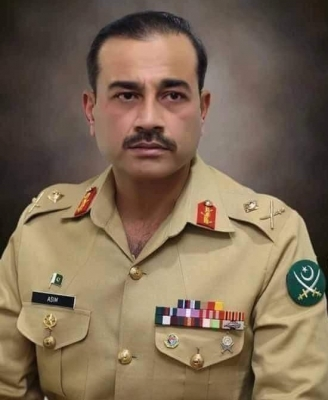
Pakistan’s army chief Asim Munir has successfully expanded his role far beyond defence, and now includes areas traditionally reserved for civilian governance. This is now an established fact, with recent reports of Munir sitting on Pakistan’s population management committee, a body tasked with addressing the country’s demographic challenges.
With Pakistan recording nearly 6.7 million births annually, and projections suggesting it could become the world’s fourth most populous country by 2030, population planning is a critical policy area that Munir may be considering to marshal on the field.
And Islamabad appears to have acquiesced, instead of empowering provincial authorities who constitutionally hold authority over population welfare, thus signalling military dominance over demographic policy.
Munir’s influence goes beyond, as has also been reported widely, being a member of the Special Investment Facilitation Council (SIFC), a civil-military body overseeing investment and economic coordination.
The SIFC is an ambitious plan to try and shore up Pakistan’s economy by addressing investment bottlenecks, promoting foreign investment, and fostering public-private partnerships. Now this council effectively places the army at the centre of Pakistan’s economic decision-making, further blurring the line between civilian governance and military command.
Further, recent mentions this month spoke of his involvement in disaster management, adding another layer of militarisation, as the army increasingly dictates responses to natural calamities that are otherwise primarily managed by civilian institutions. Army support is indeed sought, but when under immense challenge, which Islamabad presumably is feeling from the adjoining garrison town of Rawalpindi.
This creeping militarisation has profound consequences, as reiterated by experts. It erodes civilian authority by placing the army chief at the helm of population planning and disaster management,
Islamabad undermines the 18th Constitutional Amendment, which devolved these responsibilities to provincial governments. This amendment was enacted to reverse decades of centralised control and military influence over Pakistan’s political system. It removed the President’s power to unilaterally dissolve Parliament, as was the case in earlier instances. Now, this centralisation risks alienating provinces and weakening democratic institutions, or perhaps depicts their weakness.
The Fiscal Transparency Report explicitly urges Pakistan to subject military budgets to parliamentary oversight, warning that fiscal opacity undermines investor confidence and increases corruption risks. Pakistan stands to risk alienating international partners and deterring foreign investment, on which it leans on Washington. Munir is again the person who leads Pakistan’s diplomatic exercise, including those involving meetings in the White House.
The US report further exposes how secrecy in defence spending mirrors the broader militarisation of civilian policy under Asim Munir. This model sacrifices transparency, accountability, and democratic legitimacy for short-term control.
–IANS
jb/vd