

New Delhi, May 8 (IANS) For Pakistan, ‘Operation Sindoor’ resulted in a loss of face. After terror infrastructure was hit hard by the Indian armed forces who were avenging the Pahalgam terror attack, Pakistan set out a fake narrative of emerging victorious.
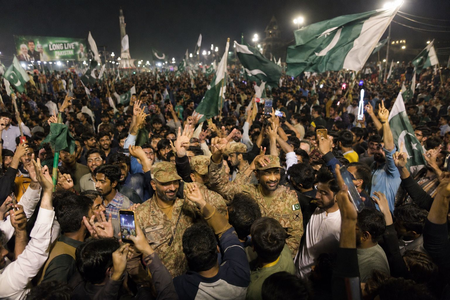
Rallies and processions were taken out to create an impression that the Pakistan Army had hit back and won the battle. While the perception was created, the reality was something different.
An official said that events were strategically planned across Pakistan to commemorate fake victory. On the other hand, social media handles run by Pakistanis worked overtime to put out false narratives.
Following the conclusion of ‘Operation Sindoor’, Pakistan’s Army chief instructed the Shehbaz Sharif government to release Rs 500 crore. This money was then distributed evenly to federal governments, business and religious groups. All were asked to organise massive rallies across Pakistan. The programme mandate by the Pakistan Army was titled ‘Ashra-e-Tashakur Fateh-E-Muneeb,’ which means ten days of gratitude for a decisive victory.
To cement the fake claim further, Asim Munir even pressured the Sharif government to make him Field Marshal.
An Intelligence Bureau official said that while these rallies took place on a grand scale for ten days, something more serious was brewing within. Some of the rallies even focussed on thanking the Jaish-e-Mohammad and Lashkar-e-Tayiba for the so-called victory.
However, within the ranks of these two terror groups something serious was simmering. Both Hafiz Saeed and Masood Azhar had started to question the Pakistan Army and the ISI. They wanted to know what happened to the guarantees and protection that they had been assured. These groups have been operating with ease only due to the funds and protection that the Army and the ISI offer them.
During ‘Operation Sindoor’, the Jaish-e-Mohammad lost its Bahawalpur headquarters. Its chief Masood Azhar even lost most of his family members and several other cadres. The Muridke camp, which is the Lashkar-e-Tayiba’s primary training facility was blown to pieces during the Indian operation.
Both these terror groups, which have wrecked havoc in India, had not witnessed such a huge hit. There have been encounters and terrorists have been killed on Indian soil. However never have they been struck so hard and that, too, deep inside Pakistan.
Another official said that the impression that the Pakistan establishment sought to create in the aftermath of the operation worked among a few people, but clearly their proxies were not impressed. They knew what they had lost and the fact that the Army could not even defend them is what left them completely disgruntled. The official also said that many cadres, too, had started questioning their own leadership.
Officials say that all these factors led to rifts within these two terror groups and this explains why they are taking so long to rebuild.
During the numerous processions, the Army insisted that the cadres of the Lashkar-e-Tayiba and Jaish-e-Mohammad should take part. Many of them did, but in their minds, they knew what the reality was. In this desperation to show that Pakistan was victorious, the Army ended up showcasing to the world that globally banned terror groups such as the Jaish-e-Mohammad and Lashkar-e-Tayiba are welcome within the ecosystem of the establishment, the official added.
Pakistan watchers point out that it was nothing but desperation on part of the Army. It had to indulge in this circus and claim a false victory. In reality, the Pakistan Army and its chief were the hardest hit thanks to ‘Operation Sindoor’, the experts also point out.
–IANS
vn/rad