

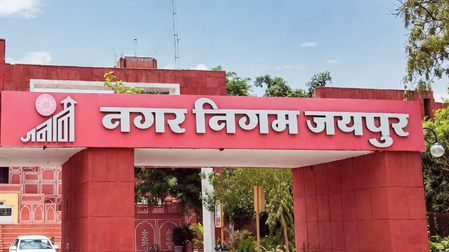
Jaipur, May 22 (IANS) A dramatic scene unfolded at the Jaipur Municipal Corporation (JMC) headquarters on Friday after a court-appointed team arrived to attach the chair of Commissioner Om Kasera over alleged non-compliance with a Rajasthan High Court order pending for the past 13 years.
The action was initiated following orders issued by the SCJM-1 (Senior Civil Judge-cum-Metropolitan Magistrate-1), Jaipur Metropolitan First Court, in the case of Chandrakant Nagar vs JDA and Others.
Acting on the court’s directive, court bailiff Babulal Sharma, decree holder Rashmikant Nagar, and advocate Sanjay Sharma reached the Municipal Corporation headquarters and began legal proceedings inside the Commissioner’s office, triggering panic and intense activity among officials and staff.
The dispute dates back to 2013, when the Rajasthan High Court directed the Municipal Corporation to issue an allotment letter to petitioner Chandrakant Nagar on September 26 that year. According to the petitioner, despite clear directions from the High Court, the corporation failed to issue the allotment letter even after 13 years. Following repeated non-compliance, the matter was brought before the lower court, which treated the issue seriously and, on May 20, ordered attachment proceedings against the Commissioner’s chair.
The court reportedly observed that continued failure to comply with judicial orders amounted to contempt of court.
The arrival of court officials at the civic body headquarters created a stir within the Municipal Corporation administration.
Court representatives completed procedural formalities inside the Commissioner’s chamber while officials simultaneously began consulting legal advisors regarding possible next steps.
The incident has sparked sharp discussions within administrative and legal circles, with questions being raised over why the High Court’s order remained unimplemented for more than a decade.
Legal experts described the development as a strong message against prolonged disregard of court directives by government departments. The case has now emerged as a major topic of debate at both administrative and judicial levels.
–IANS
arc/dpb