

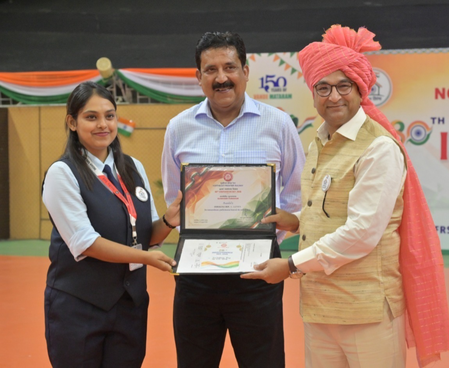
Guwahati, Aug 16 (IANS) Highlighting the Northeast Frontier Railway’s (NFR) major achievements during 2026 so far, General Manager Chetan Kumar Shrivastava reiterated that safety remains the foremost priority under the guiding philosophy of “100 per cent Safety, Zero Risk”.
Addressing a function at the NFR headquarters at Maligaon, near Guwahati, Shtrivastava said that the NFR has strengthened safety measures through modern signalling systems and advanced technologies, besides improving the monitoring of trains, tracks and critical infrastructure.
The zone has also focused on the elimination of level crossing gates and commissioning of new foot over bridges to enhance passenger and operational safety, he said.
According to the GM, more than 130 electric locomotives have been upgraded with KAVACH, while 30 Hot Box Detectors and three Automatic Train Examination Systems have also been installed across the zone. These technological interventions are aimed at strengthening safety systems and ensuring more efficient monitoring of railway operations.
Shrivastava said that passenger connectivity also received a major boost during the year with the introduction of 14 pairs of new train services, including the Vande Bharat Sleeper, Amrit Bharat and other Mail/Express trains.
Besides, 674 trips of special train services were operated to meet additional passenger demand during various periods of increased traffic, he noted.
The GM said that the introduction of India’s first Vande Bharat Sleeper Express from Kamakhya and the first MEMU service between Agartala (Tripura) and Karimganj (Southern Assam) marked significant milestones in providing modern, faster and improved rail connectivity to the Northeast. These new services are expected to further strengthen inter-state and regional connectivity while providing passengers with enhanced travel facilities.
The NFR, he said, also recorded encouraging growth in its business and freight performance during the year.
During April-July, apportioned earnings reached Rs 2,744 crore, registering an 8 per cent growth over the corresponding period of the previous year.
Ticket-checking earnings also witnessed a substantial growth of 37 per cent during the period, Shrivastava said.
The Darjeeling Himalayan Railway (DHR) crossed the Rs 18 crore mark in earnings, its highest-ever figure for the corresponding period. The performance reflects the continued popularity of the heritage railway among tourists and passengers and the efforts to strengthen tourism-oriented rail services in the region.
Freight infrastructure was also augmented with the commissioning of seven new freight terminals and two Gati Shakti Cargo Terminals at Habaipur and Baihata. These facilities are expected to improve freight-handling capacity and facilitate faster and more efficient movement of goods, the GM said.
The first-ever container train from India reached Nepal in July, marking an important milestone in cross-border freight transportation and further strengthening regional trade connectivity.
The track linking the Jogighopa Railway Station Yard and the Jogighopa Multi Modal Logistics Park was also completed, paving the way for integration of rail connectivity with the logistics hub and strengthening the region’s multimodal transportation network, he said.
Infrastructure development, electrification, and sustainability also remained key focus areas for NFR during the year. The zone commissioned 23.7 MWp of solar power capacity during January-July, the highest among all zones of Indian Railways. The initiative is expected to contribute significantly to reducing dependence on conventional energy sources and promoting cleaner and more sustainable railway operations.
During the period, four redeveloped Amrit Stations — Kamakhyaguri, Majbat, Jalpaiguri Road and Haldibari — were inaugurated by Prime Minister Narendra Modi. The redeveloped stations provide upgraded passenger amenities and modern station infrastructure, in line with the broader objective of transforming railway stations into modern and passenger-friendly facilities.
The NFR General Manager also lauded the extraordinary resilience and commitment demonstrated by Team NFR in restoring flood-affected railway tracks at Simaluguri within just 17 days. More than 700 railway personnel worked round the clock to restore the crucial railway infrastructure and ensure the resumption of train services.
Sustained restoration efforts also continued at New Harangajao, where railway personnel have been working to restore infrastructure affected by adverse weather and difficult terrain. The restoration works underscore the challenges faced by NFR in maintaining railway connectivity across the hilly and geographically challenging areas of the Northeast.
Appreciating the contribution of the Railway Protection Force (RPF), Bharat Scouts & Guides, sportspersons, railway employees and other stakeholders, Shrivastava reaffirmed NFR’s commitment to providing safer, modern, efficient and sustainable rail transportation. He also emphasised the collective role of railway employees and stakeholders in strengthening the railway network and improving passenger services across the Northeast.
The NFR’s initiatives in safety, connectivity, infrastructure development, freight movement, electrification and sustainability are aligned with the national vision of “Viksit Bharat @ 2047”, Shrivastava stated.
–IANS
sc/vd