

New Delhi, Sep 2 (IANS) Indian scientists have found a way to make jammed systems flow momentarily by applying sudden temperature ramps that erase memory imprints, and thus help in drug delivery, an official statement said on Wednesday.
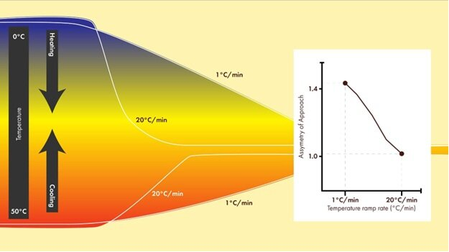
Researchers at the Raman Research Institute, an autonomous institute of the Department of Science and Technology, used microgel particles to mimic glassy, jammed materials and showed that rapid heating can trigger particle rearrangements that send the system into a temporary liquid state and obliterate asymmetries in paths.
Materials such as glass exhibit mechanical properties akin to those of solids though their structural characteristics resemble those of liquids. They also retain memory imprints.
The study was published in the Journal of Colloid and Interface Science, and Sonali Kawale, first author on the paper and PhD student at RRI, used jam-packed squishy particles for the experiments.
The floppy particles Kawale used were made of microgels, a material that can absorb 300-500 times its weight in water and is used in diapers and sanitary napkins.
They were synthesised, ground to a fine powder, suspended in water, stirred for 24 hours, sonicated for 15 minutes and refrigerated at 4 degrees Celsius for stability.
The team found that the path the suspension followed to reach the target temperature of 20 degrees Celsius during heating differed from that during cooling.
There was no mirror symmetry but ‘asymmetry’ in the path the suspension took during the heating and cooling processes. The system depends not only on the initial and final temperatures, but also on the path taken.
The findings could help in targeted and controlled drug release which reduces side effects.
“Therefore, it is essential to understand how external perturbations, thermal shocks in their case, influence the structural recovery of these materials,” the statement noted.
Scientists plan to study how the intricate path-dependent dynamics of jammed systems depend on the application of mechanical shocks, and how mechanical shocks compare with thermal shocks.
—IANS
aar/pk