

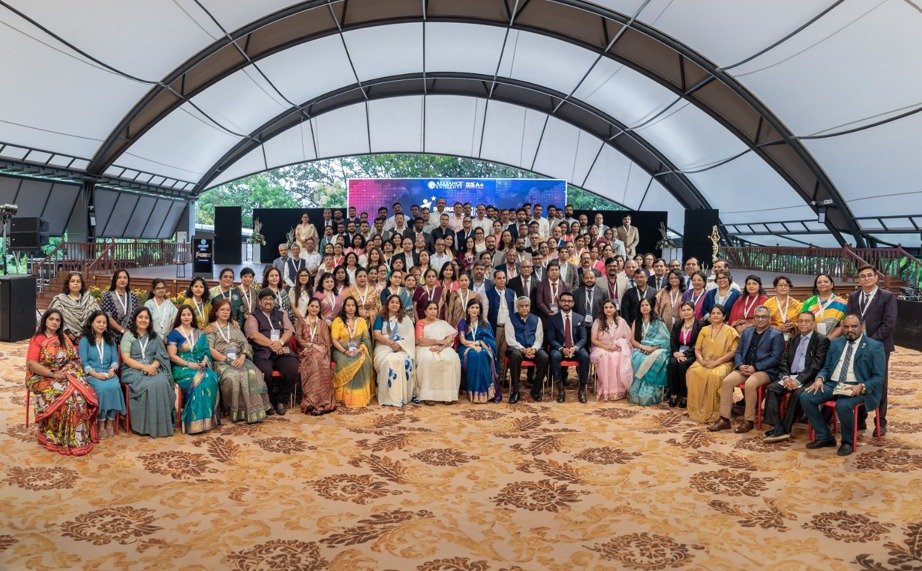
Bengaluru: Human values, creativity, critical thinking and independent thinking must remain at the heart of education despite the rapid adoption of artificial intelligence (AI) and other emerging technologies, education experts said at the fifth edition of the International School Leaders Summit (ISLS 5.0) hosted by Alliance University.
The two-day summit brought together school principals, educationists, academic leaders and industry representatives from India and abroad to discuss the changing nature of learning and the skills students will need in the future.
Held under the theme ‘Learner-Centric Humanistic Education: Reshaping the Teaching-Learning State of Play’, the summit explored the evolving expectations of students, the impact of AI on education, emerging career opportunities and new approaches to teaching and learning.
Dr Ray Titus, Pro-Vice-Chancellor of Alliance University, said education should go beyond simply transferring knowledge. He stressed the importance of conceptual understanding, adaptability and purposeful learning in preparing students for a rapidly changing world.
Alliance University Pro-Chancellor Abhay G. Chebbi observed that as AI makes information and knowledge increasingly accessible, distinctly human qualities such as curiosity, creativity, empathy, integrity and independent thinking have become even more important.
Vice-Chancellor Dr B. Priestley Shan said educational institutions need to continuously adapt their teaching methods to meet changing student expectations. Mentorship, collaboration and sustained engagement with industry, he said, can play a key role in improving the overall learning experience.
Economist and educationist Prof. M.V. Rajeev Gowda, former professor and Chairperson of the Centre for Public Policy at IIM Bengaluru, delivered the keynote address. He underlined the importance of critical thinking and creativity in the AI era, urging students to question, analyse and contextualise information generated or presented by technology rather than accepting it without scrutiny.
The summit also featured a ‘Leadership Lens’ dialogue involving senior professionals from organisations including SAP, IBM, Tata Consultancy Services (TCS), Eightfold, ABB and Narayana Health. The discussion focused on the skills and competencies expected in an evolving employment landscape.
Another session, titled ‘Next-Gen Learners: Rethinking Learning Design for Gen Z & Alpha’, brought together school principals and education leaders from India and abroad. Participants discussed ways of redesigning learning environments and teaching methods to better align with the expectations and learning patterns of younger generations.
The discussions at ISLS 5.0 highlighted that technological progress need not come at the expense of human-centred education. Experts stressed that critical thinking, creativity, character, values and meaningful human relationships should continue to form the foundation of the learning process.
During the valedictory session, Surekha Shetty, Registrar General of Alliance University, thanked the participating principals, educationists and guests. She also highlighted the university’s academic programmes, achievements and student-focused initiatives.
The summit provided a platform for school education, higher education and industry representatives to exchange ideas and examine how education systems can prepare learners for a technology-driven future while retaining a strong human focus.