

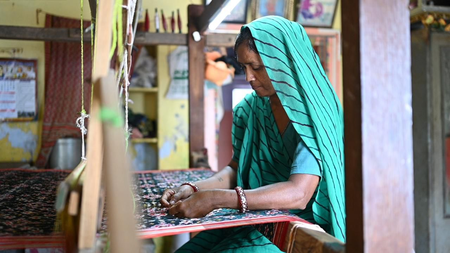
Gandhinagar, June 2 (IANS) Gujarat’s Hastkala Setu Yojana (HSY), launched to strengthen traditional arts and crafts and improve market access for artisans, has recorded cumulative sales of Rs 102.08 crore and generated more than 50,000 employment opportunities since its inception, according to figures released by the state government.
The scheme, introduced in 2020 under the leadership of Chief Minister Bhupendra Patel, was designed to support artisans through training, market linkages, and entrepreneurship development while preserving Gujarat’s traditional craft heritage.
“It aligns with Prime Minister Narendra Modi’s initiatives promoting self-reliance, local manufacturing, and the preservation of cultural heritage,” officials said.
The programme has been implemented across all 34 districts of Gujarat through the Office of the Commissioner of Cottage and Rural Industries, with the Entrepreneurship Development Institute of India (EDII) serving as the knowledge partner.
The state government has spent approximately Rs 58 crore on the scheme. More than 21,690 artisans have been registered under the programme, with women accounting for 82 per cent of beneficiaries.
The scheme has also seen participation from socially disadvantaged groups, including Scheduled Castes (21 per cent), Scheduled Tribes, and Other Backward Classes (34 per cent).
Officials said 15,586 artisans have undergone entrepreneurship development training, while 9,292 have received specialised skill-based training related to their respective crafts.
To provide continued support, a network of more than 70 master trainers and over 150 mentors has been established.
A key component of the scheme has been improving artisans’ access to markets. Around 9,300 artisans have been connected directly with buyers through business-to-business orders.
Seven B2B meetings and four fashion shows have also been organised to facilitate interaction among artisans, designers, and industry stakeholders.
The programme has additionally focused on digital outreach. More than 2,000 artisans have received training in digital marketing and have been connected to e-commerce platforms, including Amazon, Flipkart Samarth, Meesho, and Etsy.
According to the government, the scheme has contributed to a significant increase in artisans’ earnings. While only nine per cent of beneficiaries previously earned more than Rs 15,000 per month from their work, that figure has risen to 50 per cent.
The proportion of artisans relying on handicrafts as their primary source of income has increased from 20 per cent to 45 per cent, while 73 per cent now access markets directly through exhibitions and fairs.
The government said challenges during implementation included inadequate documentation, delays in financial convergence, limited adoption of modern technology, and weak marketing mechanisms.
It said efforts to address these issues have focused on technology upgrades, design innovation, market diversification, and public-private partnerships.
The scheme was initially planned for three years from 2019-20 but was later extended until 2025-26 following disruptions caused by the Covid-19 pandemic.
–IANS
mys/dan