

Beijing, Sep 24 (IANS) China calls its new ethnic-unity law a path to harmony. For Tibetans, Uyghurs, Mongolians and other minorities, however, it may become a legal wall around their languages, religions and identities. By turning Communist Party ideology into a public duty and targeting critics abroad, Beijing has replaced respect for diversity with a demand for political obedience.
China’s National People’s Congress passed the Law on Promoting Ethnic Unity and Progress on March 12 and it came into force on July 1. Beijing says it will create a shared national identity among China’s 56 officially recognised ethnic groups while supporting stability and development.
Behind these promises, the law places Communist Party leadership and the idea of a single “Chinese national community” at the centre of society. It requires Mandarin education from before kindergarten through secondary school. Parents are also expected to guide children to love the Party, the state and Beijing’s approved concept of the Chinese nation.
These provisions create risks for Tibetans, Uyghurs, Southern Mongolians and other non-Han communities with distinct languages, faiths and identities. The measure applies to schools, families, religious groups, businesses and public institutions, making ideological conformity a social responsibility.
Minority-language education may weaken as Mandarin becomes the basic language of teaching. Religious institutions face stronger demands for “Sinicisation”, a policy requiring faith to conform to state-defined Chinese culture and Party priorities. Broad restrictions on actions that “undermine ethnic unity” could also turn peaceful cultural advocacy, historical discussion or criticism of state policy into evidence of separatism.
The result is a controlled form of diversity. A Tibetan child may still wear traditional clothing during an official festival but receive fewer opportunities to study deeply in Tibetan. Cultural symbols may remain visible while language, memory and belief are gradually restricted.
The law also extends Beijing’s claims beyond China. Article 63 says overseas organisations and individuals may face legal responsibility for conduct that China considers harmful to ethnic unity or supportive of ethnic division. This provision could threaten exiled activists, journalists, academics and diaspora organisations, especially during travel to China or states cooperating with Beijing.
Taiwan has firmly rejected this extraterritorial claim. Its government says Chinese domestic legislation has no authority over Taiwan and has announced coordinated measures against transnational repression. Taipei fears that Beijing may use “ethnic unity” as another legal weapon to pressure Taiwanese citizens and promote its unification agenda.
The law converts Xi Jinping’s assimilation policies into a nationwide legal framework. Beijing argues that a common language and identity can improve social unity, employment and economic development. Chinese officials have dismissed allegations of forced assimilation as foreign interference and maintain that the overseas provision targets unlawful separatism without affecting normal exchanges.
Yet unity imposed by the state is different from unity built through equal rights. When one political authority defines acceptable language, religion, history and identity, minorities do not participate as equal partners. They are allowed to remain different only within boundaries established by the Party.
International criticism has increased. UN human-rights chief Volker Turk called for the law to be repealed, warning that it could deepen restrictions on language, education, religion, culture, expression and assembly. Eight UN experts also warned that it could transform regional assimilation measures into binding national obligations.
The United States described the law as problematic, while the European Union warned that it could further restrict minority rights and opposed its overseas application. Fourteen members of the US House of Representatives urged Washington to condemn the law and strengthen safeguards against transnational repression.
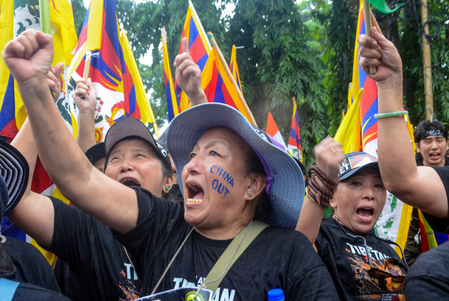
Civil society groups have moved beyond statements. A coalition of 54 human-rights and diaspora organisations demanded monitoring and protection for threatened communities. More than 50 Uyghur groups called for the law’s repeal, while Tibetan, Uyghur, Hong Kong and other activists organised demonstrations in the United States, India and Europe.
The Tibetan Youth Congress launched an international chain hunger strike. The Tibetan Parliament-in-Exile approached Indian lawmakers to build political opposition, while protesters gathered outside Chinese diplomatic missions in Berlin and Zurich.
The law is too new for its full enforcement record to be assessed. Its early impact, however, may be measured through fear and self-censorship. Parents may avoid teaching disputed history, teachers may hesitate to defend minority-language education and exiles may silence themselves to protect relatives or reduce travel risks.
China has presented conformity as unity and legal pressure as progress. Genuine harmony protects minority communities without requiring them to surrender their language, faith or collective memory. A state that fears independent identity cannot build lasting unity it can only enforce silence.
–IANS
scor/as