
Amendment of marketing code for medical devices to boost transparency in MedTech sector: AiMeD

New Delhi, Sep 3 (IANS) The Department of Pharmaceuticals’ (DoP) recent amendment to certain clauses of the marketing code for medical devices is set to boost transparency in MedTech sector, said the Association of Indian Medical Device Industry (AiMeD) on Wednesday.
The amendment to the Uniform Code for Marketing Practices in Medical Devices (UCMPMD), 2024, will enable manufacturers of medical devices to provide free evaluation samples to doctors.
This will help the healthcare professionals acquire hands-on experience in using the product.
However, the Code capped the free evaluation samples at 2 per cent of domestic sales, with valuation to be recorded at stockist price if manufactured in-house, or at purchase price if sourced externally.
As per the amendment, companies must disclose spending on samples, CME programmes, event sponsorships, and pre-approvals needed for specialist doctors' international travels, lodging, and hospitality in a newly prescribed annexure format.
Notably, the revised framework also prohibits gifts, cash grants, and personal travel or hospitality benefits to healthcare professionals and their families. Industry associations will be required to retain disclosure data for five years, with stricter penalties for violations.
Welcoming the amendment, AiMeD said that the move would bring much-needed transparency, fairness, and accountability to India’s growing MedTech sector.
“At AiMeD, we welcome the Universal Code of Ethical Marketing of Medical Devices and the simplified annual reporting format. The Code ensures ethical and transparent marketing, fostering fair competition and stronger reputations for both domestic and overseas manufacturers. Patients benefit through safer devices, trustworthy information, and freedom from exploitative promotions,” said Rajiv Nath, Forum Coordinator, AiMeD.
With the amendment, the chief executives or managing directors of medical device companies will now have to file annual declarations of marketing expenditure within two months of the financial year’s close. For FY25, the deadline has been extended till September 30.
"The Associations shall have a system in place to ensure that data disclosed by its members is stored securely and is adequately protected. Such data shall be retained for a minimum period of five years, or for such longer period as may be necessary for the purpose of facilitating inquiry into or decision on any complaint made or proceeding instituted before the Ethics Committee for Marketing Practices in Medical Devices, the Apex Committee for Marketing Practices in Medical Devices or any court or other authority or as such committee, court or authority may direct for such purpose," the DoP said.
"The Associations shall also have a system in place to share such data or information, without affecting the integrity of the same in any manner, on being required to do so by such committee, court or authority for the purpose of such inquiry or decision," it added.
--IANS
rvt/
SC issues notice on plea alleging baby swap at private hospital in Chhattisgarh

New Delhi, Sep 2 (IANS) The Supreme Court has issued notice to the Chhattisgarh government and two doctors on a petition alleging that a newborn was swapped at a private hospital in Raipur.
Observing that the matter "requires consideration”, a Bench of Justices Manoj Misra and Ujjal Bhuyan sought responses within four weeks from the Raipur Superintendent of Police, Police Station Khamardih, and gynaecologist Dr Neeraj Pehlajani and Mata Laxmi Nursing Home Director, D. Sameer Pehlajani.
The petitioner couple alleged that while Usha Singh delivered a boy and a girl at Mata Laxmi Nursing Home in 2023, the hospital discharged them with two girls.
A subsequent DNA test confirmed that only one child was biologically theirs, while the other did not match either parent, stated the petition, describing the incident as a "clear case of child swapping".
Before approaching the Supreme Court, the petitioners had petitioned the Chhattisgarh High Court in 2024 seeking registration of an FIR and recovery of their missing child. They also prayed for directions to hand over custody of the “kidnapped child”.
However, a bench led by Chief Justice Ramesh Sinha, in its order passed in January this year, dismissed the plea. The Chhattisgarh High Court took note of an inquiry report prepared by a six-member committee of doctors, which found hospital records in order and "no proof or evidence of any kind submitted by the complainant regarding child theft".
Rejecting the plea, it had said: "We do not find any good ground to interfere with the case. Petitioners are at liberty to take recourse to law, if they so advised."
Challenging the dismissal, the couple filed a special leave petition (SLP) before the Supreme Court, arguing that the Chhattisgarh High Court had failed to consider whether the DNA findings had been properly investigated and whether their complaint warranted a criminal probe.
Agreeing to examine the matter, the apex court ordered: "Matter requires consideration. Issue notice to the Respondents, returnable in four weeks."
--IANS
pds/vd
Madras HC quashes denial of kidney transplant over ‘proof of friendship’

Chennai, Sep 3 (IANS) Questioning the logic of demanding documents to establish personal friendship, the Madras High Court has set aside an order of the Authorisation Committee that had refused permission for a kidney transplant between two men who described themselves as family friends.
A bench of Justice N. Anand Venkatesh observed that the committee had denied approval merely on the basis of a report from the Erode Collector, which said that donor C. Ganesan of Erode and recipient V. Periasamy of Thanjavur had not produced documentary evidence to prove their friendship.
“It is incomprehensible as to how family friends can establish their relationship through documents. Emotion plays a part in a relationship involving friends, and it is not determined through documentation,” the judge said in his order, calling the Collector’s reasoning flawed.
The court pointed out that the Transplantation of Human Organs and Tissues Act, 1994, does not bar transplants between unrelated individuals. The law only mandates that such donations must be out of love and affection, without monetary inducement or coercion.
Its central objective, it underlined, is to prevent exploitation of vulnerable people and ensure that organ trade is not legitimised under the guise of donation.
Justice Venkatesh noted that in cases involving non-near relatives, the onus of establishing the absence of commercial dealings cannot rest solely on the donor and recipient. While they may assert that the donation is genuine, it is the duty of the Authorisation Committee to independently examine the circumstances and assess whether the donation is truly voluntary or influenced by financial gain.
"In the present case, the committee has failed to apply its mind independently and has simply relied upon the Collector’s report. This vitiates the decision," the bench said, quashing the committee’s June 27, 2025, order that denied permission for the transplant.
The judge directed the Authorisation Committee to give both parties a fresh opportunity to present their case and to deliver a reasoned decision within four weeks, based solely on legal requirements and independent assessment.
--IANS
aal/vd
India’s power sector adds 5.2 GW capacity in July, 36 GW solar capacity addition expected in FY26: Report
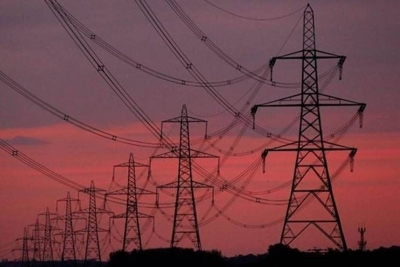
New Delhi, Sep 3 (IANS) India's power sector saw increased capacity commissioning in July, aided by strong policy incentives, adding 2 GW of conventional and 3.2 GW of renewable capacity, a report said on Wednesday.
This addition has taken year-to-date (YTD) additions in FY 26 to 21 GW, according to an HSBC Global Investment Research report.
The research report projected the commissioning of 11.7 GW of thermal power, 3.8 GW of hydropower, and 36 GW of solar power during FY26. The overall power demand increased 4.4 per cent YoY in August and over 2 per cent in July upon a low base.
"However, it is important to note that, despite the growth last month, power demand hasn't crossed August 2023 highs. This proves the importance of weather-related disruption in determining the strength of India's power demand and its greater weighting than manufacturing-led power growth," the report added.
Cooler weather led to a reduction in thermal plant load to 64 per cent Plant Load Factor (PLF), the lowest level for July in ten years.
A rise in renewable power (excluding hydro) share brings to light the question of grid stability and state discom acceptability, unless battery installation picks up fast, the HSBC report noted.
In July, renewables excluding hydro accounted for 20 per cent of generation, while hydro contributed 13 per cent. While wind contributed 10 per cent of generation, solar lagged at 7.3 per cent share on account of rain.
"We believe that increasing battery storage is the best solution due to its quick commissioning (unlike pumped storage), the firm noted. The government has provided both policy and fiscal support, and recently discovered storage tenders (the most recent at INR6.64/kWh of storage-based power) look promising," the report said.
Chinese anti-innovation policies have raised cell prices, it said, adding that module prices, however, remained stable, indicating overcapacity in the system.
--IANS
aar/vd
Medical team to visit Andhra Pradesh’s village to investigate series of deaths
Amaravati, Sep 3 (IANS) A high-level medical team will visit a village in Andhra Pradesh's Guntur district to investigate the cause of a series of unexplained deaths in recent months.
On the direction of State Health Minister Satya Kumar Yadav, a team headed by Director of Medical Education G. Raghunandan will visit Turkapalem village in Guntur Rural Mandal.
The village recorded about 30 deaths in the last five months. During the last four days, three deaths were reported from this village, which has a population of about 3,000.
The investigation conducted so far by the district officials of the Medical and Health Department has not confirmed the cause of death.
This prompted the Health Minister to depute a team of senior state-level officials of the department to conduct a thorough investigation.
He asked the team to look into cases of fever and infection and submit a report.
The medical team will collect blood samples from the families of the deceased and will also send water and other samples for analysis.
The village has witnessed a surge of fever cases during the last few weeks. Municipal authorities, in coordination with the Health Department, have taken a series of measures for mosquito eradication. Dozens of workers were participating in a sanitation drive.
Guntur district health officials have also intensified the investigation. A team of specialists from Guntur Medical College has been deployed to trace the source of sickness. Specialists from six departments are part of the team which conducted the investigation.
A team led by Guntur Medical College Principal Sundarachari and District Medical and Health Officer Vijayalakshmi conducted the investigation. They met affected families and collected detailed medical histories related to the patients.
Laboratory tests have reportedly confirmed two cases of melioidosis, a rare but serious bacterial infection, prompting widespread screening and health monitoring.
A 15-day medical camp has been established in the village, bringing together experts from microbiology, biochemistry, general medicine, psychiatry, and social and preventive medicine.
--IANS
ms/svn
Australia: Teenager charged over stabbing in western Sydney
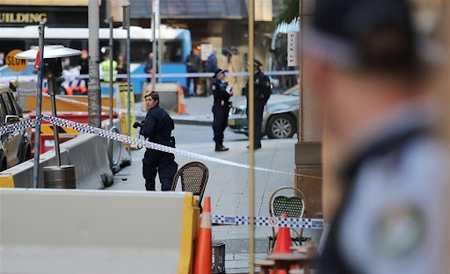
Sydney, Sep 3 (IANS) A teenager has been charged over a stabbing at a western Sydney train station that left a boy in a critical condition in hospital.
Police in the state of New South Wales (NSW) said on Wednesday that emergency services were called to reports of a stabbing at a railway station in Merrylands, 20 km west of central Sydney, around 5:15 pm on Monday, Xinhua News Agency reported.
A 16-year-old male victim was treated at the scene by ambulance paramedics and taken to hospital in a critical condition. As of Wednesday morning he was continuing to recover in hospital.
Investigators believe that the 16-year-old boy had interacted with two males who were not known to him before they assaulted him and left the scene.
NSW Police said that a 17-year-old attended a police station on Tuesday afternoon where he was arrested and charged with seven offenses, including wounding a person with intent to cause grievous bodily harm, being armed with intent to commit a serious offense and using a knife in a public place.
He was refused bail and will make an initial appearance before a children's court on Wednesday. Police inquiries into the incident are ongoing.
On August 28, police said one teenager was dead and another was hospitalised following a stabbing incident in western Sydney.
According to the police, emergency services were called to a bus station in Mount Druitt, 38 km west of central Sydney, following reports of a concern for welfare shortly after 10:10 pm on August 27.
Police officers arrived at the scene and found two men, both aged 19, suffering from stab wounds. One of the men was treated by ambulance paramedics for stab wounds to his chest, but could not be revived and was declared deceased at the scene.
The other man sustained stab wounds to his arm and was treated by paramedics before being taken to the hospital in a stable condition.
Local police established a crime scene and have commenced an investigation into the incident with assistance from the homicide squad.
--IANS
akl/as
SC asks Centre to frame policy against foreign accused jumping bail
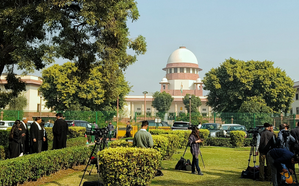
New Delhi, Sep 3 (IANS) The Supreme Court has asked the Centre to consider formulating an appropriate policy to prevent foreign nationals accused of crimes in India from absconding from the country.
The issue arose when a Nigerian national, accused in a high-profile criminal case, allegedly absconded to his home country after being granted bail by the Jharkhand High Court in May 2022.
The top court, in December last year, had set aside the bail order, directing the authorities to ensure the accused is brought back to India to face trial.
At the same time, it underscored the need to do “something more..as these cases keep coming up and therefore, a proper set of guidelines has to be framed and distributed to all the Courts concerned so that such incidents do not happen in future.”
In the latest hearing, a Bench of Justices Dipankar Datta and Augustine George Masih was informed by Additional Solicitor General Raj Kumar Bhaskar Thakre, the law officer appearing on the Centre’s behalf, that extradition was unlikely due to the absence of a bilateral treaty with Nigeria.
The Union Ministry of External Affairs, in an email to the Solicitor General, said, “In the absence of a bilateral Extradition treaty between India and Nigeria, the Nigerian authorities are unlikely to extradite their own national.”
Having regard to the fact that there is no bilateral treaty between Nigeria and India, the apex court observed that continuing to pursue the matter would serve “no useful purpose”.
Disposing of a Special Leave Petition (SLP) filed by the Jharkhand government, the Justice Datta-led Bench said, “The special leave petition stands disposed of, confirming the order of cancellation of bail but leaving it open to the Central Government to formulate an appropriate policy or initiate such further action as deemed necessary and proper so that foreign nationals do not flee the course of justice after committing crimes in India.”
--IANS
pds/dpb
SC asks Centre to frame policy against foreign accused jumping bail
New Delhi, Sep 3 (IANS) The Supreme Court has asked the Centre to consider formulating an appropriate policy to prevent foreign nationals accused of crimes in India from absconding from the country.
The issue arose when a Nigerian national, accused in a high-profile criminal case, allegedly absconded to his home country after being granted bail by the Jharkhand High Court in May 2022.
The top court, in December last year, had set aside the bail order, directing the authorities to ensure the accused is brought back to India to face trial.
At the same time, it underscored the need to do “something more..as these cases keep coming up and therefore, a proper set of guidelines has to be framed and distributed to all the Courts concerned so that such incidents do not happen in future.”
In the latest hearing, a Bench of Justices Dipankar Datta and Augustine George Masih was informed by Additional Solicitor General Raj Kumar Bhaskar Thakre, the law officer appearing on the Centre’s behalf, that extradition was unlikely due to the absence of a bilateral treaty with Nigeria.
The Union Ministry of External Affairs, in an email to the Solicitor General, said, “In the absence of a bilateral Extradition treaty between India and Nigeria, the Nigerian authorities are unlikely to extradite their own national.”
Having regard to the fact that there is no bilateral treaty between Nigeria and India, the apex court observed that continuing to pursue the matter would serve “no useful purpose”.
Disposing of a Special Leave Petition (SLP) filed by the Jharkhand government, the Justice Datta-led Bench said, “The special leave petition stands disposed of, confirming the order of cancellation of bail but leaving it open to the Central Government to formulate an appropriate policy or initiate such further action as deemed necessary and proper so that foreign nationals do not flee the course of justice after committing crimes in India.”
--IANS
pds/dpb
SC asks Centre to frame policy against foreign accused jumping bail
New Delhi, Sep 3 (IANS) The Supreme Court has asked the Centre to consider formulating an appropriate policy to prevent foreign nationals accused of crimes in India from absconding from the country.
The issue arose when a Nigerian national, accused in a high-profile criminal case, allegedly absconded to his home country after being granted bail by the Jharkhand High Court in May 2022.
The top court, in December last year, had set aside the bail order, directing the authorities to ensure the accused is brought back to India to face trial.
At the same time, it underscored the need to do “something more..as these cases keep coming up and therefore, a proper set of guidelines has to be framed and distributed to all the Courts concerned so that such incidents do not happen in future.”
In the latest hearing, a Bench of Justices Dipankar Datta and Augustine George Masih was informed by Additional Solicitor General Raj Kumar Bhaskar Thakre, the law officer appearing on the Centre’s behalf, that extradition was unlikely due to the absence of a bilateral treaty with Nigeria.
The Union Ministry of External Affairs, in an email to the Solicitor General, said, “In the absence of a bilateral Extradition treaty between India and Nigeria, the Nigerian authorities are unlikely to extradite their own national.”
Having regard to the fact that there is no bilateral treaty between Nigeria and India, the apex court observed that continuing to pursue the matter would serve “no useful purpose”.
Disposing of a Special Leave Petition (SLP) filed by the Jharkhand government, the Justice Datta-led Bench said, “The special leave petition stands disposed of, confirming the order of cancellation of bail but leaving it open to the Central Government to formulate an appropriate policy or initiate such further action as deemed necessary and proper so that foreign nationals do not flee the course of justice after committing crimes in India.”
--IANS
pds/dpb
SC asks Centre to frame policy against foreign accused jumping bail
New Delhi, Sep 3 (IANS) The Supreme Court has asked the Centre to consider formulating an appropriate policy to prevent foreign nationals accused of crimes in India from absconding from the country.
The issue arose when a Nigerian national, accused in a high-profile criminal case, allegedly absconded to his home country after being granted bail by the Jharkhand High Court in May 2022.
The top court, in December last year, had set aside the bail order, directing the authorities to ensure the accused is brought back to India to face trial.
At the same time, it underscored the need to do “something more..as these cases keep coming up and therefore, a proper set of guidelines has to be framed and distributed to all the Courts concerned so that such incidents do not happen in future.”
In the latest hearing, a Bench of Justices Dipankar Datta and Augustine George Masih was informed by Additional Solicitor General Raj Kumar Bhaskar Thakre, the law officer appearing on the Centre’s behalf, that extradition was unlikely due to the absence of a bilateral treaty with Nigeria.
The Union Ministry of External Affairs, in an email to the Solicitor General, said, “In the absence of a bilateral Extradition treaty between India and Nigeria, the Nigerian authorities are unlikely to extradite their own national.”
Having regard to the fact that there is no bilateral treaty between Nigeria and India, the apex court observed that continuing to pursue the matter would serve “no useful purpose”.
Disposing of a Special Leave Petition (SLP) filed by the Jharkhand government, the Justice Datta-led Bench said, “The special leave petition stands disposed of, confirming the order of cancellation of bail but leaving it open to the Central Government to formulate an appropriate policy or initiate such further action as deemed necessary and proper so that foreign nationals do not flee the course of justice after committing crimes in India.”
--IANS
pds/dpb