
GST on 33 cancer drugs, rare disease medicines slashed to 0 from 12 pc: FM Sitharaman
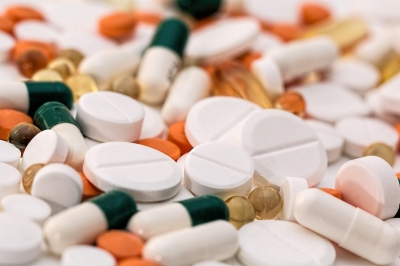
New Delhi, Sep 4 (IANS) In a historic move, the Union government has slashed the Goods and Services Tax (GST) rates for 33 cancer drugs and rare medicines -- from 12 to zero per cent.
The decision taken by the GST Council, chaired by Finance Minister Nirmala Sitharaman, on Wednesday, rationalised the indirect tax structure, cutting the current four slabs down to two -- scrapping the 12 per cent and 28 per cent rates, while retaining the 5 per cent and 18 per cent slabs.
"GST on 33 life-saving drugs and medicines has come down from 12 per cent to zero," Finance Minister Sitharaman said.
The Union government also slashed GST rates for other life-saving drugs.
As per the revision, life-saving drugs, health-related products, and some medical devices will see a rate cut from 12 per cent/18 per cent to 5 per cent or nil.
"From 5 to 0 and 3 life-saving drugs and medicines used for the treatment of cancer, rare diseases and other severe chronic diseases," the Finance Minister added.
"There are several drugs and medicines coming down to 5 per cent from 12 per cent. Similarly, spectacles and goggles for correcting vision are also coming down to 5 per cent from 28 per cent," she said.
The changes in GST rates on services will be implemented from September 22.
The GST revision will also slash rates for health insurance, medical oxygen, and diagnostic kits.
GST on individual health and life insurance premiums have been reduced to nil (which currently stands at 18 per cent).
The Finance Minister said the move will make insurance more affordable for the common man and help expand coverage across the country.
The GST rates have been slashed from 18 per cent to 5 per cent on various medical apparatus and devices used for medical, surgical, dental or veterinary usage or for physical or chemical analysis
The GST rates have been reduced from 12 per cent to 5 per cent on various medical equipment and supplies devices such as wadding gauze, bandages, diagnostic kits and reagents, blood glucose monitoring system (Glucometer) medical devices, etc.
Meanwhile, products harmful to health such as pan masala, gutkha, cigarettes, chewing tobacco, zarda, unmanufactured tobacco, and bidi will continue under existing high GST rates and compensation cess until outstanding cess-linked loans are cleared.
All goods (including aerated waters), containing added sugar or other sweetening matter or flavoured to go from 28 per cent to 40 per cent.
--IANS
rvt/khz
GST reforms to boost affordability of life saving drugs, address public health: Pharma experts

New Delhi, Sep 4 (IANS) The reforms made in Goods and Services Tax (GST) by the GST Council, in its 56th meeting on Wednesday, will boost the affordability of life-saving drugs as well as address public health, pharma industry experts said.
In a landmark move, the GST Council, chaired by Finance Minister Nirmala Sitharaman, rationalised the indirect tax structure, cutting the current four slabs down to two -- scrapping the 12 per cent and 28 per cent rates, while retaining the 5 per cent and 18 per cent slabs.
As per the revision, life-saving drugs, health-related products, and some medical devices will see a rate cut from 12 per cent/18 per cent to 5 per cent or nil.
The changes in GST rates on services will be implemented from September 22.
"The Prime Minister’s call for next-generation GST reforms is both timely and vital to stimulate growth. For the pharmaceutical sector, placing medicines in the 5 per cent slab will be crucial to ensuring affordability and addressing pressing public health concerns," Indian Pharmaceutical Alliance (IPA) Secretary General Sudarshan Jain said.
He noted that the pharma industry has also proposed alignment of GST on into an Active Pharmaceutical Ingredient (API), Key Starting Material (KSM) and other key inputs to 5 per cent.
"This will help prevent tax inversion, improve working capital, strengthen domestic manufacturing, and bolster India's position as the 'pharmacy of the world'," Jain said.
The Association of Indian Medical Device Industry (AiMeD) also "welcomed" the move by the government to slash GST rates “from 12 per cent to 5 per cent".
"If refund on accumulated GST due to the inverted GST structure will be made within seven days, as being informed, we hope GST refunds will also be available on GST paid on Services and Capital Goods as is the case in other countries like Australia, Singapore and Canada etc to enable us to be globally competitive," AiMeD Forum Co-Ordinator, Rajiv Nath said.
"We also hope a transition period is provided to switch packaging material to avoid persecution for profiteering, though we intend to pass on the GST reduction to the end consumers by reducing MRP proportionately," he added.
Meanwhile, the government also reduced GST on individual health and life insurance premiums to nil (which currently stands at 18 per cent).
The Finance Minister said the move will make insurance more affordable for the common man and help expand coverage across the country.
With this change, all individual life insurance policies — including term life, Unit Linked Insurance Plan (ULIPs) and endowment plans — as well as their reinsurance, will now fall under the nil GST category.
The exemption also extends to all individual health insurance policies, including family floater and senior citizen plans, along with their reinsurance.
--IANS
rvt/vd
No GST on life and health insurance premiums from Sep 22
New Delhi, Sep 3 (IANS) In a significant development for policyholders, GST on individual health and life insurance premiums, which currently stands at 18 per cent, has been reduced to nil in the 56th GST Council meeting, and will come into effect starting September 22.
Finance Minister Nirmala Sitharaman said the move will make insurance more affordable for the common man and help expand coverage across the country.
Moving forward, all individual ULIP plans, family floater plans, and term plans will be exempt from GST.
Currently, insurance services attract 18 per cent GST.
With this change, all individual life insurance policies — including term life, Unit Linked Insurance Plan (ULIPs) and endowment plans — as well as their reinsurance, will now fall under the nil GST category.
The exemption also extends to all individual health insurance policies, including family floater and senior citizen plans, along with their reinsurance.
For example, if a policyholder pays Rs 100 as a premium towards buying an insurance policy, he or she actually ends up making a payment of Rs 118 (Rs 100+ Rs 18 GST).
With the exemption, customers will now pay only the base premium quoted by insurers, with no additional GST. Industry experts say this could cut the effective cost of policies by around 15 per cent, making them more accessible and boosting insurance penetration in the country.
In a landmark move, the GST Council, chaired by Finance Minister Sitharaman, on Wednesday rationalised the indirect tax structure, cutting the current four slabs down to two -- scrapping the 12 per cent and 28 per cent rates, while retaining the 5 per cent and 18 per cent slabs.
The changes in GST rates on services will be implemented from September 22.
--IANS
na/vd
Rajasthan Health Sciences University (Amendment) Bill 2025 passed by voice vote; RIMS to be set up in Jaipur
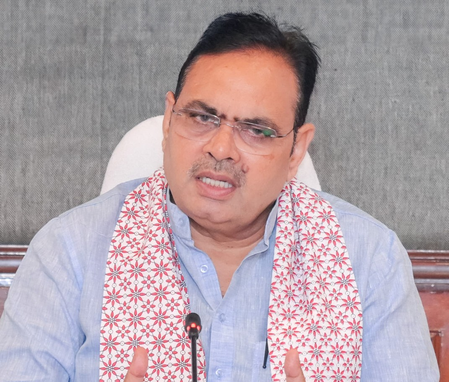
Jaipur, Sep 3 (IANS) The Rajasthan Legislative Assembly on Wednesday passed the Rajasthan Health Sciences University (Amendment) Bill, 2025 by voice vote.
Speaking after the discussion, Medical and Health Minister Gajendra Singh announced that a Rajasthan Institute of Medical Sciences (RIMS) will be set up in Jaipur, modelled on the All India Institute of Medical Sciences (AIIMS), New Delhi.
The minister said that the Rajasthan University of Health Sciences (RUHS) will be upgraded, and RIMS will be established on 40 acres of land with world-class, super-speciality facilities. Adequate budgetary provision has already been made by the state government for this ambitious project.
“The establishment of RIMS will not only make Rajasthan a leader in advanced medical services but will also promote medical tourism,” he added. Singh informed the House that RIMS is expected to be ready in the next two years.
Patients eligible under government health schemes will receive free treatment at the institute, thereby reducing the load on existing government hospitals.
The institute will function as an autonomous institution to ensure efficiency and quality standards.
According to the amendment bill, the state government will have the authority to declare any component of the university or any college established by it as a government college.
In such cases, administrative control and all assets -- land, buildings, and laboratories -- will be vested with the state government.
The Health Minister said that the government’s priority is to ensure that people of Rajasthan do not need to travel outside the state for highly specialised medical treatment.
With the establishment of RIMS, the state will get a new dimension in advanced healthcare and world-class medical infrastructure.
--IANS
arc/dan
Minorities of Afghanistan, B’desh and Pak can stay in India without passport if entered before Dec 2024

New Delhi, Sep 3 (IANS) A person from minority community including Hindu, Sikh, Buddhist, Jain, Parsi and Christian from neighbouring nations including Afghanistan, Bangladesh and Pakistan, who were compelled to seek shelter in India due to religious persecution or fear of it and entered into India on or before 31st December, 2024 - with or without valid documents including passport or other travel documents, will be exempted from any penal action, said a government notification.
The declaration, allowing non-Muslim minority migrants to stay in the country without their passports, has been made in the Immigration and Foreigners Act 2024, which came into force after its notification on September 1 (Monday).
The development has been hailed and widely welcomed by the BJP, as this opens doors for harassed and troubled minorities from the neighbouring countries to seek refuge in the country – a concept championed by the Citizenship Amendment Act (CAA).
Union Minister of State for Education Sukanta Majumdar called it “a true step towards justice & humanity”.
Taking to X, he wrote, “In a landmark decision, the Govt of India has allowed minorities from Afghanistan, Bangladesh & Pakistan — Hindu, Sikh, Buddhist, Jain, Parsi & Christian — who entered India on/before 31st Dec 2024 due to religious persecution, to stay even without valid documents. A true step towards justice & humanity!”
Moreover, according to the Immigration and Foreigners (Exemption) order 2025, the citizens of Nepal and Bhutan and Tibetans who entered India from 1959 to May 2003 on the special entry permit and are registered with the foreign registration officer, have been given similar relaxation.
The notification further said that the members of the Navy, military and Air Forces entering India on duty and members of the family of any such person, when accompanying such person on a government transport, will get exemption under the Immigration and Foreigners Act. Also, those foreigners holding diplomatic passports will not require a visa.
--IANS
mr/dan
Minorities of Afghanistan, B’desh and Pak can stay in India without passport if entered before Dec 2024
New Delhi, Sep 3 (IANS) A person from minority community including Hindu, Sikh, Buddhist, Jain, Parsi and Christian from neighbouring nations including Afghanistan, Bangladesh and Pakistan, who were compelled to seek shelter in India due to religious persecution or fear of it and entered into India on or before 31st December, 2024 - with or without valid documents including passport or other travel documents, will be exempted from any penal action, said a government notification.
The declaration, allowing non-Muslim minority migrants to stay in the country without their passports, has been made in the Immigration and Foreigners Act 2024, which came into force after its notification on September 1 (Monday).
The development has been hailed and widely welcomed by the BJP, as this opens doors for harassed and troubled minorities from the neighbouring countries to seek refuge in the country – a concept championed by the Citizenship Amendment Act (CAA).
Union Minister of State for Education Sukanta Majumdar called it “a true step towards justice & humanity”.
Taking to X, he wrote, “In a landmark decision, the Govt of India has allowed minorities from Afghanistan, Bangladesh & Pakistan — Hindu, Sikh, Buddhist, Jain, Parsi & Christian — who entered India on/before 31st Dec 2024 due to religious persecution, to stay even without valid documents. A true step towards justice & humanity!”
Moreover, according to the Immigration and Foreigners (Exemption) order 2025, the citizens of Nepal and Bhutan and Tibetans who entered India from 1959 to May 2003 on the special entry permit and are registered with the foreign registration officer, have been given similar relaxation.
The notification further said that the members of the Navy, military and Air Forces entering India on duty and members of the family of any such person, when accompanying such person on a government transport, will get exemption under the Immigration and Foreigners Act. Also, those foreigners holding diplomatic passports will not require a visa.
--IANS
mr/dan
Calcutta HC questions differences in 2 post-mortem reports on death of 2 BJP workers
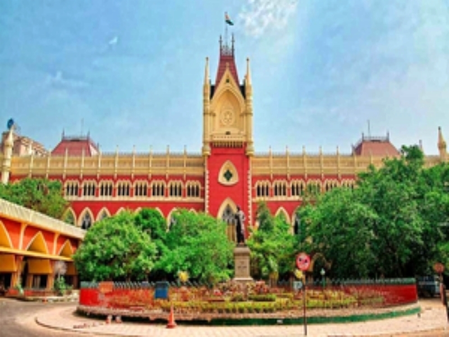
Kolkata, Sep 3 (IANS) The Calcutta High Court on Wednesday raised questions on the differences in the content of two post-mortem reports related to a single case of the mysterious death of two BJP workers at Khejuri in East Midnapore district of West Bengal in July this year.
The division bench of Justice Debangshu Basak and Justice Shabbar Rashidi also directed the police to submit the call details of the 17 individuals named as accused in the case to the court by the next date of hearing.
To recall, on July 12 this year, two BJP workers -- Sujit Das and Sujit Paik -- died while attending a public cultural function in the village at Khejuri, where they used to reside. Based on the first post-mortem report in the matter, the investigating police officers declared the death as “electrocution deaths".
However, the family members of the two deceased BJP workers claimed that they had been murdered, and they approached the Calcutta High Court seeking a second autopsy in the matter.
Following the orders of the Calcutta High Court, a second autopsy was conducted in the matter at state-run S.S.K.M. Medical College & Hospital in Kolkata. In the second autopsy report, injury marks were found on the bodies of the two deceased BJP workers.
As the matter came up for hearing on Wednesday at the Calcutta High Court, the division bench raised questions on the differences in the contents of two post-mortem reports in the matter.
During the hearing, Justice Basak questioned how the mention of injury marks was in the second post-mortem report, when nothing was reported in the first autopsy report.
According to Justice Basak, it was surprising that the reported mishap took place at a public cultural function and there was not a single witness to that. He also observed that the witnesses were scared of something, and it is the duty of the investigating official to allay their fears.
“Doubts are bound to surface if the content of the two autopsy reports are different. The police should check the mobile phones of all those named as accused to get their call recordings. At least an investigation should be started against those 17 persons named as accused in the complaint in the case,” Justice Basak observed.
--IANS
src/pgh
Calcutta HC questions differences in 2 post-mortem reports on death of 2 BJP workers
Kolkata, Sep 3 (IANS) The Calcutta High Court on Wednesday raised questions on the differences in the content of two post-mortem reports related to a single case of the mysterious death of two BJP workers at Khejuri in East Midnapore district of West Bengal in July this year.
The division bench of Justice Debangshu Basak and Justice Shabbar Rashidi also directed the police to submit the call details of the 17 individuals named as accused in the case to the court by the next date of hearing.
To recall, on July 12 this year, two BJP workers -- Sujit Das and Sujit Paik -- died while attending a public cultural function in the village at Khejuri, where they used to reside. Based on the first post-mortem report in the matter, the investigating police officers declared the death as “electrocution deaths".
However, the family members of the two deceased BJP workers claimed that they had been murdered, and they approached the Calcutta High Court seeking a second autopsy in the matter.
Following the orders of the Calcutta High Court, a second autopsy was conducted in the matter at state-run S.S.K.M. Medical College & Hospital in Kolkata. In the second autopsy report, injury marks were found on the bodies of the two deceased BJP workers.
As the matter came up for hearing on Wednesday at the Calcutta High Court, the division bench raised questions on the differences in the contents of two post-mortem reports in the matter.
During the hearing, Justice Basak questioned how the mention of injury marks was in the second post-mortem report, when nothing was reported in the first autopsy report.
According to Justice Basak, it was surprising that the reported mishap took place at a public cultural function and there was not a single witness to that. He also observed that the witnesses were scared of something, and it is the duty of the investigating official to allay their fears.
“Doubts are bound to surface if the content of the two autopsy reports are different. The police should check the mobile phones of all those named as accused to get their call recordings. At least an investigation should be started against those 17 persons named as accused in the complaint in the case,” Justice Basak observed.
--IANS
src/pgh
German Foreign Minister hails PM Modi’s call for peace in Ukraine
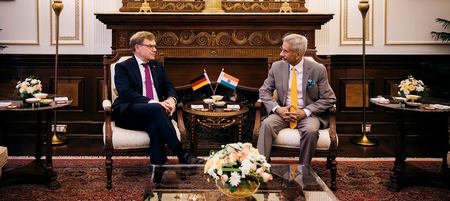
New Delhi, Sep 3 (IANS) German Foreign Minister Johann Wadephul on Wednesday welcomed Prime Minister Narendra Modi's call for a speedy peace agreement in Ukraine made during his recent meeting with Russian President Vladimir Putin in China's Tianjin, describing it as a significant development for Europe.
"For us in Germany and Europe, Russia's war of aggression remains right now the biggest challenge to our security policy. The fact that Prime Minister Modi, when he met with President Putin a couple of days ago, also pointed to the need for a speedy peace agreement in Ukraine has been important to us. We Europeans are doing our best working with our American and Ukrainian friends to ensure that this war ends soon and Ukraine finds peace as a sovereign state," Wadephul said while addressing a joint media briefing with External Affairs Minister (EAM) S Jaishankar following their talks in New Delhi.
"I spoke out in favour today that India uses its relations with Russia to point to the need to make peace return to Europe. I'm grateful for the open discussion we had today, and peace is the basis for security, freedom and prosperity. Security, anyway or generally speaking, is and will remain a challenge for the future, and we are pleased that in the vicinity of India too, a ceasefire has come to apply,” he added.
The German Foreign Minister further assured that Germany stands firmly on India's side in its fight against terrorism.
He also asserted that India and Germany are united by an objective to preserve the rules-based international order that includes the freedom of maritime trade routes in the Indo-Pacific.
"China's increasingly aggressive behaviour in the Indo-Pacific is a cause for concern for both our countries. More generally, we aim to further expand our cooperation in the areas of defence, security, and armaments. And we talked about this today. Be that through common exercises of our forces or speeding up the granting of export licenses process for the Indo-Pacific engagement," Wadephul emphasised
"Last year, a German frigate made a port call in India. Germany stands ready to enhance this cooperation. We also talked about the fact that security in the Indo-Pacific is closely linked to security in Europe," he added.
The German Foreign Minister expressed hope that the German Chancellor would visit India soon, highlighting the need to work together to tackle the shared challenges and further strengthen the bilateral cooperation.
As a rising economic powerhouse and the most populous country and biggest democracy in the world, he said, India holds strategic significance in the global world order.
--IANS
scor/as
Global tariffs to be offset by local markets, exporters to gain new opportunities: Varanasi Professor
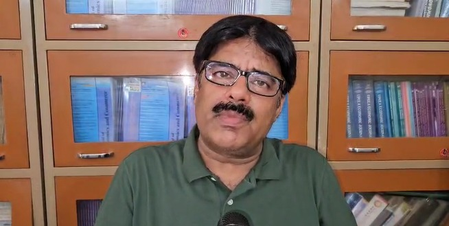
Varanasi, Sep 3 (IANS) As the 56th GST Council meeting, chaired by Union Finance Minister Nirmala Sitharaman, began in New Delhi, Professor Anoop Kumar Mishra, Head of the Economics Department at Varanasi's DAV College (affiliated to BHU) on Wednesday said that the government is attempting to use the domestic market to cushion the impact of global tariff wars on Indian exporters.
"Today’s meeting can be seen from two perspectives. First, the tariff war initiated by US President Donald Trump. Because of this, Indian exporters are facing difficulties. When our products go abroad, nearly 50 per cent additional duty is imposed on them," Professor Mishra told IANS.
The two-day Council meeting, scheduled for September 3-4, is expected to discuss rate rationalisation. Proposals on the table include eliminating the 12 per cent and 28 per cent GST slabs and moving towards a simplified structure of 5 per cent and 18 per cent, along with a 40 per cent slab for so-called "sin goods".
Mishra highlighted the second key context for the meeting - India’s approaching festive season.
“This 56th meeting is taking place just before festivals, when consumer demand traditionally rises. The government is trying to ensure that the losses exporters face from global tariffs can be compensated through the internal market. This is India’s answer to the tariff war,” he added.
He linked the strategy to the government’s push for ‘Vocal for Local.’
"India is promoting indigenous products. The Prime Minister has consistently stressed that self-reliance will come from strengthening local industries. The GST decisions under consideration aim to support that vision," he said.
Mishra added that rationalising GST could boost consumption and simultaneously support government revenue.
“With festivals approaching, consumer numbers will increase. Lower GST rates will make goods cheaper, encouraging demand. When demand rises, government revenue also deepens. It becomes a win-win situation for both consumers and the state. These decisions will be historic,” he added.
He also underlined the benefits for those unable to export their products abroad due to high tariffs.
“Such producers will now find opportunities in the domestic market. This will generate revenue, benefit consumers with lower prices, and allow exporters to reduce their losses. Everyone gains,” he told IANS.
The GST Council meeting brings together the Union and state Finance Ministers with the agenda of structural reforms in GST, including rate changes, simplifying compliance, and exploring new compensation mechanisms for states. A preparatory officers’ meeting was held on Tuesday to lay the groundwork for the key discussions.
--IANS
jk/vd