
Elon Musk denies Grok generated sexualised images of minors

New Delhi, Jan 15 (IANS) Tesla CEO and founder of AI firm xAI, Elon Musk, has said he is unaware of any instances where Grok, xAI’s chatbot, generated sexualised images of underage individuals.
Musk posted on X platform that “I not aware of any naked underage images generated by Grok. Literally zero. Obviously, Grok does not spontaneously generate images, it does so only according to user requests."
Musk's comments come after regulatory scrutiny on reports that Grok had complied with requests to digitally undress images of real people, including alleged cases involving minors.
He argued Grok only generates images in response to user prompts and is designed to refuse illegal requests, saying it “obeys the laws of any given country or state".
"When asked to generate images, it will refuse to produce anything illegal, as the operating principle for Grok is to obey the laws of any given country or state," the tech baron said.
"There may be times when adversarial hacking of Grok prompts does something unexpected. If that happens, we fix the bug immediately," he added.
X implemented new restrictions that barred Grok from editing images of real people in revealing clothing and limiting image creation and editing via the Grok account to paid subscribers.
Musk was replying to a thread which claimed “only left wing and Labour MPs and supporters" had encountered the images that triggered the outrage asking, "why are their algorithms sending it to them?". Musk dismissed suggestions that the chatbot could independently produce illegal content.
The Ministry of Electronics and Information Technology (MeitY) earlier cracked down on X Corp for failing to prevent the generation and circulation of obscene, nude and indecent content on its platform.
The government directed X Corp to send an action taken report (ATR) “towards immediate compliance for prevention of hosting, generation, publication or transmission, sharing or uploading of obscene, nude, indecent and explicit content through the misuse of Al-based services like ‘Grok’ and xAl’s other services”.
—IANS
aar/na
SEBI proposes fix for pre-IPO pledged shares, plans simpler IPO disclosure format
New Delhi, Nov 13 (IANS) The Securities and Exchange Board of India (SEBI), on Thursday, proposed key reforms to address long-standing challenges around locking in pre-IPO pledged shares and simplifying public issue disclosures.
The market regulator suggested these changes through amendments to the Issue of Capital and Disclosure Requirements (ICDR) Regulations, 2018.
At present, pre-issue shareholding other than that of promoters must be locked in for six months after listing.
Depositories, however, encounter technical difficulties in establishing such locks when shares are pledged, which causes last-minute compliance issues for issuers, especially those with sizable or dispersed shareholder bases.
SEBI has suggested enabling depositories to designate pledged shares as "non-transferable" for the lock-in period in response to directives from the issuer in order to address this.
Companies would also have to change their articles of association to make sure that shares remain locked in, whether in the pledgee's or pledger's account, when a pledge is released or invoked.
According to reports, the suggested framework has been approved by non-banking financial companies (NBFCs) that make loans against unlisted shares.
Additionally, SEBI has suggested replacing the abridged prospectus, which is a condensed version of the IPO offer document that is currently required with every public issue, with a more succinct and uniform "offer document summary".
The proposed summary would be posted on the websites of the issuer, lead managers, stock exchanges, and SEBI, and it would be filed with the draft offer document.
Key business and industry details, significant risks, financial highlights, litigation information, and promoter profiles would all be included in its streamlined disclosures for retail investors.
In light of growing concerns that lengthy prospectuses deter retail investors from interacting with official documents and instead direct them to informal or unverified information sources, the regulator said that the move aims to make IPO disclosures more investor-friendly.
--IANS
aps/khz
LG Electronics India’s Q2 profit falls 27 pc to Rs 389 crore
New Delhi, Nov 13 (IANS) LG Electronics India on Thursday reported a 27.3 per cent year-on-year (YoY) decline in its profit after tax (PAT) to Rs 389 crore for the second quarter of the current fiscal (Q2 FY26).
The company had posted a PAT of Rs 536 crore in the same period last year.
Revenue from operations jumped marginally 1 per cent to Rs 6,174 crore in Q2FY26, compared to Rs 6,113.8 crore in the corresponding quarter of the previous year.
However, the company’s operating performance came under pressure, with EBITDA falling 28 per cent YoY to Rs 547 crore, while margins contracted by 350 basis points to 8.9 per cent.
Segment-wise, revenue from the home appliances and air solutions division slipped slightly to Rs 3,948 crore, whereas the home entertainment division registered an improvement to Rs 2,226 crore during the quarter.
Industry-wide, electronics and consumer goods companies in India faced softer demand through most of the quarter as buyers postponed purchases until late September, when the GST rate reduction on several categories — including electronic products — came into effect.
Managing Director, LG Electronics India Limited, Hong Ju Jeon, said, "H1 of 2026 presented some macroeconomic headwinds, including a cool summer, geopolitical challenges, tariffs, and forex fluctuations. Despite this, our team in India demonstrated resilient sales growth, gaining market share and maintaining stable profitability."
"This performance underscores the strength of our operational execution and the deep trust consumers place in our brand. This is a reflection of our strong fundamentals and reinforces our continued commitment to our India growth story," he added.
It was LG Electronics India’s first quarterly results since its blockbuster stock market debut on October 14, 2025.
The company’s shares had listed at a 50 per cent premium on the National Stock Exchange (NSE) at Rs 1,710 per share against the IPO price of Rs 1,140, and closed the day 48 per cent higher at Rs 1,682.8.
The company’s IPO, which was open for subscription between October 7 and 9 this year, had received an overwhelming response with a 54.02 times oversubscription.
--IANS
aps/rad
Microfinance institutions can play role in bringing formal credit to underserved: M Nagaraju

New Delhi, Nov 13 (IANS) The government is committed to supporting the Microfinance institutions (MFIs) in advancing financial inclusion, as they can play a role in bringing formal credit to the underserved, M Nagaraju, Secretary, Department of Financial Services, said on Thursday.
Existing MFIs have built a loyal customer base that has evolved into a financially mature segment, which may seek products beyond microfinance.
They are gradually shifting away from volume-led expansion towards a customer-insights-led approach.
“The number of MFI borrowers has reduced by over 1 crore, and the loan outstanding has reduced by over Rs 1 lakh crore, over the last 18 months, due to the self-regulation guardrails by MFIs," said Nagaraju at an event here.
According to Sa-Dhan, the organiser of the event, there are about 300 million people who are not covered by formal credit. MFIs can play a role in bringing formal credit to the underserved, he added.
MFIs alone serve over 6.72 crore customers, 95 per cent of whom are women, underscoring their vital role in extending credit to underserved and low-income households.
About 91 per cent of loans obtained through MLIs were used for income generation activities.
“NABARD has been supporting the farmers in agricultural activities, as the farmers expand their income sources to non-farm activities, MFIs can play a role in extending credit for non-farm related income opportunities," said Shaji KV, Chairman, NABARD.
Additionally, NABARD will continue to partner with the MFIs in building their capacity through training, he added.
The MFIs have shifted their strategy as they are now actively taking steps to understand the entire household’s financial service requirements, which may include loans from moneylenders, secured loans against gold, rather than focusing on the customer.
--IANS
aps/dan
16 out of the 25 Fortune World’s ‘Best Workplaces 2025’ now operate in India

Mumbai, Nov 13 (IANS) In a significant feat, 16 out of the 25 ‘Fortune World’s Best Workplaces 2025’ now operate in India, thus further strengthening the country's global footprint, a report showed on Thursday.
Great Place To Work, the global authority on workplace culture, and Fortune Media, identified 25 winners on this year’s list by surveying more than 9 million employees.
“Out of the 25 recognised organizations, 16 have a strong presence in India, showcasing India’s pivotal role in shaping the global workplace culture. I wish my heartfelt congratulations to all the winners of the Fortune World’s Best Workplaces list who are leading by example and inspiring many others along the way,” said Balbir Singh, CEO, Great Place To Work, India.
This year, companies earned a higher rank for their ability to outperform their peers both in their local markets and globally on measures of employee trust, pride, and camaraderie. Rankings were based on over 9 million employee surveys conducted in 2024 and 2025, representing the experiences of more than 25 million employees worldwide.
The winners of the Fortune World’s Best Workplaces list demonstrate how great culture transcends borders. When organisations lead with trust and fairness, they create workplaces where people and performance thrive universally.
“The powerful impact of these great companies on our planet is a sacred trust,” said Michael C. Bush, CEO of Great Place To Work.
“Of the more than 9 million employees surveyed, more workers at these remarkable companies say their company trusts them and wants them to grow as people and professionals. These economic powerhouses also strengthen the communities where they operate and are leaving behind a better world than the one they inherited,” said Bush.
The 'World’s Best Workplaces' list casts an important spotlight on what employees believe are today’s exceptional workplaces, companies and organization where they feel trusted, empowered, and energized to do their best work, added Alyson Shontell, editor-in-chief of Fortune.
--IANS
na/
Centre welcomes suggestions to enrich draft National Labour and Employment Policy
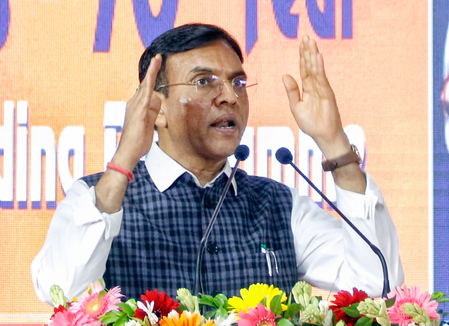
New Delhi, Nov 13 (IANS) The government on Thursday said that draft Shram Shakti Niti-2025 (National Labour and Employment Policy of India) would be finalised only after incorporating suitable improvements suggested over several rounds of consultation, with focus on workers' welfare.
Labour Minister Dr Mansukh Mandaviya chaired a tripartite consultation on the draft Shram Shakti Niti- 2025 with representatives of employers' associations and Central Trade Unions (CTUs), here.
Mandaviya underlined that the collective aim was to collaborate effectively to create the best possible vision document for an equitable and resilient world of work.
Emphasising that the shared intent of all stakeholders was ensuring the welfare of workers and protecting their interests, he welcomed suggestions on the draft Policy from the representatives of employers’ associations and trade unions.
Their suggestions, reflecting their extensive experience in their respective domains, would go a long way in enriching the policy, the minister said.
Mandaviya further stated that the draft policy was open to modifications based on inputs from stakeholders.
Representatives from all CTUs and employer groups appreciated the Ministry’s efforts and initiative in formulating a forward-looking, comprehensive policy framework.
They welcomed the vision and mission of the policy, its strong grounding in the Constitution and its alignment with International Labour Organisation (ILO) standards and the Sustainable Development Goals (SDGs).
CTUs reiterated their earlier suggestions and offered additional ideas to further strengthen worker protection, social security delivery, grievance redress, and employment opportunities. Employer bodies contributed perspectives on promoting innovation, enabling job creation, simplifying compliance, and improving ease of doing business while ensuring fair working conditions.
According to the ministry, the meeting ended on a positive and collaborative note, with broad confidence that the final Shram Shakti Niti-2025 will emerge as a robust, forward-looking, and inclusive framework to guide India’s labour governance in the years ahead.
--IANS
na/
India emerges as major player in health research: Anupriya Patel
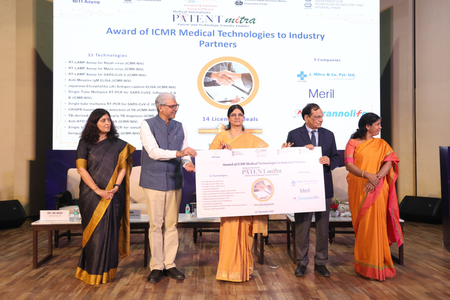
New Delhi, Nov 13 (IANS) Over the past decade, India has emerged as a major player in health research and initiatives such as MedTech Mitra and innovations like Rotavac and the COVID-19 vaccines stand as testament to India’s growing prominence in the global health research landscape, said Minister of State for Health and Family Welfare, Anupriya Singh Patel, on Thursday.
Delivering the keynote address at the 2nd 'DHR-ICMR Health Research Excellence Summit 2025' here, she highlighted that India’s health research ecosystem has witnessed remarkable strengthening under the leadership of Prime Minister Narendra Modi.
“Over the past decade, India has emerged as a major player in health research. Initiatives such as MedTech Mitra and innovations like Rotavac and the COVID-19 vaccines stand as testament to India’s growing prominence in the global health research landscape,” she stated.
The minister emphasised the government’s commitment to ensuring that the benefits of science and research reach people at all levels.
“India is becoming increasingly self-reliant in the MedTech and biomedical innovation sectors. The country is not only innovating but also demonstrating the capacity to deliver solutions at scale,” she added.
Patel further noted that evidence-based policymaking remains a guiding principle of the government. She stressed that clinical guidelines and quality standards must be accessible to all healthcare professionals to ensure affordable and equitable healthcare for every citizen.
The minister observed that India’s health system stands at a defining moment. She encouraged the scientific community to lead the advancement of futuristic technologies such as AI-driven precision healthcare and advanced genomics. Concluding her address, she congratulated all researchers and awardees, remarking, “India should not only contribute to global science but lead it.”
Dr V.K. Paul, Member (Health), NITI Aayog, noted that the healthy life expectancy in India currently stands at 60 years, and emphasised that the Viksit Bharat vision for ICMR aims to raise it above 75 years by deploying innovative interventions, solutions, and advanced technologies.
Dr Paul urged the Department of Health Research (DHR) to focus on priority areas such as non-communicable diseases (NCDs), hypertension, and trauma care.
--IANS
na/
Stock market ends higher over US-India trade deal optimism

Mumbai, Sep 10 (IANS) The Indian equity indices settled the session in positive territory on Wednesday, continuing the positive momentum buoyed by optimism around the India-US trade deal and GST rationalisation.
Sensex ended the session at 81,425.15, up 323 points or 0.43 per cent. The 30-share index opened with a decent gap-up at 81,504.36 against the last session's closing price of 81,101.32 amid buying in IT and FMCG stocks. The index hit an intra-day high at 81,643.88.
Nifty closed at 24,973.10, up 104.50 points or 0.42 per cent.
"Renewed optimism around ongoing trade negotiations between India and the US lifted market sentiment. Anticipation of stronger H2 FY26 earnings, driven by GST rationalisation and the benefits of monetary easing, is providing resilience to valuations," said analysts.
The IT index extended its outperformance on hopes of a potential Fed rate cut next week and a revival in technology spending. Investors remain focused on the progress of India-US trade talks for signals of a constructive resolution to tariff-related issues, he added.
BEL, HCL Tech, Bajaj Finance, Axis Bank, TCS, Tech Mahindra, Infosys, SBIN, L&T, Adani Ports, ITC, Bajaj FinServ and Kotak Bank were the top gainers from the Sensex basket. While Mahindra and Mahindra, Maruti Suzuki, Tata Motors, Ultratech Cement, Eternal, and PowerGrid settled in negative territory.
The majority of sectoral indices ended the session on a positive note. Nifty Fin Services jumped 161.80 points or 0.62 per cent, Nifty Bank escalated 319 points or 0.59 per cent, Nifty FMCG surged 359 points or 0.64 per cent, and Nifty IT soared 927 points or 2.63 per cent. Nifty Auto fell 348.55 points or 1.28 per cent amid profit booking.
The broader market followed suit as well. Nifty smallcap 100 moved 130 points or 0.73 per cent, Nifty midcap100 jumped 535 points or 0.93 per cent, and Nifty 100 ended the session 319 points or 0.59 per cent higher.
--IANS
aps/na
Warming climate to surge dengue cases by 76 pc across Asia, Americas by 2050: Study
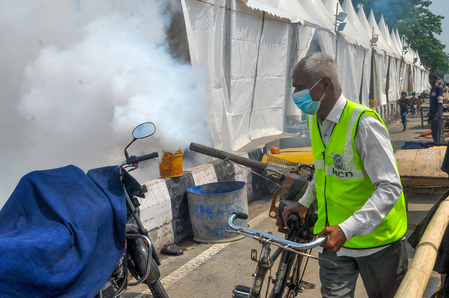
New Delhi, Sep 10 (IANS) An increasing rise in global temperatures is set to drive cases of dengue by as much as 76 per cent across a large number of countries in Asia and the Americas by 2050, according to a new study.
The research, by a team of scientists from the universities of Washington, Stanford, and the US National Bureau of Economic Research, provides the first direct evidence that a warming climate has already increased the disease's toll.
"The effects of temperature were much larger than I expected," said lead author Marissa Childs, Assistant Professor of environmental health at the University of Washington.
"Even small shifts in temperature can have a big impact on dengue transmission, and we're already seeing the fingerprint of climate warming," she added.
The study analysed over 1.4 million observations of local dengue incidence across 21 countries in Central and South America and Southeast and South Asia, capturing both epidemic spikes and background levels of infection.
Dengue thrives in a "Goldilocks zone" of temperatures -- incidence peaks at about 27.8 degrees Celsius (82 degrees Fahrenheit), rising sharply as cooler regions warm but dropping slightly when already-hot areas exceed the optimal range.
As a result, some of the largest increases are projected for cooler, high-population regions in countries such as Mexico, Peru, and Brazil.
Many other endemic regions will continue to experience larger, warming-fuelled dengue burdens.
The findings, published in the journal Proceedings of the National Academy of Sciences, suggest that higher temperatures from climate change were responsible for an average of 18 per cent of dengue incidence across 21 countries in Asia and the Americas from 1995 to 2014 -- translating to more than 4.6 million extra infections annually, based on current incidence estimates.
Cases could climb another 49 per cent to 76 per cent by 2050, depending on greenhouse gas emissions levels, according to the study.
At the higher end of the projections, the incidence of dengue would more than double in many cooler locations, including areas in the study countries that are already home to over 260 million people.
Aggressive climate mitigation would significantly reduce the dengue disease burden, according to the study. At the same time, adaptation will be essential: better mosquito control, stronger health systems, and potential widespread use of new dengue vaccines.
--IANS
rvt/
AI likely to add $15.7 trillion to global GDP by 2030: Report

New Delhi, Sep 10 (IANS) Artificial Intelligence (AI) has emerged as the defining technology of the 21st century, poised to add nearly $15.7 trillion to global GDP by 2030, a report said on Wednesday.
"More than 66 per cent of developed economies already have national AI strategies, compared to just 30 per cent in developing economies and 12 per cent in least-developed ones," a joint report of FICCI and Boston Consulting Group (BCG) stated.
According to the report, the race of AI is based on four interdependent dimensions: compute, data, models, and talent.
A few nations, like the US and China, have taken the lead, with many focusing on specific AI interventions; however, most economies have the potential to advance.
According to the report, a few sectors, such as financial services and retail, are leading with rapid AI integration due to data-rich environments.
However, socially critical sectors like agriculture and public services lag, constrained by fragmented infrastructure and funding challenges due to unclear Return on Investment.
FICCI Director General Jyoti Vij said: "AI is not just a technological wave; it is a strategic race that will define economic and social leadership in the decades ahead. Together, we can ensure that AI is not just a race for advantage, but a collective pursuit of progress that unlocks value for the world."
The FICCI-BCG report highlighted that despite billions in investments, nearly half of AI pilots are scrapped before production, and fewer than one in eight prototypes reach deployment.
Key barriers include siloed infrastructure, skills shortages, and cultural resistance, it said.
According to the report, adoption of AI is more sociological than technical; 70 per cent of AI adoption obstacles stem from people and process issues, not technology.
Organisations that invest in reskilling, cultural change, and empowering workforces are best placed to translate AI into real business outcomes, the report noted.
“We are seeing significant divergence in the global AI race. The majority of developed economies have national AI strategies, while the less developed ones are yet to undertake this journey," BCG Managing Director and Senior Partner Saibal Chakraborty said.
--IANS
aps/vd