
Assam Rifles, police seize drugs valued at Rs 54 crore in Mizoram, one held
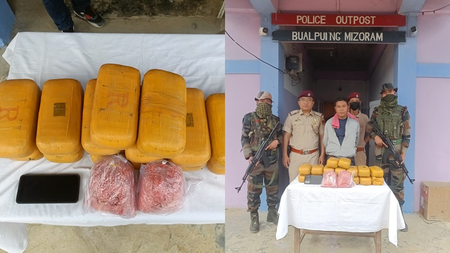
Aizawl, April 13 (IANS) Seizure of drugs, arms, ammunition, explosives and exotic animals in Mizoram by the security forces continues unabated with highly addictive 17.946 kg methamphetamine tablets valued at more than Rs 54 crore confiscated in the northeastern state, officials said on Sunday.
A drug peddler, a Myanmar national, was apprehended in connection with the seizure.
A defence spokesman said that acting on a secret inputs, the Assam Rifles in coordination with Mizoram police launched a swift and precise joint operation on Saturday night resulting in the recovery of nearly 17.946 kg (1,80,000 tablets) methamphetamine tablets at Siachangkawn in Lawngtlai district, which shares unfenced border with Bangladesh.
He said that the seized contraband is assessed to be valued at nearly Rs 54 crore.
The apprehended Myanmar national and the recovered narcotics are being handed over to Bualpui Police outpost in Lawngtlai district for further legal proceedings.
This operation highlights the unwavering commitment of Assam Rifles to combat the menace of drug trafficking in the region and safeguard the youth from the perils of narcotics, an official statement said.
A senior Mizoram police official said that the methamphetamine tablets, also known as Yaba or party tablets, smuggled from Myanmar and intended to supply to Bangladesh through a clandestine route.
Mizoram Chief Minister Lalduhoma while addressing a function in Aizawl on Saturday expressed his deep concern over the rising drug abuse in the state.
He urged all citizens to work together towards a drug-free Mizoram.
The Chief Minister stressed the need to strengthen both legal and traditional measures in combating drug trafficking.
In particular, he highlighted the potential of community-based social sanction, deeply rooted in Mizo tradition, as powerful tools in the fight against drugs, often more effective than formal legislation.
Myanmar's Chin state is a hub for smuggling of varied drugs, exotic wildlife animals and many other contrabands through six Mizoram districts -- Champhai, Siaha, Lawngtlai, Hnahthial, Saitual, and Serchhip.
Mizoram shares 510 km and 318 km unfenced border with Myanmar and Bangladesh, respectively.
--IANS
sc/khz
FairPoint: Will Tahawwur Rana reveal the untold 26/11 story of local support?

New Delhi, April 13 (IANS) Tahawwur Rana is currently being interrogated by the NIA, and the entire nation -- even Pakistan -- is waiting to hear what he reveals or confesses. His links to Pakistan and the involvement of its state actors are well-known, but the 26/11 conspiracy is not just about that country. It is equally important to uncover who within India enabled these acts.
Who were the traitors? Even if it comes 16 years later, those who aided this horrific attack must be identified and exposed.
Rana's interrogation is expected to add crucial details to the investigation and potentially identify the names and agencies behind the 26/11 Mumbai terror attacks. This could significantly strengthen India's case against Pakistan.
However, what is most eagerly awaited is information about the support Rana and his team may have received within India. It is difficult to accept the theory -- as claimed by the state and central governments in 2008 -- that the attackers had no local assistance. Is it possible for individuals who have never been to a country to execute such precise and coordinated attacks without any local help?
Investigations so far suggest that Rana and his associate, Daood Gilani, alias David Coleman Headley, conducted reconnaissance and prepared detailed plans, which were followed meticulously by the ten Pakistani attackers. These terrorists hijacked the fishing boat, 'Kuber,' killed four of its crew members, and forced its captain, Amar Singh Solanki, to steer the vessel carrying ten Lashkar-e-Taiba operatives to the shores of Mumbai.
After reaching the coast, Solanki was killed, and the terrorists entered Mumbai, launching an unprecedented assault on India's financial capital.
On the night of November 26, 2008, ten heavily armed Pakistani terrorists struck simultaneously at five key locations in Mumbai, killing around 140 Indians and 25 foreign nationals. Their targets included two luxury hotels, a Jewish cultural centre, a popular cafe frequented by Western tourists, and Mumbai's main railway station -- CST -- where the highest number of casualties occurred.
Is it possible to carry out such an attack without any local support? This question was raised even back then, but clear answers are still lacking.
Mumbai Police had maintained that the role of local elements in the attack was limited to two alleged Indian Lashkar-e-Taiba operatives -- Fahim Ansari and Sabauddin Ahmed. However, both were acquitted by a special court on May 3, 2010, and the Bombay High Court upheld their acquittal on February 21, 2011.
If they were not the local collaborators, then who were? Why did the Mumbai Police fail to uncover them?
In February 2009, BJP leader L.K. Advani, while speaking in the Lok Sabha during the debate on the motion of thanks to the President's address, criticised the investigation as incomplete. He called it "shameful" that the Mumbai Police gave a clean chit regarding any local involvement and demanded a judicial probe into the attacks.
The then Gujarat Chief Minister, Narendra Modi, also criticised the UPA government, accusing it of making a half-hearted attempt to uncover the full conspiracy behind the Mumbai terror attacks. Modi argued that Pakistan could not have executed the attacks without local support, but the government failed to identify these collaborators.
In response, the Centre dismissed calls for a judicial commission to probe the local angle. Then Union Home Minister P. Chidambaram even mocked Modi's remarks, suggesting sarcastically that since both Pakistan and Modi were raising the same point about local involvement, someone should check if they were in touch with each other.
Such a response was seen by many as an attempt to deflect a serious question -- one that continues to perplex the nation.
Why the then-government did not thoroughly investigate the local angle remains baffling and raises several questions. It is difficult to believe that such a meticulously planned attack could have been executed without any support from within India.
Moreover, there were intelligence inputs about a possible attack via the sea route -- a fact that was raised in Parliament by the Opposition in 2009.
Interestingly, in testimony before the US House Homeland Security Committee on June 12, 2013, RAND Corporation, a leading US think-tank, stated that the 26/11 attackers "relied upon crucial domestic assistance" despite being of Pakistani origin.
The international community is well aware of the key Pakistani perpetrators -- Hafiz Saeed, founder of LeT; Zaki-ur-Rehman Lakhvi, LeT's operational commander; Sajid Majid; Illyas Kashmiri; Abdur Rehman Hashim Syed (aka Major Abdur Rehman or Pasha); Major Iqbal (alias Major Ali); and Major Sameer Ali (alias Major Samir) -- all believed to have been involved in planning, funding, and executing the attack. And then, there are the names of Tahawwur Rana and David Headley.
Rana's interrogation may lead to more revelations -- possibly names from Pakistan, Canada, or the US -- but the 26/11 conspiracy is beyond Pakistan. The conspiracy is also about the traitors in India who helped the perpetrators unleash terror and kill innocent people.
It is time that those faces be unmasked and brought to justice.
(Deepika Bhan can be contacted at deepika.b@ians.in)
--IANS
dpb/sd/
Five arrested for robbing medical store staff at gunpoint in Gurugram
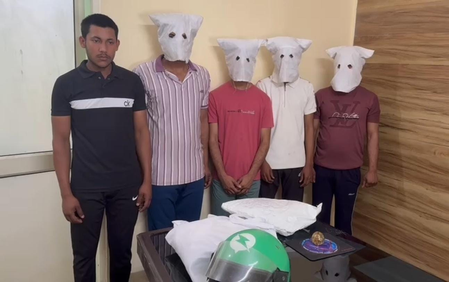
Gurugram, April 13 (IANS) A crime branch team of the Gurugram Police arrested five men who were accused of allegedly robbing a medical store at gunpoint and fleeing, said officials here on Sunday.
The suspects were identified as Ashutosh, Ajay, Ashish Pal, Krishna, all residents of Uttar Pradesh, and Manish, a resident of Rewari (Haryana).
Two country-made pistols, a helmet used in the crime, and Rs 1.10 lakh were recovered from the possession of the accused, said the officials.
According to the police, a man filed a complaint at Police Station Bajghera, Gurugram, on March 31, stating that he works at a medical store in Sai Chowk, New Palam Vihar Phase-3. He said he was at the shop at around 10.00 p.m. on March 30 when three persons came to his shop, out of which two were wearing helmets. Those persons asked him for medicines, some of which he did not have, which he refused. After this, the three threatened him with a pistol, robbed him and fled from the spot.
On this complaint, a case was registered under the relevant sections at the Police Station, Bajghera. The Crime Branch Palam Vihar, Gurugram, took action and arrested five accused in the above case.
The police team arrested accused Ashutosh, Manish, Ajay, and Ashishpal on April 9 from near Basai Chowk, Gurugram, and accused Krishna was arrested on Saturday from Etawah (Uttar Pradesh), said the officials here.
During police interrogation, the accused also revealed that they had committed another incident of robbery at gunpoint in Gurugram. It was also revealed that the accused Krishna had given the weapons used in the robbery to the other four accused.
"The accused stood outside the shop at night and did reconnaissance, and after some time before the shop closed, they committed the robbery and fled. The accused Ashutosh, Manish, Ajay, and Ashish Pal were produced before the court and taken into three-day police custody," Sandeep Kumar, spokesperson of the Gurugram Police, said.
--IANS
str/dpb
PM Modi to launch key infrastructure projects in Haryana on Ambedkar Jayanti

New Delhi, April 13 (IANS) Prime Minister Narendra Modi will visit Haryana on Monday to mark Ambedkar Jayanti and will inaugurate and lay the foundation stone of several major development projects aimed at enhancing the state's infrastructure and connectivity.
According to the Prime Minister's Office (PMO), PM Modi will begin his visit in Hisar at around 10:15 a.m., where he will flag off the first commercial flight from Hisar to Ayodhya and lay the foundation stone of the new terminal building at Maharaja Agrasen Airport.
The terminal project, valued at over Rs 410 crore, will include a state-of-the-art passenger terminal, a cargo terminal, and an air traffic control building.
Taking to X, PM Modi posted, "Tomorrow, on Ambedkar Jayanti, the day will be dedicated to Haryana's development journey. At around 10:15 in the morning, I will inaugurate commercial flights between Hisar-Ayodhya and lay the foundation stone of the new terminal building of the airport. In the afternoon, there is a program related to many projects in Yamuna Nagar as well."
The introduction of scheduled flights from Hisar -- twice weekly to Ayodhya and thrice weekly to Jammu, Ahmedabad, Jaipur, and Chandigarh -- marks a significant milestone in Haryana's aviation connectivity.
During his visit, the Prime Minister will also address a public meeting in Hisar before heading to Yamuna Nagar at around 12:30 p.m. There, he will inaugurate and lay the foundation stone of additional development projects and interact with the public.
Underscoring the Centre's commitment to expanding power infrastructure and ensuring last-mile electricity delivery, the PMO statement said that PM Modi will lay the foundation stone for an 800 MW thermal power unit at the Deenbandhu Chhotu Ram Thermal Power Plant in Yamuna Nagar.
The Rs 8,470 crore project will be spread over 233 acres and is expected to significantly improve Haryana's energy security and power supply reliability.
Furthering the GOBARDhan initiative (Galvanising Organic Bio-Agro Resources Dhan), the Prime Minister will also lay the foundation stone for a Compressed Biogas Plant in Mukarabpur, Yamuna Nagar.
With an annual production capacity of 2,600 metric tonnes, the plant will promote organic waste management, clean energy generation, and environmental conservation.
In addition, PM Modi will inaugurate the Rewari Bypass project, a 14.4 km stretch developed at a cost of Rs 1,070 crore under the Bharatmala Pariyojana.
This infrastructure boost will help decongest Rewari City, cut travel time between Delhi and Narnaul by approximately one hour, and foster economic and social activity in the region.
--IANS
sd/mr
Breeding season: 61-day fishing ban in Tamil Nadu to start on April 15
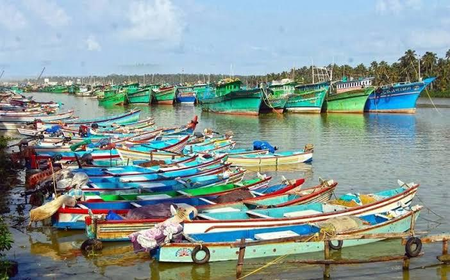
Chennai, April 13 (IANS) The annual 61-day fishing ban along Tamil Nadu’s east coast will come into effect on April 15, aiming to conserve marine resources and protect fish breeding during the spawning season. The ban will remain in force until June 14, both days inclusive, and applies to all mechanised fishing boats, including trawlers.
With the halt in large-scale fishing operations, the state is expected to witness a drop in fish availability, potentially causing a rise in market prices. Fisheries officials warned that the impact on fish supply may become visible in the coming weeks. Ramanathapuram District Collector Simranjeet Singh Kahlon announced that all mechanised vessels must be anchored at their respective jetties by midnight on April 14. During the ban period, fishermen are strictly prohibited from venturing into the sea.
According to Fisheries Department officials, the April-June period marks the peak breeding season for fish in the Palk Strait. The ban, implemented under the Tamil Nadu Marine Fishing Regulation Act of 1983, is intended to allow marine life to regenerate and fish stocks to replenish.
The fishing ban is expected to significantly impact the operations of thousands of mechanised boats across coastal Tamil Nadu. In Rameswaram alone, over 700 mechanised boats will remain docked. Across the Ramanathapuram district -- including key fishing hubs like Pamban, Mandapam, Ervadi, Keelakarai, Thondi, Soliyakkudi, and Mookaiyur -- more than 2,000 boats will be grounded during the ban.
Although Sunday marked the final day of permitted fishing activities, many fishermen voluntarily stayed ashore, citing concerns over potential arrests by the Sri Lankan Navy. As a result, hundreds of boats were already seen anchored at Rameswaram harbour.
To sustain their livelihood during the ban period, many fishermen from the region temporarily migrate to states such as Kerala and Karnataka to continue fishing in the Arabian Sea.
It may be noted that the ban applies only to mechanised and trawl boats. Traditional country boats and small-scale fishermen are permitted to continue operations throughout the period. To support the fishing community during the seasonal halt, the Tamil Nadu government provides financial assistance of Rs 8,000 per month to each registered fisher family. This amount was increased from the earlier Rs 5,000, offering an additional Rs 3,000 to help families meet their basic needs. The ban will affect regular fishing activity in as many as 14 coastal districts of Tamil Nadu.
Officials estimate that a total of 1.90 lakh fishermen will benefit from the financial aid during this two-month period.
Meanwhile, fishermen in regions like Thoothukudi, Vembar, and Tharuvaikulam, who usually avoid fishing on Sundays, also remained ashore, contributing to calm seas on Sunday, according to local authorities.
--IANS
aal/uk
TN: Pastor arrested for sexually assaulting two minors, sent to judicial custody till April 25
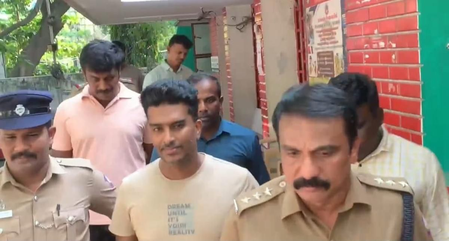
Chennai, April 13 (IANS) A pastor from Coimbatore, who had been absconding after being accused of sexually assaulting two minor girls, was arrested by a special team of the Tamil Nadu Police and remanded to judicial custody till April 25.
The accused, John Jebaraj (37), a pastor of Kings Generation Church located on Cross Cut Road in Coimbatore, was apprehended from Munnar in Kerala, where he had been hiding to evade arrest.
Acting on a tip-off, a special team led by Inspector R. Arjun Kumar tracked him down and brought him back to Coimbatore on Sunday.
He was booked by the All Women Police Station, Coimbatore Central, under multiple sections of the Protection of Children from Sexual Offences (POCSO) Act, following allegations of sexual assault on two girls aged 17 and 14.
The incident allegedly took place on May 21, 2024, during a function at Jebaraj's residence in GN Mills.
One of the victims, adopted by the pastor's father-in-law, reportedly confided in a relative about the trauma she underwent, leading to the filing of the complaint.
The second victim, aged 14, is said to be the pastor's neighbour.
Jebaraj, known for his Christian devotional concerts and significant youth following on social media, was associated with Levi Ministries, a prominent Christian organisation.
As the pastor remained untraceable after the case was registered, Coimbatore City Police Commissioner A. Saravana Sundar constituted three special teams under the supervision of Assistant Commissioner of Police T. H. Ganesh to track him.
A lookout notice was also issued to prevent him from fleeing the country.
Following his arrest, Jebaraj was taken to the Gandhipuram Central Women's Police Station for interrogation. Later, he was produced before a judicial magistrate and remanded to custody until April 25.
--IANS
aal/svn
Bengal Governor sends communique to Centre on Murshidabad situation

Kolkata, April 13 (IANS) West Bengal Governor C. V. Ananda Bose has sent a communique to the Ministry of Home Affairs giving updates on the current situation in Murshidabad, which has been on the boil for the last few days after protests against the Waqf (Amendment) Act.
In the communique, the Governor provided the details of what happened in Murshidabad during the last few days, and also how tension flared up in certain pockets of the district, according to sources in Raj Bhavan.
The sources said that the communique was based on information collected by the Governor's core team and details passed down to his office from the state secretariat.
It is learnt that the communique also contains the details of the confidential communication between the Governor and Chief Minister Mamata Banerjee over the prevailing situation.
Meanwhile, the state government has decided to depute 23 police officers currently posted in different districts of West Bengal, with special skills and proven track records in handling law and order situations in such cases, to Murshidabad.
The team will be operating from Murshidabad till the situation becomes normal.
Director General of Police Rajeev Kumar has already reached Murshidabad district, coordinating with the district administration and the Central Armed Police Forces (CAPF) personnel over the prevailing situation.
Inspector General (South Bengal Frontier) of Border Security Force K. S. Shekhawat also reached Murshidabad on Sunday.
The CAPF personnel also conducted route marches at different troubled pockets in the state on Sunday morning.
The CAPF personnel have been deployed in Murshidabad with special concentration on nine especially sensitive pockets following an order of a special division bench of the Calcutta High Court on Saturday evening.
The total number of arrests till Sunday afternoon is 150. The death toll because of the violence has reportedly increased to four.
--IANS
src/svn
BJP-AIADMK alliance will end exploitative Stalin’s regime, says Nainar Nagendran
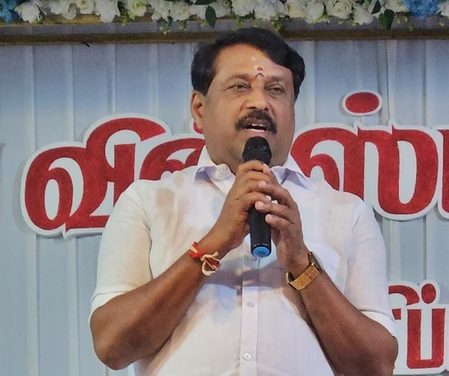
Chennai, April 13 (IANS) Newly elected BJP Tamil Nadu President Nainar Nagendran has said the National Democratic Alliance (NDA) would unseat the ruling DMK in the 2026 state Assembly elections.
In a post on X on Sunday, Nagendran responded to critics who described the BJP-AIADMK alliance as “incompatible”, stating, “This alliance is indeed incompatible — but only for the DMK. It is this alliance that will bring an end to the exploitative regime of @mkstalin, which has burdened the people of Tamil Nadu. This alliance will uproot a government that has appointed those who disrespected the dignity of Tamil Nadu’s women as ministers.”
He added, “Don’t panic, Mr. Stalin. You still have one year left in office. But no one can change the verdict the people are going to deliver.”
Nagendran’s remarks came a day after his formal election as the BJP’s Tamil Nadu unit president on Saturday. The announcement was made during a party meeting in Chennai, where Union Minister G. Kishan Reddy and BJP National General Secretary Tarun Chugh declared him duly elected.
Outgoing president K. Annamalai, in his address, stated that the party’s goal was clear - to “dislodge the evil shakti” of the DMK and return good governance to the state.
Referring to the BJP’s renewed alliance with the AIADMK, Annamalai said, “The path is now clear, and the choice of Nagendran was unanimous.”
Nagendran’s elevation comes at a politically significant juncture as the BJP and AIADMK draw closer ahead of the 2026 polls.
A seasoned political figure, the 64-year-old leader began his career with the AIADMK and was first elected to the Tamil Nadu Assembly from Tirunelveli in 2001. He served as Minister for Transport, Industries, and Electricity in the Jayalalithaa-led government between 2001 and 2006.
Though re-elected in 2011, he was not inducted into the Cabinet and narrowly lost the Tirunelveli seat in both 2006 and 2016. Following the demise of Jayalalithaa in 2016, Nagendran joined the BJP. He reclaimed the Tirunelveli seat in the 2021 Assembly elections and was appointed the BJP Legislature Party Leader in the Tamil Nadu Assembly. He also contested the Lok Sabha elections from Ramanathapuram in 2019 and Tirunelveli in 2024 but lost on both occasions.
--IANS
aal/dpb
SC to Tuesday hear suo moto case registered in wake of Allahabad HC ruling on attempt to rape

New Delhi, April 13 (IANS) The Supreme Court is slated to hear on Tuesday the matter where it had suo moto (on its own motion) stayed the Allahabad High Court judgment holding that grabbing breasts and breaking the pyjama string was not enough for charge of attempt to rape.
As per the causelist published on the website of the apex court, a bench of Justices B.R. Gavai and A.G. Masih will resume hearing the matter, including the plea of the victim’s mother, on April 15.
Staying the impugned part of the Allahabad HC judgment, the Justice Gavai-led Bench, on March 26, said that the observations depicted a total lack of sensitivity and an inhumane approach on the part of the author of the judgment.
"We have perused the said judgment and order dated 17.03.2025. We are at pains to say that some of the observations made in the impugned order and particularly in paragraphs 21, 24, and 26 depict a total lack of sensitivity on the part of the author of the judgment," it said.
"But since the observations appearing in paragraphs 21, 24, and 26 are totally unknown to the cannons of law and depict a total insensitive and inhuman approach, we are inclined to stay the said observations," it added.
The Justice Gavai-led Bench recorded that the controversial ruling was not on the spur of the moment but was delivered four months after reserving the order.
The Supreme Court had issued notices to the Centre, the Uttar Pradesh government and the parties before the Allahabad High Court, including the accused persons.
It asked Attorney General R. Venkataramani and Solicitor General Tushar Mehta to assist it in the adjudication of the matter.
The Supreme Court has registered a suo moto case titled ‘In Re: Order dated 17.03.2025 passed by the High Court of Judicature at Allahabad in Criminal Revision No. 1449/2024 and ancillary issues’ following a letter from senior advocate Shobha Gupta, who urged the Chief Justice of India (CJI) to take cognisance of the observations made by a single-judge Bench of the Allahabad High Court while modifying a summoning order.
In its decision, a bench of Justice Ram Manohar Narayan Mishra of the Allahabad HC altered the charges against the two accused, who were originally summoned by the trial court for commission of offences under Section 376 IPC (rape) and Section 18 (punishment for attempt to commit an offence) of the Protection of Children from Sexual Offences (POCSO) Act.
Partly allowing the revision plea of the accused persons, Justice Mishra held that they are instead liable to be summoned for a minor offence under Sections 354(b) IPC, i.e. assault or abuse of a woman with intent to disrobing or compelling her to be naked, read with Section 9/10 of the POCSO Act.
Under the POCSO Act, Section 9 provides punishment for aggravated sexual assault on a child victim, and Section 10 provides punishment with imprisonment up to seven years, which shall not be less than five years and shall also be liable to a fine.
According to the prosecution's version, the two accused, namely Pawan and Akash, grabbed the breasts of the victim, and one of them broke the string of her pyjama and tried to drag her beneath the culvert. However, on the intervention of passersby/witnesses, the accused persons fled from the spot, leaving the victim behind.
Saying that prima facie a charge of attempt to rape was not made out against the accused, Justice Mishra's bench said: "There is no allegation that the accused tried to commit penetrative sexual assault against the victim. The allegations levelled against the accused Pawan and Akash and facts of the case hardly constitute an offence of attempt to rape in the case."
"In order to bring out a charge of attempt to rape, the prosecution must establish that it had gone beyond the stage of preparation. The difference between preparation and actual attempt to commit an offence consists chiefly in the greater degree of determination," it added.
--IANS
pds/vd
Will not accept caste census report, says Veerashaiva Mahasabha K’taka chief
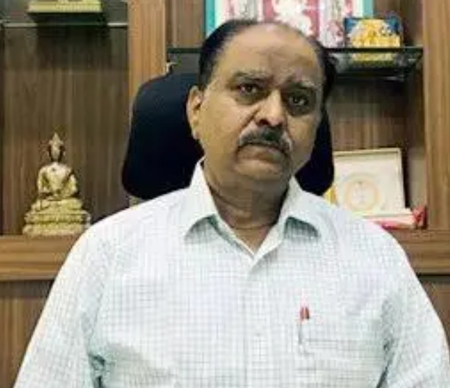
Bengaluru, April 13 (IANS) The All-India Veerashaiva Lingayat Mahasabha's Karnataka state president, Shankar Bidari, on Sunday said the controversial caste census report, presented by the Backward Classes Commission to the Congress-led government in Karnataka, was unacceptable.
Speaking in Bengaluru on Sunday, Bidari said the report does not provide accurate information regarding the population of the Veerashaiva-Lingayat community. According to the report, the population of the community is shown as 66 lakh.
However, he claimed that the actual population, when all sub-castes are considered, is around three crore in the state. “We will not accept this report under any circumstances. We will appeal to the government and Chief Minister Siddaramaiah to conduct a fresh caste census in the state,” Bidari said.
The organisation is one of the most influential community groups in Karnataka, as the Veerashaiva-Lingayat community plays a crucial role in determining the outcome of elections in nearly 150 Assembly out of the total 224 constituencies.
Commenting on the issue on Sunday, Minister for Large and Medium Industries M.B. Patil said the population of the Veerashaiva-Lingayat community is not around 70 lakh, as stated in the report, but is actually more than one crore.
“I have obtained a copy of the caste census report. I will need to go through it thoroughly before making any comments. Once I have studied the report, I will share my views at the special cabinet meeting scheduled for April 17,” Patil said.
“We need to clarify the doubts and discuss the matter in the cabinet. To avail of reservation benefits, many sub-castes do not officially record themselves as belonging to the Lingayat community. Such facts must be taken into account. The matter will be discussed, and there will be no conflict,” he added.
The census report lists the Lingayat community population at 66.35 lakh, comprising 11.09 per cent -- lower than the Muslim population. Currently, the Lingayat community is considered the largest in the state, with 17 per cent of the population.
The controversial caste census report submitted by the Backward Classes Commission to the Congress-led government in Karnataka has pegged the Muslim population in the state at 18.08 per cent and recommends 8 per cent reservation for the community, sources confirmed on Sunday. The Muslims are currently getting four per cent reservation in the state.
The caste census report was submitted to the state cabinet on Friday (April 10), and the state government is convening a special cabinet meeting on April 17 to decide on the report’s recommendations. However, no official statement has been issued to the media regarding the report’s contents. Nonetheless, details presented in the cabinet meeting have surfaced in the public domain.
In 2014, Siddaramaiah (during his first tenure as the Chief Minister) ordered the Karnataka Socio-Economic and Educational Census. A committee headed by the then Backward Classes Commission Chairman, H. Kantharaju, did the survey at a cost of around Rs 169 crore. The report was ready by 2016; it was, however, put in cold storage by subsequent governments.
--IANS
mka/dpb