
PM Modi extends wishes to Tamil people on Thaipusam festival

Chennai, Feb 11 (IANS) Prime Minister Narendra Modi, who is in France attending the Artificial Intelligence summit, has extended his wishes to Tamil people on the Thaipusam festival.
In a post on social media platform 'X', the Prime Minister said, "Wishing everyone a joyful and blessed Thaipusam! May Lord Murugan's divine grace guide us with strength, prosperity, and wisdom. On this sacred occasion, I pray for the happiness, good health, and success of all. May this day bring peace and motivation into our lives! Victory to Vel! Hail Lord Murugan!"
AIADMK general secretary and former Chief Minister of Tamil Nadu, Edappadi K.Palaniswami (EPS) also wished the people of Tamil Nadu on the festival.
EPS posted on X: "On this auspicious day, Tamils worldwide pray to Lord Murugan for his divine blessings and protection. May their lives flourish, may their endeavours prosper, and may they achieve victory after victory."
Tamil Nadu BJP President K. Annamalai also conveyed his wishes, stating: "I wish all Tamils a joyful Thaipusam. May Lord Murugan’s grace bring happiness, peace, and prosperity to Tamil Nadu. May he guide us in the victory of Dharma over injustice and dispel the darkness surrounding us."
Tamil superstar and Tamilaga Vettri Kazhagam (TVK) president Vijay shared a message: "On this sacred Thaipusam, let us come together to venerate Lord Murugan, the eternal guardian of Tamil lands. He watches over us from every hill with benevolence. We humbly offer our prayers to this unique and divine protector of Tamils worldwide."
Heavy police security has been deployed at the six main abodes of Lord Murugan in Tamil Nadu as lakhs of devotees converge to celebrate the auspicious Thaipusam festival.
Lord Murugan, the revered warrior deity of South India, has six sacred temples known as Arupadai Veedu, which include, Thiruchendur Murugan, Pazhamudhir Solai, Thirupparamkundram Murugan, Palani Murugan, Swamimalai Murugan and Tiruttani Murugan Temple.
With an overwhelming number of devotees gathering at these temples for Thaipusam, Tamil Nadu police have significantly ramped up security measures.
In Palani, where a massive number of devotees are participating in the festival, 3,000 police personnel have been deployed. At Thirupparamkundram, over 4,000 officers are on duty following recent tensions over the consumption of non-vegetarian food near the temple hills.
Security has also been strengthened at Thiruchendur and Swamimalai, with 2,000 police officers stationed at each location to manage the large influx of devotees.
Similarly, at Tiruttani and Pazhamudhir Solai, 1,500 police personnel have been deployed to ensure safety and Thaipusam, a highly revered festival dedicated to Lord Murugan, is observed with deep devotion.
The festival is marked by prayers, kavadi (offerings), and various spiritual rituals. The Pusam Nakshathram (star) associated with Thaipusam began at 6:01 p.m. on Monday, and will end at 6.34 p.m. this evening. This sacred occasion is considered a time for spiritual purification, penance, and introspection.
To prevent overcrowding, darshan tickets have been suspended for three days.
Tamil Nadu's political leaders and prominent personalities extended their greetings on the occasion of Thaipusam. As the festival unfolds, Tamil Nadu remains immersed in deep devotion, with Lord Murugan's divine presence uniting millions of devotees in faith and celebration.
--IANS
aal/svn
14th Asian Fisheries and Aquaculture Forum to kick start in Delhi tomorrow

New Delhi, Feb 11 (IANS) The 14th Asian Fisheries and Aquaculture Forum, with the theme “Greening the Blue Growth in Asia-Pacific,” is being organised in Delhi from Wednesday (February 12) and will host around 1,000 delegates from 24 countries, including researchers, policymakers and industry leaders.
The Asian Fisheries and Aquaculture Forum (AFAF) is a triennial event of the Asian Fisheries Society with its Headquarters in Kuala Lumpur, Malaysia. The three-day 14th AFAF is being jointly organised by the Asian Fisheries Society, Kuala Lumpur, the Indian Council of Agricultural Research (ICAR), the Department of Fisheries and the Asian Fisheries Society Indian Branch (AFSIB), Mangalore. This prestigious event is being hosted in India for the 2nd time after the 8th AFAF held at Kochi in 2007.
Hosting the 14th AFAF in India after 18 years highlights the country’s growing prominence in global fisheries and aquaculture. With a rapidly expanding blue economy, progressive government policies, and significant scientific advancements, India has emerged as a key player in sustainable fisheries and aquaculture.
Today, India occupies the 2nd position in total fish production and also aquaculture production globally. The forum will provide a platform to showcase India’s contributions, strengthen international partnerships, and promote innovative approaches for sustainable, resilient, and economically viable fish production systems.
The Asian Fisheries and Aquaculture Forum (AFAF) has a strong legacy of fostering global collaboration in the sector. Since its inception, the forum has been successfully hosted in multiple countries across Asia.
The forum will be inaugurated by Rajiv Ranjan Singh, Minister of Fisheries, Animal Husbandry and Dairying and Panchayati Raj, at Bharat Ratna C. Subramaniam Auditorium, ICAR Convention Centre, Pusa Campus, New Delhi.
The event will include over 20 Lead Presentations by internationally acclaimed experts from India and overseas.
On the second day a Symposium on “Aquatic Animal Diseases: Emerging Challenges and Preparedness” will be held at 09.00 AM on 13 February 2025 at A.P. Shinde Auditorium, NASC Complex, Pusa Campus, New Delhi. Minister of State for Fisheries, Animal Husbandry & Dairying George Kurian has consented to inaugurate the symposium.
On the third day, the Academia-Industry-Government Meet on 'De-risking Shrimp Aquaculture Value Chain for Improved Global Competitiveness' at 9.00 am at Parijat Lecture Hall, Ground Floor, NAAS Block, NASC, New Delhi on 14 February 2025. Dr B. Mastan Rao, Member of Parliament (Rajya Sabha) has consented to inaugurate the Meet.
The closing ceremony of the 14th Asian Fisheries and Aquaculture Forum will be held at 4.30 pm on 14th February 2025 at Bharat Ratna C. Subramaniam Auditorium, ICAR Convention Centre, Pusa Campus, New Delhi. Minister of State for Agriculture and Farmers Welfare Bhagirath Choudhary has consented to be the chief guest of the closing ceremony.
--IANS
sps/dan
Milind Deora submits Committee report, recommends ‘rules enforcement for solving Delhi’s air pollution’

New Delhi, Feb 11 (IANS) Milind Deora, Rajya Sabha MP and the Chairman of the Parliamentary Committee on Subordinate Legislation presented the 254th report on air quality management in the National Capital Region (NCR) in the House on Tuesday.
Deora-led Committee has made several recommendations in the 60-page report, asserting that the law enforcement regarding agriculture residues burning and also incentivising the farmers with adequate compensation will yield tangible results in addressing the air pollution, that chokes the national capital every year.
The Shiv Sena MP also took to social media and posted on X, “Stubble burning rules & their enforcement are key to preventing Delhi’s annual crisis.”
Later, he told the media persons that the committee, comprising MPs from all political parties, examined the stubble-burning laws, held a series of discussions with various stakeholders and came up with constructive suggestions, which he hoped would be adopted by the government.
“Those farmers following the stubble burning guidelines should be incentivised and those disregarding it be penalised,” he said, adding that Delhi and its citizens must be freed from hazardous air quality that it has been grappling with for years.
The Committee chairman also suggested some form of minimum support price to farmers to encourage and motivate them to look for alternate means of disposing of the agricultural resides rather than stubble burning.
Notably, the Commission for Air Quality Management in the National Capital Region and Adjoining Areas Bill, 2021 was introduced in Lok Sabha on July 30, 2021. This Bill provided for the constitution of a Commission for better coordination, research, identification, and resolution of problems related to air quality in Delhi-NCR.
The Commission imposes environmental compensation on farmers, liable for burning stubble at the prescribed rates in the form of challan.
Deora-led committee held several meetings with concerned departments and ministries to examine the rules on stubble burning while also deliberating on making them more effective and feasible on the ground.
--IANS
mr/dan
India ready to share its experience, expertise with world to ensure AI future for all: PM Modi

Paris, Feb 11 (IANS) India is developing AI applications for the public good and has one of the world’s largest AI talent pools, Prime Minister Narendra Modi said here on Tuesday, adding that the country is ready to share its experience and expertise to ensure that the "AI future is for Good, and for All".
Addressing the 'AI Action Summit' here, PM Modi said India is also building its own large language model (LLM), considering its diversity.
"We also have a unique public-private partnership model for pooling resources like computing power. It is made available to our start-ups and researchers at an affordable cost," informed the Prime Minister.
PM Modi further stated while the positive potential of AI is absolutely amazing, there are many biases that we need to think carefully about.
"We must build quality data sets, free from biases. We must democratise technology and create people-centric applications. We must address concerns related to cyber security, disinformation, and deepfakes. And, we must also ensure that technology is rooted in local ecosystems for it to be effective and useful," PM Modi emphasised.
AI is developing at an unprecedented scale and speed and being adopted and deployed even faster. There is also a deep inter-dependence across borders.
"Therefore, there is a need for collective global efforts to establish governance and standards, that uphold our shared values, address risks, and build trust," said the Prime Minister.
The country last month announced to launch its safe and secure indigenous AI model within six months at an affordable cost. Aligning with India's broader vision to become a global artificial intelligence (AI) hub, Finance Minister Nirmala Sitharaman, in her Union Budget speech, announced the creation of three Centres of Excellence (CoEs) in AI for education.
According to PM Modi, governance is not just about managing risks and rivalries.
"Governance is also about ensuring access to all, especially in the Global South. It is where the capacities are most lacking - be it compute power, talent, data, or the financial resources," he mentioned.
"AI can help transform millions of lives by improving health, education, agriculture and so much more. It can help create a world in which the journey to Sustainable Development Goals becomes easier and faster," the Prime Minister added.
To do this, the world must develop open-source systems that enhance trust and transparency.
On the debate of job losses due to AI, the Prime Minister said history has shown that work does not disappear due to technology.
"Its nature changes and new types of jobs are created. We need to invest in skilling and re-skilling our people for an AI-driven future," he noted.
India has successfully built a Digital Public Infrastructure (DPI) for over 1.4 billion people at a very low cost. It is built around an open and accessible network. It has regulations, and a wide range of applications to modernize our economy, reform governance and transform the lives of our people.
"We have unlocked the power of data through our Data Empowerment and Protection Architecture. And, we have made digital commerce democratic and accessible to all. This vision is the foundation of India’s National AI Mission," said PM Modi.
Today, India leads in AI adoption and techno-legal solutions on data privacy.
"We are at the dawn of the AI age that will shape the course of humanity. Some people worry about machines becoming superior in intelligence to humans. But, no one holds the key to our collective future and shared destiny other than us humans," the Prime Minister told the gathering.
--IANS
na/svn
Kohlu machine becomes centre of attraction at Maha Kumbh

Prayagraj, Feb 11 (IANS) Amidst the spiritual fervor of the Maha Kumbh, where millions of devotees gather to take a holy dip at the confluence of the Ganges, Yamuna, and the mythical Saraswati rivers, one unique attraction is quietly stealing the spotlight. In the heart of the Khadi Utsav pandal, a 'Kohlu machine' is drawing crowds with its traditional method of extracting pure, cold-pressed oil. This centuries-old process has captivated both health-conscious visitors and those keen on preserving ancient Indian practices.
The Kohlu machine, an age-old oil extraction method, is fascinating attendees with its natural technique, which involves extracting oil at a low temperature, preserving its nutritional value. The process is powered by wood and works without the high-speed machinery and intense heat associated with modern oil production methods. Visitors are not only witnessing a traditional craft in action but also learning about its health benefits.
Talking to IANS, Vipin Kumar, a devotee said, “It’s truly special to see oil being extracted this way. The natural process is incredibly beneficial for health. By coming here to the Ganga Sabha Triveni, we are not just connecting with the divine, but also gaining knowledge on how to stay healthy naturally and keep diseases at bay. The oil produced here is of excellent quality, and I had the chance to test it myself.”
The traditional Kohlu machine works at a much lower temperature—around 30 to 35 degrees Celsius—compared to modern machines that run at temperatures of up to 100 degrees. This low-temperature extraction ensures that the oil retains its full nutritional value, unlike refined oils processed under high heat, which lose many of their vital nutrients.
Chetan Rajput, a passionate advocate for traditional Indian methods, explained the significance of such practices: “I’ve been honoured with awards for promoting traditional techniques. Unfortunately, over the last fifty years, many of these methods have been forgotten. In India, nearly two out of ten people suffer from diseases like cancer and heart disease, largely due to refined oils and unhealthy cooking practices. The Kohlu process, on the other hand, runs on wood, maintaining temperatures that preserve the oil's nutrients. The machinery doesn’t heat up to damaging levels, unlike the modern machines that spin at thousands of revolutions per minute, destroying the nutritional content. When we process foods in their natural way, we retain the goodness that nature intended.”
Rajput further elaborated on the importance of natural processing, drawing a comparison to the production of sugar and jaggery.
“Sugar and liquor are made from sugarcane, but what makes them harmful is the intense, artificial processing—high temperatures and chemical additives. On the other hand, natural processing, as seen with the Kohlu machine, is much healthier, retaining the essence of the seeds or fruits being used," he concluded.
--IANS
jk/dan
Instead of skilling, youth being pushed to become delivery persons: Akhilesh Yadav
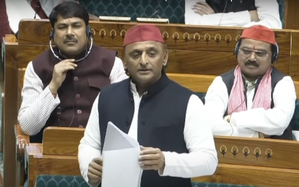
New Delhi, Feb 11 (IANS) Samajwadi Party chief Akhilesh Yadav on Tuesday said “Skill India Mission” is just a hollow slogan, claiming that in the name of skilled workers, the government has pushed the youth towards becoming delivery persons.
Opposing the Union Budget 2025-26 during a discussion in Lok Sabha, the Kannauj MP said there is an absence of appropriated environment for investment that is the only key for true “Vikas”.
Raising issues like the drop in the country’s position in the hunger index and cut in the education budget, Yadav said the government is dreaming of making India the food basket of the world but it will remain to be ‘jumlebazi’ (hollow slogan) unless it first feeds the hungry in the country.
“The hunger index figures are exposing the hollow progress being claimed by the government,” he said, hitting out at the lack of efforts to control price rise.
He also slammed the Budget for not proposing measures to remove poverty, provide good education and health services and create jobs.
“There is no road map for progress in the Budget,” he said, alleging concentration of wealth in the hands of a few, the widening of disparity in society, the infringement of tribals’ rights and the crying need for reforms in the financial sector.
“Asli traqi hai wohi jo har farq mitati hai, jo har tarf khushhali ke gul failati hai (True progress is the one which brings about all-around prosperity and removes disparity), ” he said.
“Real development is the one which diminishes disparity, and an ideal Budget is the one which is democratic and paves the way for overall development and empowers the last person in line,” he said.
Slamming the poor performance of the economy, he said the government’s claim that the Budget is focused on pushing up the rate of progress exposes the fact that the rate of growth has been sluggish over the past 11 years due to lack of investment.
Yadav also decried the dependence of the Indian stock market on foreign investors' investments.
He said the BJP government’s latest Budget has nothing to offer for the development of the country or for the progress of people.
“There is no special assistance or reference to MSMEs in the Budget,” said Yadav, saying most of such units are not benefitting from its schemes as only a fraction of them were registered with the government.
He also called for special schemes for farmers and waiving their loans, providing them MSP while taking measures to protect crops from stray cattle.
He also sought measures to stop fake news, alleging that the government was busy highlighting its achievement but, in the process, ending up defaming the rivals.
Yadav described demonetisation and the introduction of GST as the biggest economic disasters in the country.
He also cited the case of a boy who was born while his mother was standing in a bank during demonetisation and urged the government to adopt him. “We had named him khazanchi (treasurer) and he has now grown up to cycle around,” he said.
--IANS
rch/dan
NDA slams Bengal CM’s pitch for going solo in 2026 polls, Trinamool backs the call

Kolkata, Feb 11 (IANS) The political temperature in West Bengal has risen after Chief Minister Mamata Banerjee announced that the Trinamool Congress (TMC) will contest the 2026 state Assembly elections without any alliance, ruling out any tie-up with the Congress.
During a meeting with Trinamool legislators ahead of the Assembly's budget session on Monday, Mamata Banerjee reportedly stated that Congress has no political significance in West Bengal, making an alliance with the party unnecessary.
Confident of securing a fourth consecutive term, she declared that Trinamool alone is enough to form the government in 2026.
The NDA quickly seized on the statement, terming it a sign of "overconfidence" and further evidence of cracks within the opposition INDIA Bloc.
Speaking to IANS in Delhi, Union Minister Ramdas Athawale remarked that Mamata Banerjee's words prove that the opposition alliance existed only for the 2024 Lok Sabha elections and has now collapsed.
"It seems that the INDIA Bloc has completely fallen apart, and Mamata Banerjee's statement confirms that Congress has no presence in West Bengal. Similarly, the AAP is also ready to contest against Congress. The 2026 West Bengal elections will be very easy for us," he added.
West Bengal BJP MLA Agnimitra Paul took a dig at Mamata Banerjee, questioning whether she would win Bengal the same way she failed in Goa, Tripura, and Meghalaya.
"You try to buy votes in West Bengal by luring our sisters with schemes like Lakshmi Bhandar, offering them Rs 1000. You even promised Rs 5,000 to women in Goa, yet they did not vote for you. So, don't be overconfident," she told reporters.
Drawing a parallel with AAP's recent loss in Delhi, Paul said that just as Kejriwal once claimed that PM Modi wouldn't be able to enter Delhi, only to be proven wrong, Mamata Banerjee's overconfidence would also be crushed.
She further accused the Chief Minister of "deceiving and oppressing" the people of West Bengal, claiming that she would soon face the consequences.
Speaking to IANS in Mumbai, Shiv Sena spokesperson Manisha Kayande also took aim at the INDIA Bloc, calling it an "opportunistic alliance" of "ideologically conflicting" parties.
"They may have come together during certain elections for political convenience, but deep down, they were never truly united. Their fate will be similar to those who come together only for political ends," she added.
Despite the criticism, Trinamool leaders stood firmly behind Mamata Banerjee's decision, asserting that the party does not need allies to win elections.
Talking to the reporters, West Bengal Minister Shashi Panja reiterated that the Trinamool is fully prepared for the 2026 elections and is capable of securing victory on its own.
"Our party's chairperson, Mamata Banerjee, spoke yesterday, and she mentioned that here in West Bengal, Trinamool Congress and its organisation is ready for an election. Trinamool Congress can go alone and win the election in 2026. Every political front can work on themselves, while the Trinamool Congress will go solo this time," she added.
MLA Humayun Kabir, recalling how Banerjee led the party to a landslide victory in 2021, told IANS, "In 2021, Didi also fought the election alone, and the result was good -- she secured 213 seats, which has now increased to 226-227. Didi is the sole decision-maker in TMC. Based on this, in the 2026 elections, TMC will easily come to power with a two-thirds majority."
Sources indicated that Mamata Banerjee holds Congress responsible for the Opposition's recent electoral setbacks, particularly in Delhi and Haryana, where the BJP registered sweeping victories.
According to insiders, she reportedly told her party members that Congress failed to support AAP in Delhi, while AAP did not back Congress in Haryana, allowing the BJP to win both states. She reiterated that Congress has no influence in West Bengal and that Trinamool alone is sufficient to take on its rivals.
With Mamata Banerjee making it clear that Trinamool will go solo in 2026, the political landscape in West Bengal is set for a dramatic showdown.
--IANS
sd/dan
Kerala transgender man moves HC to preserve his eggs

Kochi, Feb 11 (IANS) A 28-year-old transgender man has approached the Kerala High Court after a leading private hospital in Thiruvananthapuram allegedly denied him the right to freeze and store his eggs, citing his gender identity.
Hari Devageeth, who was assigned female at birth but now identifies as male, has undergone breast removal surgery but has not yet completed sex reassignment procedures. In his petition, he argued that preserving his eggs before further transition was crucial to safeguarding his reproductive choices.
Despite a medical report confirming no abnormalities, the hospital allegedly refused the procedure solely based on his gender identity. He had approached KIMS hospital in Thiruvananthapuram for the same.
Devageeth contended before the court that transgender men are biologically capable of conception and that denying them access to egg cryopreservation violates their reproductive autonomy.
"The refusal to provide cryopreservation services strips the petitioner of reproductive choice and infringes on his fundamental rights under Article 21 of the Constitution, which guarantees the right to life and personal liberty, including reproductive rights," the plea stated.
He also argued that no legal provision prohibits fertilization procedures for transgender individuals and that barring access to such medical services constitutes discrimination based on gender identity.
The petitioner also cited the Transgender Persons (Protection of Rights) Rules, 2020, which clearly prohibit discrimination in medical services based on gender identity.
He also referred to the 2015 Transgender Policy of Kerala which calls for non-discriminatory access to healthcare for transgender individuals.
Taking cognisance of the plea, the High Court has directed notices to be served to the private hospital, the state government, the Union government, and the National Assisted Reproductive Technology (ART) and Surrogacy Board.
The matter is scheduled for further hearing on February 18.
--IANS
sg/skp
Total number of EVs registered on e-Vahan portal goes up to 56.75 lakh

New Delhi, Feb 11 (IANS) The number of electric vehicles (EVs) registered on the e-Vahan portal of the Ministry of Road Transport & Highways has gone up to 56.75 lakh as of February 8 this year, while the total registered vehicles are 3,897.71 lakhs, Minister of State for Heavy Industries Bhupathiraju Srinivasa Varma informed the Lok Sabha on Monday.
The Rs 10,900 crore PM E-DRIVE scheme ensures accessibility and affordability of electric vehicles (EVs) through targeted subsidies and demand incentives for e-2Ws and e-3Ws on a pan-India basis including rural and semi-urban areas. The scheme also has an allocation of Rs 2,000 crore for installation of EV charging infrastructure across the country and addressing the issue of range anxiety among EV buyers, the minister said in a written reply to a question.
The emphasis of the PM E-DRIVE Scheme, which is available till March 31, 2026, is on providing affordable and environment-friendly public transportation options for the masses. The scheme applies mainly to vehicles used for public transport or those registered for commercial purposes in e-3W, e-trucks and other new emerging EV categories on a pan-India basis including Tier-2 and Tier-3 cities, he explained.
Prioritising EVs for public transport and commercial use aims to provide environmentally friendly transportation options for the masses, thereby reducing overall emissions. By promoting electric mobility, the scheme intends to decrease dependence on fossil fuels and lower emissions from the transportation sector, the minister said.
The scheme aims to accelerate the uptake of electric vehicles by reducing their upfront costs through demand incentives. A significant focus is on establishing a robust charging infrastructure network to build confidence among EV users and support the growing EV fleet.
The scheme also promotes the development of a local EV manufacturing ecosystem, ensuring long-term sustainability and reducing reliance on imports.
The PM E-Drive scheme has also launched the Phased Manufacturing Programme (PMP) to support the localisation of EV components which promotes domestic manufacturing capabilities.
The scheme extended demand incentives of Rs 5,000 per kWh in FY 2024-25 and Rs 2,500 per kWh in FY 2025-26 are provided for e-2W and e-3W categories. These incentives are capped at 15 per cent of the ex-factory price.
The scheme has also allocated Rs 4,391 crore for the rollout of 14,028 e-buses. Priority is also being given in the scrapping policy for grants to deploy e-buses. Cities and states that procure new e-buses after scrapping old STU buses through authorised RVSFs are being preferred for the grants, the minister added.
--IANS
sps/svn
No discrimination between physical & mental illness in medical claims: Jharkhand HC

Ranchi, Feb 11 (IANS) In a significant ruling, the Jharkhand High Court has held that expenses incurred for the treatment of mental illness cannot be excluded from medical claims. No company can discriminate between physical and mental illnesses while settling medical claims for current or retired employees.
The verdict was delivered by Justice Ananda Sen while hearing a petition filed by a retired executive of Bharat Coking Coal Limited (BCCL), a subsidiary of Coal India.
The court directed the BCCL to reimburse the medical expenses incurred for the mental health treatment of the petitioner’s wife.
BCCL had initially refused the claim, citing provisions under the "Contributory Post Retirement Medicare Scheme (CPRMS) for Executives of CIL and its Subsidiaries," which did not cover mental illness treatment.
However, the court ruled that such an exclusion violates Section 21 of the Mental Healthcare Act, 2017, which explicitly prohibits discrimination between physical and mental illnesses in healthcare coverage.
Quoting the Act, the court stated that insurers must offer the same health insurance benefits for mental illnesses as they do for physical conditions. “No health insurance policy can exclude coverage for mental health treatment under the Government of India’s law,” the judgment emphasised.
The court noted that the existing medical insurance scheme in Coal India and its subsidiaries lacks provisions for mental illness treatment, which contradicts the Mental Healthcare Act.
Furthermore, the court asserted, "Coal India Limited and its subsidiaries fall under the definition of 'State' as per Article 12 of the Constitution. No policy or resolution they adopt can override a parliamentary law. Any provision contrary to such a law will be deemed invalid."
The Court noted that CPRMS was adopted in 2008, prior to the enactment of the Mental Healthcare Act, 2017.
It held, “I hold and declare that after the promulgation of Mental Healthcare Act, 2017 and especially taking into consideration Section 21(4) of the Act, exclusion of psychiatric treatment in CPRMS is rendered nugatory."
This ruling reinforces legal protections for mental health treatment, ensuring parity in medical claims across all health conditions.
--IANS
snc/skp/dan