
Telangana: Adsum Advisory director held in Rs 13,000 crore online gaming syndicate

Hyderabad, Feb 19 (IANS) GST intelligence, Hyderabad, has arrested Pankaj Kumar, founder and director of Adsum Advisory Service Pvt Ltd, in the case of an organised syndicate worth Rs 13,000 crore involved in operating illegal online gaming websites with the assistance of associated fintech companies.
Directorate General of GST Intelligence, Hyderabad Zonal Unit, said on Thursday that the arrest is a significant development linked with the online gaming investigation.
Adsum Advisory Service provides fraud detection and customer verification/digital KYC services.
Evidence gathered during the investigation identified an organised syndicate worth Rs 13,000 crore, operating illegal online gaming websites with the assistance of associated fintech companies, including payment aggregators, payment gateways, and third-party technology service providers.
According to the Directorate General, Pankaj Kumar is one of the masterminds responsible for fraudulent KYC verification of merchants and shell entities on behalf of RBI-regulated entities, such as Payment Gateways and Banking as Payment Aggregator (BAPA).
As the director of a company responsible for the KYC verification process, Pankaj Kumar failed to develop a risk profile of customers based on ownership and control structures, and helped onboard shell entities for UPI integration required for the flow of money from online gaming. He is one of the beneficiaries who received illegitimate proceeds of crime generated by an online gaming syndicate, the release said.
According to one estimate, the gross valuation of online gaming in India in 2025 is about USD 23 billion (two lakh crores). DGGI, Hyderabad, has launched a massive crackdown on online gaming syndicates, including action against associated Fintech companies, freezing bank accounts to the tune of Rs 100 crores and arresting masterminds.
Further investigation is in progress, it added.
--IANS
ms/dan
Global CEOs emphasise autonomy, mass empowerment in AI ecosystem
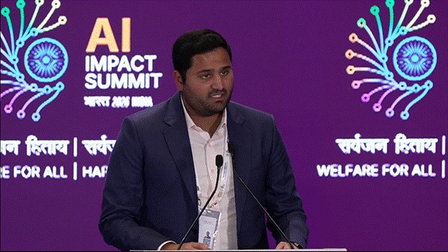
New Delhi, Feb 19 (IANS) CEOs of global tech companies attending the India AI Impact Summit 2026, on Thursday, emphasised the need for autonomy, infrastructure, and mass empowerment in the AI ecosystem.
On the sidelines of India AI Impact Summit 2026, keynote addresses by Arthur Mensch, CEO & Co-founder, Mistral AI; Jeet Adani, Director, Adani Digital Labs; Rajesh Subramaniam, CEO, FedEx and Vinod Khosla, Founder, Khosla Ventures, examined how artificial intelligence is reshaping sovereignty, global commerce, infrastructure, and access to essential services - with a strong emphasis on openness, ownership and large-scale societal impact.
Arthur Mensch, CEO & Co-founder, Mistral AI, made a compelling case for AI autonomy and open innovation.
Emphasising decentralisation and digital self-reliance, he stated, “AI should be a tool for empowerment, not for dominance. Countries and regions must own their AI destiny; it is not a privilege, but a necessity for preserving digital autonomy.”
Warning against excessive concentration of power, he added, “We do not want a world where three or four enormous companies own access to intelligence. The future must be built by the many, and for the many.”
Jeet Adani, Director, Adani Digital Labs, framed AI through the lens of national capability and strategic sovereignty.
Outlining energy, compute, and services sovereignty as three defining pillars, he remarked, “AI is written in code, but it runs on electricity. If a nation’s energy systems are fragile, its intelligence systems are fragile.”
Announcing major investments in green, sovereign AI infrastructure, he added, “The question is no longer whether India will participate in the AI century. The question is whether the AI century will carry India’s imprint, in its infrastructure, its intelligence, and its values.”
Rajesh Subramaniam, CEO, FedEx, positioned AI as foundational infrastructure for the next industrial era, particularly in global supply chains.
Reflecting on the company’s transformation, he said, “AI is no longer a trend - it is the next industrial system. Intelligence is not an asset; it is infrastructure.”
Highlighting the scale of opportunity, he added, “Over the next 50 years, our differentiation will come from orchestrating the intelligence that governs modern commerce, predicting disruption, optimising flows and building resilient supply chains.”
Vinod Khosla, Founder, Khosla Ventures, shifted the focus to immediate, large-scale applications capable of transforming lives.
Advocating AI tutors, AI doctors, and AI agronomy services accessible to every citizen, he said, “Unless AI benefits the bottom half of India’s population, we will not see its true impact.”
Underscoring feasibility, he added, “The future is here today. What once required hundreds of billions of dollars can now be delivered at scale, cheaply — multiplying access to education, healthcare, and expertise for every Indian.”
The session reflected a shared conviction that AI’s next phase must be defined not only by technological sophistication, but by ownership, accessibility, and equitable deployment.
From open-source autonomy and sovereign infrastructure to intelligent supply chains and universal digital services, the leaders emphasised that India stands at a decisive inflection point, with the opportunity to architect AI systems that are inclusive, resilient, and globally influential.
--IANS
sps/dan
Shillong Lok Sabha MP Ricky Syngkon passes away
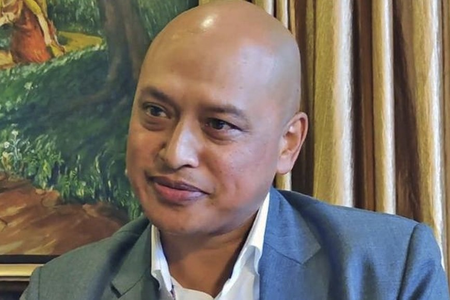
Shillong, Feb 19 (IANS) Shillong Member of Parliament Ricky A.J. Syngkon of the Voice of the People Party (VPP) passed away on Thursday evening after suddenly falling ill while playing football, triggering widespread shock and grief across Meghalaya’s political spectrum.
According to sources, Syngkon had gone to play football with friends on Thursday evening at a playground in Mawlai Mawiong.
During the match, he reportedly collapsed on the field, prompting immediate concern among those present. He was swiftly rushed by his friends to the nearby Mawiong Community Health Centre (CHC) for emergency medical attention.
However, sources said that due to the absence of a doctor at the facility at that time, he was referred to a higher medical centre.
He was subsequently shifted to Dr H. Gordon Roberts Hospital in Jaiaw for advanced treatment. Hospital sources said that despite efforts by the medical team, Syngkon succumbed shortly after being admitted.
He was declared dead at around 8:42 p.m., leaving supporters, colleagues, and residents of the state stunned by the sudden loss.
Following the news of his death, Deputy Chief Minister Prestone Tynsong, VPP president Ardent Miller Basaiawmoit, along with several legislators, senior political leaders, and party workers, rushed to the hospital to pay their respects and console family members.
Syngkon, a first-time Member of Parliament, had emerged as a prominent political figure after registering a landslide victory in the 2024 Lok Sabha elections.
Contesting on a VPP ticket, he had defeated three-time Congress MP Vincent H. Pala by a massive margin of over 3.7 lakh votes, a result that marked a significant shift in Meghalaya’s political landscape.
Known for his grassroots connections and advocacy on indigenous rights, governance, and transparency, Syngkon’s sudden demise has left a void in state and national politics, particularly within the VPP.
Leaders across party lines expressed deep condolences, remembering him as a committed public representative with a promising political future.
The state government is expected to issue further details regarding the last rites and official condolence arrangements.
--IANS
tdr/dan
Woman murdered for gold in B’luru outskirts; accused arrested

Bengaluru, Feb 19 (IANS) A 60-year-old woman was allegedly murdered for her gold jewellery by a man who entered her house on the pretext of asking for water in Nelamangala, on the outskirts of Bengaluru, police said on Thursday.
The crime was committed in the presence of her paralysed husband, who was bedridden. Police arrested the accused within hours of the incident.
The incident occurred on Pete Street on Wednesday night and came to light when a doctor visited the residence later as part of a routine medical visit.
The deceased was identified as Shobha, who lived with her husband in Nelamangala.
The couple had no children. Her husband had suffered a brain stroke 12 years ago and had remained bedridden since then. Shobha was the sole caregiver and was known to maintain cordial relations with neighbours.
According to police, the couple was financially well-off, and a doctor regularly visited their home to provide physiotherapy to her husband. The crime was discovered during one such scheduled visit.
Preliminary investigations revealed that the accused had noticed Shobha wearing gold jewellery while she was returning home earlier in the day.
Police said the accused allegedly observed that she was wearing gold ornaments weighing more than 100 grams and followed her to her residence.
Near her house, the accused allegedly approached her under the pretext of asking for water. When Shobha went inside to fetch water, he allegedly followed her into the house and slit her throat using a knife he was carrying, before fleeing the scene with her gold jewellery.
Nelamangala Town Police rushed to the spot after receiving information, conducted an inspection, and registered a murder and robbery case.
The accused, identified as Shivakumar (35), a wholesale shop owner, was arrested shortly thereafter.
Police said preliminary investigations indicated that Shivakumar was allegedly under financial distress and had targeted the elderly woman in an attempt to repay a debt of Rs 8 lakh.
After committing the crime, he reportedly returned home on his scooter in an attempt to avoid suspicion.
However, investigators traced the registration number of the scooter used in the crime and apprehended the accused. Police also recovered the scooter, the knife allegedly used in the murder, and mobile phones linked to the accused.
Police said the victim was found lying beside her bedridden husband with fatal injuries. Her husband, due to his medical condition, was reportedly unable to respond or raise an alarm.
Further investigation is underway to ascertain additional details related to the crime.
--IANS
mka/pgh
Sudhanshu Trivedi highlights India’s global AI leadership, Oppn in ‘perpetual frustration’
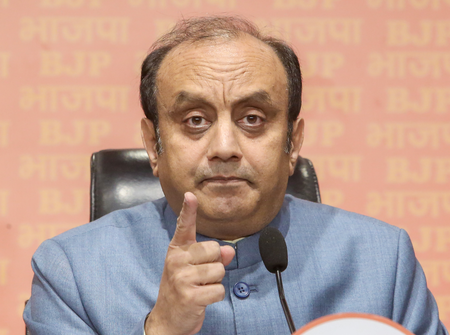
New Delhi, Feb 19 (IANS) Highlighting India's technological achievements, Bharatiya Janata Party (BJP) Rajya Sabha MP and party spokesperson, Sudhanshu Trivedi, on Thursday, praised the country's progress in the tech sector, while criticising the Opposition for failing to acknowledge it.
Trivedi said, "On one hand, everyone connected to India's technology sector is excited, and the people of the country feel proud. On the other hand, the Congress party and other opposition leaders have not issued a single statement appreciating it. Forget appreciation; they haven't even given a positive statement. Technological development should remain above politics, yet they continue to project personal envy and resentment toward Prime Minister Narendra Modi, which is very unfortunate."
He added that when BJP was in the Opposition, it had consistently acknowledged every technological advancement in India and praised the role of scientists.
"At the very least, the Opposition could have recognised and lauded the achievements of our tech sector," the BJP Rajya Sabha MP said.
Trivedi described India as emerging as a new nation, while the Congress remains mired in perpetual frustration.
The BJP Rajya Sabha MP's comments come as the World AI Summit is being held in India, featuring participation from global leaders, including the United Nations Secretary-General Antonio Guterres and French President Emmanuel Macron, along with heads of state from 22 other countries.
"Prominent global IT companies are also participating in the event, reflecting India's growing stature in artificial intelligence."
Recalling past skepticism, Trivedi noted that a former Finance Minister (referring indirectly to P. Chidambaram) had once reportedly said in the Parliament that Indians lacked the ability to learn new technologies or understand digital transactions.
Today, BJP leader Trivedi said that India is the number one country in digital transactions and is demonstrating its leadership in AI on the global stage, a feat he attributed to the strategic vision and capable leadership of Prime Minister Modi.
He also hailed the Union Electronics and Information Technology Minister Ashwini Vaishnav and his team for their "highly commendable efforts in giving practical shape to the Prime Minister's vision".
Commenting on artificial intelligence, Trivedi said, "AI, or 'Kritim Buddhi' in Hindi, is a magnificent achievement. However, it cannot be appreciated by those with 'Vikrit buddhi' (perverted intellect). Only those lacking fundamental intelligence are unable to perceive India's glory in AI."
--IANS
sn/khz
Hindi to unite India, AI to power future: Tripura CM Saha
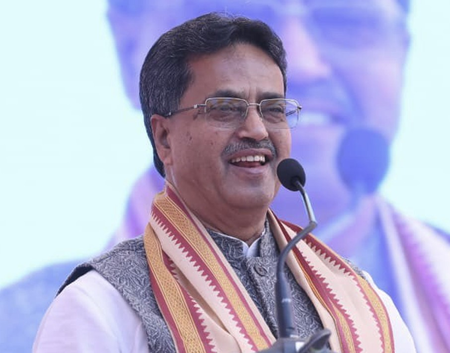
Agartala, Feb 19 (IANS) Tripura Chief Minister Manik Saha on Thursday underlined the importance of promoting the Hindi language alongside local languages, saying it (Hindi) plays a vital role in communication and national unity.
The Chief Minister said that as part of efforts to strengthen Hindi while respecting linguistic diversity, Union Home Minister Amit Shah has chosen Agartala to host the Joint Regional Official Language Conference (Rajbhasha Sammelan) of the Northern, Eastern, and North Eastern regions.
The event will be held at the International Indoor Exhibition Centre in Hapania on Friday, and the Home Minister will inaugurate the conference.
“He wants such national-level programmes to be held in Agartala. Representatives from the Northern Region, the Eastern Region, and the Northeastern Region have come here, and we are eagerly awaiting the event. The Home Minister will also address the gathering,” Saha told the media.
Describing Hindi as an accessible and widely understood language, the Chief Minister said that in Tripura, a majority of people can use Hindi with ease.
“Keeping Hindi at the forefront, we want to unite the entire country. At the same time, everyone has their own language, and all are important,” he added, noting that many Indian languages are rooted in Sanskrit.
Saha also expressed gratitude to Prime Minister Narendra Modi and Union Home Minister Amit Shah for their initiatives to promote linguistic harmony.
Speaking on technology and innovation, the Chief Minister said he attended the AI Impact Summit at Bharat Mandapam in New Delhi on Wednesday.
He said that at the AI Impact Summit, he interacted with foreign delegates, Union Ministers, and Chief Ministers of several states on numerous issues.
“Prime Minister Narendra Modi is always keen on AI. In the coming days, all departments will use artificial intelligence, and AI has also been included in the recent budget,” he said.
Expressing confidence in India’s technological future, Saha added, “I believe that in the coming days, India will emerge as a global platform for AI. Artificial intelligence is necessary for all of us.”
Meanwhile, the Ministry of Home Affairs' (MHA) Department of Official Language Secretary, Anshuli Arya, earlier in the day, said that more than 3,000 senior officials, representatives, and experts from Central government offices, public sector undertakings, and banks from the Northern, Eastern, and North-Eastern regions of the country will participate in the conference.
She said that officials, representatives, and experts from around 20 states will attend the conference, which is the first of its kind in Tripura.
The participating states include West Bengal, Odisha, Bihar, and Jharkhand from the Eastern region; Assam, Tripura, Manipur, Meghalaya, Mizoram, Nagaland, Arunachal Pradesh, and Sikkim from the Northeastern region; and Uttar Pradesh, Uttarakhand, Haryana, Punjab, Himachal Pradesh, Rajasthan, Jammu and Kashmir, and Ladakh from the Northern region.
--IANS
sc/dan
West Bengal reshuffles IPS officers in key districts ahead of Assembly elections
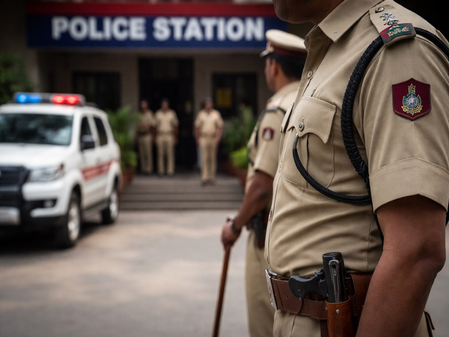
Kolkata, Feb 19 (IANS) Ahead of the upcoming Assembly elections, the West Bengal government on Thursday carried out another reshuffle in the state police administration, transferring four IPS officers holding key positions in politically sensitive districts.
A notification issued by the state Home Department stated that the transfers were made in the “public interest”. However, administrative and political observers consider the reshuffle significant in the context of preparations ahead of the Assembly polls.
According to the official notification, the reshuffle involved changes in the posts of Superintendents of Police (SPs) in several politically sensitive police districts in north and south Bengal.
As per the order, Khandbahale Umesh Ganapath, the Superintendent of Police of Alipurduar district, has been transferred and appointed as Superintendent of Police, Intelligence Branch (IB), north Bengal. Arish Bilal, who was serving as Superintendent of Police in the Intelligence Branch of the state police, has been appointed as the new Superintendent of Police of Basirhat Police District.
The existing Superintendent of Police of Basirhat Police District, Dr Hossain Mehedi Rahman, has been transferred to Jangipur Police District in Murshidabad. Meanwhile, Shaw Kumar Amit, who was serving as Superintendent of Police of Jangipur Police District, has been appointed as the new Superintendent of Police of Alipurduar district in north Bengal.
The notification stated that the officers concerned are required to assume charge of their new assignments with immediate effect until further orders.
Government sources said that such administrative measures are routinely undertaken ahead of major elections to ensure effective law and order management and facilitate free and fair polling. Basirhat, Jangipur, and Alipurduar are considered politically sensitive districts, and administrative changes in these areas are seen as part of election preparedness.
Alipurduar in north Bengal and Jangipur in Murshidabad district, which has a significant minority population, are expected to be crucial constituencies in the forthcoming Assembly elections, making administrative positioning in these districts particularly important.
As per established procedures, once the Election Commission of India announces the election schedule and the Model Code of Conduct comes into force, the police and civil administration function under the direct supervision of the Election Commission, and the state government’s authority to transfer officials becomes restricted.
Administrative observers believe that the state government is finalising key administrative placements ahead of the enforcement of the Model Code of Conduct to ensure preparedness for election-related responsibilities.
--IANS
sch/pgh
NCB chief explores tool at AI Summit to outwit drug traffickers
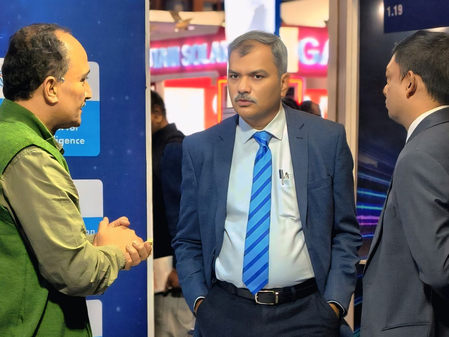
New Delhi, Feb 19 (IANS) Narcotics Control Bureau (NCB) Director General, Anurag Garg, visited the India AI Impact Summit 2026 at the Bharat Mandapam here to explore AI-driven solutions for strengthening enforcement and combating drug trafficking in the country, an official said on Thursday.
"During the visit, Garg and accompanying officials were informed by participants about the modern tools that can help outsmart drug traffickers," the official said in a statement.
Earlier, Garg, in a message, said, "As the nation's premier agency in the fight against drug trafficking and abuse, the NCB is committed to safeguarding the health and security of our society by eliminating the menace of narcotic drugs and psychotropic substances."
He said our mission is multifaceted -- ranging from intelligence gathering and enforcement to rehabilitation efforts and public awareness.
"We work relentlessly to strengthen coordination among central and state agencies and engage with international partners to ensure that India's borders remain impervious to the illicit drug trade," the NCB Director General added.
Garg said that in recent years, the NCB has made significant strides in curbing drug-related crimes through our focused operations, enhanced inter-agency collaboration, and increased technological capabilities.
"The success of these efforts hinges on the collective responsibility of all stakeholders, including law enforcement agencies, civil society, and each one of you," he added.
In a message posted on NCB's official website, Garg said, "Together, let us strive for a drug-free India. I encourage you to explore our website for information on our activities, initiatives, and ways in which you can contribute to this cause. Your support and vigilance are invaluable in achieving a healthier, safer future for all."
The NCB said that the recent conviction in cases probed by the Bureau underscores its commitment to accomplish the vision of "Drug Free India" through proper investigation and prosecution of cases.
"Any person having information related to the sale or trafficking of narcotic drugs or psychotropic substances may share the same by calling Madak Padarth Nished Asoochna Kendra (MANAS) -- National Narcotics Helpline and Toll-Free Number '1933'. The identity of the caller will be kept strictly confidential," a statement said.
--IANS
rch/khz
‘Journey of Jan Sewa’: Himanta Biswa Sarma on 25 years in Assam Assembly
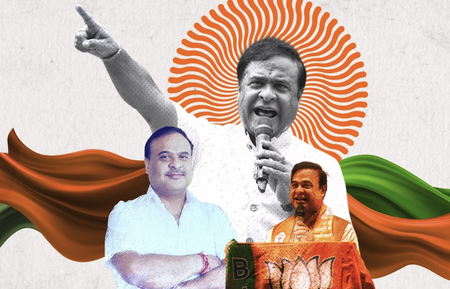
Guwahati, Feb 19 (IANS) Assam Chief Minister Himanta Biswa Sarma on Thursday reflected on completing 25 years as a legislator, calling it a deeply personal milestone marked by service, resilience, and an unwavering commitment to public welfare.
In a post on the social media platform X, Sarma said that, with the conclusion of the 15th Assam Legislative Assembly session, he paused to look back on his journey that began in 2001 as a first-time MLA and has continued to the present day as the Chief Minister of the state.
“While roles have evolved, my commitment to Jan Sewa has remained unwavering,” the Chief Minister said, describing the past two-and-a-half decades as a journey guided by a deep sense of responsibility and love for “Aai Asomi”.
Recalling his early years in the Assembly, Sarma said he had the opportunity to serve on several key committees, where he focused on rural development and education reforms.
He noted that these formative experiences helped shape his understanding of legislative processes and grassroots governance.
In 2006, when he took the oath as a Minister, Sarma said he began to understand the practical challenges of governance, including balancing fiscal discipline with development priorities.
During this period, he was involved in initiatives to expand educational infrastructure, roll out scholarships for meritorious students, and lay the groundwork for financial inclusion.
Reflecting on his tenure as Chief Minister since 2021, Sarma said he assumed office with a vision of building a stronger and more decisive Assam.
He added that he has endeavoured to serve with the same dedication and enthusiasm that guided him during his early years as a legislator.
“From a young MLA speaking in these hallowed halls to leading the state today, the trust and affection of the people have been my greatest strength,” he said.
Looking ahead, the Chief Minister reaffirmed his resolve to continue serving the state with commitment and purpose.
“As I look to the future, my resolve to serve my motherland remains as firm as ever,” Sarma said, expressing hope for continued progress, peace, and prosperity in Assam.
--IANS
tdr/dan
Irrigation transforming Assam’s rural economy: CM Sarma
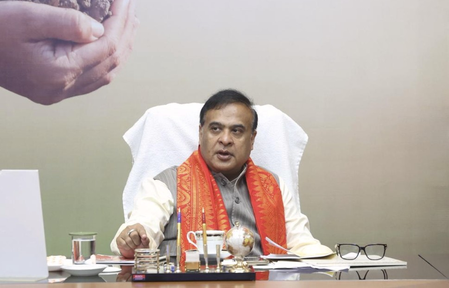
Guwahati, Feb 19 (IANS) Highlighting the Assam government’s focus on agricultural infrastructure, Chief Minister Himanta Biswa Sarma on Thursday said irrigation has become a key driver of transformation in the state’s rural economy over the last five years.
In a post on social media platform X, the Chief Minister said irrigation, long considered the lifeline of Assam’s agriculture, has seen unprecedented progress under the current government.
He said 772 minor irrigation schemes have been delivered across the state, strengthening irrigation coverage over more than 60,000 hectares of farmland.
“Fields that once depended solely on the monsoon are now powered by certainty. Assam’s farms are growing with confidence like never before,” Sarma said in his post.
According to official sources, the irrigation push has reduced farmers’ dependence on erratic rainfall, enabling them to plan multiple cropping cycles and improve productivity.
The government has focused on completing long-pending projects and adopting solutions such as solar-powered irrigation systems to ensure sustainability.
One major achievement highlighted by the Chief Minister is the completion of the Dhansiri irrigation project, which has brought an assured water supply to agricultural land in 175 villages.
The project is expected to benefit thousands of farmers by improving crop yield and supporting allied agricultural activities.
Officials said the irrigation initiatives have generated rural employment and strengthened water management practices, contributing to long-term agricultural resilience. The focus has been on accountability, timely execution, and impact-driven outcomes, aligning with the government’s broader vision of inclusive rural development.
The irrigation expansion is a crucial part of the state government’s strategy to boost farmers’ income, promote self-reliance in food production, and enhance Assam’s agrarian economy.
Experts believe that improved irrigation coverage will help farmers mitigate the effects of climate variability and shifting rainfall patterns.
The Chief Minister reiterated that the government remains committed to building robust agricultural infrastructure and ensuring that the benefits of development reach the grassroots.
He said stronger irrigation systems would continue to play a central role in Assam’s journey towards sustainable and resilient growth.
The irrigation drive has been positioned as one of the key pillars of the government’s development agenda, reinforcing the slogan of “Stronger Irrigation for Assam” as the state prepares for future agricultural challenges.
--IANS
tdr/dan