
PM Modi discusses post-Maoism plans for Bastar with Chhattisgarh CM
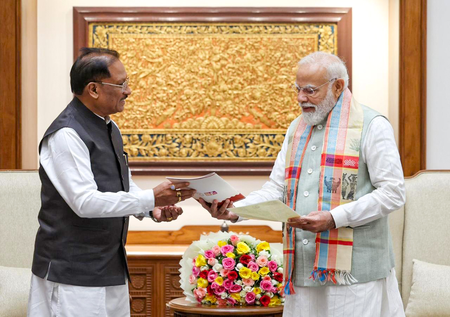
New Delhi, April 7 (IANS) Chhattisgarh Chief Minister Vishnu Deo Sai met Prime Minister Narendra Modi here on Tuesday and presented a forward-looking vision for the next phase of Bastar’s development in the post-Maoism era, an official said.
During the meeting, the Chief Minister expressed gratitude for the restoration of peace in the region following the decline of Maoism, crediting the continued support and leadership of the Prime Minister, said a statement.
He also shared a comprehensive blueprint aimed at driving holistic growth in Bastar, with a strong emphasis on tourism, start-up ecosystems, infrastructure expansion, and innovation-led development.
Highlighting the region’s potential, the plan outlines a transformative roadmap designed to accelerate economic progress and improve the quality of life.
The Chief Minister stated that the development blueprint for Bastar is built around the core strategy of “Saturate, Connect, Facilitate, Empower, and Engage.” This approach aims to ensure rapid and inclusive expansion of basic infrastructure and essential services across the region, said the statement.
In addition, the Chief Minister invited the Prime Minister to visit Bastar after the monsoon season.
The proposed visit is expected to serve as a significant milestone, with plans for laying the foundation stones of several major projects and inaugurating key initiatives in his presence, signalling the beginning of a new era of growth for the region, said a statement.
The Chief Minister emphasised that Maoism has been eliminated across Chhattisgarh, including Bastar, paving the way for lasting peace in the region.
He highlighted major strides in education and healthcare, including the development of new Education Cities, super-speciality hospitals, and medical colleges.
At the same time, connectivity is being significantly strengthened through key infrastructure projects such as the construction of barrages on the Indravati River, expansion of railway networks, and development of airport facilities, said the statement.
He noted that this comprehensive blueprint is set to usher in a new phase of growth, generating employment opportunities and improving access to essential services across Bastar.
In his development vision document, the Chief Minister underscored that the aspiration of transforming Bastar into a hub of peace and progress -- first envisioned by the Prime Minister nearly a decade ago -- is now taking concrete shape on the ground.
--IANS
rch/uk
East Champaran hooch tragedy: Major disaster averted due to timely seizures of 1,500 litres of methanol, says Bihar DGP

Patna, April 7 (IANS) The spurious liquor tragedy in Bihar's East Champaran on Tuesday claimed eleven lives so far, while several others remain under treatment in critical condition.
In response, the police have swung into "action mode", launching extensive raids across Bihar, particularly in areas surrounding Motihari.
Large quantities of illicit liquor have been seized during these operations.
Addressing the situation, Bihar Director General of Police Vinay Kumar termed the incident deeply tragic and revealed that a major disaster was averted due to timely intervention.
According to the State DGP, a massive consignment of liquor was recovered, and key accused individuals have been arrested.
Considering the seriousness of the case, a Special Investigation Team (SIT) has been constituted to probe the entire network.
In a crucial revelation, the investigation has led to the seizure of nearly 1,500 litres of methanol -- a highly toxic substance often used in the adulteration of illicit liquor.
The DGP emphasised that if this methanol had been circulated, the death toll could have been far higher.
Strict legal action is being initiated against those involved in the incident, and authorities have assured that all aspects of the case are being thoroughly investigated.
Methanol, commonly found in spurious liquor, is extremely dangerous for human consumption.
Once ingested, it is converted by the liver into formic acid -- a toxic compound that damages vital organs.
Initially, its effects may resemble ordinary intoxication. However, within hours, severe symptoms begin to appear, including intense headache, dizziness and vomiting, acute abdominal pain, and breathing difficulty.
In advanced stages, methanol poisoning can lead to blindness, organ failure, coma, and death.
The tragedy in East Champaran began on April 2, when multiple individuals across different localities fell ill after consuming spurious liquor.
The death toll rose rapidly.
Till April 4, the authorities have registered seven deaths, including Chandu Kumar, Pramod Kumar, Parikshan Manjhi, Hiralal Bhagat, Lalkishore Rai, Sampat Sah, and Laddu Sah.
On April 5, Md. Ilyas Ansari, Laddu Sah (from Balganga), and Jodha Manjhi lost their lives.
On April 7, Jitendra Shah succumbed in the hospital.
As of now, 11 people have lost their lives, while around 15 others remain hospitalised.
--IANS
ajk/khz
Skill as source of livelihood: PM Vishwakarma Yojana changes fortunes of Damoh youths
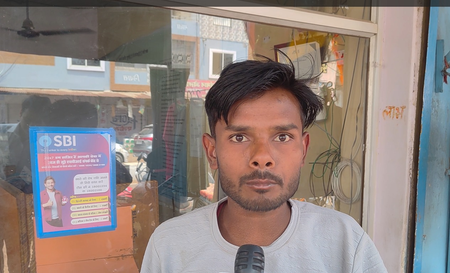
Bhopal, April 7 (IANS) For the youth of Damoh in Madhya Pradesh, the Pradhan Mantri Vishwakarma Yojana has emerged as more than just a government scheme.
It has become a guarantee of employment, and many glimpses of this transformation are being seen outside the Tendukheda Post Office in the district.
Many young beneficiaries of the scheme are seen transporting their toolkits on their motorcycles.
Two young men, hailing from Sarra village, chose a challenging path to realise their dreams and also became successful with the help of the PM Vishwakarma scheme.
The PM Vishwakarma scheme was launched in 2023 to provide end-to-end holistic support to artisans and craftspeople in 18 traditional trades, who work with their hands and tools. Lakhs of beneficiaries are drawing support and training under the scheme.
Suresh, one of the beneficiaries told IANS that he learnt about the scheme through his mobile phone and went ahead to get free vocational training. After getting trained in his traditional skills, he was also provided with a toolkit to explore opportunities.
Another 25-year-old beneficiary, Parmanand Kurmi, also shared his journey and informed how dozens of people in his village got the benefits of the scheme.
Upon the completion of their training, they were provided with a toolkit worth ₹15,000 by the government.
The toolkit, containing essential tools and equipment required for translating their newly acquired skills into practice, helped them establish a livelihood of their own and significantly improve the quality of life of their respective families.
Over the years, the PM Vishwakarma scheme has emerged as a comprehensive initiative to empower traditional artisans and craftspersons from villages by integrating them into formal market systems.
As of 22 January 2026, the scheme has received 2.72 crore applications for selection and has registered approximately 30,000 artisans.
--IANS
mr/dan
Bengal: Mamata Banerjee slams ECI over voter list deletions
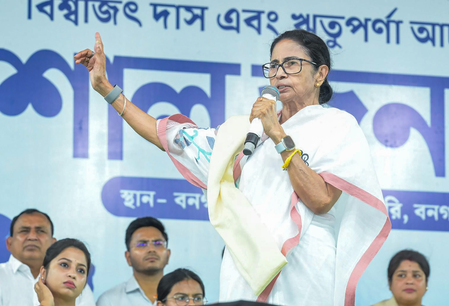
Kolkata, April 7 (IANS) West Bengal Chief Minister Mamata Banerjee on Tuesday launched a scathing attack against the Election Commission of India (ECI) over the special intensive revision (SIR) in West Bengal, accusing the Commission of not even sparing members of different religious and charitable organisations in the exercise.
The Chief Minister addressed three campaign rallies in Nadia and North 24 Parganas districts. In two of the rallies, she specifically named the Swami Vivekananda-founded Ramakrishna Math and Ramakrishna Mission and the Mother Teresa-founded Missionaries of Charity while attacking the Commission.
She said she felt sad on hearing that the names of 300 individuals attached to the Missionaries of Charity had been deleted in the course of the SIR exercise.
“Even monks of the Ramakrishna Math and Ramakrishna Mission had not been spared, she added.
According to her, the Commission specially targeted districts with high populations of minorities and socially backward communities during the SIR exercise, with maximum names being deleted from these areas.
She said maximum deletions had taken place in districts like Malda, Murshidabad, North Dinajpur, South 24 Parganas, North 24 Parganas, and Nadia.
“In the Bangaon subdivision of North 24 Parganas, people from the Matua community had been targeted. Areas like Chakdaha and Haringhata in Nadia and Gaighata in North 24 Parganas had witnessed high deletion of names from the voters’ list,” she added.
The Chief Minister also accused the Communist Party of India (Marxist) of having a clandestine understanding with the Bharatiya Janata Party in several assembly constituencies.
She said CPI(M) leaders knew they would not win and would try to ensure BJP’s victory by dividing anti-BJP votes.
She added that CPI(M) leaders were resorting to tall talk even after being reduced to zero in the 2021 assembly polls and should be reduced to zero again this time.
Speaking on the occasion, she said the Trinamool Congress would give all necessary assistance to voters whose names had been deleted, so that they could regain their voting rights by approaching the Appellate Tribunals constituted for that purpose.
She alleged that the only aim of the BJP and the Commission was to selectively delete voters’ names and asserted she would never allow them to succeed in that mission.
--IANS
src/dan
Attainment of criticality at Prototype Fast Breeder Reactor reflects India’s indigenous strength
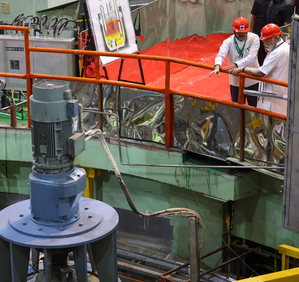
New Delhi, April 7 (IANS) The attainment of criticality at the Prototype Fast Breeder Reactor (PFBR) marks more than a technological milestone; it reflects the maturity of India’s long standing nuclear vision and the strength of its indigenous capabilities, an official statement said on Tuesday.
The indigenously designed and built Prototype Fast Breeder Reactor (PFBR) at Kalpakkam in Tamil Nadu successfully attained its first criticality on April 6, marking the initiation of a sustained nuclear chain reaction.
This PFBR is a 500 MWe (Megawatt electrical) reactor built by Bharatiya Nabhikiya Vidyut Nigam Limited (BHAVINI) at the Kalpakkam Nuclear Complex.
“The progress at Kalpakkam Nuclear Complex signals confidence in advanced reactor technologies and reinforces the role of institutions such as Department of Atomic Energy in driving this transformation. As capacity expands and new technologies take shape, nuclear energy is set to play a far more central role in India’s energy mix,” said the official fact-sheet.
India holds limited uranium reserves but one of the largest thorium reserves in the world. To make the most of these resources, the Department of Atomic Energy designed a three-stage nuclear power programme built on a closed nuclear fuel cycle. The goal is to progressively multiply domestic fissile resources and secure long-term energy independence.
India's current nuclear capacity is 8.78 Gigawatt (GW). In 2024–25, nuclear power plants generated 56,681 million units of electricity across the country.
Nuclear power has consistently accounted for around 3 per cent of India's total electricity generation. In 2024–25, its share stood at 3.1 per cent.
“India's nuclear capacity is set to grow nearly 3x in the coming years. With indigenous 700 Megawatt (MW) reactors and 1,000 MW reactors being developed through international cooperation, the installed capacity is projected to reach 22.38 GW by 2031–32,” said the statement.
India has signed Inter-Governmental Agreements (IGAs) on Civil Nuclear Cooperation for peaceful purposes with 18 countries, reflecting the growing global confidence in India's nuclear programme.
The Nuclear Energy Mission allocates Rs 20,000 crore towards the design, development, and deployment of Small Modular Reactors (SMRs), signalling a serious long-term investment in indigenous nuclear technology. At least five indigenously designed SMRs are to be operational by 2033, strengthening India's clean and reliable energy roadmap.
The Bhabha Atomic Research Centre (BARC) is leading the development of next-generation reactor designs, including the 200 MWe Bharat Small Modular Reactor (BSMR-200), the 55 MWe SMR-55, and a High-Temperature Gas-Cooled Reactor of up to 5 MWth (Megawatt thermal) designed for hydrogen generation.
Moreover, to support the mission, the government has enacted the 'Sustainable Harnessing and Advancement of Nuclear Energy for Transforming India (SHANTI) Act, 2025.’
The Act consolidates and modernises India's nuclear legal framework. It enables limited private participation in the nuclear sector under regulatory oversight, opening new avenues for collaboration and investment.
--IANS
na/
Akali Dal to help farmers for crop damage in Punjab rains
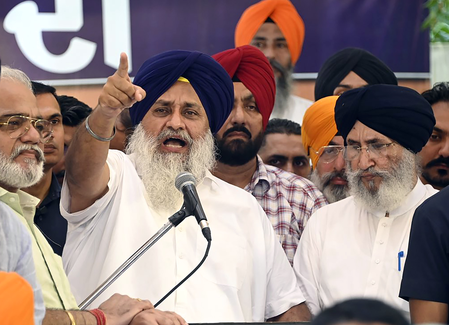
Chandigarh, April 7 (IANS) Shiromani Akali Dal (SAD) President Sukhbir Badal on Tuesday said the party would chart out a programme to help distressed farmers whose standing crop had been damaged across 1.25 lakh acres as they had been completely abandoned by the Aam Aadmi Party (AAP) government in Punjab.
Addressing a rally in Budhlada town as part of the party’s Punjab Bachao campaign, the SAD President said, “We are making a programme to provide wheat as well as green and dry fodder to affected farmers.”
He said the modalities of the entire exercise would be finalised at a meeting of the party’s district presidents and halka in-charges in Chandigarh on Wednesday.
Asserting that Chief Minister Bhagwant Mann had forsaken the farmers, he said they were yet to get compensation for the destruction of their paddy crop in floods last year.
“Now, even after unseasonal rain and hailstorms have flattened wheat crop across 1.25 lakh acres, they have not been given any immediate compensation even though they were promised by the Aam Aadmi Party.”
He said, despite this, AAP convener Arvind Kejriwal was lying in Gujarat that the AAP government had given compensation at the rate of Rs 50,000 per acre to Punjab farmers within one month of the floods last year. Badal said the lies of AAP and CM Mann knew no bounds.
“Even though it is clear that incidents of sacrilege started in Punjab after AAP entered the state in 2014, the Chief Minister today claimed that I am responsible for committing sacrileges. If this is so, then why does he not register a case against me?” he asked.
Badal also spoke on how AAP and the Congress had got together in a desperate bid to stop the SAD’s storm in the state.
He said Punjab Congress President Raja Amarinder Singh Warring was also speaking the Chief Minister’s language.
The SAD President also announced that a hospital of the stature of AIIMS would be opened in Mansa beside a veterinary college.
He said all link roads would be re-laid and that roads would be made to link all ‘dhanis’.
He also announced that streets and drains in all 12,500 villages of the state would be laid with concrete, and it would be ensured that every family had a ‘pucca’ home.
Speaking on the occasion, Bathinda MP Harsimrat Kaur Badal spoke on how the erstwhile SAD government had spent Rs 800 crore for irrigation projects in Budhlada alone.
She said the AAP government had repeatedly failed to give compensation to farmers, be it for floods, bollworm attacks or hailstorms.
--IANS
vg/dan
MP: Pravin Togadia joins Bhojshala satyagraha, demands restoration of Goddess Vagdevi idol
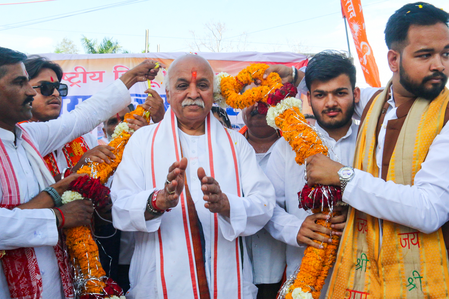
Dhar, April 7 (IANS) National President of the Antarrashtriya Hindu Parishad (International Hindu Council), Pravin Togadia, visited the disputed Bhojshala-Kamal Maula Mosque complex in Dhar on Tuesday amid an ongoing satyagraha by the Hindu community.
“How can namaz be performed at a place where clear evidence of a Hindu temple exists? The Mughal era is over. The current governments are committed to protecting religious rights. Hindus must be given full, uninterrupted right to worship at their sacred sites,” he asserted.
Hundreds of devotees gathered in the morning for collective recitation of the Hanuman Chalisa and performed traditional worship rituals at the site, which is currently under the jurisdiction of the Archaeological Survey of India (ASI).
After the satyagraha, Togadia inspected the entire premises. Later, speaking to the media, he recalled his participation in the movement 23 years ago to open the locks of Bhojshala, when over one lakh people had assembled.
He said he had returned to seek the darshan and blessings of Maa Saraswati (Goddess Vagdevi).
Pointing to visible Hindu symbols inside the complex, including a Shivling, statue of Lord Kartikeya, shankh (conch shell), and Kaal Sarpa Yoga chakra carvings on the walls, Togadia questioned the practice of offering namaz at the site.
He strongly demanded the reinstallation of the original idol of Goddess Vagdevi, complete access for Hindu worship, and withdrawal of permission for namaz at the disputed structure.
Referring to the ongoing scientific survey ordered by the court, Togadia expressed confidence that inscriptions, artefacts, and findings would reveal the true original nature of Bhojshala.
He said the ASI report had already indicated pre-existing temple structures and added that Hindus had waited long enough.
Togadia also urged organisational strengthening through weekly collective recitation of the Hanuman Chalisa every Tuesday and Saturday.
He said that in the coming year, the aim was to organise such recitations at one lakh locations across the country to connect with 10 crore Hindu families.
He also appealed to families to educate daughters on right and wrong from an early age and maintain societal unity and vigilance for their security.
The Bhojshala dispute has been a long-standing issue, with the ASI’s scientific survey report (submitted in 2024 and opened in 2026) highlighting temple remains used in the construction of the Kamal Maula Mosque.
The matter is currently under judicial review at the Madhya Pradesh High Court, where a day-to-day hearing is going on.
Togadia’s visit has further intensified demands for restoring the site fully as a Hindu temple dedicated to Goddess Saraswati, originally built by Raja Bhoj.
--IANS
sktr/dan
Gujarat ATS arrests two from Rajasthan border, seizes drugs worth Rs 25 crore
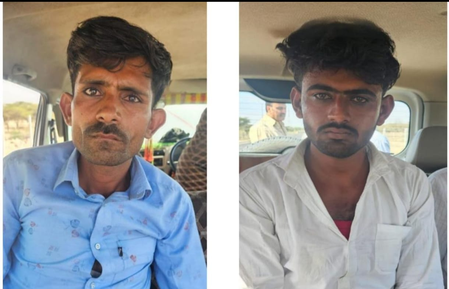
Ahmedabad, April 7 (IANS) The Gujarat Anti-Terrorist Squad (ATS), in coordination with the Rajasthan ATS, has arrested two men from Rajasthan and seized approximately five kilograms of methamphetamine in a crackdown on an international drug smuggling syndicate.
According to officials, Inspector J.M. Patel of the Gujarat ATS received confidential information which indicated that two individuals, Shankarram Rameshram and Salman Lalakhan, were transporting a consignment of methamphetamine from the international border of Rajasthan.
The narcotics were allegedly supplied by a Pakistani smuggler for distribution within India.
“After verifying the information, it was shared with senior ATS officials, who authorised a coordinated operation,” an official said.
The Gujarat ATS contacted the Rajasthan unit, which deployed a joint team along National Highway 68, linking Jaisalmer in Rajasthan with Banaskantha in Gujarat.
Intensive patrolling and a checkpoint were established to intercept the suspects.
On the evening of April 6, authorities stopped a suspicious Eeco vehicle during routine checks.
A yellow bag inside contained five transparent pouches of a white crystalline substance.
Preliminary tests confirmed the contents as methamphetamine, with an estimated market value of around Rs 25 crore.
The two suspects, residents of Sajan Ka Par, Ramsar, in Barmer district, were taken into custody.
A case was registered under Sections 8, 21, 22, 23, 25, 28, and 29 of the NDPS Act at Sadar Barmer Police Station.
During initial questioning, the accused revealed that the drugs had been smuggled from Pakistan’s Tharparkar area by an individual named Masat Mubarak and left in Barmer for collection.
Authorities also recovered digital evidence, including WhatsApp chats, call records, and videos from their mobile phones, which could help trace the wider syndicate.
Officials described the operation as a significant step in curbing both interstate and international narcotics trade.
“This demonstrates the effective coordination between Gujarat and Rajasthan ATS,” a senior official said.
Investigations are ongoing to identify other members of the network.
The successful interception marks one of the largest methamphetamine seizures in the region this year, highlighting growing vigilance against cross-border drug trafficking.
--IANS
mys/uk
BJP seeing better-than-expected response in all areas: Bagalkot BJP candidate
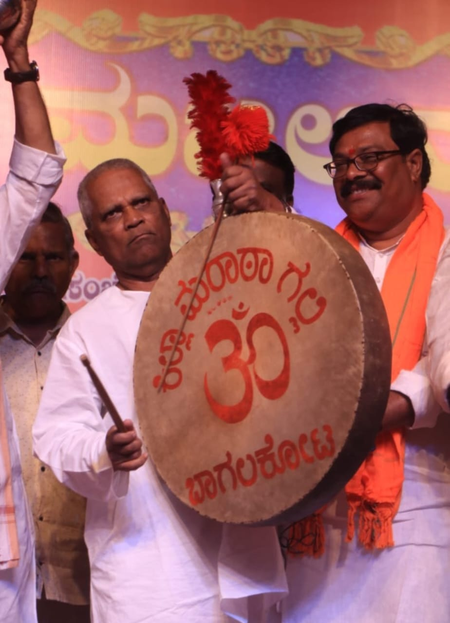
Bagalkot (Karnataka), April 7 (IANS) BJP candidate for Bagalkot Assembly segment, Veeranna Charantimath, has said that the party is receiving a better-than-expected response in both rural and urban areas.
Speaking to the media on Tuesday here, he said that during the campaign it has become clear that there is a need for leadership that speaks strongly for the people.
He appealed to voters to cast their votes against what he termed a “Tughlaq government.”
He alleged that justice has not been delivered to flood-affected victims and that corruption has gone beyond limits.
“When we were in power, we distributed land titles to 2,100 people. In the last three years, not even a single title has been given,” he claimed, adding that development schemes have been moving at a slow pace.
He further alleged that even after paying Rs 2.5 crore to Rs 3 crore, people are not able to get land. “They make irresponsible statements. They claim they will give Rs 30 lakh or Rs 40 lakh,” he said, criticising the government.
He accused the ruling party of making promises such as a medical college and Gandhi Bhavan merely as election gimmicks.
The Congress has fielded Umesh Meti against former MLA Charantimath. Umesh Meti is son of late H.Y. Meti, whose death has necessitated the bye-elections.
BJP Legislative Council member P.H. Pujar has criticised the state government, alleging that it is limited to making speeches and is not allocating sufficient funds for irrigation.
He claimed that even the CM's Economic Advisor Basavaraj Rayareddy has remarked that the government seems to have forgotten the Krishna Upper Canal project.
He pointed out that although there were promises to allocate higher funds in the budget, only Rs 2,600 crore has been earmarked.
Expressing concern, he said that at this pace of funding, it could take 20–25 years to complete the project. He added that it has been three years since the government came to power, but there has been little progress, leading to public disappointment.
Pujar further claimed that there is a strong wave in favour of the BJP across the constituency and expressed confidence that voters will not be swayed by money or liquor.
--IANS
mka/rad
Himachal promoting natural farming in big way, says CM Sukhu
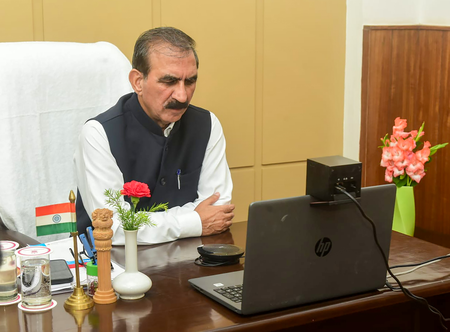
Shimla, April 7 (IANS) Himachal Pradesh Chief Minister Sukhvinder Singh Sukhu said on Tuesday that the Agriculture Department has set a target to integrate one lakh farmers with natural farming this year.
He noted that the state government is actively promoting natural farming and encouraging farmers to adopt this method, as it enables them to earn higher profits at lower costs.
As of now, 222,893 farmer and horticulturist families have adopted natural farming practices.
The Chief Minister in a statement said that more than two lakh farmers engaged in natural farming have been registered, of which 198,000 have already been issued certificates.
Under the Prakritik Kheti Khushhal Kisan Yojana the use of chemical inputs is discouraged, while inputs based on indigenous cow dung, cow urine and local plant resources are promoted.
The key objectives of the scheme include environmental conservation, promotion of crop diversification, and reduction in the cost of cultivation.
Chief Minister Sukhu said the state government is offering the highest minimum support price (MSP) in the country for naturally grown produce to ensure fair returns for farmers.
This year, the MSP for naturally grown wheat has been increased from Rs 60 to Rs 80 per kg, maize from Rs 40 to Rs 50, barley from the Pangi Valley from Rs 60 to Rs 80, and natural turmeric from Rs 90 to Rs 150 per kg.
The Pangi subdivision has been declared the state's first fully natural farming subdivision.
Ginger has also been brought under the MSP for the first time at Rs 30 per kg.
Additionally, the procurement price of cow milk has been enhanced to Rs 61 per litre and buffalo milk to Rs 71 per litre.
The Chief Minister said agriculture remains the backbone of the state's economy, as nearly 90 per cent of the population lives in rural areas, with 53.95 per cent directly dependent on agriculture for their livelihood.
This sector contributes about 14.70 per cent to the state's Gross Domestic Product, he added.
Keeping this in view, the state government is aiming to strengthening the rural economy through progressive policies and farmer-friendly initiatives.
To ensure better and remunerative prices for farmers, naturally produced maize and wheat flour are being marketed under the brand name 'Him'.
--IANS
vg/khz