
Delhi HC grants injunction in favour of Gautam Gambhir in personality rights case

New Delhi, March 25 (IANS) The Delhi High Court on Wednesday said it will pass orders directing social media intermediaries and e-commerce platforms to take down online content unauthorisedly using the name and images of former India cricketer and current head coach Gautam Gambhir for commercial gains.
A single-judge Bench of Justice Jyoti Singh observed that directions would be issued to tech platforms, including Meta and Google, to remove objectionable links flagged on behalf of Gambhir and to furnish details of the entities responsible for uploading such content.
The Delhi High Court also granted protection to Gambhir’s personality and publicity rights, directing the removal of objectionable posts and content circulating online without his consent. During the hearing, it was contended on behalf of Gambhir that his name, voice and photographs were being exploited for commercial purposes without authorisation, including through the use of artificial intelligence (AI) tools and deepfake technology.
The Delhi High Court directed Meta, Google and e-commerce platforms such as Amazon to take down the offending URLs and online posts misusing Gambhir’s identity. Justice Singh said a detailed order would be passed, including directions to provide Basic Subscriber Information (BSI) of the entities behind such content.
The development comes in a plea filed by Gambhir before the Commercial Division of the Delhi High Court, alleging a “coordinated campaign of digital impersonation” involving AI-enabled face-swapping and voice-cloning tools.
The suit names multiple defendants, including social media platforms, e-commerce websites and intermediaries, accusing them of facilitating the spread of misleading and fabricated content as well as unauthorised sale of merchandise bearing his name and likeness.
Gambhir has argued that there has been a sharp rise in such content across platforms like Instagram, X, YouTube and Facebook, including viral deepfake videos falsely attributed to him, which garnered significant public attention.
He has submitted that such misuse not only misleads the public but also causes serious reputational and professional harm, particularly in light of his current role as head coach of the Indian men’s cricket team.
The plea seeks a permanent injunction restraining all defendants from using his name, image, voice or persona without consent, along with damages of Rs 2.5 crore and directions for removal of infringing content.
The Gambhir case adds to a growing list of high-profile personalities invoking their personality and publicity rights before the Delhi High Court.
In recent months, former India captain Sunil Gavaskar, spiritual leader and Art of Living founder Sri Sri Ravi Shankar, actors Nagarjuna, Kajol, Aishwarya Rai Bachchan, and Abhishek Bachchan, singer Jubin Nautiyal, film-maker Karan Johar, and podcaster Raj Shamani have secured court protection against the unauthorised use of their identity, likeness, or AI-generated imitations.
--IANS
pds/uk
Rohit alleges coup bid in NCP via ‘forged’ ECI letter; flags Sunetra Pawar’s counter-note to poll panel
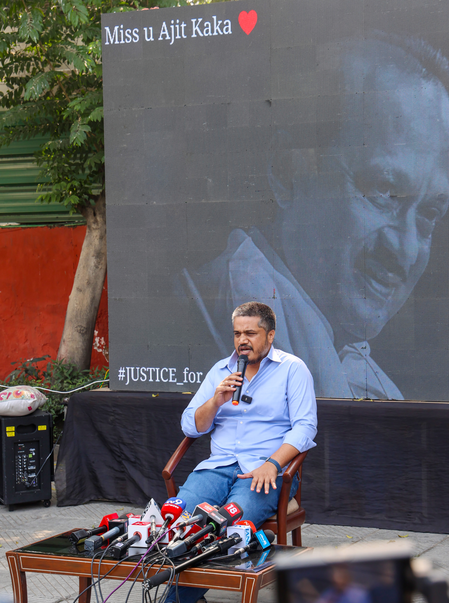
Mumbai, March 25 (IANS) In a high-octane press conference, NCP (SP) leader Rohit Pawar on Wednesday levelled explosive allegations against Sunil Tatkare and Praful Patel, claiming the duo attempted to seize control of the Nationalist Congress Party following the sudden demise of Maharashtra Deputy Chief Minister, Ajit Pawar, in a plane crash.
He further claimed that a group of leaders wrote to the Election Commission of India (ECI) claiming changes to the party constitution to vest sweeping powers in a “working president”, and said Sunetra Pawar subsequently wrote to the poll body asking it to disregard any such correspondence during the transition period after Ajit Pawar’s demise.
Rohit Pawar suggested a deep-rooted "conspiracy" involving strategic letters to the Election Commission (EC), alleged practitioners of black magic, and the suppression of family members' voices.
According to Rohit Pawar, a letter was sent to the Election Commission on February 16, 2026 — just 18 days after Ajit Pawar’s fatal accident on January 28. This letter, reportedly signed by Praful Patel, Sunil Tatkare, and Brijmohan Srivastava, claimed that the party's constitution had been amended.
"The amendment sought to transfer all party powers and authority — previously held by Ajit Dada — to the Working President (Praful Patel). This was done without the knowledge of Sunetra Pawar, Parth Pawar, or the party’s MLAs," Rohit Pawar stated.
He further revealed that upon becoming National President, Sunetra Pawar immediately wrote to the EC, urging them to disregard any correspondence made between the date of the accident and her appointment.
In a startling claim, Rohit Pawar alleged that "black magic" rituals were performed outside Ajit Pawar’s residence while he was still alive. He questioned if a "godman from Nashik" was used to influence the party's leadership through occult means.
He also pointed towards a potential coordination with external political forces, citing a statement by Union Minister Piyush Goyal. Two days after the accident, Goyal reportedly referred to Praful Patel as the National President of the NCP. Though Goyal later claimed it was a slip of the tongue, Rohit Pawar argued the sequence of events suggests the transition was "pre-planned" between Patel, Tatkare, and other senior leaders, he said.
Rohit Pawar alleged that MLAs were strictly instructed by Tatkare and Patel not to speak about the details of Ajit Pawar's accident during the Assembly session. He claimed that Jay Pawar (Ajit Pawar’s son) intended to hold a press conference, but his voice was "suppressed."
“Given these suspicious moves to grab power, we reiterate our demand for a high-level criminal investigation into the accident itself," Rohit said.
Closing his statement, Rohit Pawar issued a somber warning to the current Deputy Chief Minister, Sunetra Pawar. “Politics has become very ugly," he remarked. "You must be careful of the people surrounding you. While the workers and MLAs are vital, the intentions of those currently at the helm are questionable,” he remarked.
--IANS
sj/rad
Gujarat: BJP core committee meets at CM’s residence after Assembly passes UCC Bill
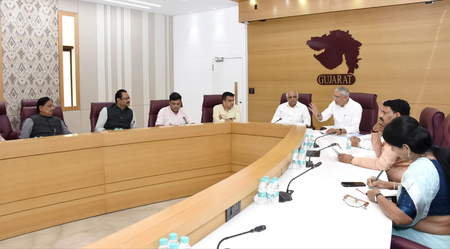
Gandhinagar, March 25 (IANS) A meeting of the Gujarat unit of the Bharatiya Janata Party (BJP)'s Core Committee was held on Wednesday at the official residence of Chief Minister Bhupendra Patel.
The meeting was attended by senior party leaders and Ministers, including Rushikesh Patel, Jitu Vaghani and State BJP President Jagdish Vishwakarma.
The closed‑door meeting came a day after the State Assembly passed the Uniform Civil Code (UCC) Bill, 2026, making the state the second in the country after Uttarakhand to clear legislation aimed at establishing a uniform set of civil laws governing marriage, divorce, succession, inheritance and related personal matters across all religions and communities.
The Assembly debate on the Bill lasted for more than seven hours before it was adopted with a majority.
The discussions at the Core Committee meeting are likely to review organisational strategy and administrative coordination in the context of the legislative development and preparations for the upcoming local body elections scheduled across municipal corporations and other local authorities in the state later this year.
These polls will cover numerous urban local bodies, including municipal corporations in cities such as Ahmedabad, Surat and Vadodara.
No official statement was issued immediately after the meeting.
The BJP leaders have in recent weeks emphasised the party's readiness for the upcoming electoral exercises and its ongoing efforts to communicate government initiatives to voters, senior officials said.
The passage of the UCC Bill has attracted attention in state and national political circles, with supporters highlighting its aim of legal uniformity and opponents raising concerns about its potential impact on personal laws and cultural practices.
The local body elections will be among the first major electoral tests for political parties in Gujarat this year, with control of urban and rural governing bodies seen as an important barometer of public sentiment.
The upcoming local body elections are also crucial for setting the tone for the state Assembly elections scheduled in 2027.
--IANS
mys/khz
Delhi minister targets Kejriwal over ‘Sheesh Mahal’, displays ‘list of luxuries’ bought for mansion
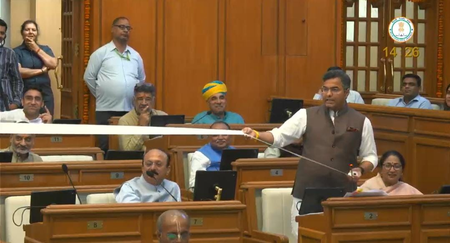
New Delhi, March 25 (IANS) Delhi minister Parvesh Verma on Wednesday trained guns on the previous AAP dispensation and then chief minister Arvind Kejriwal over gross violations in the erection of a sprawling mansion, widely identified as ‘Sheesh Mahal’ and also the destruction of green cover for its construction.
He made a pointed reference to the ‘expensive and luxurious purchases’ by the then dispensation, alleging large-scale irregularities in awarding contracts as well as procuring accessories for the swanky building.
In a rather dramatic takedown, the minister went on to display a long list of luxurious items bought for ‘Sheesh Mahal’, then CM Arvind Kejriwal’s residence, stating how various items like furniture, sofa, tables, recliner chairs and more were bought at exorbitant prices.
He also showed photographs of the site, purportedly a green belt earlier, where the Sheesh Mahal was built for the former Delhi CM.
“All those trees were cut down, and the Sheesh Mahal was erected,” said Verma, waving pre- and post-construction pictures of the place.
The PWD minister, speaking in the Delhi Assembly on Wednesday, claimed that hundreds of trees were axed to make way for the palatial mansion (Sheesh Mahal) for the AAP supremo, who called himself “aam aadmi” but chose to live in a king-size and ultra luxurious villa.
Taking the previous AAP dispensation to task, Parvesh Verma claimed multi-level violations in raising the structure, ranging from issuing of tenders to awarding contracts to procuring luxurious ornaments for the villa.
“All types of sanctions, including preparing price estimates and the signature of all concerned engineers, were completed in a single day. It’s astonishing that when Covid pandemic disrupted every aspect of administrative functioning, all the approvals were given in one day,” Verma told the House.
He said that the orders for the construction of 'Sheesh Mahal' were issued precisely when the COVID-19 pandemic was at its peak.
The directive was issued to build a palace, and it was explicitly marked as "most urgent", he said while expressing shock and surprise over why the AAP government never marked any public development work – event tasks like sewer cleaning, in the same bracket as that of ‘Sheesh Mahal’.
“Delhi has faced two disasters: the first was COVID-19, and the second is the Aam Aadmi Party,” the BJP leader lashed out, taking a bitter jibe.
Calling out the AAP convenor's double standards, Parvesh Verma further said, “When the AAP chief became Chief Minister, he took an oath promising not to accept any government vehicle or bungalow. However, immediately after taking the oath, he hoodwinked the people of Delhi. Within just 20 days, he shifted to a bungalow on Flagstaff Road.”
Parvesh Verma further claimed that adjacent to the 'Sheesh Mahal', another plot of 4,000 square yards was under consideration for erecting ‘Sheesh Mahal 2’.
“The work had commenced there, but in the subsequent elections, the AAP govt was voted out of power, and therefore work stopped; otherwise, another Rs 60 crore would have been spent,” he claimed.
--IANS
mr/uk
Cabinet okays continuation of Immigration, Visa, Foreigners Registration and Tracking Scheme for Rs 1,800 crore
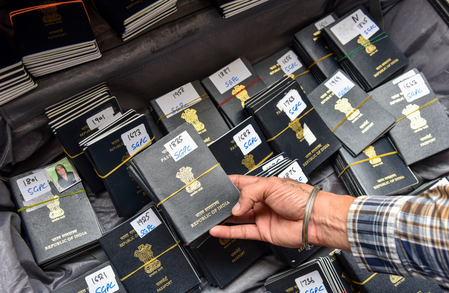
New Delhi, March 25 (IANS) The Union Cabinet, chaired by Prime Minister Narendra Modi, on Wednesday approved the continuation of the Immigration, Visa, Foreigners Registration and Tracking (IVFRT) Scheme beyond March 31, 2026 for a period of five years -- from April 1, 2026 to March 31, 2031 -- with a budget outlay of Rs 1,800 crore.
The IVFRT platform seeks to interlink and optimise functions related to immigration, visa issuance and registration of foreigners in India.
The core objective of the IVFRT is to modernise and upgrade immigration and visa services within a secure and integrated service delivery framework. It aims to facilitate legitimate travellers while strengthening national security, according to an official statement.
This project was approved by the Cabinet Committee on Economic Affairs on May 13, 2010 with a budget outlay of Rs 1,011 crore and with project duration till September, 2014. The budget outlay for the project was revised to Rs. 638.90 crore in 2015 along with extension of the implementation timeline up to March 31, 2017, and further up to March 31, 2021 without any additional financial implications.
An expenditure of Rs 613.28 core was incurred against the total revised outlay of Rs 638.90 crore. The extension of the project for a further continuation for a period of five years from April 1, 2021 to March 31, 2026 was approved by the Cabinet on January 19, 2022 with a budget outlay of Rs 1,365 crore, the statement said.
The scheme seeks to expand and strengthen the scope and capacity of the existing IVFRT Scheme not only by reimagining and revamping the existing structure, but also introducing the state-of-the-art technological solutions to enhance user experience without compromising the security architecture. The modernisation of the IVFRT project is essential to meet the evolving demands of global travel and address emerging national security challenges, the statement explained.
After the recent enactment of the Immigration and Foreigners Act, 2025 and its subsequent Rules and Order, it has become imperative to strengthen and modernize the Immigration, Visa, and Foreigners Registration & Tracking (IVFRT) system to effectively meet emerging requirements and future challenges in the domain of immigration control and foreigner management including illegal migration.
The continuation of the project is not just a technical upgrade, but a strategic transformation aligned with the vision of the Government of India to promote international mobility through a world-class immigration and visa issuance system.
The next phase would focus on three broad areas including emerging technology innovations, transformation of core infrastructure, and technology and service optimization, the statement said.
The scheme will modernise the immigration and visa ecosystem through adoption of emerging technologies, including mobile-based services and self-service kiosks for seamless and secure passenger movement. It will upgrade and expand core infrastructure across Immigration Posts, FRROs, and Data Centres to build a resilient and scalable system nationwide.
Additionally, it will optimise technology and service delivery by introducing unified digital platforms, revamping core application architecture, and strengthening network and deployment frameworks for improved efficiency and user experience, which will facilitate legitimate travellers while strengthening national security. It will help maintaining service continuity and induct innovative technological solutions to attract more foreign tourists in India in future.
This will thus give a boost to the tourism, medical and business sectors. IVFRT has immense positive externalities that would boost international traffic, business, commerce, and tourism. This would pave the way for economic growth and would thus contribute towards employment opportunities, the statement further explained.
The scheme has covered 117 Immigration Posts (JPs), 15 Foreigners Regional Registration Officers (FRROs) and 854 Foreigners Registration Officers (FROs)/Superintendents of Police (SPs)/Deputy Commissioners of Police (DCPs) across the country.
IVFRT system has led to significant improvements in service delivery and operational efficiency across immigration and visa functions. The system has enabled a 100 per cent contactless and faceless visa process with online appointment scheduling and payment facilities, leading to faster visa processing times with 91.24 per cent of e-Visa applications have been cleared within 72 hours during the past five years.
Average passenger clearance time at Immigration Posts has also been reduced to 2.5-3 minutes including biometrics, from the conventional 5-6 minutes, the statement said.
Also, Fast Track Immigration-Trusted Traveller Programme (FTI-TTP) through automated e-gates implemented at 13 Major airports, reduces the time taken for immigration clearance from 2.5-3 minutes to 30 seconds. Its enrolment is on gratis basis currently available for Indian nationals & OCI cardholders.
--IANS
sps/na
E-comm, healthcare industry lead hiring activity, digital skills in high demand: Report

New Delhi, March 25 (IANS) India's e-commerce and healthcare sectors lead hiring activity in the first half of FY 2026–27, even as digital skills continue to see strong demand across industries, according to a report released on Wednesday.
The report by TeamLease Services highlighted that sector-wise, hiring demand is led by e-commerce and tech startups with a net employment change (NEC) of 8.9 per cent, followed by healthcare and pharmaceuticals at seven per cent, and manufacturing, engineering and infrastructure at 6.6 per cent.
Moreover, the projected NEC stands at 4.7 per cent for the period, up from 4.4 per cent and 2.8 per cent in the previous two half-years, it said.
The report also said that hiring sentiment in India is showing steady improvement, with 58 per cent of employers planning workforce expansion during the period.
In terms of skills, digital literacy remains the most in-demand capability at 77 per cent, followed by customer experience management (68 per cent) and communication skills (61 per cent).
At the same time, capital expenditure, supply chain realignment and policy incentives continue to support steady hiring in manufacturing and infrastructure-linked sectors.
The improving sentiment is most pronounced among large enterprises, where 74 per cent of firms indicated expansion plans, compared to 57 per cent of mid-sized companies and 38 per cent of small businesses.
On the compensation front, electric vehicle (EV) and EV infrastructure roles are expected to see the highest salary growth at 10.5 per cent, followed by fintech at 9.9 per cent, and healthcare at 9.7 per cent.
Function-wise, hiring intent is strongest in sales and marketing roles, with 54 per cent of employers planning expansion, followed by IT (40 per cent) and finance (39 per cent), reflecting a focus on revenue generation, digital transformation and compliance.
Balasubramanian A, senior Vice-President at TeamLease Services, said that India's workforce dynamics are increasingly being shaped by structural and policy-led shifts rather than cyclical demand.
"Geographically, hiring activity is concentrated in major urban centres, with Bengaluru leading at 67.9 per cent employer expansion intent, followed by Hyderabad (57.8 per cent) and Pune (56.1 per cent). Mumbai and Chennai are also witnessing steady momentum," according to the report.
--IANS
ag/khz
RG Kar elevator death: Probe finds lift malfunctioned a week before fatal incident
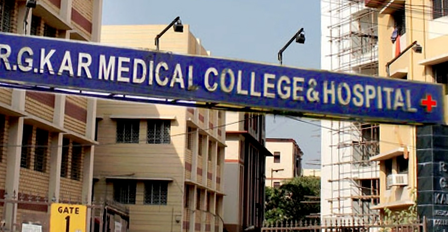
Kolkata, March 25 (IANS) Investigations into the elevator death at RG Kar Medical College and Hospital in Kolkata have revealed that the same lift had malfunctioned just seven days before the tragic incident.
According to Kolkata Police, the elevator in the Trauma Care unit developed technical issues on March 13, prompting engineers to inspect and reportedly repair it the same day. However, on March 20, Arup Banerjee, a resident of Nager Bazar in north Kolkata, was crushed between the elevator and a wall in a horrific accident.
The police said that forensic experts are currently investigating how the same hospital elevator malfunctioned again within just seven days, despite having been repaired. Preliminary information has already been shared with the police by the forensic team.
Kolkata Police detectives have also raised questions as to whether the elevator was, in fact, properly repaired on March 13. It was learnt that after Arup Banerjee -- along with his wife, Sonali, and their young son -- boarded Elevator No 2 in the Trauma Care unit on March 20. The elevator subsequently gave a violent jolt. The police are currently attempting to ascertain the cause of this sudden jolt.
To gather further details, detectives interrogated the PWD personnel who were responsible for the elevator's maintenance.
Additionally, the elevator engineers, several employees of the maintenance agency, elevator operators from other buildings within the RG Kar complex (beyond just the Trauma Care unit), and several security guards have been questioned. Reports indicate that approximately 30 individuals have been interrogated so far as part of this investigation.
Detectives also spoke with several friends and acquaintances of the deceased, Arup Banerjee, who were present at the scene of the elevator tragedy. To reconstruct the sequence of events, detectives are currently monitoring CCTV footage from at least 70 cameras installed within the hospital premises.
According to police officials, forensic experts, in collaboration with the lift engineers, examined the control panel of the lift at RG Kar Hospital as part of the investigation into the accidental death of Arup. During the course of the investigation, the forensic experts and detective officers learned that a routine inspection of the lift had been conducted earlier this month. At that time, the engineers had informed the hospital authorities that the lift was in good working condition.
However, just a few days later -- on March 13 -- the lift began to malfunction. It would frequently stall while ascending or descending, and its sensors also started acting up. The lift engineers subsequently arrived and determined that a software glitch had developed. They examined the lift's motherboard, repaired the unit for the time being and gave the green signal for its operation. The lift resumed functioning; however, just seven days later, the malfunctions began once again.
Police have learned that when Arup and his family members entered the elevator and pressed the button to travel from the second floor to the fifth, the lift instead ascended all the way to the seventh floor. Subsequently, the elevator descended to the basement. During this sequence, the doors shut automatically with tremendous force, causing a violent jolt inside the cabin.
Detectives have raised questions regarding how such a malfunction could occur just seven days after the elevator was supposedly 'repaired' -- specifically asking whether a 'green signal' was issued even if the repairs carried out on March 13 were incomplete. The police stated that they are currently awaiting the forensic report to gather further information regarding this incident.
--IANS
sch/skp
‘Weak CM, strong Health Minister’: Odisha Assembly in chaos over SCB ICU fire deaths
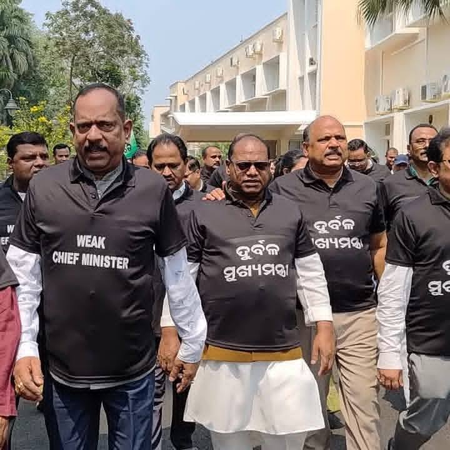
Amid the chaos, Speaker Surama Padhy adjourned the proceedings until 11:30 A.M. The protesting legislators raised slogans inside the House, creating disruptions during the proceedings. The same scene repeated when the House reconvened for Zero Hour, leading to further adjournments, ultimately until 4 P.M.
Meanwhile, Speaker Padhy on Wednesday also called an all-party meeting aiming to end the deadlock.
The Opposition members later moved to the Assembly premises, where they organised a protest rally around the Assembly building.
The Opposition demanded a detailed statement from the Chief Minister on the incident, resignation of the Health Minister, and strict action against the then Superintendent of SCB Medical College and Hospital.
Accusing Majhi of being the weakest chief minister, BJD leader Goutam Buddha Das alleged, “Since the last 10 days, when the fire mishap took place at SCB Medical College and Hospital, we have been demanding that the health minister should resign as so many people died due to your negligence.
"However, the state government has turned a deaf year on the issue despite all our protests and demonstrations. So, we assumed that the state health minister is the most powerful while the Chief Minister is the weakest in the history of Odisha.”
Opposition Chief Whip, Pramila Mallik, also challenged the Chief Minister to take action against the Health Minister, saying it would prove he is not the weakest.
Senior Congress leader CS Raazen Ekka also slammed the BJP-led double engine government holding the health minister responsible for the tragic fire tragedy in SCB Medical College and Hospital.
He alleged that the Chief Minister is completely weak and compromised, which is why the Health Minister is not being asked to step down. He also demanded Rs 1 crore ex-gratia for the families of patients who died in the fire at the SCB medical in Cuttack on March 16.
--IANS
gyan/rad
Cabinet okays modified UDAN scheme with Rs 28,840 crore outlay, to develop 100 airports
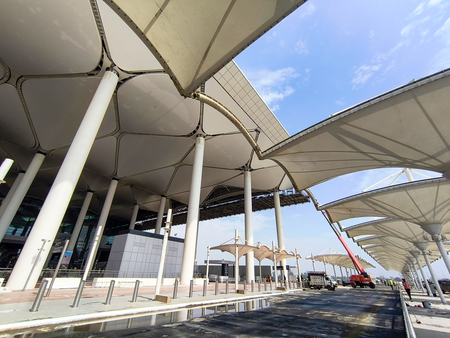
New Delhi, March 25 (IANS) The Cabinet, chaired by Prime Minister Narendra Modi, on Wednesday approved the Regional Connectivity Scheme-Modified UDAN for a period of 10 years with a total outlay of Rs 28,840 crore, with the budgetary support of the Central Government.
The Modified UDAN Scheme has been approved from the period of FY 2026-27 to FY 2035-36.
This decision will result in enhanced regional air connectivity to underserved and unserved areas; boost economic growth, trade and tourism in tier 2 and 3 cities; support affordable air travel for common citizens; and improve emergency response and healthcare access in remote and hilly regions.
Also, the scheme will help greater viability and sustainability for regional aerodromes and airline operators; promote indigenous aerospace sector under Atmanirbhar Bharat and help achieve the ‘Viksit Bharat 2047’ goal.
Under the Modified UDAN Scheme, it is proposed to develop 100 airports from existing unserved airstrips to enhance regional connectivity, in line with the Viksit Bharat 2047 vision of infrastructure expansion and transforming India into a globally competitive aviation ecosystem, with a total outlay of Rs 12,159 crore over the next eight years.
Given the high recurring operation and maintenance costs and limited revenue streams for Regional Connectivity Scheme (RCS)-only aerodromes, the Scheme proposes to provide O&M support for three years capped at Rs.3.06 crore per annum per airport and Rs. 0.90 crore per annum per heliport/water aerodrome, estimated at Rs. 2,577 crore for around 441 aerodromes.
Moreover, to address connectivity challenges in hilly, remote, island and aspirational regions, the Scheme proposes developing 200 modern helipads at Rs 15 crore each, amounting to a total requirement of Rs 3,661 crore over the next eight years (inflation-adjusted), focused on priority and aspirational districts to improve last-mile connectivity and emergency response.
Under the Regional Connectivity Scheme, airline operators receive financial support in the form of VGF for operating awarded routes.
Recognising the need for longer market development, VGF support to airline operators is proposed amounting to Rs 10,043 crore over 10 years, according to the Cabinet.
To address the shortage of small fixed-wing aircraft and helicopters, the scheme also proposes to procure two HAL Dhruv helicopters for Pawan Hans and two HAL Dornier aircraft for Alliance Air.
The original UDAN Scheme was launched in October 2016 with the objective of making air travel affordable and strengthening connectivity to tier 2 and 3 cities.
Over the nine years of implementation, 663 routes have been operationalised across 95 airports, heliports and water aerodromes (as on February 28, 2026). More than 3.41 lakh flights have been operated, carrying 162.47 lakh passengers.
--IANS
na/
JGU VC receives prestigious STAR Scholars Lighthouse Leadership Award in US
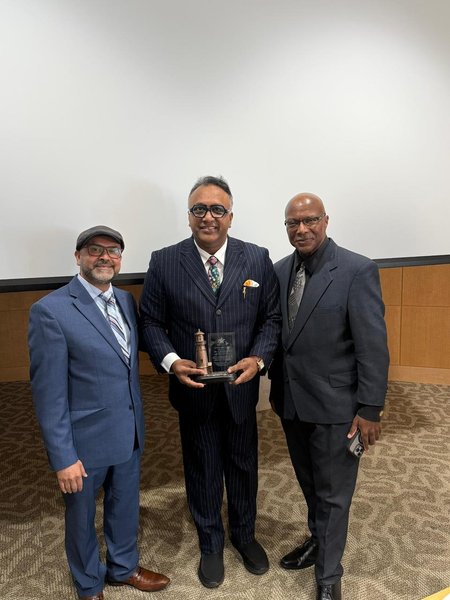
Washington, D.C., March 25 (IANS) The STAR Scholars Network has conferred its distinguished Lighthouse Leadership Award upon Professor (Dr.) C. Raj Kumar, Founding Vice Chancellor of O.P. Jindal Global University (JGU). This recognition celebrates his exceptional contributions to global higher education, academic leadership, and institution-building.
The award ceremony, associated with global academic engagements in Washington, D.C., highlighted international leadership shaping the future of higher education.
The Lighthouse Leadership Award, instituted by the STAR Scholars Network, is a premier global honour recognising visionary leaders in academia. Inspired by the metaphor of a lighthouse as a guiding force, the award celebrates individuals whose leadership illuminates pathways for global scholarship, institutional innovation, academic collaboration, and social impact through education. The award underscores the transformative role of higher education in addressing global challenges and advancing knowledge for the public good.
Dr Uttam Gaulee, President, Society of Transnational Academic Researchers (STAR Scholars Network), observed: “The STAR Lighthouse Leadership Award is one of our highest global recognitions -- reserved for leaders who illuminate pathways for higher education worldwide. In India, where institution-building carries immense scale and responsibility, what Vice Chancellor Professor C. Raj Kumar has achieved with JGU is truly transformational. He is not only building a world-class university but also positioning India at the centre of global academic leadership and discourse.”
Dr Gaulee further remarked, “Having worked closely with institution builders around the world, I know what it takes to build a university from scratch -- and Professor C. Raj Kumar has done exactly that. His visionary leadership stands as a global model. As a leader of a worldwide scholarly community, I believe this is a story worth celebrating loudly -- he did it, and he did it exceptionally well.”
Purpose and Vision of the Award
The Lighthouse Leadership Award is designed to honour leaders who embody visionary leadership in higher education, distinguished contributions to global scholarship, commitment to institutional excellence and innovation, promotion of international collaboration, and dedication to equity, justice, and inclusive education systems.
The Founding Vice Chancellor of O.P. Jindal Global University, Professor (Dr.) C. Raj Kumar said on receiving the award, “I am deeply honoured and privileged to accept this award on behalf of the 16,000 students and 4,000 faculty and staff of O.P. Jindal Global University (JGU). The journey of JGU that began in 2009 in a modest manner, and now, after 17 years, to become a truly world-class university, has been possible because of the extraordinary contribution of the entire university community. I would like to acknowledge the leadership and contribution of our Founding Chancellor and benefactor, Naveen Jindal, for his deep and passionate commitment to academic freedom, institutional autonomy, and not-for-profit governance, all of which have shaped the evolution of JGU. On a personal note, I am grateful to my parents, teachers, and mentors, and my family members, including my wife and children, for having supported me in this journey that has culminated in this award that I accept on behalf of all of them.”
Recipients are seen as “guiding lights” whose work influences not only their own institutions but also the broader global academic ecosystem. Awardees are selected through a rigorous evaluation by the STAR Scholars Network’s leadership and advisory community. The selection is based on demonstrated impact in the following key areas.
--Academic Leadership & Institution-Building through establishment or transformation of world-class institutions and strategic leadership in higher education governance.
--Global Scholarship & Intellectual Contributions with influential research and academic thought leadership and contributions shaping global academic discourse.
--Advancement of International Higher Education through cross-border academic partnerships and promotion of global learning ecosystems.
--Inclusive and Collaborative Knowledge Production through advocacy for equitable access to education and encouragement of diversity, inclusion, and interdisciplinary collaboration.
These criteria ensure that recipients represent excellence, innovation, and global influence in higher education.
Significance of the Award
The Lighthouse Leadership Award is regarded as one of the highest recognitions presented by the STAR Scholars Network. It celebrates leaders whose vision extends beyond institutional boundaries, whose work shapes the future of global higher education, and whose contributions inspire scholars, policymakers, and institutions worldwide. The award reinforces the importance of leadership in building a more just, knowledge-driven, and interconnected world.
Dr. Raj Kumar is an internationally respected academic, legal scholar, and institution-builder. As the Founding Vice Chancellor of O.P. Jindal Global University, he has built JGU into a globally recognised multidisciplinary university, advanced international collaborations with leading universities worldwide, championed interdisciplinary education and research excellence, and promoted global engagement and public policy impact. Under his leadership, JGU has emerged as a hub for innovation in law, public policy, international affairs, and liberal arts education.
In honouring Prof. Kumar, the STAR Scholars Network recognises a leader whose work exemplifies the very essence of the Lighthouse Award -- guiding institutions, scholars, and students toward a future defined by academic excellence, ethical leadership, global responsibility, and inclusive knowledge systems. As higher education continues to evolve in a rapidly changing world, such leadership remains critical in shaping equitable and sustainable futures.
The STAR Scholars Network is a global non-profit academic community dedicated to advancing scholarly collaboration, promoting responsible and impactful research, supporting innovation in higher education, and building global academic partnerships. Through initiatives like the Lighthouse Leadership Award, the organisation highlights leaders who are redefining the role of higher education in society.
--IANS
skp/