
Economic pressure on Iran makes major strikes needless, says Rubio
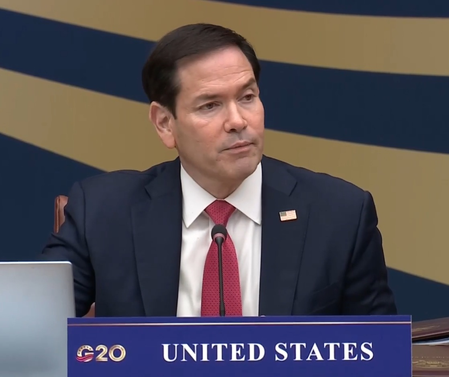
Washington, Nov 11 (IANS) US Secretary of State Marco Rubio has said that economic pressure on Iran had become so severe that President Donald Trump saw no immediate need for major combat operations, while warning that Washington remained ready to respond militarily if Tehran escalated.
Rubio told reporters after a G-7 meeting that the combination of a blockade and sanctions was squeezing Iran's oil earnings. He rejected suggestions that the absence of new major strikes amounted to a stalemate, arguing that the economic damage would deepen over time.
"What I'm saying to you is that the economic campaign is so devastating that right now there really is no need for major combat operations."
Rubio said he had conveyed that assessment to US partners. Discussions at the meeting focused principally on the Middle East and Ukraine, with representatives from Saudi Arabia, Brazil, Egypt and South Korea also participating.
Asked about the possibility of Iranian attacks on civilian infrastructure, he warned: "I mean, if they -- if they do that, then they'll pay a terrible price."
Rubio said Iran was approaching the exhaustion of oil supplies already at sea. Those shipments, he said, had passed through during a temporary ceasefire arrangement when the blockade was suspended.
"Once that dries up, almost all of their oil revenue will dry up."
He said Treasury Secretary Scott Bessent and US intelligence agencies were working to close routes used to evade sanctions. Reduced income, he argued, would constrain Iran's ability to finance its nuclear programme, armed partners and other activities.
The transcript provided no independent figures to substantiate his assessment of the economic damage.
Rubio maintained that Washington remained open to negotiations. Qatar and other countries were continuing mediation efforts, he said, adding that the Qatari prime minister had met Trump in Washington the previous day.
But he described Iran's negotiating conditions as unrealistic. He said Washington would reject demands for reparations and cash payments, while maintaining that Iran could have a civilian nuclear energy programme like other countries.
"You know, if there's a deal to be done, it -- the President will be the first one to be in favour of it, but it's not going to be a stupid deal."
Challenged about the economic consequences for Gulf countries, Rubio disputed the suggestion that their economies were being devastated. He said oil shipments were continuing despite Iranian drone attacks on commercial vessels.
On some nights, he said, flows were reaching 80 to 85 per cent of pre-conflict levels. He attributed the remaining shortfall to the interruption of Iranian exports.
Rubio urged other countries to help protect shipping through the Strait of Hormuz. He acknowledged that he had received no response when he raised the issue with G7 counterparts, though he said such commitments would probably require decisions by heads of government.
He also rejected linking Lebanon's future to negotiations with Tehran. Washington was mediating directly between Lebanon and Israel, he said, and was working on a system to verify compliance with arrangements involving Israeli withdrawals and deployments by the Lebanese armed forces.
--IANS
lkj/sd/
India, Nigeria human rights commissions sign MoU in Abuja
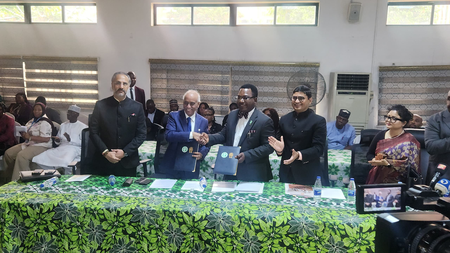
Abuja, Nov 11 (IANS) The National Human Rights Commission of India (NHRC-India) and the National Human Rights Commission of Nigeria (NHRC-Nigeria) signed a Memorandum of Understanding (MoU) in Abuja on Tuesday, the High Commission of India in Abuja said.
“A Memorandum of Understanding (MoU) between the National Human Rights Commission of India (NHRC-India) and the National Human Rights Commission of Nigeria (NHRC-Nigeria) was signed today in Abuja, marking an important milestone in India–Nigeria relations,” the High Commission posted on X.
Earlier on Tuesday, NHRC Chairman Justice V Ramasubramanian met Nigeria’s Attorney-General of the Federation and Minister of Justice Prince Lateef Olasunkanmi Fagbemi, exploring avenues for strengthening cooperation between the two countries in the fields of human rights, access to justice and the rule of law.
“The meeting provided an opportunity to exchange views on matters of mutual interest and explore avenues for strengthening cooperation between India and Nigeria in the fields of human rights, access to justice and the rule of law,” the High Commission of India in Nigeria had said.
The NHRC delegation, led by Justice Ramasubramanian, arrived in Abuja on Monday.
“High Commissioner Abhishek Singh welcomed a high-level delegation from the National Human Rights Commission (NHRC), India, led by Hon’ble Justice V. Ramasubramanian, Chairman, upon their arrival at Nnamdi Azikiwe International Airport, Abuja,” the High Commission had posted on X.
Last month, Minister of State for External Affairs Kirti Vardhan Singh represented the Government of India as Chief Guest at Nigeria’s 66th Independence Day celebrations, noting that the two countries share longstanding historical ties and a robust Strategic Partnership.
“India and Nigeria share longstanding historical ties and a robust Strategic Partnership. We remain committed to further deepening our bilateral cooperation for the mutual benefit of our peoples,” he had said.
In September, Prime Minister Narendra Modi met with Vice President Kashim Shettima of Nigeria on the sidelines of the 18th BRICS Summit in New Delhi.
“The discussion focused on key areas including trade and investment, defence and security, energy partnership, agriculture, health, and digital technologies. They reaffirmed their commitment to further strengthening the India-Nigeria Strategic Partnership,” the Ministry of External Affairs (MEA) had stated.
--IANS
ksk/
India, Ecuador hold sixth round of Foreign Office Consultations in New Delhi
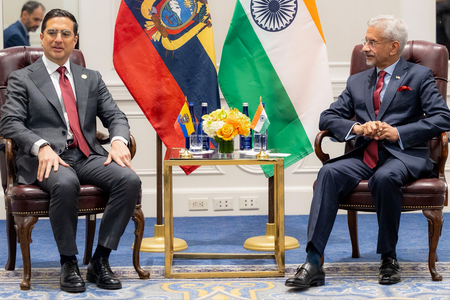
New Delhi, Nov 10 (IANS) India and Ecuador held the sixth round of Foreign Office Consultations (FOC) in New Delhi on Tuesday, reviewing the progress of bilateral relations and exchanging views on regional and global developments, the Ministry of External Affairs (MEA) said.
“The sixth round of India-Ecuador Foreign Office Consultations (FOC) was held on 10th November 2026, in New Delhi. Indian delegation was led by Shri Rudrendra Tandon, Secretary (East), Ministry of External Affairs and the Ecuadorian delegation was led by Mr. Alejandro Davalos, Dy. Minister of Foreign Affairs & Human Mobility of Ecuador,” the MEA said in a statement.
“The two sides reviewed the progress of bilateral relations and exchanged views on regional and global developments,” it added.
During his visit, Davalos also held meetings with senior Indian officials and the business community.
“During his visit to India, Mr. Davalos, Dy. Minister of Foreign Affairs of Ecuador held bilateral meetings with Commerce Secretary; Health Secretary; and Secretary of the Department of Pharmaceuticals. He also met with Indian business fora,” the statement said.
In September, External Affairs Minister (EAM) S Jaishankar met Ecuador’s Foreign Minister Roberto Kury in New York, where they discussed “strengthening our economic ties, including in energy and pharmaceuticals, mobility, training of personnel, development partnership and cooperation in multilateral fora, including the UN”, he had said on X.
Technology and pharmaceuticals figure prominently in the relations between New Delhi and Quito. India has trained 223 Ecuadorian professionals over the last five years, and the Centre of Excellence in Information Technology India set up at an Ecuadorian university has trained 813 others.
Earlier, highlighting strong economic synergies, the Ambassador of Ecuador to India Fernando Xavier Bucheli Vargas had said Ecuador exports products including gold, oil and cocoa to India while importing automobiles, bikes, pharmaceutical products and agricultural ingredients.
“Ecuador and India are complementary economies. We offer the products that India is looking for. For instance, we are selling gold and oil to India, and cocoa to prepare the best chocolates. At the same time, we are importing from India automobiles, bikes, pharmaceutical products, and also ingredients for the agricultural sector,” Vargas had told IANS.
--IANS
ksk/
Commanding Officers of Japanese warships on Mumbai visit call on Western Naval Command chief
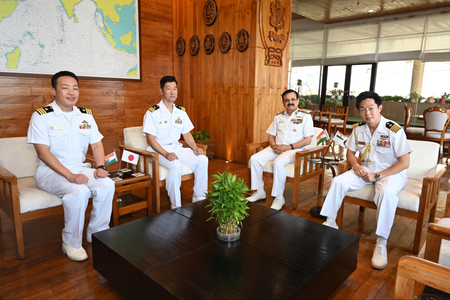
Mumbai, Nov 10 (IANS) The Commanding Officers of Japan Maritime Self-Defense Force (JMSDF) ships JS Takanami and JS Kirisame, currently on a goodwill visit to Mumbai, called on Vice Admiral Sanjay Vatsayan, Flag Officer Commanding-in-Chief, Western Naval Command, the Indian Navy’s Western Naval Command said.
“The Commanding Officers of JMSDF ships JS Takanami and JS Kirisame currently on a goodwill visit to Mumbai, called on VAdm Sanjay Vatsayan, Flag Officer Commanding-in-Chief, Western Naval Command,” the Western Naval Command posted on X.
The two sides exchanged perspectives on issues of mutual interest during the interaction.
“The interaction provided an opportunity to exchange perspectives on issues of mutual interest and reaffirmed the longstanding friendship, mutual trust and growing maritime partnership between the Indian Navy and JMSDF,” it said.
“The goodwill visit reaffirms the shared resolve of both navies to deepen mutual understanding, strengthen maritime cooperation and work together towards a free, open, peaceful and prosperous Indo-Pacific,” the Western Naval Command added.
Last week, Indian Ambassador to Japan Nagma Mohamed Mallick and Vice Admiral AN Pramod, Deputy Chief of the Naval Staff, hosted a deck reception onboard INS Sahyadri in Japan commemorating the 75th anniversary of India-Japan diplomatic ties.
“INS Sahyadri is visiting Japan for participation in the multilateral maritime exercise MALABAR 2026 and bilateral maritime exercise JAIMEX 2026,” the Indian Embassy in Japan had said.
In October, Vice Chief of the Naval Staff, Vice Admiral Ajay Kochhar, visited Japan to strengthen India-Japan cooperation in shipbuilding and mine countermeasures and to explore possibilities for joint development under the ‘Make in India’ initiative.
Vice Admiral Kochhar held bilateral consultations with Vice Admiral Yasuhiro Kunimi, Vice Chief of Staff of the JMSDF, and Lieutenant General Norimichi Shirakawa, Vice Chief of Staff of Japan’s Joint Staff, and the two sides reaffirmed their commitment to continue close collaboration to strengthen India-Japan defence cooperation.
The visit came after the defence ministers of the two countries agreed to leverage each other’s strengths in defence shipbuilding.
--IANS
ksk/uk
India, France discuss space collaboration, review ISRO-CNES cooperation at Strategic Dialogue
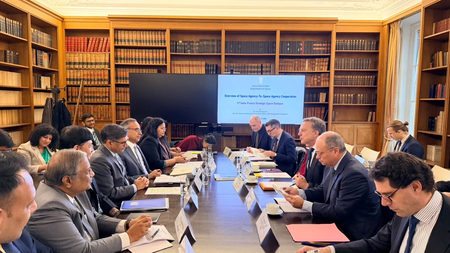
Paris, Nov 10 (IANS) India and France on Tuesday reviewed progress in their bilateral space cooperation, including between ISRO and CNES, and discussed pathways to facilitate commercial space collaboration between the two countries’ space industrial ecosystems at the 3rd India-France Strategic Space Dialogue in Paris, the Ministry of External Affairs (MEA) said.
“Foreign Secretary Shri Vikram Misri, along with Secretary General of the French Ministry for Europe and Foreign Affairs, Mr Martin Briens, co-chaired the 3rd India-France Strategic Space Dialogue earlier today in Paris,” MEA spokesperson Randhir Jaiswal posted on X.
The two sides reviewed the ongoing space cooperation and discussed ways to further strengthen it.
“Reviewed progress in the wide-ranging ongoing bilateral space cooperation, including between ISRO and CNES. Discussed avenues for furthering strategic space cooperation and pathways to facilitate commercial space collaboration between the two space industrial ecosystems. Exchanged views on multilateral space matters,” the MEA said.
Misri and Briens also co-chaired the inaugural meeting of the India-France Economic Security and Critical Technologies Dialogue, and held bilateral talks.
“Both sides also held bilateral talks, reviewing the entire gamut of bilateral relations. They also exchanged views of regional and global issues of mutual interest,” the Indian Embassy in France posted on X.
Misri arrived in Paris on Monday for the dialogues, which are aimed at expanding cooperation between the two countries, with a particular focus on resilient supply chains.
“These discussions will deepen cooperation between India and France in space, critical technologies and economic security, particularly in the area of resilient supply chains,” the Embassy had said.
In April, Misri had co-chaired the India–France Foreign Office Consultations with Briens in Paris.
“Foreign Secretary Shri Vikram Misri co-chaired the India–France Foreign Office Consultations with Secretary General of the French Ministry of Foreign Affairs Martin Briens, holding discussions on a wide range of issues including civil nuclear energy, defence and space, cyber and digital cooperation, AI and innovation and people-to-people and cultural ties, along with global and regional developments,” Jaiswal had posted on X after the meeting.
--IANS
ksk/uk
Bangladesh: Garment workers clash with police in Ashulia as wage protests resume, two injured
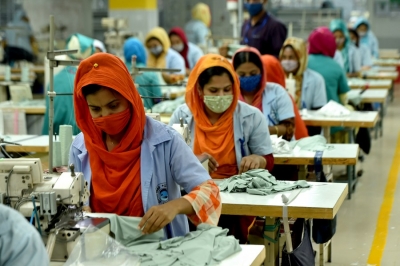
Dhaka, Nov 10 (IANS) At least two garment workers were injured in clashes with police in Dhaka’s Ashulia on Tuesday as protests demanding higher minimum wages resumed in Bangladesh after a break of several days, local media reported.
Workers blocked a road in the Jamgora area, prompting police to fire tear gas shells and sound grenades to disperse them, the Dhaka Tribune reported.
“At around 10:30 am, workers blocked the road in the Jamgora area of the Baipail-Abdullahpur Road and began demonstrating. Police initially tried to persuade them to leave the road, but the protesters began throwing bricks and stones at police, triggering clashes and chases between the two sides,” the report said.
The injured were identified as Alamgir Hossain and Rafia Begum, both employees of Sterling Style. Hospital authorities said the workers had sustained rubber bullet injuries, though it could not be independently verified whether police had actually fired rubber bullets.
Rafia Begum, who sustained a head injury, was referred to Dhaka Medical College Hospital, while Alamgir received primary treatment and returned home, Harun-or-Rashid, operations manager of Ashulia Women and Children Hospital, told the Dhaka Tribune.
Several platoons of Border Guard Bangladesh (BGB) have been deployed in the industrial area, alongside additional police personnel stationed in front of factories and at key locations to prevent further unrest.
“Separately, authorities have announced the indefinite closure of all factories operated by New Age Group in Ashulia from November 10, 2026, under Section 13(1) of the Bangladesh Labour Act, 2006, citing the ongoing labour unrest,” the report stated.
As hundreds of thousands of garment workers staged protests across several parts of the country on October 31, demanding a minimum wage of 30,000 Bangladeshi taka ($241), police had detained 21 people who they called Awami League activists and not genuine workers.
“Consistent with international standards, Bangladesh authorities should ensure that police use force only when necessary and proportionate, and that those responsible for violence are held accountable,” the US-based Human Rights Watch (HRW) had stated last week, amid condemnation by several international rights groups of the violence against protesting workers.
--IANS
ksk/dan
US moved diplomats over Iran threat: Secretary of State
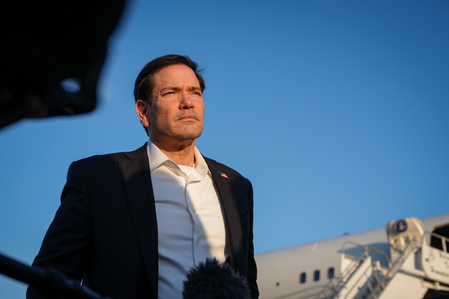
Washington, Nov 10 (IANS) The United States has moved diplomatic personnel away from security threats overseas, Secretary of State Marco Rubio said, as he voiced concern over Iranian-linked activities and the danger of a wider regional conflict.
Speaking to reporters in Paris on Monday, Rubio was asked whether the administration had neutralised a threat against American diplomats overseas that US intelligence had warned about last month.
“We’ve addressed it by moving people away from the threat,” Rubio said.
He said the safety of American personnel and their families was a constant priority. Any threat crossing a certain threshold triggered a review of security conditions, the ability to move staff and the risks of being caught in a rapidly deteriorating situation.
Rubio said the concerns extended beyond Iran. He pointed to the Houthis in Yemen and attacks involving Iranian-backed militias in Iraq, warning that a regional escalation could leave American personnel stranded if airports were shut.
“What we always have to take into consideration is not just what’s happening now, it’s what could happen,” he said.
He described an internal process in which security officials assess facilities, staff numbers, dependants and evacuation options before making recommendations. Rubio said he had acted on those recommendations when deciding to move personnel.
The secretary also sharply criticised Iran’s Islamic Revolutionary Guard Corps after being asked about cyberattacks that a reporter said French officials had attributed to the group.
Rubio said French officials had briefed him about their planned announcement but declined to say whether Washington had shared intelligence with Paris.
“What kind of sickos are these people? They attack refrigerators,” Rubio said.
He argued that the reported operation was consistent with a pattern of activity he attributed to the Iranian force.
“The IRGC’s been conducting acts of terrorism,” he said, before adding that it had also carried out “sabotage around the world for a long time.”
Rubio said he was not surprised by the French allegation and emphasised that his criticism was directed at Iran’s leadership rather than its population.
“The Iranian people are great people,” he said, drawing a distinction between ordinary citizens and those he described as a small group of violent rulers.
Responding to a question, Rubio defended Defence Secretary Pete Hegseth on a congressman’s move to seek his impeachment over the Iran war.
Rubio praised Hegseth’s performance and claimed that US operations had seriously weakened Iran’s military.
“They still retain capabilities, obviously, but they are very degraded from where they were a year ago at this time,” Rubio said.
His remarks brought together three issues facing Washington: threats to American diplomats, allegations of Iranian cyber operations in Europe and the regional consequences of confrontation with Tehran. Rubio did not provide details of the personnel movements, locations or any intelligence shared with France.
--IANS
lkj/ksk
Iran wants deal but terms ‘absurd’: US Secreatary of State
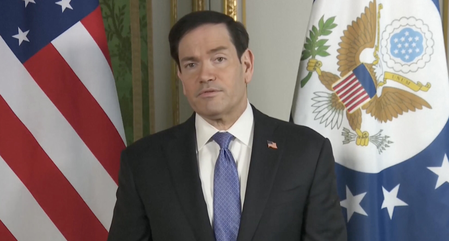
Washington, Nov 10 (IANS) US Secretary of State Marco Rubio has said Iran wants an agreement with Washington but is demanding conditions he considers unacceptable, as he warned that American sanctions are causing mounting economic pressure on Tehran.
“Iran would love a deal. The problem is, the conditions they continue to place are absurd. They're not even serious. But that could change. Eventually, you have to eat.”
“The economic pain that is being inflicted on Iran right now, on that regime, is extraordinary. It compounds; it's growing every day,” Rubio said.
“These sanctions get worse over time; they get more painful as time goes on,” he added.
Rubio placed responsibility for the economic hardship on Iran's leadership rather than American policy.
“It's all brought about by the fact that this radical regime of lunatics is imposing this on their own people. They're destroying their own country.”
Rubio criticised how Tehran had used resources after sanctions relief granted during former President Barack Obama's administration.
“When Obama gave them sanctions relief, they didn't use that money to build up hospitals, roads, bridges, and universities. They used that money to build weapons and arm proxies in the region to attack us and other countries.”
Rubio also accused Iran's leadership of fuelling conflicts across the Middle East.
“Behind every single one of these destabilising activities in the Middle East there's one common denominator — the Iranian regime.”
He added: “They are behind all the instability in the region. They are the source of instability in the region. I think the countries of the region realise that as well.”
“We work for America. We don't work for the global order; we don't work for other countries. We work for the United States.”
Asked about cyberattacks in France attributed by French officials to Iran's Islamic Revolutionary Guard Corps, Rubio declined to discuss whether Washington had shared intelligence with Paris.
He accused the force of a longstanding pattern of sabotage but distinguished Iran's leadership and its citizens.
“The Iranian people are great people,” he said.
--IANS
lkj/ksk/dan
Pakistan: Protective embankment’s collapse at Tarbela Dam project managed by Chinese contractors triggers flood
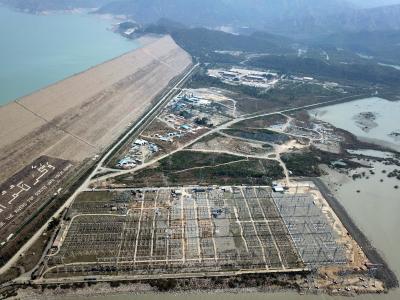
Islamabad, Nov 10 (IANS) A breach in a protective embankment at the Tarbela Dam's Tunnel Five hydropower project in Pakistan's Khyber Pakhtunkhwa province triggered a flood with officials stopping the construction work due to the collapse of protective embankment, local media reported. The project reportedly involves Chinese construction firms.
The breach of protective embankment caused an increased flow of water in the River Indus, with authorities issuing an alert for the regions near the river, Pakistan-based daily 'The Express Tribune' reported.
A weak rock mass collapsed during excavation of the second bench connecting tunnel, causing water from the intake pit to enter the tunnel and the powerhouse area, according to a statement issued by the Water and Power Development Authority (Wapda).
The statement said, "The water from the Intake Pit has been completely drained, and no further water is entering the downstream work sites," adding that dewatering from the under-construction powerhouse had began.
No casualties were reported as all workers were immediately evacuated after the incident. Wapda said that senior officers, the engineer and the contractor were analysing the situation to address any challenges to the T-5 project, The Express Tribune reported.
Tarbella Dam authorities said that the inflow of water in the River Indus was expected to reach 150,000 cusecs in the next 24 hours. It ordered all relevant department, district administrations and the public to take precautionary measures due to possible risks. It urged people to avoid going near the banks of the River Indus and to refrain from bathing, swimming or boating in the river.
Haripur Deputy Commissioner Waseem Ahmed said that water had entered the tunnel after the protective embankment collapsed. He said that one Pakistan worker was swept into the water as the tunnel flooded but they were rescued by emergency teams, adding that no casualties had been reported. He said that construction work on the T-5 project had been suspended indefinitely after the incident, while a probe has been launched to determine the cause of the breach.
The construction work was part of the Tarbela 5th Extension Hydropower Project and was planned to add 1,530 megawatts to the dam's installed generation capacity through three units of 510MW each, The Express Tribune reported.
After its completion, the project was expected to generate an average of 1.347 billion units of electricity annually and increase Tarbela Dam's installed capacity from 4,888MW to 6,418MW. The project has been delayed repeatedly, pushing its completion deadline back from the original five-year schedule to September 2027.
--IANS
akl/as
Developed countries must fulfil climate finance obligations: India at COP31
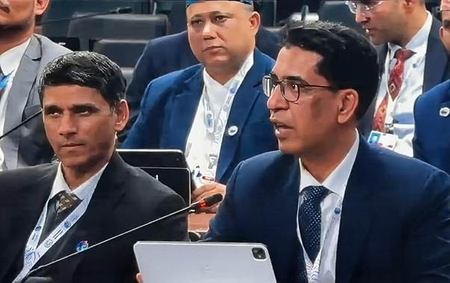
New Delhi, Nov 10 (IANS) India has called on developed countries to fulfil their climate finance obligations under Article 9.1 of the Paris Agreement and reaffirmed its commitment to climate multilateralism, seeking a fair, equitable and ambitious outcome at the UNFCCC COP31 being held in Antalya, Turkey, the Ministry of Environment, Forest and Climate Change said on Tuesday.
“On climate finance, India emphasised that public finance from developed countries remains central to catalysing climate action in developing countries and strengthening adaptation finance flows to address their vulnerabilities,” the ministry said in a press release.
Delivering India’s Opening Statement at COP31, Secretary, Ministry of Environment, Forest and Climate Change, Narendra Bhooshan expressed gratitude to Turkey and Australia for their leadership of COP31 and stated that India aligns itself with the statements made by G77 and China, LMDC, and BASIC.
“It underscored the fundamental importance of Article 9.1 of the Paris Agreement, which establishes the obligation of developed countries to provide financial resources to developing countries,” the release said.
India underlined that the UNFCCC and its Paris Agreement remain the most inclusive platforms where every country has a voice, and reaffirmed its faith in the process, rooted in equity and the principle of Common But Differentiated Responsibilities and Respective Capabilities (CBDR-RC).
“Highlighting the growing challenges posed by the prospect of crossing 1.5°C warming, India stressed that equity has become particularly urgent to ensure that no one is left behind in the collective effort to address climate change,” the ministry said.
India also underscored that just transition and meeting adaptation needs remain significant challenges, particularly for the Global South, where these are closely intertwined with the challenge of development itself.
The two-week COP31 opened in Antalya on Monday with its President Murat Kurum calling on countries to turn climate promises into practical action, as the world confronts increasingly interconnected climate, economic and geopolitical challenges.
Kurum called for COP31 to become an “implementation COP”, focused on closing the gap between commitments made in negotiating rooms and tangible improvements in people’s lives.
According to the United Nations Environment Programme’s (UNEP) “2026 Adaptation Gap Report: Ready? Not”, international public adaptation finance flows from developed to developing countries are far below estimated needs of $305 billion annually by 2035.
--IANS
ksk/as