
Trump cites nuclear threat, signals Iran endgame

Washington, April 6 (IANS) US President Donald Trump on Monday defended the war with Iran, saying it is aimed at stopping Tehran from getting nuclear weapons and could end quickly if conditions are met.
“They're foolish, because the war is about one thing, Iran cannot have a nuclear weapon,” Trump told reporters at the White House.
He said the conflict could end soon if Iran complies with US demands. “Well, it could end very quickly, the war, if they do what they have to do. They have to do certain things,” he said.
Trump linked the current war to his earlier decision to exit the Obama-era nuclear deal. “Had we not broken the Barack Hussein Obama agreement… Israel would have been gone, extinguished,” he said.
He also claimed US actions had reshaped Iran’s leadership. “We've had total regime change… The first regime was taken out. The second regime was taken out,” Trump said, adding that the current group negotiating with Washington is “much more reasonable.”
Trump said talks with Iran were being held “in good faith” and described the current interlocutors as “not as radicalized.”
At the same time, he struck a hard tone on military operations. “Because we are obliterating that country. And I hate to do it, but we're obliterating,” he said.
He said Iran’s military capacity had been largely degraded. “They can't fight back. They have no capability… they have some missiles left. They have some drones left, but essentially, they have no capability,” Trump said.
The president also pointed to a recent mission to rescue two downed US pilots in Iran as a sign of US military strength. “What we did yesterday is we picked up not one, we picked up two,” he said.
Trump said the US still has multiple options. “We could leave right now, and it would take them 15 years to rebuild what they have… but I want to finish it up,” he said.
He reiterated that the war is tied to preventing Iran from becoming a nuclear power. “Iran is ready to not have a nuclear weapon… " You can't put nuclear weapons in the hands of a lunatic,” Trump said.
--IANS
lkj/dan
Pakistan’s rhetoric of ‘dignity’ amid UAE debt repayment pressure cover for its ‘beggar’s bowl’ image: Report
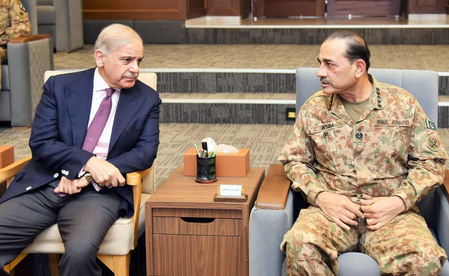
Islamabad, April 6 (IANS) Pakistan's chronic dependence on external debt reflects decades of fiscal mismanagement, entrenched elite capture and failure to broaden the tax base or restructure loss-making state-owned corporations, a report said on Monday.
According to a report in the ‘Khalsa Vox', Pakistan has announced to repay $3.5 billion in debt to the United Arab Emirates (UAE) by the end of April 2026, projecting the decision as an “act of sovereign pride”.
It added that Abu Dhabi had sought the immediate repayment of funds originally extended in 2019 to help stabilise Pakistan’s balance of payments.
The report argued that Islamabad's narrative of “dignity” rings hollow when confronted with the facts.
“Pakistan had actively sought a two-year rollover and a reduction in interest rates from 6.5 per cent to around 3 per cent, citing improved credit ratings and lower global borrowing costs. The UAE refused. What Islamabad presents as a principled stand is, in reality, acquiescence to a creditor’s demand amid regional turbulence—the UAE’s own liquidity needs heightened by Middle East tensions following the US-Israel-Iran conflict,” the report detailed.
“For decades, Gulf deposits have functioned as de facto lifelines; their abrupt withdrawal reveals how fragile that dependence remains. This episode underscores a deeper contradiction in Pakistan’s foreign policy: a persistent desperation to project global standing while its economic reality tells a different story,” it added.
Asserting that Pakistan’s rhetoric of dignity is a cover for its “beggar’s bowl” image, the report said that the rush to repay is aimed at resetting the creditor-debtor dynamic and impressing the International Monetary Fund (IMF) and global markets.
Rather the move by Pakistani authorities, it warned, risks signalling weakness — “a country so cash-strapped it must liquidate reserves to avoid the optics of prolonged begging.”
“The setback is multidimensional. Reserves are not abstract numbers; they underpin import financing for fuel, food and machinery in an economy already grappling with inflation, low growth and structural deficits. A sharp drawdown could force tighter monetary policy or fresh borrowing on harsher terms, undermining the very stability the repayment ostensibly protects. It also strains relations with other Gulf partners who may now question Pakistan’s reliability as a steward of deposits," the report emphasised.
“Far from enhancing global standing, this move advertises vulnerability. Pakistan’s leaders appear more concerned with performative sovereignty than sustainable sovereignty,” it further stated.
The report stressed that if the narrative of “national dignity” is to hold any significance, Pakistan must begin building an economy that does not swing from one rollover to repayment crisis.
“Pakistan’s decision to return the UAE funds may salve short-term pride, but it delivers a long-term economic blow. The world sees not a confident power but a nation still trapped in the cycle it claims to have broken. Until Islamabad confronts this reality—rather than dressing it in the language of dignity—such setbacks will recur,” it noted.
--IANS
scor/as
Bangladesh faces LDC graduation setback amid economic instability
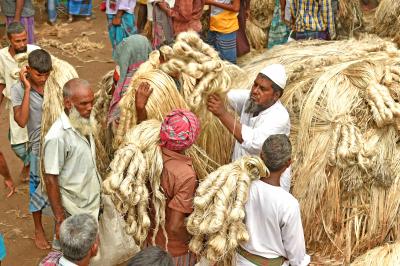
Dhaka, April 6 (IANS) Bangladesh faces significant challenges in preparing to graduate from the Least Developed Countries (LDCs) list amid current macroeconomic instability and weak performance even as discussions continue on pre-graduation risks, local media reported.
Bangladesh's Finance Minister Amir Khosru Mahmud Chowdhury chaired a meeting on LDC graduation held in Dhaka on Sunday. During the meeting, the UN-OHRLLS (United Nations Office of the High Representative for the Least Developed Countries, Landlocked Developing Countries and Small Island Developing States) presented a review report assessing Bangladesh’s preparedness, underscoring the key gaps in preparation.
Mohammad Abdur Razzaque, Chairman of the Dhaka based organisation RAPID (Research and Policy Integration for Development), presented various aspects of the UN report.
The report highlights multiple shortcomings and risks in Bangladesh’s preparation for LDC graduation, warning that difficult political transitions and prolonged economic crises are undermining the country’s socio-economic achievements and putting graduation at risk, leading Bangladeshi daily Prothom Alo reported.
There is also lack of preparation to tackle potential trade losses following graduation. Moreover, given the current macroeconomic instability and sluggish performance, reportedly raising concerns over pre-graduation risks.
According to the UN report, Bangladesh's financial preparedness to meet the challenges of LDC graduation remains weak, with limited implementation of the Smooth Transition Strategy (STS).
The report indicates that citing insufficient preparedness, a three year extension for Bangladesh's LDC graduation has been requested.
Speaking after the meeting, Bangladesh's Finance Minister Chowdhury said that given the current circumstances, Bangladesh cannot proceed with graduation from LDC status.
Describing the state of the economy as very poor, he noted that any consideration of LDC graduation would come only after addressing the difficult economic situation inherited from the previous Muhammad Yunus led interim government, Prothom Alo reported.
Following the Bangladesh Nationalist Party (BNP) government assuming office, Bangladesh sent a letter to the UN in February requesting a delay in LDC graduation, a position Chowdhury reiterated on Sunday.
The United Nations classifies the world’s less advanced developing countries as Least Developed Countries (LDCs) granting them various forms of support and concessions from the international community aimed at promoting development and eventual graduation.
The Committee for Development Policy (CDP), under the UN Economic and Social Council (ECOSOC), recommends which countries should transition out of LDC status.
LDC countries are evaluated every three years, with graduation eligibility determined by three criteria: per capita income, human resources, and economic and environmental vulnerability.
--IANS
scor/as
Human sale remains dark blot on Pakistan’s conscience: Report
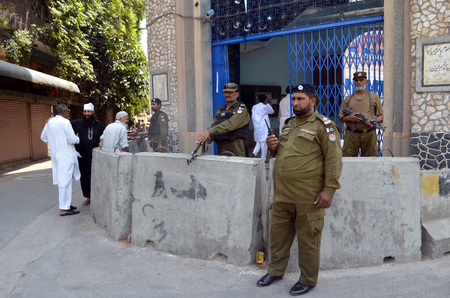
Islamabad, April 6 (IANS) The recent detention of a former Elite Force officer, who is believed to have been involved in the 2023 Greek boat capsize incident, showcases Pakistan government's laidback approach to human trafficking, a report has stated.
"Human sale is a dark blot on Pakistan’s conscience. Although global collaborations have attempted to end the scourge, our lawmakers’ efforts remain a letdown. Thousands of Pakistanis are traded annually, yet the conviction rate refuses to improve. Recently, the FIA arrested seven suspects in fake visas, visa fraud and human trafficking cases from Lahore, Sialkot, Multan and Bahawalpur," an editorial in Pakistan's leading daily Dawn mentioned.
"Separately, the agency has detained a most-wanted human trafficker. The fact that he is a former Elite Force officer who is believed to have been involved in the 2023 Greek boat tragedy is a scathing indictment of the government’s approach to crime," it added.
Human traffickers web of deceit increases in times of conflict and rising poverty. 2025 was the second consecutive year, where more than 2,700 fatalities were reported across the world. According to the data collected under the International Organisation for Migration’s Missing Migrants Project, at least 2,722 people from the Asia-Pacific region died or disappeared during illegal international migration.
As many as 109 Pakistani nationals were among at least 2,722 persons from the Asia-Pacific region who died or disappeared around the world in 2025 while trying to enter other countries illegally, according to the latest statistics by IOM.
"Clearly, there is a long way to go before the rights of victims of human trafficking and smuggling are guaranteed, and citizens choose not to leave. Law-enforcement has indeed been empowered by many laws. But social sins thrive amid legal ambiguities, influential patronage, corruption and a culture of impunity," an editorial in Dawn mentioned.
The 2018 Prevention of Trafficking in Persons Act, despite amendments, imposes fines instead of mandatory imprisonment, and the Prevention of Smuggling of Migrants Act has remained ineffective due to its poor implementation.
Last week, Pakistan's Federal Investigation Agency (FIA) confirmed the arrest of a most wanted human trafficker on FIA red book who was involved in the June 2023 Greece boat capsize. The accused was earlier serving in Pakistan's Elite Force.
In January, the arrested trafficker had resisted and attacked a FIA team during a raid conducted in Majra Shumali village of Pakistan's Gujrat district. Police had booked him for attempted murder and other changes, Pakistan's leading daily Dawn reported.
According to a senior FIA official, the most-wanted human trafficker Waqas Ali, alias Waqas Butt, was arrested by FIA Composite Circle, Gujrat. The accused is mentioned in the red book of 2025 and is a proclaimed offender involved in several FIA cases.
The accused was directly connected to the Libya shipwreck in 2023, according to the official. He extorted around Pakistani Rupees (PKR) 3 million from each of the affected families by promising to send them to Greece through illegal sea routes from Libya. The accused is a former Elite Force constable dismissed from the service in 2023 from Gujrat police.
--IANS
akl/as
Pakistan condemned for violating global ban on mercury-added cosmetics
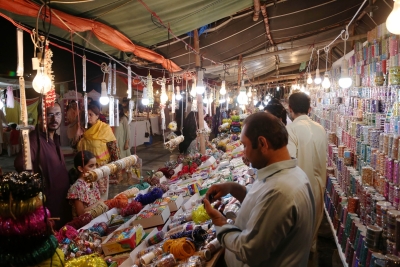
Manila, April 6 (IANS) EcoWaste Coalition - the toxics watchdog group - on Monday called on the government of Pakistan to address its apparent failure to enforce the global ban on mercury-added cosmetics. The appeal came ahead of World Health Day on Tuesday.
The Philippines-based group, which has been exposing dangerous skin-lightening products with mercury additives since 2011, condemned Pakistan’s persistent violation of the global ban on mercury-added cosmetics.
It cited detection of outrageous levels of mercury, up to 33,970 parts per million (ppm), in 18 out of 20 newly purchased products labelled as made in Pakistan, including eight products bearing the Pakistan Standards mark.
“The unrelenting manufacture of so-called beauty creams in Pakistan with hidden mercury content is unlawful and unacceptable. Exported with impunity and offered for sale in the marketplace, these highly contaminated products pose a serious threat to the health of women and their families, especially the young children,” said Aileen Lucero, National Coordinator, EcoWaste Coalition.
“We join the over 20 international health and environmental organisations that have earlier called on Pakistan to stop the domestic production and global trade of these dangerous cosmetics with mercury. If not now, when?” she questioned.
According to the group, from March 1 to 31 this year, the EcoWaste Coalition, as part of its observance of the National Women’s Month, purchased a total of 20 products manufactured by 14 Pakistani cosmetic companies that claim to lighten the skin tone and remove signs of ageing.
Thirteen of these products were purchased from third-party online sellers on two prominent Philippines based e-commerce platforms - Lazada and Shopee – and seven from beauty product stalls operating in Pasay City.
Five of the products, it said, were marked “export quality".
“Of the 20 products purchased and analysed using a handheld Olympus Vanta M Series X-Ray Fluorescence (XRF) device, 18 contained mercury up to 33,970 ppm, of which 11 had mercury above 20,000 ppm. All the 18 products had mercury way in excess of the 15 ppm limit for waste contaminated with mercury and should be declared hazardous waste. Also, 13 of the mercury-tainted products were manufactured in 2025, two in 2024, and three in 2023, way past the 2020 and 2025 phase-out deadlines,” the group stated.
The EcoWaste Coalition stressed that the discovery of highly contaminated skin lightening products underscores the urgent need for parties to the Minamata Convention on Mercury, including Pakistan, to firmly enforce the ban on mercury in cosmetics.
--IANS
scor/as
Greek PM proposes ban on ministers holding parliamentary seats after subsidy scandal
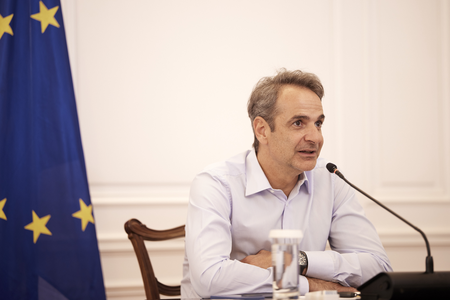
Athens, April 6 (IANS) Greek Prime Minister Kyriakos Mitsotakis on Monday proposed an institutional reform banning government ministers from concurrently serving as Members of Parliament, a move aimed at enhancing transparency and modernising state governance.
Under the proposal, which would take effect after the 2027 general elections, any lawmaker appointed to the cabinet would be required to temporarily relinquish their parliamentary seat. The vacancy would be filled by the next eligible candidate on the party's electoral list for the duration of the minister's tenure.
The initiative comes amid an ongoing investigation by the European Public Prosecutor's Office (EPPO) into the alleged misuse of European Union agricultural subsidies, with several former ministers reportedly mentioned in case files submitted to Greek authorities, Xinhua News Agency reported.
Last week, Mitsotakis carried out a cabinet reshuffle. Meanwhile, the Greek parliament is expected to initiate procedures in the coming days to lift the immunity of 11 lawmakers implicated in the investigation.
In a statement, the Prime Minister urged the EPPO to promptly clarify "how many and which individuals" may face prosecution once parliamentary immunity is lifted. He noted that those under scrutiny have the right to defend themselves following what he described as significant personal and political repercussions.
Mitsotakis said the proposed reform forms part of broader efforts to modernize the Greek state and strengthen institutional transparency. "I strive to transform Greece into a modern European state," he said, adding that the measure is intended to address long-standing systemic deficiencies.
Since last year, nearly two dozen former ministers and members of parliament, all affiliated with the ruling New Democracy party, have been named in three criminal case files submitted by the EPPO. The investigation focuses on the alleged mismanagement of farm subsidies between 2019 and 2021.
Following the cabinet reshuffle, the main opposition party, PASOK-KINAL, renewed its call for early elections. The current government's term is scheduled to expire in June 2027.
--IANS
akl/as
British parliamentary group voices concern over kidnapping and forced marriage of Christian girl in Pakistan
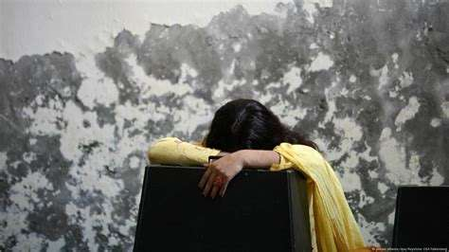
Islamabad, April 6 (IANS) A British parliamentary group has expressed deep concerns over the case of a Christian girl, Maria Shehbaz, who was allegedly kidnapped and forced to marry in Pakistan.
The parliamentary group's statement comes after Pakistan's Federal Constitutional Court termed the marriage of Maria Shehbaz lawful. However, the girl's father has said that she was underage at the time and was forced to convert. For years, girls from Christian and Hindu communities in Pakistan have been targetted by older Muslim men for rape, forced conversion and forced marriage, Christian Today reported.
In a statement, the All-Party Parliamentary Group for Pakistani Minorities (APPG) said that there has been "a broader and well-documented pattern of allegations concerning the abduction, forced conversion, and marriage of girls from religious minority communities, particularly Christians and Hindus." Minorities in such cases often face legal and social hurdles in getting justice while courts frequently support abductors.
"The protection of children and the safeguarding of religious minorities are fundamental principles recognised across all legal systems. Allegations of forced marriage and conversion, particularly involving minors, demand the highest level of scrutiny, transparency, and sensitivity to ensure that justice is both done and seen to be done," said APPG co-chair Lord Alton.
The group urged the Pakistani government to carry out investigation into allegations of forced marriage, especially those involving minors and implementation of laws. It also demanded greater international cooperation to protect religious minorities in Pakistan, Christian Today reported.
Last week, the APPG for Pakistani Minorities had voiced concern over reports that Islamabad's Capital Development Authority (CDA) is preparing demolitions operations targeting informal settlements largely inhabited by low-income Christian families.
In the statement shared on Facebook, the APPG for Pakistani minorities said that residents in several informal settlements have received notices indicating imminent clearance. It warned that forced evictions conducted without legal safeguards or alternative housing could violate constitutional guarantees of Pakistan and international human rights allegations. The APPG urged Pakistan government, the CDA and local authorities to suspend demolition plans and hold talks with affected communities.
--IANS
akl/as
Pakistan lacks coherent plan to combat HIV as cases continue to rise: Report

Islamabad, April 6 (IANS) Recent reports have indicated that Pakistan has 84,421 registered HIV/AIDS patients, with Punjab province recording the most number of cases, followed by Sindh, Khyber Pakhtunkhwa, Balochistan and the Islamabad Capital Territory. Healthcare authorities in Pakistan must create a coherent and sustained plan to combat HIV, a report has cautioned.
Transmission can occur through unsafe practices like barber services, dental procedures and related factors. According to the World Health Organisation (WHO), majority of HIV patients in Pakistan do not know about their condition.
HIV/AIDS cases have increased by 200 per cent in Pakistan over the past 15 years - from 16,000 in 2010 to 48,000 in 2024. The WHO estimated that around 350,000 people have HIV in Pakistan, however, nearly eight in 10 affected individuals remain unaware about their status, according to an editorial in Pakistan's leading daily 'The News International'. Children are also getting infected by HIV/AIDS, with cases among those aged between 0-14 years increasing from 530 in 2010 to 1,800 in 2023.
"HIV has long remained a taboo in this part of the world. Misinformation surrounding the disease has created a situation where patients often blame themselves if they contract the virus. In the past, such individuals were ostracised and forced to live in isolation. While there has been some improvement, the situation is still far from adequate. Unawareness of the disease continues to put others at risk," the editorial mentioned.
"There have been cases where individuals contracted HIV after using equipment previously used on infected patients. Criminal negligence – such as the reuse of medical equipment – further exacerbates the crisis. The harrowing example of a hospital in rural Sindh, where hundreds of children were infected due to the reuse of single-use syringes and other tools, is still a terrifying reminder of the extent of systemic failure," it added.
Healthcare authorities must create a coherent and sustained plan to combat HIV. Reducing stigma and encouraging people to undergo testing and treatment should be the first step. Awareness campaigns should be launched in Pakistan to share details regarding the virus with the people.
According to the editorial, HIV education should be included in school curriculum and religious and community leaders should be asked to share accurate information. The government should increase free or low-cost testing centres for people, introduce rapid test kits and encourage routine testing in hospitals.
--IANS
akl/as
Israel will continue with full force on all fronts until threat is removed: Netanyahu
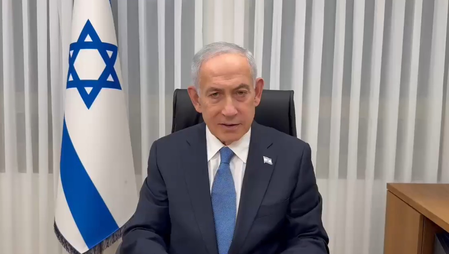
Jerusalem, April 6 (IANS): Israeli Prime Minister Benjamin Netanyahu on Monday vowed that Israel will continue its assault on Iran with full force on all fronts until the threat is removed and the war's objectives are fulfilled. Netanyahu expressed Israel's resolve while welcoming the killing of Islamic Revolutionary Guard Corps (IRGC) head of intelligence Majid Khademi and Commander of Unit 840 in the Quds Force, Asghar Bagheri.
He also warned of severe consequences for those who direct terror against Israel or build the "Iranian axis of evil."
"Another central arm of the Iranian terror regime has been severed. Tonight, we eliminated Majid Khademi, head of the Intelligence Division in the Revolutionary Guards, one of the Iranian regime's senior officials, who had only recently assumed his role after his predecessor was eliminated. In addition, we eliminated Asghar Bagheri, commander of Unit 840 in the Quds Force, who is responsible for attacks against Jews and Israelis around the world," Netanyahu posted on X.
"Whoever acts to murder our citizens, whoever directs terror against the State of Israel, whoever builds the Iranian axis of evil — their blood is upon their head. We are acting with strength and determination — we will reach everyone who seeks to harm us. We will continue with full force, on all fronts, until the threat is removed and all the war's objectives are achieved," he added.
Earlier in the day, Israel Defence Forces (IDF) said that it has killed IRGC's Head of Intelligence Majid Khademi. In the statement shared on X, IDF said that Khademi worked to advance terrorist attacks around the world and was responsible for monitoring people of Iran as part of the regime’s suppression of internal protests.
"ELIMINATED: Majid Khademi, the Head of Intelligence of the IRGC. Khademi was one of the IRGC’s most senior commanders and had accumulated extensive experience over many years. Khademi worked to advance terrorist attacks worldwide, and was responsible for monitoring Iranian civilians as part of the regime’s suppression of internal protests," IDF posted on X.
In a separate statement shared on X, IDF also confirmed the killing of Asghar Bagheri. "ELIMINATED: Asghar Bagheri, Commander of the Quds Force’s Special Operations Unit. In recent years, Bagheri advanced numerous attacks against both Israel and worldwide. In addition, Bagheri personally commanded operations targeting IDF soldiers on the Syrian-Israel border."
On Sunday, IDF said that it had killed Head of Commerce at the IRGC’s Oil Headquarters in Tehran, Mohammad Reza Ashrafi Kahi.
"ELIMINATED: Mohammad Reza Ashrafi Kahi, the Head of Commerce at the IRGC’s Oil Headquarters in Tehran. Ashrafi managed the commercial operations of the Oil Headquarters, estimated at billions of dollars annually, and advanced the development of the IRGC’s military capabilities, as well as those of the Houthis, Hezbollah and Hamas," it posted on X.
--IANS
akl/as
Nine killed, several injured as heavy rains batter eastern Afghanistan
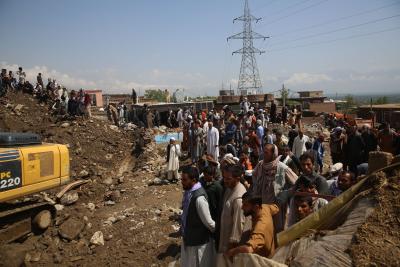
Kabul, April 6 (IANS) At least nine people were killed and nine others injured after the roofs of several houses collapsed in Eastern Afghanistan following heavy rains and floods that swept across several parts of the country, local media reported on Monday.
The deaths were reported in Afghanistan's Nangarhar and Maidan Wardak provinces. Officials in Nangarhar said six people were killed as roofs of three houses collapsed in Pachiragam, Khogyani and Spin Ghar districts after heavy rainfall. According to local reports, seven people, including children, were injured, in the incident, Afghanistan's leading news agency Khaama Press reported.
Taliban police spokesman Mohammad Yousuf Israr said a woman and two children were killed in Maidan Wardak after the roof of a house collapsed in Jaghato district during heavy rain on Sunday. Local authorities said two people were injured in the same incident.
The latest casualties have been reported as floods wreak havoc across various provinces of Afghanistan, with roads, farmland and residential areas heavily impacted over the past 10 days.
On Sunday, disaster officials said that at least 99 people were killed while 154 others were injured in rain-related incidents and floods in Afghanistan. Furthermore, thousands of families have lost homes, crops and access to basic services due to heavy rains and floods.
Aid groups and meteorological authorities have predicted that more rain is expected in several parts of Afghanistan, raising the risk of further flash floods, landslides and structural collapses. Homes made of mud and other fragile materials in rural areas of Afghanistan are susceptible to collapse during prolonged rains.
Meanwhile, the United Nations Human Settlements Programme has said that more than 31,000 people were affected by flash floods in Afghanistan in 2025. In a statement, the United Nations Human Settlements Programme emphasised the need for disaster-resilient infrastructure, Khaama Press reported.
The agency said it was making efforts in cooperation with the Special Trust Fund for Afghanistan to help people better deal with future shocks.
--IANS
akl/as