
Yemen’s Houthis claim fourth attack on US aircraft carrier in 72 hours

Sanaa, March 19 (IANS) Yemen's Houthi group said Wednesday that it has targetted the USS Harry S. Truman aircraft carrier in the Red Sea for the fourth time in the past 72 hours.
In a statement aired by the group's al-Masirah TV, Houthi military spokesperson Yahya Sarea said the operation was conducted with cruise missiles and drones, claiming it had succeeded in thwarting a "hostile US air attack."
Sarea also vowed in the statement that the group would continue attacks on Israel until "the brutal aggression against Gaza ceases," referring to Israel's heavy bombardment of Gaza since early Tuesday, which has killed more than 400 people.
The tension between the Houthis and the US military escalated as the United States launched new airstrikes on Yemen on Saturday after the Houthi group threatened last week to resume attacks on Israeli targets until humanitarian aid is allowed into Gaza.
According to al-Masirah TV, the US military conducted fresh strikes on Yemen's northern province of Saada and the port city of Hodeidah on Tuesday night, following a Houthi missile attack on Israel's Nevatim Air Base earlier in the day, Xinhua news agency reported. So far, no casualties were reported from either side.
The incident came after the Houthi group said earlier in the day that it "targetted the Nevatim Air Base (in Israel) with a 'Palestine-2' hypersonic missile, which successfully achieved its goal."
The Israeli military said in a statement that the missile was "intercepted by the IAF (Israeli Air Force) before crossing into Israeli territory."
The United States launched new airstrikes on Yemen on Saturday after US President Donald Trump vowed to continue attacks until the Houthis end attacks on Red Sea shipping.
Last week, the Houthi group said it would resume attacks on Israeli ships in the Red Sea, Arabian Sea, Gulf of Aden, and Bab al-Mandab Strait until crossings into Gaza are reopened and humanitarian aid is allowed in.
On Tuesday, Houthi leader Abdulmalik al-Houthi threatened in a televised speech aired by al-Masirah to "resume escalation at its highest levels and will do everything we can against" Israel if the renewed Israeli assault on Gaza does not stop.
--IANS
int/as
Trump, Putin agree on partial ceasefire in Russia-Ukraine war (Ld)
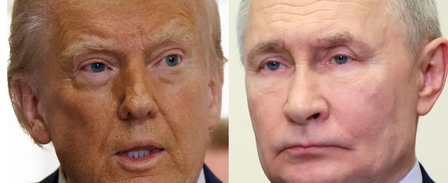
Washington, March 19 (IANS) US President Donald Trump and his Russian counterpart Vladimir Putin on Tuesday agreed to a ceasefire in the Russia-Ukraine war with a pause on attacks on energy and infrastructure and to begin negotiations for a full ceasefire and permanent peace starting immediately.
The two leaders also discussed bilateral relations and the situation in West Asia in a lengthy phone call that lasted nearly two hours.
The plan agreed by them will need to be affirmed by Ukraine.
"The leaders agreed that the movement to peace will begin with an energy and infrastructure ceasefire, as well as technical negotiations on implementation of a maritime ceasefire in the Black Sea, full ceasefire and permanent peace," said the White House in a readout of the call.
"These negotiations will begin immediately in the Middle East (West Asia)."
The two leaders "agreed this conflict needs to end with a lasting peace".
The readout also said Trump and Putin "stressed the need for improved bilateral relations between the US and Russia" and that "a future with an improved bilateral relationship between the US and Russia has huge upside. This includes enormous economic deals and geopolitical stability when peace has been achieved".
They also discussed West Asia "broadly", the readout said "as a region of potential cooperation to prevent future conflicts".
Iran also figured in their discussion.
"The two leaders shared the view that Iran should never be in a position to destroy Israel."
An hour into the phone call, Dan Scavino, the Deputy Chief of Staff to President Trump, posted on X: "Happening Now -- President Trump is currently in the Oval Office speaking with President Vladimir Putin of Russia since 10 a.m. EDT."
"The call is going well, and still in progress."
He posted an update 40 minutes later: "Update: Call still in progress..."
President Trump first announced his plans for a call late Sunday on the way back to Washington D.C. from his Mar-a-Lago residence in Florida.
The call follows talks between Steve Witkoff, Trump's West Asia envoy, and President Putin in Moscow last week.
Witkoff has said the meeting lasted three to four hours.
That meeting came on the heels of a meeting between US' Secretary of State Marco Rubio and the National Security Advisor (NSA) Mike Waltz with Ukrainian officials in Jeddah, Saudi Arabia.
Ahead of the Tuesday call, H.R. McMaster, former NSA to Trump in the first term, told Fox News that Putin's strategy is "to get Trump and the US to accept a deal that is unacceptable to the Ukrainians and then try to turn the US not only against Ukraine but against Europe".
The call marks a significant step in President Trump's efforts to end the Russia-Ukraine war, which he has maintained would never have taken place if he was in office at the time.
--IANS
yrj/khz
Trump-Putin call ‘going well’, says White House

Washington, March 18 (IANS) US President Donald Trump and Russia's President Vladimir Putin have been on the phone for more than an hour and the White House said "the call is going well".
A readout of the call will be issued later.
The two leaders are expected to discuss the US plan for a 30-day ceasefire in the war between Russia and Ukraine.
Kyiv has already conveyed its acceptance of the plan.
Putin has supported it in-principle but put forward certain conditions: chiefly, Ukraine will not use the ceasefire to mobilise or train troops or receive military support.
"Happening Now -- President Trump is currently in the Oval Office speaking with President Vladimir Putin of Russia since 10 a.m. EDT," Dan Scavino, Deputy Chief of Staff to President Trump, wrote on X.
"The call is going well, and still in progress."
He posted an update 40 minutes later: "Update: Call still in progress..."
President Trump first announced his plans for a call late Sunday on the way back to Washington D.C. from his Mar-a-Lago residence in Florida.
The call follows talks between Steve Witkoff, Trump's West Asia envoy, and President Putin in Moscow last week.
Witkoff has said the meeting lasted three to four hours.
That meeting came on the heels of a meeting between the US's Secretary of State Marco Rubio and the National Security Advisor (NSA) Mike Waltz with Ukrainian officials in Jeddah, Saudi Arabia.
Ahead of the Tuesday call, H.R. McMaster, former NSA to Trump administration in the first term, told Fox News, Putin's strategy "to get Trump and the US to accept a deal that is unacceptable to the Ukrainians and then try to turn the US not only against Ukraine but against Europe".
The call marks a significant step in President Trump's efforts to end the Russia-Ukraine war, which he has maintained would never have taken place if he was in office at the time.
--IANS
yrj/khz
Afghan government urges Pakistan to halt expulsion of refugees as deadline approaches

Kabul, March 18 (IANS) Afghanistan has urged Pakistan to stop expulsion of Afghan refugees as Islamabad is preparing to expel even the holders of Afghan Citizen Cards (ACC) after the deadline ends on March 31.
At a meeting of the High Commission for Refugee Affairs, chaired by Afghan Deputy Prime Minister for Administrative Affairs Abdul Salam Hanafi, officials emphasised the need for a coordinated and mutual strategy for the return of Afghan refugees, Afghan media outlet TOLOnews reported on Tuesday.
"Our request to neighbouring countries, especially Pakistan, is to reconsider this decision. A unilateral decision is not in their interest, nor in ours," said Abdulmutalib Haqqani, Afghan spokesperson for the Ministry of Refugees and Repatriation.
Several Afghan refugees holding ACC in Pakistan have complained about increasing challenges in the country. They stated that despite holding these cards they are faced with forcible deportation. "Refugees holding ACC cards are not illegal. They are Afghan refugees who have been living here for the past 25 years," TOLOnews quoted Malik Awal Shinwari, one of the Afghan refugees in Pakistan, as saying.
The Pakistani government has made it clear that all Afghan refugees including the ones with legal documents have been asked to leave Pakistan before March 31, which has been set as the deadline to leave the country voluntarily. In case any illegal foreigner was found in the district, he/she would be rounded up and deported back to their home countries.
Earlier, the ruling party of Pakistan's province of Khyber-Pakhtunkhwa (KP) slammed the centre's policy to deport Afghan refugees back as "inhumane". Chief Minister Ali Amin Gandapur of KP denounced the policy of Pakistan's federal government on Afghan refugees as "inhumane and oppressive", stating that his government would decide whether to follow the Centre's directives to expel Afghans residing in the province after March 31.
KP hosts the largest Afghan refugee population in Pakistan, with Peshawar accommodating the highest number. According to the United Nations, more than 800,000 Afghans have returned to Afghanistan since Pakistan started its repatriation policy.
Many refugees have been living in the province for decades, running businesses or working in various sectors. Afghan refugees living in KP have also urged Pakistani authorities not to force them into leaving the country by March 31.
Several media reports revealed that Afghan refugees are facing continuous harassment and abuse in Pakistan. They have called on the Afghan Government and Human Rights organisations to take action on their behalf.
Many refugees stated that despite holding valid legal documents, they face the threat of illegal detention, deportation, and discrimination. "Pakistani police have been conducting brutal raids, even in the middle of the night, storming homes and arresting Afghan refugees," said an Afghan journalist.
--IANS
int/scor/as
Pakistan Parliament urges national consensus against terrorism, slams PTI for current situation

Islamabad, March 18 (IANS) A crucial day-long, in-camera meeting of the Pakistan's Parliamentary Committee on National Security (PCNS) on Tuesday vowed to eliminate terror elements with full force and took some major decisions to tackle the menace of terrorism in the country. The meeting, attended by the civil and military top brass, passed a declaration condemning terrorism in all of its forms.
The committee emphasised on a unified political and strategic approach, calling on a national consensus on counterterrorism efforts. It urged all stakeholders for an urgent and immediate implementation of the National Action Plan (NAP) and the Azm-e-Istehkam strategy as part of the national counter-terrorism framework to root out terror networks, disrupt their logistical support, and sever links between terrorism and organised crime.
The committee reiterated its full support for the military establishment and the armed forces of Pakistan, acknowledging their sacrifices and commitment to national defence. It also raised serious concerns over what it termed as the misuse of social media platforms by terrorists and their supporters to spread anti-state propaganda, which the committee stated is also used for recruitment and coordinating attacks.
The committee stressed and warned that no group, individual, or institution collaborating with anti-state terror elements would be allowed to destabilise the country's harmony and solidity.
The members were given a briefing about the country's security situation by Chief of Army Staff General Syed Asim Munir.
It was also agreed that Pakistan will use its diplomatic outreach to engage with regional and global leaders and disseminate the challenges it is faced with in terms of security and terrorism. The committee vowed to use all resources and means to tackle the spread of anti-state activities in Pakistan, which it claimed were emanating from Afghanistan and its extended support to extremist militant groups like the Tehreek-e-Taliban Pakistan (TTP) and the Baloch Liberation Army (BLA).
During the in-camera session, the military establishment gave a detailed briefing about the security situation in Pakistan's violence-hit Khyber Pakhtunkhwa (KP) and Balochistan provinces with insights into the ongoing counter-terrorism operations.
Interestingly, the session was boycotted by the opposition party Pakistan Tehreek-e-Insaf (PTI), which opposed any decision to carry out another military operation in the country. The absence of the PTI was criticised by Prime Minister Shehbaz Sharif and Defence Minister Khawaja Asif.
Sharif accused the previous Imran Khan government for allowing thousands of TTP militants in the country and also releasing hundreds of militants from the Pakistani jails. He said that the National Action Plan (NAP) that was introduced as the country's strong resolve against terrorists was ignored during Khan's tenure and the country is faced with fresh security challenges due to the former PM's ignorance.
"It is because of the disastrous decision of the previous government that we are faced with the challenging situation today. It's time that we all identify the faces of all those who are responsible for working against Pakistan's national interest," said Sharif.
Former Pakistani Foreign Minister Bilawal Bhutto Zardari also emphasised on the need to re-strategise the country's foreign police and use it to engage the global community about the terrorism, that he said is radiating from Afghanistan.
Bhutto blasted Afghanistan as the country which he said has become the epicentre of terrorism.
"Afghanistan has become the epicentre of terrorism. Terrorism is being sponsored, supported, facilitated, harboured and being spread into Pakistan from Afghanistan," he said.
Experts reckon that the coming days may be critical as Pakistan gives open approval to the military establishment and the law enforcement agencies to use all means necessary against terrorists spreading unrest in the country.
It is expected that cross-border counter-terrorism operations in Afghanistan may also be approved.
--IANS
int/hamza/as
Taiwan detects ‘massive’ Chinese military presence in region

Taipei, March 18 (IANS) Amid growing security concern and aggressive posturing of China, Taiwan stated on Tuesday that it has detected a number of Chinese aircraft and warships operating around the country over the past 24 hours that crossed the meridian line of the Taiwan Strait and entered air defence identification zone.
According to the Defence Ministry of Taiwan, 59 sorties of Chinese military aircraft and nine Chinese naval ships operating around Taiwan were detected on Tuesday morning. It said that 43 out of 59 sorties crossed the median line of the Taiwan Strait and entered Taiwan’s northern, central southwestern and eastern Air Defence Identification Zone.
The ministry stated that the Taiwan Armed Forces have monitored the situation and employed Combat Air Patrol aircraft, navy ships, and coastal missile systems in response to detected activities of Chinese forces.
Meanwhile, Taiwan's first-ever 'immediate combat response' drills entered the second day on Tuesday, with the Army simulating anti-landing combat to keep Chinese forces from reaching Taipei, the country's capital and main economic and political hub, local media reported.
On the other hand, the Chinese Taiwan Affairs Office of the State Council issued a stern warning to Taiwan's President Lai Ching-te on Monday, stating that Taiwan's provocative actions against the Chinese mainland could lead to self-destruction. This statement followed after the Chinese army conducted military exercises near the Taiwan Strait on Monday, Chinese media reported.
Chinese Foreign Ministry spokesperson Mao Ning stated that the related military activities taken by China around the Taiwan Strait are necessary, lawful, and justified measures to safeguard national sovereignty, security, and territorial integrity.
Regarding the US policy on Taiwan, Mao said that the US has recently taken a series of "erroneous actions", particularly by changing the content on the US State Department's website related to its relations with Taiwan island and removing the previous statement that the US "does not support Taiwan independence". This represents a serious regression in the US position on Taiwan-related issues, the spokesperson stated.
Earlier this week, Taiwan's President William Lai had labelled China a "foreign hostile force" and ramped up national security measures in the face of growing threats and a string of spying cases.
China claims Taiwan to be a part of its territory that must be reunified with the mainland by force if necessary. In recent years, Beijing has increased military exercises in the Taiwan Strait to intensify pressure on Taiwan. Beijing opposes any kind of patrolling in the Taiwan Strait and perceives it as a security threat.
Meanwhile, the US and its allies consider the Taiwan Strait as an international waterway and routinely send warships through the strait, asserting their influence in the Indo-Pacific region and countering the growing influence of China.
--IANS
int/scor/as
Bhav Dhillon: ‘PM Luxon’s India visit to strengthen bilateral cooperation’
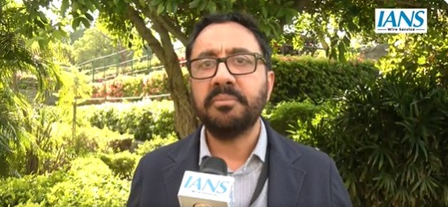
New Delhi, March 17 (IANS) New Zealand Prime Minister Christopher Luxon arrived in India on Sunday for a five-day visit.
During this time, Bhav Dhillon, the former Honorary Consul of India in Auckland and leading face of Indian diaspora in the country, spoke exclusively to IANS, expressing optimism for collaboration in various sectors.
Speaking about PM Luxon's visit, Dhillon said, "This visit is taking place after nine years. The New Zealand Prime Minister has come to India at the invitation of Prime Minister Narendra Modi. There are multiple areas where we can expect positive outcomes and cooperation, with the most significant being the initiation of trade talks between the two countries."
Regarding agricultural prospects, Dhillon highlighted, "India is an agrarian country with a large portion of its population engaged in farming. Similarly, New Zealand has a strong agricultural sector. From New Zealand's side, there are several opportunities in agricultural technology, including vegetable farming, horticulture, apple cultivation, and dairy technology. These areas offer immense potential for cooperation between India and New Zealand."
Discussing the Indian diaspora in New Zealand, Dhillon said, "The Indian community in New Zealand is very strong, with a population of around 300,000, making up nearly six per cent of the country's total population. In Auckland, the largest city in New Zealand, Indians make up about 11 per cent of the population, along with a significant student community. This visit is expected to enhance cooperation in the education sector, leading to an increase in the number of students coming to New Zealand in the future."
Asked about tourism in New Zealand, he said, "New Zealand is one of the most beautiful countries in the world. As India continues to grow economically and its people become more affluent, many are eager to visit New Zealand, ensuring a steady rise in tourism. Moreover, when it comes to sports, cricket serves as a strong unifying factor. The sporting relations between India and New Zealand remain robust."
Dhillon further noted, "Prime Minister Christopher Luxon is attending the Raisina Dialogue as the chief guest. We all know that the Raisina Dialogue is India's premier geopolitical conference. New Zealand holds a unique position in the South Pacific, while India has significant interests in the Indo-Pacific region. Therefore, PM Luxon's presence as the chief guest at the Raisina Dialogue makes this visit highly significant."
--IANS
khz/
Russia begins demining border areas of Kursk region

Moscow, March 15 (IANS) Russian engineering units have started demining operations in reclaimed border areas of the Kursk region, the Russian Defence Ministry said Saturday.
The efforts are aimed to facilitate the restoration of essential infrastructure and the resumption of economic activities following intense combat, the ministry said in a statement.
It added that the engineering units have discovered munitions banned by the Geneva Convention.
Over the past weeks, Russian troops have retaken a large part of areas that Ukraine captured after its surprise cross-border attack in the Kursk region in August last year.
Meanwhile, Ukrainian President Volodymyr Zelensky on Saturday denied claims that Ukrainian forces had been encircled in Russia's western Kursk region.
"The operation of our forces in certain areas of the Kursk region continues," Zelensky said in a Telegram post, adding that the Ukrainian troops were not surrounded.
He said that thanks to the Ukrainian forces in the Kursk region, a significant number of Russian forces were withdrawn from other directions.
Zelensky also warned that Russia is amassing its troops along Ukraine's eastern border and planning to attack Ukraine's northeastern Sumy region.
Russian President Vladimir Putin had on Friday confirmed that Ukrainian soldiers that are currently in the Kursk region will be guaranteed life if they surrender, Xinhua news agency reported.
"If they lay down their arms and surrender, they will be guaranteed life and dignified treatment in accordance with the norms of international law and the laws of the Russian Federation," he said during a meeting with members of the Russian Security Council.
US President Donald Trump said Friday that his administration "had very good and productive discussions," with Putin yesterday, adding that there is a very good chance that the "horrible, bloody war" can finally come to an end.
In a post on Truth Social, Trump said that thousands of Ukrainian troops were currently surrounded by the Russian military, adding that he urged Putin to spare their lives.
Putin noted that in order for Trump's call to be carried out, Ukraine's leadership must order its troops to surrender.
In an earlier statement on Friday, the General Staff of the Ukrainian Armed Forces denied the reports that Ukrainian troops had been encircled in Russia's western Kursk region.
The Ukrainian army launched an offensive into Russia's Kursk region in August, seizing about 1,300 square kilometers of land. As the Russian army intensified its counterattack in recent weeks, the situation for the Ukrainian forces in the region is reportedly deteriorating rapidly.
--IANS
int/as
British PM stresses commitment to Ukraine peace but avoids specifics

London, March 15 (IANS) British Prime Minister Keir Starmer reaffirmed his commitment to securing lasting peace in Ukraine as Britain hosted a virtual meeting with more than 25 political leaders on Saturday. However, no detailed or updated defence measures were announced.
At the press conference after the virtual meeting, when asked whether any concrete commitments emerged from it, Starmer said the meeting had helped build political and military momentum, with participating countries agreeing to increase collective pressure on Russia. However, he stopped short of disclosing what specific measures would be taken at the "operational phase."
Joined by French President Emmanuel Macron and leaders from Canada, Ukraine, Australia, New Zealand, and the European Union, Starmer urged Russia to "come to the table to negotiate a deal", Xinhua news reported. He also announced plans to host a military meeting next Thursday.
The British Prime Minister reiterated his country's stance on securing US involvement in Ukraine's future defense, emphasising that discussions with the United States are ongoing "on a daily basis."
He also suggested that US President Donald Trump is committed to achieving lasting peace in Ukraine, adding that the close relationship between Britain and the US is "the base on which we are planning."
Starmer reaffirmed Britain's willingness to take a leading role in the "coalition of the willing," a post-conflict arrangement that he announced two weeks ago during a London Summit. He said Britain is willing to deploy troops on the ground and aircraft in the sky. However, he did not specify how other nations would contribute to the coalition.
He also told reporters that leaders at the meeting had discussed tightening sanctions on Russia, including potential measures to freeze Russian assets in the future.
--IANS
int/as
Australian PM stands in support of Ukraine, says it is in ‘national interest’

Canberra, March 15 (IANS) Australian Prime Minister Anthony Albanese on Saturday reiterated strong and steadfast support for Ukraine, stating that the country will stand for Ukraine as long as it takes as it is in their national interest. Albanese joined a 'Coalition of Willing' virtual meeting hosted by British Prime Minister Keir Starmer, along with Ukraine President Volodymyr Zelensky and leaders from Europe, Canada, and New Zealand.
Following the meeting, Albanese issued an official statement, asserting that the leaders agreed to continue working on delivering concrete actions to support Ukraine, now and into the future. He stated that Australia stands with Ukraine because what happens in the Euro-Atlantic has serious implications for the Indo-Pacific and vice versa. He referred to this as a struggle not just for Ukraine and its national sovereignty but for the international rule of law.
Australia further extended support towards all meaningful progress for a just and enduring peace in Ukraine and broader security in Europe. Albanese stated that pressure will need to be applied on Russia to engage in good faith. Australia is always open to considering any new proposals to support Ukraine based on Australia's capacity and comparative strengths, he said.
"Australia has committed 1.5 billion dollars to help Ukraine defend itself, including 1.3 billion dollars in military support and through vital equipment and training of Ukrainian forces. Australia is open to considering any requests to contribute to a future peacekeeping effort in support of just and lasting peace we all want for Ukraine. We have a proud tradition of supporting peace through eighty years of contribution to international peacekeeping missions. Of course, peacekeeping missions by definition require a precondition of peace," Albanese stated.
Albanese's signal of openness to support Ukraine has created a bipartisan fissure in the country. Addressing reporters on Friday, Opposition leader and Prime Ministerial candidate for the upcoming elections in Australia, Peter Dutton said that Australia should not be involved, accusing PM Albanese of "shooting from the hip".
"It just doesn't make any sense. Our job is to take care of our country and make sure we are safe in our region. We have supported Ukraine from day one. But not with troops on the ground. This was a thought bubble by the Prime Minister,” Australian Broadcasting Corporation reported Dutton as saying.
Recently, the Russian Embassy in Canberra had also warned of "grave consequences" if Australia joined a "coalition of the willing" proposed by the United Kingdom and France to guarantee Ukraine's security in the event of a peace deal. "Once again, Western boots on the ground are unacceptable for Russia, and we will not remain passive observers. To those inclined to construe the above as a threat: it is not; it is a warning. Russia has no intention to harm Australians, and Canberra can easily avoid trouble by simply refraining from irresponsible adventurism in the zone of the special military operation," the Russian Embassy in Canberra stated.
--IANS
int/scor/as