
Russia expresses willingness to facilitate Iran-US nuclear agreement

Moscow, April 18 (IANS) Russia is ready to facilitate potential nuclear deal agreements between Iran and the US, provided that such accords respect Iran's interests, country's Foreign Minister Sergei Lavrov said on Friday.
"We welcomed the willingness, as far as we can see, to achieve objective and mutually acceptable agreements, including those that are being discussed by Iran and the United States," Lavrov said in a joint press conference following talks with his Iranian counterpart Abbas Araghchi in Moscow.
"Russia is certainly ready to facilitate this process and will do its best to support the agreements that would take Iran's legitimate interests into account," he added.
Addressing the press conference, Araghchi said that the indirect talks between Iran and the US, are set to continue in Rome on Saturday. "We are waiting to hear the viewpoints of the American side. If there is enough seriousness and determination, it is likely that a deal can be achieved," he said.
The Iranian Foreign Minister emphasised that Tehran will approach the talks on Saturday with seriousness and full determination, despite "serious doubts" about the intentions of the other side.
"We are fully prepared for a peaceful solution to Iran's peaceful nuclear programme, and if there is a similar will on the other side and they do not make unreasonable and unrealistic demands, I believe reaching an agreement is possible," said Araghchi.
The Foreign Minister also expressed Iran's appreciation for Russia's role in the 2015 nuclear deal between Iran and world powers and expressed hope that Moscow would continue its supportive role in any new agreement.
"We will continuously keep our friends in Russia, and of course China, informed about the developments," Araghchi said, emphasising his confidence that constructive feedback will contribute to progress on this path.
Araghchi and US Special Envoy to the Middle East Steve Witkoff are scheduled to hold the second round of their indirect talks on Saturday. The talks mainly center on Iran's nuclear programme and the removal of the US sanctions on the country.
In the first round of Muscat talks held last week, Araghchi engaged in "indirect" discussions with Witkoff, facilitated by Omani Foreign Minister Sayyid Badr bin Hamad bin Hamood Albusaidi. The talks focused on Iran's nuclear programme and the potential removal of the US sanctions.
The talks were proposed by US President Donald Trump, who threatened Iran with bombing and secondary tariffs if Tehran did not come to an agreement with Washington over its nuclear programme.
Iran signed a nuclear deal, formally known as the Joint Comprehensive Plan of Action, with six major countries — Britain, China, France, Germany, Russia, and the United States — in July 2015, accepting restrictions on its nuclear programme in return for sanctions relief.
However, the US withdrew from the deal in May 2018 and reinstated sanctions, prompting Iran to scale back some of its nuclear commitments. Efforts to revive the nuclear deal have not achieved substantial progress.
--IANS
int/scor/as
Nepal lauds continuous financial and developmental support provided by India

Kathmandu, April 18 (IANS) The foundation stone for the construction of a school building being built with the Indian government's financial assistance at a project cost of Nepalese Rs 28.10 million was laid in the Morang district of Nepal, on Friday.
India's grant under 'Nepal-India Development Cooperation' is being utilised for the construction of the triple-storied building of Shree Panchayat Secondary School and other allied facilities at Sundarharaicha Municipality in the Morang district of Nepal.
The foundation stone was laid jointly by Nepal's Minister of Social Development for Koshi Province Panchakarna Rai, Sundarharaicha Municipality Mayor Kedar Prasad Guragain and Second Secretary at the Embassy of India Garima Nautiyal.
Political representatives, government officials, social workers and teachers of the school, students, and their parents were also present on the occasion.
The project is being taken up as a High Impact Community Development Project (HICDP) and is being implemented through Sundarharaicha Municipality, Morang.
The officials from Nepal, the school management, and other stakeholders appreciated the developmental support being provided by India to the people of Nepal.
They expressed confidence that the infrastructure being created would help in providing better education to the students of Shree Panchayat Secondary School in Morang. It would also help create an improved environment for learning and contribute to the overall development of the education sector in the region.
Since 2003, India has taken up over 573 HICDPs in Nepal in various sectors and completed 495 projects. Amongst these, 91 projects are in Koshi Province, including 16 projects in Morang. In addition to these, the Government of India has gifted 1009 ambulances and 300 school buses to various hospitals, health posts, and educational institutions in Nepal. Amongst these, 146 ambulances and 48 school buses have been gifted in Koshi Province. Out of these, 21 ambulances and 15 school buses were gifted in Morang.
As close neighbours, India and Nepal are engaged in wide-ranging and multi-sectoral cooperation. The implementation of HICDPs reflects India's continued support in bolstering the efforts of Nepal government to boost growth and development by augmenting infrastructure in priority sectors.
India is the largest developmental donor of Nepal with the major portion of developmental assistance focussed on large-scale infrastructure projects under grants, necessary for the rapid development of Nepal, in the field of priority sectors such as health, education, and connectivity.
Earlier this month, Nepal Prime Minister K P Sharma Oli said that he had “extremely fruitful and positive” discussions with Prime Minister Narendra Modi on the sidelines of the 6th BIMSTEC Summit in Bangkok.
"Had a productive meeting with Prime Minister KP Sharma Oli in Bangkok. India attaches immense priority to relations with Nepal. We discussed different aspects of India-Nepal friendship, especially in sectors like energy, connectivity, culture, and digital technology. We also talked about some of the key positive outcomes from this year’s BIMSTEC Summit, especially in areas of disaster management and maritime transport," PM Modi posted on X after the meeting.
--IANS
int/scor/as
Yemen’s Houthis launched 59 attacks against Israel, US warships since mid-March
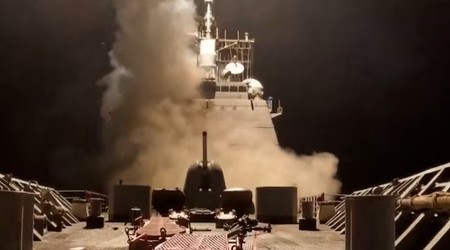
Sanaa, April 18 (IANS) Yemen's Houthi leader Abdulmalik al-Houthi has said his group had launched 26 attacks against Israel and 33 strikes on the US aircraft carrier and warships in the Red Sea since March 15.
In a televised speech aired by the group's al-Masirah TV on Thursday, the Houthi leader said the attacks on Israel were carried out using "30 ballistic missiles and drones," while those targeting the USS Harry S. Truman aircraft carrier and its escorts involved "122 ballistic and cruise missiles, as well as drones".
However, the Israeli military has reportedly intercepted many of the Houthi projectiles before they reached targets, Xinhua news agency reported.
The US Central Command dismissed the Houthi claims of daily attacks on the US aircraft carrier as "outlandish" in a post on the social media platform X.
Meanwhile, the Houthi leader noted that the US military had conducted more than 900 airstrikes against his group's positions across northern Yemen during the past 30 days.
Tensions between the Houthi group and the US military have escalated since Washington resumed airstrikes on Houthi targets in Yemen on March 15 to deter the group from attacking Israel and US warships in the Red Sea.
The Houthis, which control much of northern Yemen, said their attacks aim to press US-backed Israel to stop the offensive against the Gaza Strip and allow humanitarian aid into the Palestinian enclave.
Israel's Channel 12 News reported last Saturday that a Yemeni drone was intercepted near the Dead Sea within the Jordanian airspace before it could reach Israel.
The Jordanian army confirmed later last week that an unidentified drone entered Jordanian airspace and crashed in the Ma'in area of Madaba governorate, near the Dead Sea, and no casualties were reported.
Even since Israel renewed its intensive strikes in March across the Gaza Strip, the Houthis have been launching frequent attacks against Israeli and US targets.
Earlier last week, the Houthi military spokesperson claimed fresh attacks against the US aircraft carrier, USS Harry S. Truman, and other US warships in the northern Red Sea.
On March 15, the US military resumed airstrikes against Houthi targets to deter the group from launching attacks against Israel and US warships in the Red Sea.
--IANS
int/khz
Oman to mediate 2nd round of US-Iran nuclear talks in Rome

Muscat, April 18 (IANS) Oman's Foreign Ministry has confirmed that it will continue to mediate a second round of nuclear talks between US and Iranian officials scheduled to take place in Rome on Saturday.
A spokesman of Oman's Foreign Ministry "confirmed that Rome will be the venue this Saturday for the second round of talks between representatives of the Islamic Republic of Iran and the United States of America," the Omani Foreign Ministry said on Thursday in a statement on X.
In a statement, the Ministry said that the Italian capital was chosen as the new site for the talks due to logistical reasons, expressing hope that the discussions could make further progress toward reaching a just, binding, and sustainable agreement, Xinhua news agency reported.
Oman also expressed appreciation to the Italian government for its cooperation and support in hosting the upcoming meeting.
With Oman's mediation, Iranian Foreign Minister Seyed Abbas Araghchi engaged in a first round of "indirect" discussions with US Special Envoy to the Middle East, Steve Witkoff, in Muscat on April 12, focused on Iran's nuclear programme and the potential removal of US sanctions.
The talks in Muscat, described by both sides as "constructive," followed US President Donald Trump's statement in early March that he had sent a letter to Iranian leaders, delivered through the United Arab Emirates, proposing negotiations on Iran's nuclear programme. Iran later agreed on indirect talks.
President Trump has repeatedly threatened to unleash airstrikes targeting Iran's nuclear programme if a deal isn't reached.
Iranian officials have increasingly warned that they could pursue the development of a nuclear weapon with their stockpile of uranium enriched to near weapons-grade levels.
Wednesday's announcement came as Iran's President Masoud Pezeshkian formally approved the resignation of one of his Vice-Presidents who served as Tehran's key negotiator in its 2015 nuclear deal with world powers.
Mohammad Javad Zarif served as a key supporter of Pezeshkian in his election last year but attracted criticism from hard-liners within the Shia theocracy, who long have alleged Zarif gave away too much in negotiations.
"Pezeshkian emphasised that due to certain issues, his administration can no longer benefit from Zarif's valuable knowledge and expertise," a statement from the presidency said.
The President in a decree appointed Mohsen Ismaili, 59, to be his new Vice-President for strategic affairs. In Iran's political system, the President has multiple Vice-Presidents. Ismaili is known as a political moderate and a legal expert.
The head of the United Nations' nuclear watchdog (IAEA), Rafael Grossi, arrived in Tehran for meetings with Pezeshkian and others, which likely will be held on Thursday as his previous visits saw engagements take place the morning after his arrival.
Since the landmark nuclear deal's collapse in 2018 with Trump's unilateral withdrawal of the US from the accord, Iran has abandoned all limits on its program, and enriches uranium to up to 60 per cent purity — near weapons-grade levels of 90 per cent.
The Joint Comprehensive Plan of Action (JCPOA) was signed in 2015 and saw Iran agree to limit its nuclear activities in return for international sanctions relief.
Iran's Foreign Minister Abbas Araghchi warned the US about taking contradictory stances in the talks.
"Enrichment is a real and accepted issue and we are ready for trust-building about possible concerns," Araghchi said, but added that losing the right to enrich at all "is not negotiable".
Araghchi's warning likely refers to comments from US Mideast envoy Steve Witkoff, who this week initially suggested a deal could see Iran go back to 3.67 per cent uranium enrichment, similar to the 2015 level when the deal was reached by the Obama administration.
Witkoff then followed up with saying "a deal with Iran will only be completed if it is a Trump deal".
"Iran must stop and eliminate its nuclear enrichment and weaponisation program," he wrote on the social media platform X.
"It is imperative for the world that we create a tough, fair deal that will endure, and that is what President Trump has asked me to do."
--IANS
int/khz
Iran ready to expand all-out cooperation with Saudi Arabia: President Pezeshkian

Tehran, April 18 (IANS) Iranian President Masoud Pezeshkian met here with visiting Saudi Defence Minister Prince Khalid bin Salman bin Abdulaziz Al Saud, calling for expanding cooperation between their two countries in all areas.
Pezeshkian said on Thursday that Iran is fully prepared to expand its relations with Saudi Arabia in all fields and extend bilateral cooperation to other Islamic countries, according to a statement published on the website of his office.
He also welcomed the establishment of joint working groups in various political, economic, and security areas, emphasising that Iran and Saudi Arabia could coordinate to resolve many of the problems in the region, without the need for foreign intervention, Xinhua news agency reported.
The Saudi Defence Minister, for his part, described his meetings with Iran's Supreme Leader Ayatollah Ali Khamenei and Chief of Staff of the Iranian Armed Forces Mohammad Baqeri earlier on Thursday as "very useful, positive, and constructive".
He called Iran and Saudi Arabia "two main pillars of the region," stressing their strong relations could be an effective model for convergence and synergy in the Muslim world.
"We discussed our bilateral relations and topics of mutual interest," the Saudi Defence Minister wrote on X.
"Our belief is that the relationship between the Islamic Republic of Iran and Saudi Arabia is beneficial for both countries," Iranian state media cited Khamenei as saying in the meeting on Thursday.
"Ties between the Saudi and Iranian armed forces have been improving since the Beijing agreement," Baqeri said after the meeting, according to Iranian state media.
Saudi Arabia has welcomed Iran's nuclear talks with the US, saying it supported efforts to resolve regional and international disputes.
Iran and Saudi Arabia agreed in a 2023 deal brokered by China to re-establish relations after years of hostility that had threatened stability and security in the Gulf region and helped fuel conflicts in the Middle East from Yemen to Syria.
The Saudi Defence Minister's trip coincided with a visit to Iran by the UN nuclear watchdog chief, Rafael Grossi, who warned that the US and Iran were running out of time to reach a deal.
Iranian and US delegations are set to gather in Rome on Saturday for a second round of Omani-mediated negotiations, a week after the longtime foes held their highest-level talks since US President Donald Trump abandoned a landmark nuclear accord during his first term in 2018.
Since re-entering the White House in January, Trump has revived his so-called "maximum pressure" policy, imposing punishing economic sanctions against Iran and threatening military action if Tehran does not agree to a deal.
Iran and Saudi Arabia formally declared in April 2023 the resumption of diplomatic relations with immediate effect.
Saudi Arabia cut diplomatic ties with Iran in early 2016 in response to attacks on Saudi diplomatic missions in Iran.
The attacks followed Saudi Arabia's execution of a Shia cleric.
--IANS
int/khz
Israel extends missile alert time for long-range missiles from Yemen

Jerusalem, April 18 (IANS) Israel has extended its missile warning time for long-range threats from Yemen by three to five minutes, the military's Home Front Command said.
The updated system, which took effect on Thursday, aims to give civilians more time to reach shelters and safe rooms amid renewed missile attacks by Houthi forces, following Israel's resumption of its air and ground assault on Gaza in March.
Until now, Israelis had about one minute to reach shelter upon receiving a siren warning for long-range missiles, Xinhua news agency reported.
For short-range rockets fired from Gaza, warning times vary by location, ranging from about 15 seconds in communities near the enclave to nearly one minute in the Tel Aviv area.
Under the new protocol, a preliminary alert will be issued via the Home Front Command's mobile app in areas at risk, using a notification sound instead of the standard rising and falling siren.
"In addition, an IDF (Israel Defense Forces) message will be distributed, stating that missile fire from Yemen toward Israel may occur in the coming minutes and that the public must follow the instructions of the Home Front Command," the military said in a statement.
The purpose of the advance warning is to "allow advance preparedness, enabling civilians to move to nearby shelters and receive updates from official sources," the statement added.
Starting on Thursday, in the event of missile fire from Yemen, the Home Front Command said it will send out an early warning on its app to those in areas under potential threat. This alert will give people three to five minutes to prepare to seek shelter before sirens sound.
The IDF said the early alert does not require people to seek shelter immediately, and it is intended to give them more time to prepare and feel safer.
The early alert will be distributed to a wide area under potential threat, but the sirens may only sound in certain specific areas. The military said there may be cases where people receive an early alert, but no sirens sound in their area.
The new update to the Home Front Command app comes after several weeks of trials, staff work, and feedback from the public, it said.
Since October 2023, Houthi forces in Yemen have launched dozens of missile and drone attacks toward Israel, citing solidarity with the Palestinians amid Israel's offensive in Gaza.
Iran has also carried out two retaliatory attacks, firing about 400 missiles and drones, according to Israeli figures.
--IANS
int/khz
UN sees US-Iran nuclear talks as ‘good sign’: Spokesman

United Nations, April 18 (IANS) The United Nations views the second round of negotiations between the US and Iran on Saturday as "a good sign," and hopes it will yield positive results, a UN spokesman said.
The second round of US-Iran indirect negotiations will be held in Rome on Saturday, according to the Iranian Foreign Ministry.
The two sides will discuss Tehran's nuclear issues and Washington's sanctions, Xinhua news agency reported.
"We very much hope that the dialogue between the US and the Islamic Republic of Iran yields a positive outcome, which we're seeing the lowering of tensions in the Gulf region, in the Middle East, and between the two countries," Stephane Dujarric, spokesman for the UN Secretary-General, said at a daily briefing.
"We understand that there will be a second round from what I've seen, I think this weekend, which in itself is a good sign," he said.
"We will obviously be following it very closely."
In early March, US President Donald Trump sent a letter to Iranian leaders, proposing negotiations on Iran's nuclear programme, while Iran later agreed on indirect talks.
The first round of US-Iran indirect talks was held in the Omani capital of Muscat last week.
The White House said in a statement that the discussions were "very positive and constructive".
Iranian Foreign Ministry described their talks as "constructive".
The head of the United Nations nuclear watchdog said talks between Iran and the US are at a "crucial stage" and warned they have limited time to resolve their years-long standoff.
"There is a possibility of a good outcome but nothing is guaranteed," Rafael Mariano Grossi, Director General of the International Atomic Energy Agency, said in comments recorded during a visit to Tehran on Thursday.
"We are multiplying our efforts to facilitate this process."
Grossi's visit comes days after the US and Iran held their first talks aimed at striking an agreement over Tehran's nuclear program.
The stakes for global security and the oil market are high. US President Donald Trump has threatened military action against Iran if a deal isn't reached in the coming weeks.
Saudi Arabia's Defence Minister, Prince Khalid bin Salman, made a rare high-profile visit to Iran on Thursday and met Supreme Leader Ayatollah Ali Khamenei, the state-run Islamic Republic News Agency reported.
Prince Khalid delivered a message from Saudi Crown Prince Mohammed bin Salman addressed to Khamenei, IRNA said, without giving details on its contents. He is the highest-level Saudi royal to visit Iran in years and his trip signals that Arab states are keen to avoid a new conflict in the region.
The IAEA's Grossi said he has been in contact with the US's top Middle East envoy, Steve Witkoff, to see how the watchdog can "serve as a bridge between Iran and the US and help achieve a positive outcome," according to the IRNA.
While the US and Iran are set to meet for a second round of talks on Saturday in Rome, they’ve already hit a stumbling block over the Trump administration’s position on Tehran’s ability to enrich uranium.
Iranian Foreign Minister Abbas Araghchi said earlier this week that US has sent conflicting messages and these need to clarified when they meet again on Saturday.
Witkoff said on Tuesday that Iran had to eliminate its uranium-enrichment program all together, rather than restrict it. He was back tracking on earlier comments that suggested Iran could still enrich to a low level for civilian uses.
Iran has said its ability to produce the fissile material is non-negotiable and says it's allowed to enrich uranium under the terms of the Nuclear Non-Proliferation Treaty.
The 2015 nuclear deal that Trump abandoned during his first term imposed strict limits on the extent to which Iran was allowed to enrich uranium, in terms of both purity and quantity.
Iran started to breach those caps after Trump exited the accord in 2018 and placed stricter sanctions on the Islamic Republic.
--IANS
int/khz
5 killed, 4 injured in US university shooting

Washington, April 17 (IANS) Multiple victims were reported in a shooting at the Florida State University (FSU) in Florida state on Thursday.
WFTV9, an Orlando-based news station, reported that five people were killed and four injured, the fatalities citing unidentified law enforcement sources, who also put the number of alleged shooters at two, one of whom is dead and the other is in custody.
These numbers had not been announced by authorities yet.
"An active shooter has been reported in the area of the Student Union," the university's alert system said in an alert.
US President Donald Trump, who is a resident of Florida but was in the White House at the time, said he had been briefed and called the shooting a "shame".
"Our prayers are with our FSU family and state law enforcement is actively responding," Florida's Governor Ron DeSantis wrote in a post on X.
The Federal Bureau Of Investigation (FBI) had also responded to the incident.
"My team and I have been briefed on the tragic shooting at Florida State and our FBI Jacksonville team is on the ground assisting. We will provide full support to local law enforcement as needed," FBI Director Kash Patel wrote in a post on X.
"Please keep the FSU community in your prayers."
"I did see them carry out one student in what looked like on a stretcher and kept them in the road until an ambulance was able to pick them up," Daniella Streety, a student told NBC news.
"Directly across from me there's a building about 50 feet outside of the window... There was a student injured there as well and they had to transport them in a desk chair to the road to then be transported via ambulance."
The US has had many incidents of shooting at schools and colleges and the worst of them took place in a Florida high school in 2018 leaving 17 students and members of the staff dead.
--IANS
yrj/khz
Bangladesh demands US$ 4.32 billion, apology for 1971 genocide from Pakistan

Dhaka, April 17 (IANS) Bangladesh on Thursday raised the issue of financial claim to the tune of USD 4.32 billion from Pakistan as a fair share from the assets of undivided Pakistan before 1971 besides also seeking a formal apology for the genocide committed by the Pakistani armed forces during the Liberation War.
The issues were raised during the Foreign Secretary-level Foreign Office Consultation (FOC) held in Dhaka between the two countries after a gap of 15 years.
Bangladeshi Foreign Secretary Jashim Uddin led the Bangladesh delegation while the Pakistani side was represented by its Foreign Secretary Amna Baloch.
During the meeting, Bangladesh also demanded USD 200 million - the foreign aid from countries and agencies to East Pakistan - during the extremely deadly Bhola cyclone.
“We said that as a friendly neighbour of Bangladesh in South Asia, we seek Pakistan's cooperation in building a strong, welfare-oriented and forward-looking relationship with Pakistan by resolving the existing historical unresolved issues at the earliest and we emphasise on working together towards this end," Bangladesh Foreign Secretary Jashim Uddin told reporters at the Ministry of Foreign Affairs after the talks.
"These issues need to be resolved for having a solid foundation of our relations," he added.
Interestingly, the local media reported that the Pakistani side refused to comment on the outcomes of the meeting.
During her visit, Baloch held separate meetings with Bangladeshi interim government's Chief Advisor Muhammad Yunus and Foreign Affairs Advisor Touhid Hossain, where they discussed issues of mutual interest.
During his meeting with the visiting Pakistani Foreign Secretary, Yunus called for strengthening ties with Pakistan to boost mutual cooperation and explore trade and business potentials.
"There are certain hurdles. We have to find ways to overcome those and move forward," Yunus said after Baloch called on him at the State Guest House Jamuna.
Referring to the past, Baloch said Bangladesh and Pakistan must find ways to "harness the potentials between the two countries".
"We have huge intra regional markets on our own rights. We should use it. We can’t miss the bus every time," Baloch said.
Following the FOC talks held for the first time between the two nations since 2010, the Bangladesh Foreign Secretary confirmed that Pakistan's Deputy Prime Minister and Foreign Minister Ishaq Dar is scheduled to pay an official visit to Dhaka on April 27-28.
Dar's visit will be the first by a Pakistani Foreign Minister to Bangladesh since 2012.
The interim government has formed a working group with the Pakistan High Commission in Dhaka to finalise the agreements that will be signed during the Pakistani Foreign Minister's visit.
--IANS
int/as
Navigation through Suez Canal sees improvement in March: Canal Chief

Cairo, April 17 (IANS) Suez Canal Authority (SCA) Chairman Osama Rabie has said that there is a slight improvement in navigation through the canal during March.
The number of ships passing through the canal in March increased by 2.4 per cent compared to January, Rabie announced on Wednesday during a ceremony in Ismailia Governorate in northeast Egypt, celebrating the achievements made by the canal over the past few years, Xinhua news agency reported.
He added that the waterway recorded an 8.8 per cent increase in revenues compared to January.
The SCA chief also noted that 264 ships adjusted their routes to pass through the Suez Canal instead of the Cape of Good Hope since the beginning of February.
"The US is currently attacking the Houthis in Yemen, and it remains unclear whether these US attacks have weakened the Houthis' ability to target shipping in the Red Sea," Rabie told Xinhua news agency.
Egypt, which relies heavily on revenue from the Suez Canal, has repeatedly called for calm following a series of attacks on commercial vessels in the Red Sea.
In March, Egyptian President Abdel Fattah al-Sisi said that due to the regional turmoil -- including attacks on vessels in the Red Sea by Yemen's Houthis -- the Suez Canal was losing nearly $800 million in revenue each month.
The US military has resumed airstrikes on Houthi-held areas in northern Yemen since March 15 in a bid to deter the group from attacking Israeli targets, the US Navy, and international shipping lanes in the region.
However, the Houthi group responded by affirming its unwavering support for Gaza.
It has resumed attacks on Israeli targets and US military vessels in the Red Sea, as Israel ended a January ceasefire with Hamas and restarted military operations in Gaza.
The project would need governmental approvals and would be funded through the SCA's investment budget, to avoid "placing any additional burdens on the state's general budget," a statement added.
Rabie said it could raise the competitiveness of the canal and allow it to take more and bigger ships.
--IANS
int/khz