
Trump says stopped nuclear conflict, used trade to end India-Pak hostilities
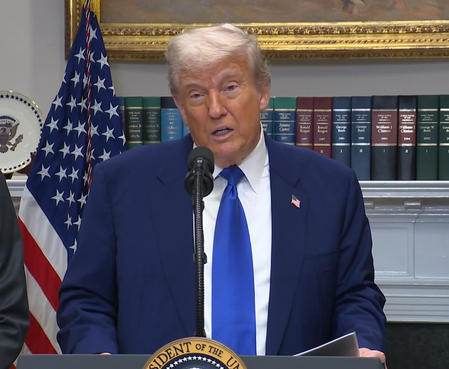
Washington, May 12 (IANS) President Donald Trump on Monday said he used the lure of trade with the US to persuade India and Pakistan to end hostilities last week, which, he added, could have potentially spiraled into a nuclear war.
The US President also commended the leaderships of India and Pakistan for "wisdom" and "fortitude" to understand the gravity of the situation and end the fighting.
Trump on Saturday announced a ceasefire in the India-Pakistan military conflict following the April 22 attack by a Pakistan-linked terrorist outfit in which 26 tourists were killed in Jammu and Kashmir's Pahalgam.
"Come on, we're going to do a lot of trade with you guys," President Trump said at a news conference in the White House before departing for Saudi Arabia, the UAE and Qatar in West Asia.
"Let's stop it. Let's stop it. If you stop it, we're doing trade. If you don't stop it, we're not going to do any trade. We're going to do a lot of trade with Pakistan. We're going to do a lot of trade with India. We're negotiating with India right now, we're going to be soon, negotiating with Pakistan," he went on to say
No details were available or how the offer of trade was extended by the Trump administration in this context. India and the US have been discussing a bilateral trade agreement and both sides have expressed optimism about an early deal, unlike in 2019 — in President Trump’s first term — when talks had fallen through.
"We stopped (a) nuclear conflict," President Trump went on to say. Although there is no evidence or indication the two countries were about to use nuclear weapons. "I think it could have been a bad nuclear war. Millions of people could have been killed. So I'm very proud of that."
Earlier at the briefing, the US President said, "My administration helped broker a full and immediate ceasefire, I think, a permanent one, between India and Pakistan, ending a dangerous conflict of two nations with lots of nuclear weapons, and they were going at it hot and heavy, and it was seemingly not going to stop."
"I'm very proud to let you know that the leadership of India and Pakistan was unwavering, powerful, but unwavering in both cases," he went on to say. But, he added, they also had "the strength and the wisdom and fortitude to fully know and to understand the gravity of the situation".
--IANS
int/yrj/as
South Korea: DP’s Lee leads by over 50 pc in hypothetical matchup against PPP’s Kim, poll shows
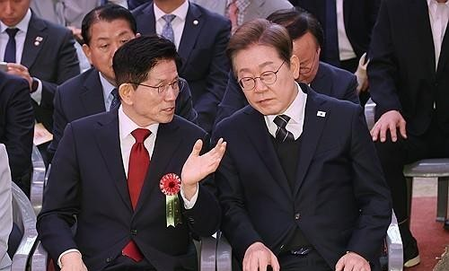
Seoul, May 11 (IANS) The Democratic Party's (DP) presidential candidate Lee Jae-myung has expanded his lead to over 50 per cent in a hypothetical matchup against the People Power Party's (PPP) Kim Moon-soo, a recent poll showed Sunday.
Lee garnered 52.1 per cent support against Kim's 31.1 per cent in the hypothetical three-way race that also included Lee Jun-seok of the minor New Reform Party, according to a Realmeter poll conducted from Wednesday to Friday on 1,508 eligible voters. Lee Jun-seok earned 6.3 per cent.
It marks an increase from the 46.6 per cent the DP's Lee recorded in a similar three-way race in the previous Realmeter poll, in which Kim received 27.8 per cent and the minor party's Lee 7.5 per cent.
Among those who identified as politically moderate, 54.9 per cent opted for Lee, while 24.3 per cent chose Kim.
In another hypothetical three-way matchup that included former Prime Minister Han Duck-soo instead of the PPP's Kim, the DP's Lee garnered 51.7 per cent support, Han 30.5 per cent and the minor party's Lee 5.8 per cent.
The PPP's leadership had attempted to field Han as the party's presidential candidate by merging Kim's campaign into his after Han previously outperformed in public polls.
On Saturday, however, the PPP's all-member meeting voted down a leadership-backed motion to replace Kim, who secured the party's presidential nomination through the primaries, with Han as the party's candidate.
The Realmeter poll also showed that 55.8 per cent of the respondents want the presidency to be transferred to the DP or other opposition parties, while 39.2 per cent said they want it to remain with the PPP or the conservative bloc.
The survey, commissioned by the Energy Economic News daily, has a 95 per cent confidence level and a margin of error of plus or minus 2.5 percentage points.
--IANS
int/rs/dan
Pakistan to bring up IWT suspension in DGMO level talks with India
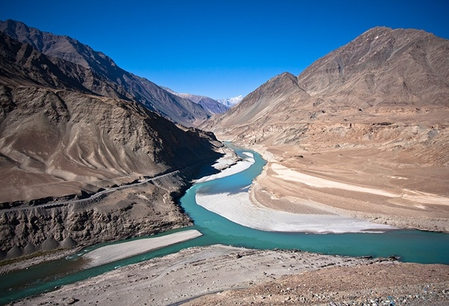
Islamabad, May 11 (IANS) Pakistan's Federal Minister for Water Resources, Mian Muhammad Moeen Wattoo, has said that the Indus Waters Treaty (IWT) suspension will be a part of the agenda of the talks with India, scheduled for Monday.
After 48 hours of military escalation by Pakistan, and later a US-brokered ceasefire understanding, DGMOs (Director General Military Operations) of both sides will have first contact and communication on Monday.
Watto, while speaking to media persons, said that Pakistan will be bringing forward the IWT suspension during the DGMO level meeting, which had stopped in the past few days, adding that a formal legal notice to India is also being served.
"Pakistan will address all issues, including the Indus Waters Treaty suspension with India, tomorrow during the communication. We are also ready to serve a formal legal notice to India over the Indus Waters Treaty as well," he said.
"Constitutional and legal consultations in response to India's recent announcement regarding the suspension of the Indus Waters Treaty have been completed," he added.
Sources confirmed that Pakistan would serve a legal notice to India over IWT through diplomatic channels within the next few days.
"The official communication will demand concrete justifications from India for its unilateral suspension of the treaty," the source stated.
India had suspended the IWT following the dastardly Pahalgam terror attack in Jammu and Kashmir, which killed 26 innocent civilians.
India has issued a notification to its Pakistani counterpart explaining the reasons for suspending the IWT highlighting the significantly altered population demographics, the urgent need to expedite the development of clean energy, and shifts in the assumptions related to water sharing under the IWT as fundamental changes that have led to its decision to suspend its treaty obligations.
Additionally, during a recent media briefing in New Delhi on Operation Sindoor, which India carried out against terror targets in Pakistan and Pakistan-occupied Kashmir on May 7, Foreign Secretary Vikram Misri said, "There have been fundamental changes in the circumstances in which the Indus Waters Treaty was concluded, and they called for a reassessment of the obligations under the treaty."
"Over the last year-and-a-half to two years, India has been in communication with the government of Pakistan, we sent several notices to them requesting negotiations to discuss the modification of this treaty. India has for six-plus decades now honoured the treaty, even during periods when Pakistan imposed multiple wars on us," he had said.
--IANS
hamza/sd/
Pakistan welcomes Trump’s willingness to ‘mediate’ on Kashmir

Islamabad, May 11 (IANS) Pakistan on Sunday welcomed US President Donald Trump's "constructive role" in brokering a ceasefire understanding between Islamabad and New Delhi.
In a statement issued by Pakistan's foreign office, Islamabad appreciated Trump's willingness to support efforts aimed at the resolution of the so-called Kashmir "dispute," terming it a "longstanding issue that has serious implications for peace and security in South Asia and beyond."
Pakistan said that it reaffirms that "settlement" of the Kashmir "dispute" should be "in accordance with the relevant United Nations Security Council resolutions," according to the statement.
"Pakistan remains committed to engaging with the United States and the international community in efforts to promote peace, security, and prosperity in the region. We look forward to deepening our multifaceted partnership with the United States, particularly in the areas of trade, investment and economic cooperation," the foreign office statement added.
Islamabad's statement comes in response to Trump's post on Truth Social, congratulating both Pakistan and India for agreeing to a US-brokered ceasefire understanding.
"I am very proud of the strong and unwavering, powerful leadership of India and Pakistan for having the strength, wisdom, and fortitude to fully know and understand that it was time to stop the current aggression that could have led to the death and destruction of many, and so much. Millions of good and innocent people could have died! Your legacy is greatly enhanced by your brave actions," maintained US President Donald Trump.
"I am proud that the USA was able to help you arrive at this historic and heroic decision. I am going to increase trade, substantially, with both of these great nations," he added.
Islamabad has welcomed the US President's offer to intervene; however, New Delhi has been opposed to any third-party mediation on the issue, as Kashmir is an integral part of India.
"Additionally, I will work with you both to see if, after a thousand years, a solution can be arrived at concerning Kashmir," Donald Trump maintained.
--IANS
hamza/sd/
South Korea: Official campaigning for presidential election to begin Monday
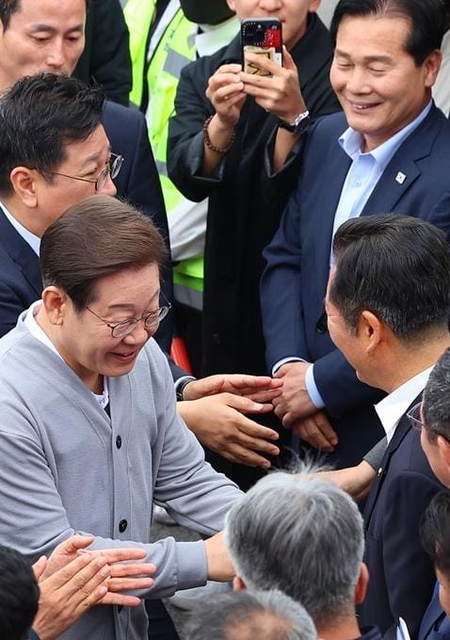
Seoul, May 11 (IANS) Official campaigning for the June 3 presidential election will begin this week with the close of candidate registration on Sunday.
The 22-day campaign period will kick off Monday, allowing candidates and their campaign teams to give speeches in public places between 7 a.m. and 11 p.m., distribute leaflets and other campaign materials, and put up campaign banners, Yonhap news agency reported.
The election, triggered by the impeachment of former President Yoon Suk Yeol over his failed martial law bid in December, has shaped up to be a contest between Lee Jae-myung of the liberal Democratic Party and Kim Moon-soo of the conservative People Power Party.
Kim's candidacy was confirmed only Saturday following intraparty strife over which of two people -- Kim or former Prime Minister Han Duck-soo -- would be better suited to defeat Lee, who has maintained a wide lead in favorability polls.
Lee's plan is to consolidate that lead by wooing swing voters with promises to improve the economy and people's livelihoods, and promote national unity.
Kim, meanwhile, is set to adopt the conservatives' strategy of building a broad "big tent" coalition to counter Lee.
The success of that strategy is likely to hinge on whether he can win the support of former Prime Minister Han, Lee Jun-seok, the presidential candidate of the minor New Reform Party, and other political heavyweights.
On Saturday, the People Power Party's (PPP) all-member meeting voted down a motion led by the party's leadership to replace him with former Prime Minister Han Duck-woo as the party's presidential candidate, ending a weeklong internal dispute between him and the leadership.
Kim, a former labor minister, had secured the party's nomination through the primaries but had since come under intense pressure from the party leadership to merge campaigns with Han, who had polled better in hypothetical matchups with front-runner Lee Jae-myung of the liberal Democratic Party.
--IANS
int/rs
India-Pakistan conflict is ‘none of our business’, says US Vice-President Vance

Washington, May 9 (IANS) US Vice-President J.D. Vance has said that the conflict between India and Pakistan is "fundamentally none of our business," though he and President Donald Trump are encouraging both the countries to de-escalate.
"What we can do is try to encourage these folks to de-escalate a little bit, but we're not going to get involved in the middle of war that's fundamentally none of our business and has nothing to do with America's ability to control it. You know, America can't tell the Indians to lay down their arms. We can't tell the Pakistanis to lay down their arms. And so, we're going to continue to pursue this thing through diplomatic channels," Vance, who has been a proponent of US disengagement from international conflicts, said in an interview with Fox News.
"Our hope and our expectation is that this is not going to spiral into a broader regional war or, God forbid, a nuclear conflict," Vance added.
"Right now, we don't think that's going to happen."
The remarks by Vance came as Pakistan made a failed attempt to attack military establishment in Jammu, Pathankot and several other cities.
India's air defence system intercepted and neutralised at least eight missiles launched by Islamabad.
Earlier, US President Donald Trump said he wants India and Pakistan to "stop" what he described as "tit for tat" actions, saying if he can do anything to "help", he will be there.
"Oh it's so terrible. My position is I get along with both. I know both very well and I want to see them work it out. I want to see them stop and hopefully they can stop now. They have gone tit for tat, so hopefully they can stop now. I know both, we get along with both the countries very well."
"Good relationships with both and I want to see it stop. And If I can do anything to help, I will be there," Trump said in response to a question on the "war" between India and Pakistan.
Trump's remarks came after the Indian military carried out strikes against terror targets in Pakistan-occupied Kashmir (PoK) and Pakistan's Punjab province on Wednesday.
Pakistan army carried out artillery and mortar shelling targeting forward villages along the Line Of Control in Jammu and Kashmir.
India launched Operation Sindoor early Wednesday hitting nine terror targets in Pakistan-occupied Kashmir (PoK) and Punjab province of Pakistan in retaliation for the April 22 terror attack that killed 26 people in Jammu and Kashmir's Pahalgam.
--IANS
khz/
US says its message to India, Pak is to ed-escalate and talk

Washington, May 9 (IANS) The US on Thursday said its message to India and Pakistan amid the current tensions following the Pahalgam terrorist attack has been two fold: de-escalate and keep talking.
Referring to the US Secretary of State Marco Rubio's calls to India's External Affairs Minister S. Jaishankar and Pakistan's Prime Minister Shehbaz Sharif earlier in the day, State Department Spokesperson Tammy Bruce said at the daily briefing that US has been focussed on "two things".
"That it should not escalate, and communication was fundamentally key, that there should be talks, that there should not be silence, and that America, obviously was at the centre of this, in speaking with a variety of leaders of both countries over the last two days," Bruce said.
She also said: "The message from the Secretary, and, I think, from the US as a whole in general, is that the violence should stop that military action, war, as we've seen in that region, certainly in the Middle East, has clearly, for generation, proven that it is not a solution, because it never ends. There has to be a change in that regard. So obviously, when it comes to solving a problem, this administration has made itself clear that war, the military, more violence is not a solution. Diplomacy is a solution."
Asked if Secretary Rubio has offered to mediate, Bruce said the situation is "very delicate and dangerous" and "where there's negotiations happening, we are not going to be speaking about the details".
She went on to say that "it's important to not put details in the middle of the media, the worldwide media, when the work is being done privately between leaders, and we need to really try to keep it that way".
When asked if a statement in the readout of Secretary Rubio's call with Prime Minister Sharif -- that called Pakistan to end any support for terrorism -- was an endorsement of Indian position that Pakistan has been a supporter of terrorism, Bruce said, "Well, you know, obviously in today's world, that's a call that we've been making for decades. It is the dynamic that we've seen in the Middle East disrupting lives. And clearly what happened in Kashmir is awful, and we've all of course, we send our condolences. The world has rejected the nature of that kind of violence overall, of course, and certainly the President has and continues to but at this moment in time, there is, like one thing that has to stop, which is a back and forth and a continuation of this. And that is what we're focused on right now."
"The Secretary expressed sorrow for the reported loss of civilian lives in the current conflict. He reiterated his calls for Pakistan to take concrete steps to end any support for terrorist groups," Bruce had said earlier in a statement on Rubio's call with Sharif.
The US has not hesitated to call out Pakistan on its support for terrorism.
"The US has foolishly given Pakistan more than $33 billion in aid over the last 15 years, and they have given us nothing but lies & deceit, thinking of our leaders as fools," President Donald Trump had written in a post on X, in his first term in 2018, "They give safe haven to the terrorists we hunt in Afghanistan, with little help. No more!"
--IANS
yrj/khz
No requests for UN Security Council meeting

United Nations, May 9 (IANS) There have been no requests for a Security Council meeting on the situation between India and Pakistan, according to UN Mission of Greece, which holds the presidency this month.
"Since the closed consultations on Monday, no request has been received for a new meeting yet," the mission said on Wednesday night.
Neither Pakistan nor the other 14 members of the Council had requested a meeting.
Asked if Pakistan was seeking a UN Security Council meeting, the country's Permanent Representative to UN Asim Iftikhar Ahmed said cryptically, "We are watching the situation."
On Monday, the Council held a closed-door consultation on the situation in South Asia with a briefing by Assistant Secretary-General Mohamed Khaled Khiari.
India, in principle, is opposed to the Council getting involved with what it considers is a bilateral matter under the terms of the 1972 Simla Agreement between the leaders of the two countries.
While there has been a universal call for de-escalation, any Council session will be just a talking shop as any substantive, implementable resolution will not be possible to be adopted as of now as the unanimity of permanent members is not there.
Earlier on May 6, the United Nations Security Council (UNSC) pulled up Pakistan and asked tough questions concerning the terror attack in Jammu and Kashmir's Pahalgam at its closed session amid the escalating tensions between New Delhi and Islamabad.
The members slammed Islamabad and questioned Pakistan-based Lashkar-e-Toiba's involvement in the Pahalgam attack, which killed 26 people.
Though Pakistan claimed that the meeting largely served and achieved the objectives of the UNSC's meeting, reports showed that it flopped miserably.
In the meeting, which was called at the request of Pakistan's Permanent Representative Asim Iftikhar Ahmad, he claimed that his country was not involved in the terror attack.
Though the session was a closed consultation and had no official records, the UNSC members called for dialogue and restraint to resolve the issues.
After the meeting on Monday, UNSC President Evangelos Sekeris told reporters, "The Security Council is always helpful in such efforts" to de-escalate. It is the responsibility of the Council. It was a productive and helpful meeting. Since the meeting was a closed consultation, its proceedings are secret without official records."
UN Secretary-General Antonio Guterres said the situation was at a "boiling point" and asked the two countries to "step back from the brink".
"It is also essential -- especially at this critical hour -- to avoid a military confrontation that could easily spin out of control," he said.
Condemning “strongly” the terrorist massacre of 26 people in Pahalgam last month, he said, "I understand the raw feelings following the awful terror attack”.
Notably, The Resistance Front (TRF), an affiliate of the Pakistan-based Lashkar-e-Taiba, claimed responsibility for the terrorist attack, in which 25 Indians and one Nepalese national were killed.
--IANS
al/khz
UN monitors in Kashmir safe: Spokesperson
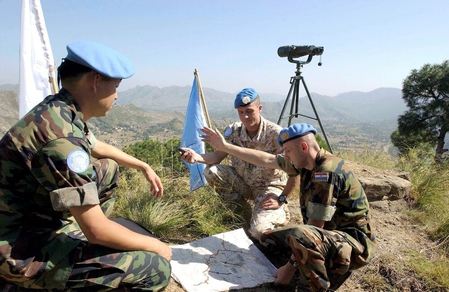
United Nations, May 8 (IANS) UN ceasefire monitors in Kashmir and in the Pakistan-occupied area are safe and accounted for after the Indian missile strikes on "terror infrastructure" and the Pakistan shelling, according to a UN spokesperson.
"We checked with our colleagues in peacekeeping, and they said everybody was accounted for, and everybody was safe," Stephanie Tremblay, the UN Secretary-General's associate spokesperson said on Wednesday.
Formally known as the UN Military Observers Group in India and Pakistan (UNMOGIP) has 44 military personnel and 75 civilian staff posted on both sides of the Line of Control (LOC) in Kashmir.
Now headed by Mexican Major General Ramon Guardado Sanchez, UNMOGIP began operations in 1949 monitoring the fragile ceasefire in Kashmir under a UN Security Council mandate.
India has called the UNMOGIP redundant and called for its termination.
The Resistant Front, an offshoot of the Pakistan-based Lashkar-e-Toiba (LeT) terrorist organisation, owned responsibility for the religiously targeted massacre of 26 people in Pahalgam, a tourist spot in Kashmir.
India launched a missile attack in retaliation, hitting nine places in Pakistan and Kashmir territory it occupies that New Delhi identified as terrorist locations.
Pakistan shelled India across the Line Of Control killing at least 10 people, and downing three Indian jets, according to media reports.
On Tuesday night, Pakistan served notice that it was preparing for further attacks on India, telling the UN Security Council that it reserves the right to hit back.
Earlier on Wednesday, UN Secretary-General Antonio Guterres remains "very concerned" about India's military operation against Pakistan, saying "the world cannot afford a confrontation between the two countries," according to his Spokesperson Stephane Dujarric.
"He calls for maximum military restraint from both countries," Dujarric said shortly after India announced missile strikes into Pakistan and territory it occupies in Kashmir.
"The Secretary-General is very concerned about the Indian military operations across the Line of Control and international border," he added.
India's Ministry of Defence said on Wednesday that it launched "Operation Sindoor" hitting nine places in Pakistan and the part of Kashmir it occupies.
"Focused strikes were carried out on nine #terrorist infrastructure sites" in a "precise and restrained response to the barbaric #PahalgamTerrorAttack," it said in a post on X.
Earlier, the Indian Army said that it has hit nine locations deep inside Pakistan in retaliation for the Pahalgam terror attack.
"A little while ago, the Indian Armed Forces launched 'Operation Sindoor', hitting terrorist infrastructure in Pakistan and Pakistan-occupied Jammu and Kashmir from where terrorist attacks against India have been planned and directed," the Army in a press statement said.
The Indian Army also posted on its official X handle, "Justice is Served. Jai Hind."
"Altogether, nine (9) sites have been targeted. Our actions have been focused, measured and non-escalatory in nature. No Pakistani military facilities have been targeted. India has demonstrated considerable restraint in the selection of targets and the method of execution," the Army said.
--IANS
al/khz
US lawmakers backs Indian strikes, urge Pak to restore democracy

Washington, May 7 (IANS) One Indian-descent US lawmaker on Wednesday called for Pakistan to not use the current tensions with India as pretext to further undermine democracy while another offered full-throated support and endorsement of India’s retaliatory strikes done earlier in the day, India time.
"In the wake of last month's horrific terrorist attack in Pahalgam, the need to combat terrorism and prevent future violence has become even more urgent. As Secretary Rubio stated, it is essential to avoid broader conflict and further escalation," Raja Krishnamoorthi, who is of Indian descent, said, adding, "At the same time, Pakistan must release former Prime Minister Imran Khan and ensure free and fair elections that uphold democratic values and give voice to the will of the Pakistani people. The current situation should not be used as a pretext to further undermine democracy in Pakistan.”
Meanwhile, Shri Thanedar, the second Indian-descent lawmaker, said, “Terrorism cannot be tolerated, and it cannot go unanswered. India has the right to defend its people, and I stand firmly with our ally in its efforts to dismantle these extremist networks."
He further said: “The United States should always stand with our allies against terrorism. This is a time for deeper US-India cooperation to confront shared threats, protect innocent lives, and defend the principles of democracy, human rights, and religious freedom."
Both Krishnamoorthi and Thanedar are members of the Democratic party and hail from Illinois and Michigan states respectively. There are two out five members of the House of Representatives of Indian descent, together called the Samosa Caucus — the other three are Ami Bera, Ro Khanna and Pramila Jayapal.
Krishnamoorthi, who on Wednesday announced he is running for US senate, was referring to Secretary of State Marco Rubio’s statement on Tuesday. “I am monitoring the situation between India and Pakistan closely,” Rubio had said. “I echo POTUS's comments earlier today that this hopefully ends quickly and will continue to engage both Indian and Pakistani leadership towards a peaceful resolution."
--IANS
int/yrj/as