
India and Kenya discuss defence cooperation, exports and maintenance support
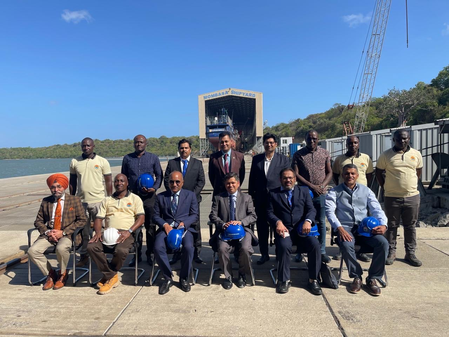
Nairobi, Jan 22 (IANS) India and Kenya held extensive discussions this week focused on strengthening bilateral defence cooperation, with emphasis on defence industrial collaboration, capacity building, training, sustainment partnerships, information sharing, and long-term cooperation in defence exports and maintenance support.
The talks were held during the visit to Nairobi by a four-member Ministry of Defence delegation to advance bilateral defence industrial cooperation. The Indian delegation, led by Sanjeev Kumar, Defence Production Secretary, held several key meetings during its Kenya visit from January 19-21, the High Commission of India in Nairobi stated on Thursday.
During the visit, Kumar represented India's defence manufacturing and export ecosystem at the 3rd India–Kenya Defence Exhibition and Seminar, held on January 19 in Nairobi. The event was jointly organised by the High Commission of India in Kenya and the Kenya Defence Forces (KDF), with support from the Department of Defence Production, Ministry of Defence, Government of India. The previous editions were held in 2022 and 2024.
The Exhibition and Seminar were jointly inaugurated by Soipan Tuya, Kenya's Cabinet Secretary for Defence, along with Sanjeev Kumar and the High Commissioner of India to Kenya. The event saw participation from 21 Indian defence companies, representing both public and private sectors, showcasing defence platforms, systems, and advanced manufacturing capabilities. The companies participated under the aegis of FICCI, highlighting India’s 'Make in India' and export-ready defence solutions.
On the margins of the event, the Secretary held extensive engagements with senior Kenyan defence leadership, including Patrick Mariru, Principal Defence Secretary and Lt Gen John Omenda, Vice Chief of Defence Forces, along with other senior officers.
Secretary (Defence Production) also paid homage at the Joint India–Africa Commemorative Pillar at Mile 27, a memorial built by the Government of India and jointly unveiled on 23 June 2025 by the Cabinet Secretary for Defence, Kenya. Dedicated to the unknown Indian and Kenyan soldiers of the First World War, the memorial stands as a symbol of shared sacrifice and enduring partnership.
"The delegation also visited Kenya Shipyard Limited (KSL), Mtongwe, where discussions highlighted the practical potential of cooperation under the MoU between Goa Shipyard Limited (GSL) and KSL, signed in August 2023, particularly in shipbuilding, repair, and sustainment," read a statement issued by the Indian High Commission.
"India and Kenya share long-standing friendly relations, with defence cooperation forming a key pillar of the bilateral partnership. The visit of the Secretary (Defence Production) further reinforced ongoing momentum in India–Kenya defence engagement and advanced prospects for deeper defence industrial collaboration, in line with India’s expanding defence partnership with African nations," the statement added.
--IANS
/as
Gulf investors in K-electric file $2 billion arbitration case against Pakistan
New Delhi, Jan 22 (IANS) Saudi and Kuwaiti investors holding a 30.7 per cent indirect stake in Karachi-based power utility K‑Electric have filed a $2 billion international arbitration claim against Pakistan, alleging regulatory interference and unpaid government dues, a report has said.
The investors also alleged prolonged blocking of a $1.77 billion sale of the country’s largest private power utility, according to a report from Profit by Pakistan Today.
The arbitration case lodged on January 16, 2026, by Steptoe International (UK) LLP and Omnia Strategy LLP, represents 32 Saudi and five Kuwaiti entities that together hold a 30.7 per cent stake in the power utility company. The investors have been cornerstone shareholders since the utility’s privatisation in 2005.
"The dispute traces back to October 2016, when the investors agreed to sell 66.4 per cent of K‑Electric to Shanghai Electric Power Company," the report said.
While regulators initially backed the transaction, the investors said the deal was stalled for over eight years amid shifting regulatory conditions.
The Pakistan administration gave contradictory government instructions and delayed mandatory national‑security approvals leading to withdrawal of Shanghai Electric.
“The arbitration filing also points to attempts by domestic investors to seize control of K-Electric through offshore structures, undisclosed ownership changes, and regulatory violations, despite repeated complaints made to regulators and enforcement agencies,” the report said.
The arbitration case also mentioned long-standing unpaid government receivables, including tariff differential subsidies owed to K-Electric for roughly two decades. The investors claimed these unpaid dues have severely impacted the utility’s cash flows, with the government imposing penalties for late payments.
The Pakistani government politicised K-Electric's multi-year tariff framework, undermining NEPRA, the power regulator, resultantly stalling the sale, investors alleged.
The investors also alleged failure of the government to notify NEPRA’s final tariff determinations issued in May 2025. The government reopened settled matters through flawed review processes, and imposed revised tariffs, costing K-Electric around Rs 85 billion annually, according to the report.
--IANS
aar/
Rebranding of BNP’s Tarique Rahman cannot erase corrupt legacy: Bangladesh Awami League
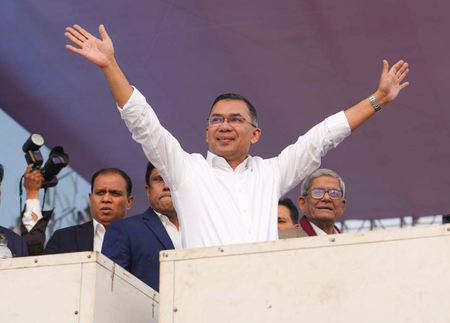
Dhaka, Jan 22 (IANS) Bangladesh Awami League on Thursday warned that the country is witnessing a disturbing political trend, with Bangladesh Nationalist Party (BNP) Chairman Tarique Rahman being celebrated, rehabilitated, and projected as a future leader, raising concerns that the nation’s history has been erased and its collective memory failed.
“The crimes, corruption, and state capture of the 2001–2006 period are being deliberately forgotten, softened, or conveniently ignored. This amnesia is dangerous. Because what Tarique Rahman did during that time was not a footnote in history, it was one of the darkest chapters of institutional collapse in Bangladesh," the Awami League stated.
According to the Awami League, the Hawa Bhaban, the political office of former BNP Chief Khaleda Zia, was an ordinary house turned into an extraordinary centre of unlawful power during the BNP tenure from 2001 to 2006 in Bangladesh.
"Hawa Bhaban did not merely influence governance; it overrode the Prime Minister’s Office itself. Policies, projects, postings, promotions, tenders, and business approvals were decided there. The elected government became secondary. The Constitution became irrelevant. The real state operated from behind closed doors, under the command of one unelected individual," it stated.
The party stressed that what operated from Hawa Bhaban was not random corruption but a system -- a "fixed, ruthless formula". During the 2001–2006 BNP tenure, it said, a mandatory 10 per cent commission became the unofficial tax on every government development project.
"This was not a rumour or exception; it was widely documented, openly discussed, and fearfully enforced. No commission, no work," the Awami League stressed.
At the centre of this alleged system, the Awami League said, was Tarique, whose sustained pattern of extortion earned him a nationwide identity -- "Mr Ten Per cent".
“A man who institutionalised bribery, monetised development, and turned governance into a commission-based enterprise is being rebranded as a leader. But history is stubborn. And the 10 per cent empire remains one of the clearest proofs that Tarique Rahman did not serve the state; he sold it,” the party mentioned.
According to the Awami League, Tarique’s identity is inseparable from multiple corruption and criminal cases rooted in the 2001–2006 period -- cases that emerged from a system of "parallel governance, commission-based decision-making, and protected criminal networks".
Asserting that these were not isolated accusations, the party said, the cases formed a pattern that defined an era.
“A nationally known corrupt figure cannot represent national morality. No rebranding can erase the legacy of Hawa Bhaban. Bangladesh needs leadership built on integrity, not the return of a culture that turned the state into a business,” the Awami League noted.
--IANS
scor/as
Pakistan: Opposition slams govt’s decision to join Trump’s ‘Board of Peace’
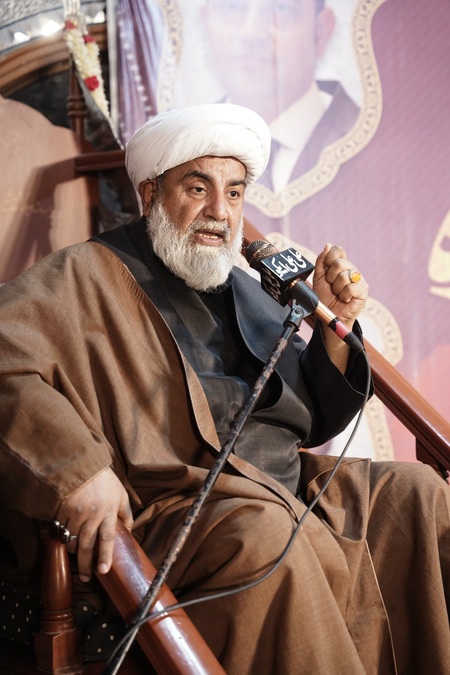
Islamabad, Jan 22 (IANS) Allama Raja Nasir Abbas, an Opposition leader in Pakistan's Senate, has criticised the country's decision to join US President Donald Trump's 'Board of Peace', terming it "morally incorrect and indefensible", both on principle and on policy.
In a post on X, Allama Raja Nasir Abbas stated, "The initiative was problematic from the outset. Conceived as an externally managed arrangement for post-war Gaza, it effectively removes the right of governance from the Palestinian people themselves. By placing reconstruction, security and political oversight in the hands of outside actors, the project carries the unmistakable imprint of a neo-colonial enterprise. Such frameworks rarely end at administration. Trump’s initiative will, over time, erode the very right to self-determination it claims to safeguard."
"What makes Pakistan’s participation more troubling is that an initiative initially sold as a limited mechanism for rebuilding after the genocide in Gaza is now being openly expanded. Statements by its principal sponsor and the contents of its draft charter suggest ambitions well beyond Palestine, with little regard for the United Nations. The absence of clear UN oversight and the board’s widening mandate point towards an attempt to supplant, or at the very least marginalise, the existing multilateral system," he added.
Tehreek-e-Tahafuz-e-Ayin-e-Pakistan (TTAP) Vice Chairman Mustafa Nawaz Khokhar stressed that Pakistan's decision to become part of the board without any public debate or taking opinion from Parliament "smacks of the disregard this regime has of the Pakistani nation."
In a post on X, he wrote, "The so called 'board of peace' is a colonial enterprise to not only govern Gaza but create a parallel system to the UN. The board 'will have the courage to depart from approaches and institutions that have too often failed. It will be 'a more nimble and effective international peace-building body', in its own language. The charter of this “board of peace” gives Trump czarist powers to implement his personal as well as US agenda without any mechanism to prevent such one sided outcome."
He added, "All other members can be nominated by the Chairman (Trump) or terminated by him. The Chairman can choose when the board meets or what it discusses. In this new forum, Trump alone would have an absolute veto. The one billion dollar ticket for a permanent seat creates in other words, a rich man’s club and what such clubs more than often do is anyone’s guess!"
Pakistan's former Ambassador to the US, the UK and the UN, Maleeha Lodhi, termed Pakistan's decision to join Trump Board of Peace "unwise for many reasons."
"An unwise decision for many reasons. The govt has overlooked the fact that Trump wants states to join the board to secure international support and legitimacy for what are and will be unilateral actions by him. The board's remit is v broad and beyond Gaza, another reason not to join," Lodhi posted on X.
Their statement comes after Pakistan's Ministry of Foreign Affairs announced that Pakistan will join the Board of Peace as part of the ongoing efforts to support the implementation of the Gaza Peace Plan under the framework of the United Nations Security Council Resolution 2803. In the statement, Pakistan expressed hope that concrete measures will be taken towards implementation of a permanent ceasefire, further scaling up of humanitarian aid for Palestinians and reconstruction of Gaza.
--IANS
akl/as
New Chinese app looks to tackle global loneliness crisis
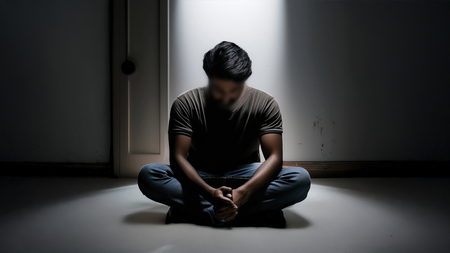
New Delhi, Jan 22 (IANS) Amid falling marriages and birth rates, and many living an isolated life in China, a new app is seeking to fight loneliness, according to a media report.
The Are You Dead? app developed by a company called Moonscape Technologies enables individuals living alone or single to be in touch with a designated emergency contact, the Guardian reported.
The company, which describes it as “a lightweight safety tool crafted for solo dwellers”, allows users to check in once a day by clicking a large green button. If the user misses two consecutive days of check-ins, the app will send an automated alert to a designated emergency contact.
The app comes as more people in their 20s and 30s are living alone in China. The report noted that in 2024, a record low of 6.1 million couples got married in the country, while 2.6 million couples filed for divorce.
In addition, the country is witnessing a significant decline in birthrate, creating demographic challenges as the population shrinks each year. By 2030, there could be as many as 200 million single-person households, according to Chinese state media.
In such a scenario, the Are You Dead? app has tapped into people’s anxiety of dying alone, with no one even to bury them.
“This app makes people feel alive. It is an interesting phenomenon that reflects and combats the loneliness of young people today,” the report quoted a user on RedNote, a social media platform that is predominantly used by women, as saying.
According to Ian Lü, one of the co-founders of Moonscape Technologies, the idea for Are You Dead? came to him while browsing on Chinese social media.
“In recent years, there has been wide and heated discussion about a hypothetical ‘are you dead’ app,” Lü said. “For example, something with features like: if you don’t check in for 48 hours, someone will come and collect your body.”
The report also cited China’s notorious “996” work culture -- meaning workers toil from 9 am to 9 pm, six days a week -- as a major factor for stress and social isolation.
The new app, thus, is becoming a tool to combat feelings of isolation, which also builds up anxiety, stress, and a sense of helplessness, the report said, with mental health experts also vouching for the app, "that will help connect to other people".
“This new ‘living alone’ group is a global phenomenon. I hope the whole world can pay attention to the safety issues of people living alone,” Lü said.
--IANS
rvt/
EAM Jaishankar bats for stronger India-EU relations amid current global volatility
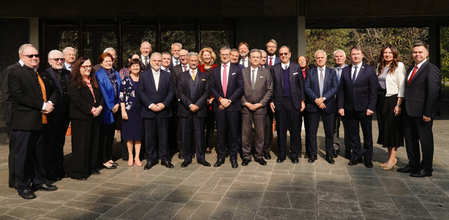
New Delhi, Jan 22 (IANS) External Affairs Minister (EAM) S Jaishankar on Thursday held an interaction with the Ambassadors from European Union (EU) member countries in New Delhi which, according to him, focused on the current state of the world with volatility and instability around.
The discussions came ahead of the State Visit to India by the European Council President Antonio Luís Santos da Costa and European Commission President Ursula von der Leyen, who will also be the Chief Guests at the 77th Republic Day celebrations on January 26.
"Pleased to interact with the Ambassadors from EU countries today. Spoke to them about the current state of the world with volatility and instability as the new normal," EAM Jaishankar posted on X after meeting the EU Ambassadors.
"Made a case for stronger India-EU relations that will: Derisk the world economy by cooperating on resilient supply chains; Reassure the international community by providing public goods like HADR, anti-piracy operations, development projects etc; and, stabilise the global order through stronger trade, mobility and security partnership," he added.
The EAM mentioned further that India is eagerly looking forward to the visit of the European Council President Antonio Luís Santos da Costa and European Commission President Ursula von der Leyen for the Republic Day celebrations.
The EU leaders, who will be arriving in India at the invitation of Prime Minister Narendra Modi, will also co-chair the 16th India-EU Summit on January 27.
During the visit, they will call on President Droupadi Murmu and hold restricted and delegation-level talks with Prime Minister Modi. An India-EU Business Forum is also expected to be organised on the sidelines of the India-EU Summit.
"India and the European Union are strategic partners since 2004. The 15th India-EU Summit was held virtually on 15 July 2020. Bilateral ties have expanded and deepened across a wide range of areas, particularly following the historic visit of EU College of Commissioners to India in February 2025. Participation of EU leaders as Chief Guests at the 77th Republic Day and the 16th India-EU Summit will further deepen the India-EU Strategic Partnership and advance collaboration in priority areas of mutual interest," the Ministry of External Affairs (MEA) stated ahead of the EU leaders' India visit.
On Wednesday, EU High Representative for Foreign Affairs and Security Policy Kaja Kallas stated that Europe is ready to deliver on a "powerful" new agenda with India.
"Today, the EU agreed to move forward with the signature of a new Security and Defence Partnership. It will expand our cooperation in areas such as maritime security, counterterrorism and cyber-defence. I look forward to signing it next week during the EU-India Summit in New Delhi," Kallas, also the Vice-President of the European Commission, posted on X.
--IANS
/as
Pakistan: Unemployed pharmacists in Balochistan slam govt for no transparency in recruitment process
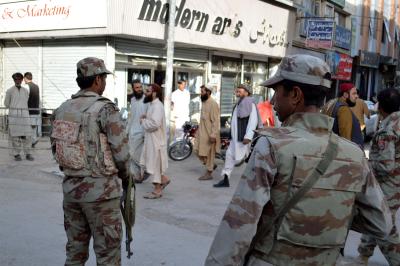
Quetta, Jan 22 (IANS) The Unemployed Pharmacists’ Action Committee in Pakistan's Balochistan have criticised government’s decision to announce a limited number of vacancies for more than 2,000 unemployed pharmacists, terming it "equivalent to offering a pinch of cumin to a camel," local media reported on Thursday.
While addressing a press briefing at the Quetta Press Club on Wednesday, UPAC General Secretary Qasim Aziz Mengal termed the decision unacceptable and called for creation of more positions and transparent as well as merit-based recruitment, Pakistan's leading daily Dawn reported.
He termed the appointment of pharmacists to BPS-17 posts through walk-in interviews a non-transparent move aimed to include favoured and recommended people. He alleged that health department did not have merit and there was no transparency in recruitment process.
He voiced concerns over the absence and non-appointment of pharmacy departments in private hospitals. He condemned the recent notification released by the health department advertising vacancies of doctors and pharmacists on a contract basis.
Meanwhile, dozens of government employees were arrested in Quetta on Tuesday as police blocked a blocked sit-in in Red Zone, where employees were raising demand for implementation of the Disparity Reduction Allowance. During the protest, authorities suspended mobile interests services in Quetta and other neighbouring areas, local media reported.
Government employees from Balochistan travelled to Quetta following sit-in announcement of alliance of workers’ organisations to raise their demands, The Balochistan Post reported. In recent days, work in many government offices has been affected due to the protest.
Authorities on Monday night placed containers at key entry points and completely shut the Red Zone to stop protesters from reaching the site. However, after the roads blockade, employees started gathering outside the Quetta Press Club. However, police stopped them from assembling and arrested dozens at the site of the incident. After the protests, the Balochistan Grand Alliance announced a "jail bharo" campaign.
--IANS
akl/as
Three dead in shooting west of Sydney in eastern Australia
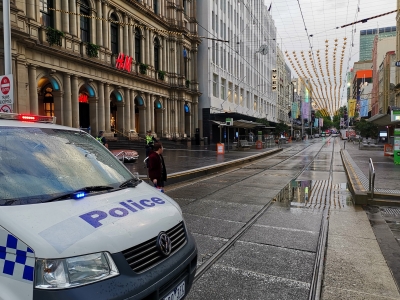
Sydney, Jan 22 (IANS) Three people have died following a shooting west of Sydney in Australia's eastern state of New South Wales (NSW) on Thursday afternoon.
The NSW Police Force said in a statement that emergency services were called to reports of a shooting in the small town of Lake Cargelligo, 450 km west of Sydney, around 4:40 pm local time on Thursday, Xinhua News Agency reported.
Police confirmed that three people, two women and a man, had died.
A second man has been taken to hospital in a serious but stable condition.
A crime scene has been established and police have urged members of the public to avoid the area and local residents to stay indoors.
On January 18, police in Australia's state of New South Wales (NSW) said that a man had been seriously injured after he was shot during a public place shooting in Sydney's west overnight.
Police said that emergency services were called to a home in Lalor Park, a suburb of Sydney, at about 11.35 pm local time on Saturday, following reports of a public place shooting.
Officers were told unknown people had fired multiple gunshots into a home, hitting one resident before leaving the scene in a vehicle.
The resident, a 46-year-old man, was treated by NSW Ambulance paramedics for a gunshot injury before being taken to the hospital in a stable condition.
On January 8, Australia's Prime Minister Anthony Albanese called a royal commission into antisemitism and social cohesion in Australia in the wake of the terror attack at Sydney's Bondi Beach.
Albanese announced at a press conference in Canberra that his government will establish a royal commission, the highest form of inquiry in Australia, which will be led by former High Court justice Virginia Bell and deliver a report by mid-December.
"I've taken the time to reflect, to meet with leaders in the Jewish community and most importantly, I've met with many of the families of victims and survivors of that horrific attack," he said.
The Prime Minister said that the inquiry would investigate the nature and prevalence of antisemitism in Australia, make recommendations to law enforcement to tackle antisemitism, examine the circumstances surrounding the Bondi Beach attack, and make recommendations on strengthening social cohesion.
"I've repeatedly said that our government's priority is to promote unity and social cohesion, and this is what Australia needs to heal, to learn, to come together in a spirit of national unity," he said.
The alleged lone surviving gunman, 24-year-old Naveed Akram, has been charged with 59 offences, including 15 counts of murder, over the attack, which authorities allege was motivated by Islamic State ideology.
--IANS
akl/as
Putin to meet Trump’s special envoy Witkoff and Kushner on Ukraine issue
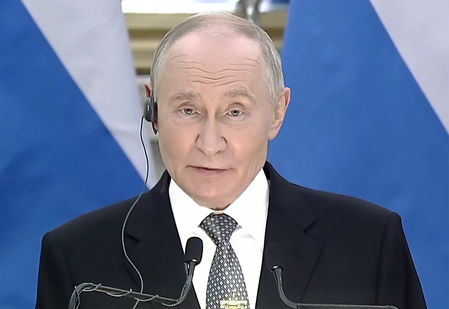
Moscow, Jan 22 (IANS) Russian President Vladimir Putin has announced that he will meet US President Donald Trump's special envoy Steve Witkoff and entrepreneur Jared Kushner later on Thursday, local media reported.
In his remarks at a meeting with the permanent members of the Russian Security Council, Putin said that he plans to meet the US representatives following his meeting with Palestinian President Mahmoud Abbas, Russia's leading news agency Tass reported.
Putin announced that Witkoff and Kushner will visit Moscow to "continue the dialogue on the Ukrainian settlement." Russian leader further stated that he intends to address details regarding Moscow's participation in the Board of Peace, for which Trump has invited Putin to participate.
Earlier, Witkoff announced his plans to visit Moscow on Thursday. Witkoff announced that Jared Kushner, who was present during the previous meeting between Putin and US officials, will accompany him on the visit to Moscow.
Before their arrival in Moscow, Witkoff and Kushner held a meeting with Russian President's special representative and Russian Direct Investment Fund CEO Kirill Dmitriev on the sidelines of the World Economic Forum on January 20. Officials from Russia and US held a meeting behind closed doors for over two hours, which Witkoff termed very positive, Tass reported.
The proposed Board of Peace has been described by Trump as a platform that could bring together leaders directly to resolve disputes. He has argued that existing institutions have often been too slow or ineffective in stopping wars.
Meanwhile, Ukrainian President Volodymyr Zelensky said on Monday that Russia would focus on diplomacy and not on missile strikes, blackouts, or attempts to damage Ukraine’s nuclear power plants if it genuinely wanted to end the war.
He said there is information about the sites Russia reconnoitered in preparation for strikes, stressing that everything clearly shows “diplomacy is not a priority for Russia”.
In his address to the nation, Zelensky said, “The main target for Russia is invariably our energy sector. Almost 58,000 people are working around the clock in repair crews on power grids and generation facilities, and on the heating network alone. Resources from Ukrzaliznytsia and other state-owned companies have been involved. For Kyiv, where the situation is very difficult, an additional 50 crews from all over the country have been involved.”
“There are still houses without heating, and for them, the necessary equipment and crews are being sent to each house manually. It is also difficult in the Kyiv region, especially in the northern part of the region, also in the Boryspil district. Also in border and front-line regions, where repairs to networks and repairs to facilities are complicated by virtually constant shelling and constant strikes. These are Kharkiv, Chernihiv, Sumy, Dnipro, and Zaporizhia regions - special attention is paid to these regions. There was a lot of work in Poltava and Odessa to stabilise the energy situation,” he added.
Zelensky further said that the Ukrainian delegation, which included the head of Ukraine's National Security and Defence Council, Rustem Umerov, reported on meetings with representatives of US President Donald Trump.
“There have already been several rounds of negotiations - they are working on documents that are needed to end the war. It is important that the Ukrainian team fully informs the American side about what is happening in Ukraine and about the constant Russian attacks on our energy system,” he stated.
--IANS
akl/as
Pakistan: Baloch student body condemns police crackdown on govt employees
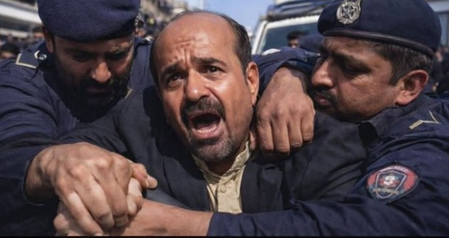
Quetta, Jan 22 (IANS) The Baloch Students Action Committee (BSAC) condemned the Pakistani police raid on the protest by the Balochistan Grand Alliance, a coalition of government employees, calling the resulting violence and arrests of teachers, professors, and other professionals “extremely alarming”.
The remarks followed the arrest of dozens of government employees in Balochistan’s capital Quetta on Tuesday after police blocked a planned sit-in in the city’s Red Zone, where workers had assembled to press home the implementation of the Disparity Reduction Allowance.
“The most condemnable act is that police officials, who draw salaries from public funds, are disrespecting a professor by dragging him on the street and taking him away. This is a deplorable act of dishonour against teachers, who hold a great status in society. We not only condemn this immoral act but also consider it the extreme of humiliating teachers,” read a statement issued by the BSAC.
The student body stated that in Balochistan, raising a peaceful voice for one’s rights has now become a crime, with people forced to endure severe punishments daily for acts they have not committed.
“On one hand, this government chants about better governance, educational reforms, and transparent recruitment; on the other hand, it has adopted an insulting attitude toward teachers and employees, which contradicts its own claims,” it stated.
Denouncing the act of violence, the BSAC demanded that the Pakistani higher authorities immediately conduct a transparent investigation and ensure the strictest punishment for all officials involved.
According to a report by The Balochistan Post, Pakistani authorities suspended mobile internet services across Quetta and nearby areas during the protest, resulting in widespread service disruptions.
The government employees from across Balochistan had travelled to Quetta following an announcement by the alliance of workers’ organisations for a sit-in to press the authorities to address their demands.
However, late on Monday night, the district administration blocked key entry points by placing containers and completely sealed the Red Zone to prevent protesters from entering.
With the access blocked, employees gathered outside the Quetta Press Club, but police prevented them from assembling and arrested dozens at the scene.
The arrest prompted the Balochistan Grand Alliance to announce a “jail bharo” (fill the jails) campaign.
Balochistan has been reeling from protests by public sector employees, with several human rights organisations raising concerns over a brutal crackdown by Pakistani authorities during the demonstrations.
--IANS
scor/sd/