
Indian national injured in Riyadh airport attack dies; EAM Jaishankar expresses grief (Lead)
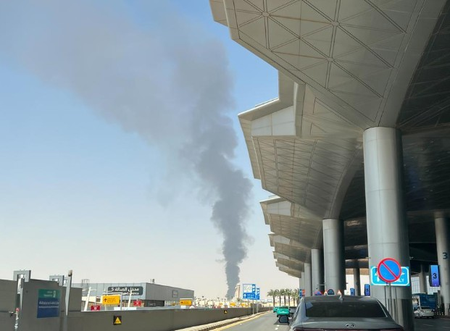
Riyadh, Oct 11 (IANS) An Indian national injured in the attack on Riyadh’s King Khalid International Airport on October 10 has died, the Embassy of India in Saudi Arabia said on Sunday, as External Affairs Minister (EAM) S Jaishankar expressed grief and conveyed condolences to the bereaved family.
“It is learnt that one Indian national injured in the Riyadh attack has unfortunately lost his life today. We convey our heartfelt condolences to the family of the deceased. We are in touch with the family and will provide all support for ensuring the early repatriation of mortal remains,” the Embassy posted on X.
The deceased, Mohammed Yusuf Ali, hailed from Hyderabad. His two sons and an aunt were also injured in the attack.
EAM Jaishankar said the Embassy would extend all possible assistance to the family.
“Deeply grieved at the loss of life of an Indian national in the Riyadh attack. My heartfelt condolences to the bereaved family. The Embassy will extend all possible assistance,” EAM Jaishankar posted on X.
Earlier on Sunday, the Embassy said 11 Indians were among those injured in the attack.
“It is learnt that 11 Indians are among those injured in the attack. Embassy has been in touch with local authorities to enquire about their well-being. Our officials have also reached out to the hospital authorities. We will provide further updates as they become available,” it had said.
The attack targeting King Khalid International Airport in the Saudi capital on Saturday afternoon killed 12 people and injured 309 others, the Saudi General Authority of Civil Aviation said, as Yemen’s Houthi group and Saudi Arabia continued exchanging strikes on major airports.
India on Sunday condemned the attack, saying that attacks on civilians and civilian infrastructure were “unacceptable” and calling for an immediate cessation of hostilities.
“We strongly condemn the repeated attacks on Riyadh’s King Khalid International Airport over the past few days, including the dastardly attack on October 10, which have led to loss of lives, injuries and damage to property. We express our condolences to the families of the deceased and wish speedy recovery to the injured persons,” the Ministry of External Affairs (MEA) said in a statement.
“The repeated attacks on civilians and civilian infrastructure are completely unacceptable and must cease immediately,” the statement read.
“We stand in solidarity with the people and the government of the Kingdom of Saudi Arabia in defence of their sovereignty, and hope that peace and normalcy returns to the region at the earliest,” it added.
--IANS
ksk/uk
Zelensky backs Trump’s energy ceasefire, awaits US details
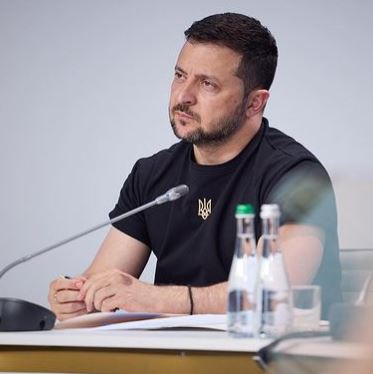
Washington, Oct 11 (IANS) Ukrainian President Volodymyr Zelensky on Sunday said Kyiv supports the "energy ceasefire" announced by US President Donald Trump and was awaiting details from Washington, adding that Russia must also back the truce, which Moscow had yet to confirm.
"Ukraine supports the ceasefire, and it is important that Russia support it as well. We are awaiting details from the American side," Zelensky wrote on X after speaking with Canadian Prime Minister Mark Carney, Finnish President Alexander Stubb and NATO Secretary General Mark Rutte.
"For our part, Ukraine always fully supports steps toward de-escalation, the protection of lives, and the decisions needed to end the war and guarantee lasting peace," he said.
Trump had announced the truce on Truth Social about 80 minutes earlier.
"Effective immediately, there is an energy ceasefire in the War between Russia and Ukraine. Both parties have agreed. Do not break it! Thank you for your attention to this matter," he wrote.
The White House repeated the announcement on X about 20 minutes later. "Effective Immediately: An energy ceasefire in the War between Russia and Ukraine," it posted.
Trump did not say when the truce was agreed, which facilities it covered, how long it would last or how it would be monitored.
The Kremlin had not publicly confirmed the arrangement by midday on Sunday.
Zelensky had initially said he had not been told. "The ceasefire announcement was news for me. But if Russians agree to an energy ceasefire, Ukraine will agree," he told Axios shortly after Trump's post.
A senior Ukrainian official told the Kyiv Independent that Kyiv had no information about the ceasefire and doubted that Russia had been informed.
Earlier on Sunday, Zelensky had offered a reciprocal halt. "Ukraine will be ready to stop striking Russian oil refineries if Russia stops striking our energy infrastructure," he said, according to the Associated Press.
The announcement came two days after Trump unveiled an agreement with Russian President Vladimir Putin to release Russian diesel into American and global markets, a move criticised by Ukraine, European officials and US lawmakers from both parties.
On Saturday, Trump blamed Zelensky for continuing drone attacks on Russian refineries and said Ukraine should "get a new leader who can make a deal".
This is not the first such announcement. Last month, Trump said on Truth Social that Russia and Ukraine had agreed not to hit each other's energy targets. Axios reported that neither side confirmed a deal at the time, and both continued attacking energy infrastructure.
India has a direct stake in the outcome. New Delhi has proposed a three-part truce that would halt attacks on energy facilities and other infrastructure, keep grain and energy flowing through Black Sea ports and end strikes on commercial shipping, the Hindustan Times reported on October 7, citing people familiar with the proposal.
Black Sea ports account for almost 30 per cent of Russian energy flows to India, the newspaper said.
"India is trying to be helpful, starting with the Black Sea safety of shipping issue, addressing immediate concerns of Russia and Ukraine on grain and energy exports and non-attack possibilities," External Affairs Ministry spokesperson Randhir Jaiswal said on October 7.
There was no immediate reaction from New Delhi to Trump's announcement.
The diesel deal has also revived questions in the US over Washington's approach to India's purchases of Russian oil. It came less than a month after Trump signed legislation authorising tariffs of up to 100 per cent on major buyers of Russian oil and gas, including India.
Russia and Ukraine have repeatedly struck each other's energy infrastructure since Moscow's full-scale invasion in February 2022.
--IANS
lkj/ksk
Iran will buckle under US blockade: Bessent
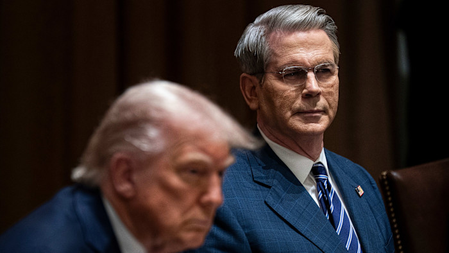
Washington, Oct 11 (IANS) US Treasury Secretary Scott Bessent has said Iran could be forced into submission within two to four months as the Trump administration intensifies an economic blockade aimed at crippling Tehran's finances, cutting off its oil exports and isolating it from the international financial system.
In an interview with Fox and Friends Weekend on Sunday, Bessent said Washington had moved beyond its earlier maximum pressure campaign to what he described as an absolute isolation strategy, combining military operations, maritime interdictions and sweeping financial restrictions.
"For a year we had a maximum pressure campaign. Now we have an absolute isolation campaign," he said.
Bessent claimed Iran had been effectively shut out of international oil markets and was facing a severe financial crisis.
"Iran now has, no oil on the water. They have negative cash flow," he said.
The Treasury Secretary said the United States was also targeting Iranian cryptocurrency holdings, shipping operations and access to international banking networks.
He claimed Iran no longer controlled the Strait of Hormuz, despite continuing attempts to disrupt commercial shipping through drone attacks.
According to Bessent, Iranian forces were launching unmanned aerial vehicles at night but lacked the radar capabilities needed to effectively obstruct maritime traffic.
He said substantial quantities of oil and petroleum products were continuing to pass through the strategic waterway.
The Treasury Secretary also outlined conditions under which Iran could return to the international system.
"They have to give up their nuclear ambitions," he said, adding that Tehran must also end its support for militant proxies.
Bessent claimed US military operations had destroyed much of Iran's naval and air capabilities, along with a significant proportion of its missile and drone production infrastructure.
He said the economic campaign was compounding the military pressure, leaving Iran unable to access dollars or maintain financial stability.
According to Bessent, Iran's currency had fallen sharply, from approximately 600,000 to the dollar 18 months ago to 2.8 million at one stage.
He also claimed Iranian authorities had restricted the publication of currency exchange rates as the financial crisis deepened.
The Treasury Secretary described the US strategy as a carefully sequenced campaign involving six weeks of military operations, followed by a maritime blockade and comprehensive economic isolation.
He said President Donald Trump referred to the blockade as the Iron Wall.
Bessent claimed the restrictions had disrupted fuel imports, leaving Iranians facing petrol queues lasting three to four hours.
Asked whether the administration ultimately wanted a negotiated settlement or regime change, Bessent acknowledged uncertainty over the outcome.
"I don't know how this ends. You never know how this ends," he said.
He outlined three possible scenarios: a popular uprising, internal divisions within Iran's Islamic Revolutionary Guard Corps or a negotiated agreement under which Tehran abandons its nuclear programme.
Bessent said he expected the blockade to continue for several months and suggested Iran's economic difficulties would eventually force its leadership to reconsider its position.
He also said Trump did not anticipate further military engagement until at least after the US midterm elections.
--IANS
lkj/ksk/
US frees 4 million oil barrels amid storm
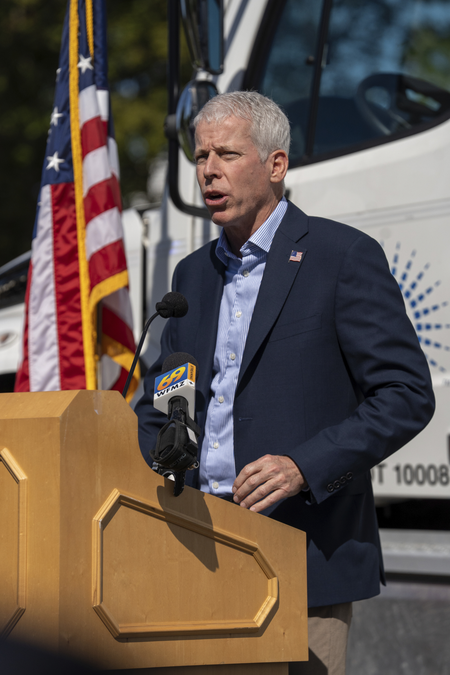
Washington, Oct 11 (IANS) The United States has authorised an emergency exchange of up to four million barrels of crude oil from its Strategic Petroleum Reserve to prevent fuel supply disruptions caused by severe weather in the Gulf region, the Department of Energy has announced.
The decision, announced on Saturday, allows energy giants ExxonMobil and BP America to obtain up to two million barrels each from the country's emergency oil stockpile.
The move is intended to keep American refineries operating and protect fuel supplies as hurricane-related disruptions affect the movement of crude oil.
Under the arrangement, the two companies will return the borrowed oil in 2027, along with additional barrels as a premium.
Energy Secretary Chris Wright said the emergency action was necessary to maintain supplies and prevent disruptions from affecting American consumers and businesses.
"With this emergency exchange, the Energy Department is acting swiftly to help maintain refinery operations, limit disruptions to fuel supplies, and ensure American families and businesses continue to have access to affordable, reliable, and secure energy," Wright said.
The department said the arrangement would also strengthen the country's strategic oil reserves because the companies would be required to return more crude than they received.
Wright said the government expected the additional barrels to generate savings for taxpayers.
The authorisation comes as the Trump administration seeks to maintain stable domestic energy supplies while responding to weather-related interruptions in the Gulf region, which is home to major American oil production, refining and transportation infrastructure.
The Energy Department said ExxonMobil's allocation would accelerate deliveries of crude oil already awarded to the company under an earlier Strategic Petroleum Reserve arrangement.
This would allow the company to address immediate supply requirements without waiting for the original delivery schedule.
BP America has separately been authorised to receive up to two million barrels under the emergency arrangement.
The Energy Department said it would continue coordinating with industry partners to maintain reliable fuel supplies and respond to further hurricane-related disruptions.
The decision also comes against the backdrop of broader American efforts to use strategic oil reserves to address supply pressures.
On September 29, the department issued a separate request for proposals covering up to 40 million barrels of crude oil under an earlier, larger emergency exchange programme.
That programme forms part of the Trump administration's commitment to release 172 million barrels in coordination with a wider international effort involving members of the International Energy Agency.
The Strategic Petroleum Reserve was established in the 1970s following the global oil crisis to provide the United States with emergency crude supplies during major disruptions.
--IANS
lkj/ksk/
Indian Army Lieutenant General Kaushik begins Nepal visit
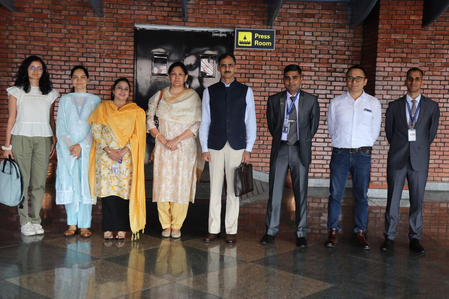
Kathmandu, Oct 11 (IANS) Lieutenant General Viresh Pratap Singh Kaushik of the Indian Army began his visit to Nepal on Sunday as he aims to interact with Indian Army ex-servicemen and review welfare schemes provided to veterans in the country, the Indian Embassy in Nepal said.
Kaushik, who holds the military honours PVSM, UYSM, YSM and SM, is scheduled to meet former Indian Army personnel during his visit and assess the implementation of various welfare initiatives aimed at supporting them in Nepal, the embassy said in a social media post.
Kaushik, who is also the Adjutant General of the Indian Army, is visiting Nepal to review the welfare of retired Indian Army personnel living in the country, including the benefits and support schemes available to them.
More than 122,000 Indian Army pensioners currently reside in Nepal, according to the Indian Embassy's website. The Indian government has made efforts to ensure the welfare of these pensioners, their families and dependents, with various branches of the Defence Wing working in coordination to address the needs and aspirations of Nepal-domiciled Gorkha ex-servicemen, according to the embassy.
The visit highlights India's continued focus on the welfare of its retired military personnel living in Nepal, particularly Gorkha veterans and their families who receive pensions and other support from the Indian government.
Under a tripartite agreement signed by representatives of the governments of India, Nepal and the United Kingdom on November 9, 1947, the tradition of recruiting Nepali nationals into the Indian and British armies continued after India gained independence.
However, the recruitment of Nepali youths into the Indian Army has remained suspended since 2019, initially due to the COVID-19 pandemic. Nepal subsequently suspended the recruitment process after India introduced the Agnipath scheme in 2022.
The Nepali government has argued that the scheme is inconsistent with the provisions of the 1947 Tripartite Agreement between India, Nepal and the United Kingdom.
Under the Agnipath scheme, only one-fourth of recruits, known as Agniveers, are retained in regular military service after completing their four-year tenure. It is not immediately clear whether Kaushik would discuss the issue with former Indian Army personnel in Nepal or Nepali officials during his visit.
In August, Indian Army Chief General Dhiraj Seth visited Nepal at the official invitation of Nepali Army Chief General Ashok Raj Sigdel. During the visit, President Ram Chandra Paudel conferred on Seth the honorary rank of General of the Nepali Army on August 17.
Nepal and India have maintained a longstanding tradition, dating back to 1950, of conferring the honorary rank of General on each other's army chiefs. The tradition is regarded as a symbol of the close military ties between the two countries.
--IANS
scor/ksk
Zelensky blames Hormuz blockade, not Ukraine, for fuel prices
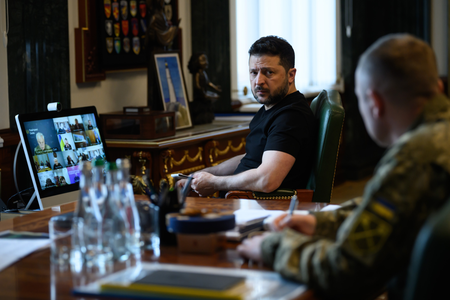
Washington, Oct 11 (IANS) Ukrainian President Volodymyr Zelensky on Sunday blamed the war in the Middle East and the blocking of the Strait of Hormuz for rising fuel prices, rejecting efforts in Washington to tie them to Ukraine, shortly before President Donald Trump announced an "energy ceasefire" between Kyiv and Moscow.
In an interview with ABC's This Week, Zelensky was asked why Trump and billionaire Elon Musk were blaming him for the continuation of the war.
"Because these people can't find a key how to stop Putin. Because it's more difficult to stop Putin than to pressure others. Because it's more simple to speak about the prices and connect it with Ukraine," he said.
"They're increasing because of the war in Middle East, of the blocking of Hormuz, because of these reasons. Everybody understands it," Zelensky added.
Trump has accused Ukraine of driving up American diesel costs through its drone strikes on Russian refineries.
"He wants to make problems for our farmers, our ranchers with diesel fuel. He better damn well stop," Trump said in a clip aired by CNN on Sunday.
In the ABC interview, Zelensky offered a reciprocal halt to strikes on energy infrastructure.
"We are ready for energy ceasefire, not to attack energy both sides," he said.
"And if the Russians want us not attack their diesel, their refineries and et cetera, we are asking President Trump, give them signal, not attack energy infrastructure of Ukraine. It's fair deal," he added.
"Don't attack us. Don't kill our children. We will stop attack your diesel," Zelensky said.
He said Russia had struck Ukraine's electricity sector 196 times this week, and gas and oil facilities 20 times, and had killed 153 civilians.
Later on Sunday, Trump wrote on Truth Social: "Effective immediately, there is an ENERGY CEASEFIRE in the War between Russia and Ukraine. Both parties have agreed.”
Zelensky subsequently told Axios the announcement "was news for me". There was no confirmation from Moscow.
Responding on ABC to Trump's call for a new Ukrainian president, Zelensky proposed a pause for elections. "So please tell Putin, give us two months, 60 days off. Total ceasefire, 60 days, and we will organize elections," he said.
--IANS
lkj/ksk/
Brazile predicts ‘Democratic night’ in Ohio as map widens
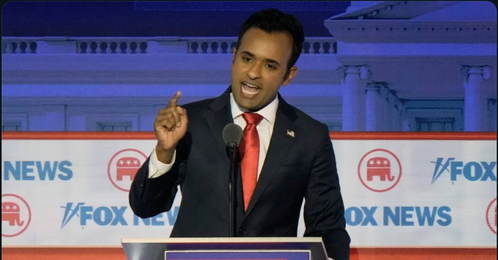
Washington, Oct 11 (IANS) Former US Democratic National Committee chair Donna Brazile on Sunday predicted a "Democratic night" in Ohio, where Indian-American Republican Vivek Ramaswamy is in a toss-up race for governor, as Sunday talk shows described Democrats pushing deep into Republican territory three weeks before the November 3 midterms.
"We're going to see a Democratic night in our -- and also in Ohio," Brazile said on ABC's This Week.
She did not name an Ohio race. The state is electing a governor and holding a Senate special election.
Brazile listed Republican-leaning House seats she said were now in play. "If you would have told me, Jon, in early September that I would be looking at South Carolina 1, Montana 1, Arkansas 2, Colorado 3," she said.
"We're campaigning in the heartland. We're campaigning in Kansas. We're campaigning in Nebraska," she added.
ABC senior political correspondent Rachel Scott said 33 House races had shifted towards Democrats in the network's ratings since Labor Day, eight of them in the past week.
On CNN's State of the Union, Republican strategist Ashley Davis said a "blue wave" was coming in the House, putting the likely Democratic gain at "nine to nineteen, which Cook is now saying".
Democratic strategist Karen Finney said she was also watching "Ohio and Florida Senate races, those are special elections".
Former New Jersey Governor Chris Christie, a Republican, said Democrats should worry instead about seats they should be winning but are not, and predicted Oregon's governorship would go Republican.
Ramaswamy faces Democrat Amy Acton in the race to succeed term-limited Republican Governor Mike DeWine. In Arizona's 1st Congressional District, Democrat Amish Shah faces Republican Jay Feely, while in Florida's 22nd, Democrat Pia Dandiya faces Republican Casey Askar.
Brazile also urged voters to return their ballots, saying 54 million Americans had requested mail ballots and only 2.5 million had sent them back. CNN host Jake Tapper said more than three million Americans had already voted.
--IANS
lkj/ksk/
Gates calls for taxing AI, reserving jobs for humans
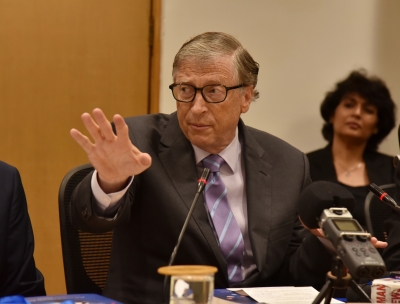
Washington, Oct 11 (IANS) Microsoft co-founder Bill Gates on Sunday said society would soon have to decide how to tax Artificial Intelligence (AI) and which jobs to reserve for humans, warning that AI "changes the world more than all previous technologies" as fears grow over its impact on employment.
Appearing on CNN's State of the Union, Gates was asked by host Jake Tapper about his earlier warning that the breadth of AI job losses across virtually all sectors would be "unprecedented", and his call to reserve some occupations in education and health care for humans.
Gates said he was looking at "how fast these models are improving and what the incentive is to use the AI in place of human labor".
"In the years ahead, we really do need to make a decision as a society, how do we tax AI usage or robot usage? And where do we want to make sure the human jobs are preserved?" he said.
"Until people get their mind around how powerful this is, and, therefore, what it's going to be doing to these jobs, the idea that you need to reserve things for humans may sound bizarre, but, in fact, we will get there," he added.
Gates, who helped build the personal computer and internet era, said those were "a big deal, but nothing compared to this".
He said the most immediate danger was "bad people using AI", particularly for cyberattacks, and predicted that "over the next year, we will move beyond self-governance" by AI companies, with government safety bodies like those for aviation and medicines.
Gates said he had heard from "a number of politicians" and hoped "in time" to discuss his concerns with Trump and "his key people".
But his warning comes as India's technology industry, whose professionals receive the bulk of US H-1B visas, faces both AI-driven change in its business and tightening US immigration rules.
Nasscom said hiring was expected "to shift from volume to skill mix, reflecting greater AI-driven productivity gains passed through to clients".
"AI is accelerating productivity and changing the nature of work, but it is also expanding the opportunity frontier," Nasscom chairperson Sindhu Gangadharan said in February, according to The Hindu BusinessLine.
In Washington, the pressure on Indian IT firms is coming from policy as well.
On Thursday, Labour Secretary Keith Sonderling suspended eight companies, including Infosys, Tata, Wipro and HCL, from the Permanent Labor Certification (PERM) programme, a key step in employer-sponsored green cards, citing ongoing investigations.
Vice President JD Vance warned at a campaign rally in Ohio last week that companies replacing American workers with legal immigrants could face "a big fat tariff".
The administration's $100,000 fee on certain new H-1B petitions has been blocked by two federal judges.
The H-1B programme allows US employers to temporarily hire foreign workers in speciality occupations. US Citizenship and Immigration Services data show that 71 per cent of approved H-1B petitions in fiscal 2024 were for beneficiaries born in India.
PERM is the labour certification step through which many employers sponsor foreign workers for permanent residence.
--IANS
lkj/ksk/
US buys Russian diesel as Graham Act deadline nears
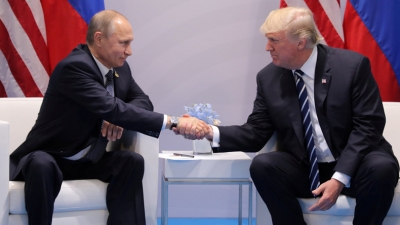
Washington, Oct 11 (IANS) US President Donald Trump's deal to buy Russian diesel drew sharp scrutiny on American Sunday television, with anchors saying it clashed with a sanctions law he signed last month, a week before that law's deadline for tariffs that could hit India and other major buyers of Russian crude.
CNN's State of the Union host Jake Tapper said Trump hoped to reverse "skyrocketing fuel costs" by buying six million barrels of diesel, "barely enough to cover a day-and-a-half of U.S. demand".
He said Trump was "purchasing it from Vladimir Putin, despite signing a bill three weeks ago by the late Senator Lindsey Graham sanctioning countries that buy Russian oil".
On ABC's This Week, co-anchor Jonathan Karl said the deal "appears to violate a law Congress passed shortly after the Russian invasion of Ukraine in 2022". He did not name the law.
ABC also replayed part of Trump's September 2025 address to the UN General Assembly, in which he criticised European countries for buying Russian energy.
"They're buying oil and gas from Russia, while they're fighting Russia. It's embarrassing to them," Trump said in the clip.
"Of course, the president announced on Friday that the US now plans to do exactly the same thing," Karl said.
The law Tapper referred to, the Lindsey O. Graham Sanctioning Russia and Iran Act of 2026, was signed on September 18.
Section 113 of the Act requires the President, within 30 days of enactment, to raise duties to "up to 100 per cent" on all goods from countries that were among the five largest importers of Russian crude oil or natural gas in the preceding 12 months and that knowingly make new purchases on or after the 30-day mark.
That deadline falls on October 18.
Section 112 requires duties of up to 500 per cent, by the same date, on goods imported into the United States from Russia, explicitly including "petroleum products".
The law allows the President to waive any duty if he certifies to Congress that the waiver is in the US national interest. It also says nothing in it affects the Treasury's authority to issue new general licences, the tool used to authorise the diesel trade.
The administration has not said publicly how it will apply either section.
Ukrainian President Volodymyr Zelensky told ABC the diesel deal "gives Putin money and he spends money only on this war".
House Majority Whip Tom Emmer, a Republican, defended it as "another example of our president thinking out of the box".
Former New Jersey Governor Chris Christie, also a Republican, called his party's closing message "malpractice", summing it up as: "It's OK to sell, or to buy oil from a thug, KGB dictator in Russia that will use it to kill free Ukrainians.”
The Treasury's Office of Foreign Assets Control issued General License 135 on Friday, authorising transactions involving Russian-origin diesel until April 2027. Trump has said Russia will initially supply more than 300,000 tonnes, followed by 500,000 tonnes in November and one million tonnes thereafter.
--IANS
lkj/ksk/
Trump declares Russia-Ukraine energy ceasefire
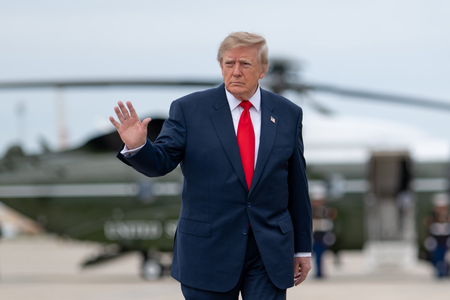
Washington, Oct 11 (IANS) US President Donald Trump on Sunday announced an immediate "energy ceasefire" between Russia and Ukraine, saying both sides had agreed to stop attacking each other's energy infrastructure, even as Ukrainian President Volodymyr Zelensky said he had not been informed and Moscow offered no confirmation.
"Effective immediately, there is an ENERGY CEASEFIRE in the War between Russia and Ukraine. Both parties have agreed. Do not break it! Thank you for your attention to this matter," Trump wrote on Truth Social.
The White House repeated the announcement on X about 20 minutes later. "Effective Immediately: An Energy Ceasefire in the War between Russia and Ukraine," it posted.
Trump did not say when the truce was agreed, which facilities it covered, how long it would last, or how it would be monitored.
Neither the Kremlin nor the Ukrainian government issued a formal statement confirming the arrangement in the hours after the post.
Zelensky, speaking to Axios shortly after the announcement, said he had not known about it but would accept a truce if Moscow did.
"The ceasefire announcement was news for me. But if Russians agree to an energy ceasefire, Ukraine will agree," Zelensky said.
"If President Trump negotiated it with Putin - please tell us when the ceasefire begins - we are ready and we will accept it," he added.
A senior Ukrainian official told the Kyiv Independent that Kyiv had no information about the ceasefire and doubted that Russia had been informed.
Earlier on Sunday, Zelensky had offered a reciprocal halt. "Ukraine will be ready to stop striking Russian oil refineries if Russia stops striking our energy infrastructure," he wrote on X, adding that any de-escalation must be mutual and backed by real guarantees.
The announcement came two days after Trump unveiled an agreement with Russian President Vladimir Putin to release Russian diesel into American and global markets, a move criticised by Ukraine, European officials and US lawmakers from both parties.
The Treasury Department's Office of Foreign Assets Control (OFAC) issued General License 135, authorising certain transactions involving Russian-origin diesel until April 2027.
On Saturday, Trump blamed Zelensky for continuing drone attacks on Russian refineries and said Ukraine should "get a new leader who can make a deal".
This is not the first such announcement. Last month, Trump said on Truth Social that Russia and Ukraine had agreed not to hit each other's energy targets. Axios reported that neither side confirmed a deal at the time, and both continued attacking energy infrastructure.
--IANS
lkj/ksk/vd