
Procurement of pulses from farmers at MSP in full swing under PM-AASHA scheme

New Delhi, Feb 17 (IANS) Procurement of pulses at the MSP by the Centre is in full swing with the approval for continuation of the integrated Pradhan Mantri Annadata Aay Sanrakshan Abhiyan (PM-AASHA) Scheme during the 15th Finance Commission cycle up to 2025-26 to help farmers get higher prices for their produce, the Ministry of Agriculture and Farmers' Welfare said on Monday.
The procurement has already started in Andhra Pradesh, Karnataka, Maharashtra, and Telangana and a total quantity of 0.15 lakh metric tonnes of tur (arhar) has been procured in these states till February 15, benefiting 12,006 farmers. The procurement of tur (arhar) in other states also will commence very soon. The Centre is committed to purchasing 100 per cent of tur produced by farmers through central nodal agencies, namely the NAFED and the NCCF, according to an official statement.
In order to incentivise the farmers contributing to the enhancement of the domestic production of pulses and to reduce the dependence on imports, the government has allowed the procurement of tur, urad, and masur under PSS equivalent to 100 per cent of the production of the state for the procurement year 2024-25.
The Government has also made an announcement in Budget 2025 that procurement of tur (arhar), urad, and masur up to 100 per cent of the production of the state will be continued for another four years through central nodal agencies to achieve self-sufficiency in pulses in the country.
Union Minister for Agriculture and Farmers' Welfare Shivraj Singh Chouhan has approved the procurement of tur (arhar) in Andhra Pradesh, Chhattisgarh, Gujarat, Haryana, Karnataka, Madhya Pradesh, Maharashtra, Telangana, and Uttar Pradesh under Price Support Scheme for the Kharif 2024-25 Season for a total quantity consolidating to 13.22 LMT.
The integrated PM-AASHA Scheme is administered to bring in more effectiveness in the implementation of procurement operations that would not only help in providing remunerative prices to the farmers for their produce but also control the price volatility of essential commodities by ensuring their availability at affordable prices to consumers through the buffer stock when prices shoot up in the market.
Under the Price Support Scheme of the integrated PM-AASHA Scheme, the procurement of the notified pulses, oilseeds, and copra conforming to the prescribed Fair Average Quality is undertaken by the central nodal agencies at the MSP directly from the pre-registered farmers through the state-level agencies.
--IANS
sps/vd
India’s exports of goods & services post 9.7 per cent rise in January

New Delhi, Feb 17 (IANS) India’s total exports of both merchandise and services for January 2025 are estimated at $74.97 billion, registering a growth of 9.72 per cent vis-a-vis January 2024, according to a statement issued by the Commerce and Industry Ministry on Monday.
The country’s merchandise exports during January 2025 were $36.43 billion as compared to $37.32 billion in January 2024.
However, non-petroleum merchandise exports in January 2025 were valued at $32.86 billion, registering an increase of 14.47 per cent as compared to $28.71 billion in January 2024.
The major drivers of merchandise export growth in January 2025 include electronic goods, engineering goods, drugs & pharmaceuticals, rice, and gems & jewellery.
Electronic goods exports jumped by a robust 78.97 per cent from $2.29 billion in January 2024 to $4.11 billion in January 2025 while engineering goods exports increased by 7.44 per cent from $8.77 billion to $9.42 billion during the month.
Drugs & pharmaceuticals exports increased by 21.46 per cent from $2.13 billion in January 2024 to $2.59 billion in January 2025.
Rice exports increased by 44.61 per cent from $0.95 billion in January 2024 to $1.37 billion in January 2025 while gems & jewellery exports went up by 15.95 per cent from $2.59 billion in January 2024 to $3 billion in January 2025.
The estimated value of the country’s services exports for January 2025 is $38.55 billion as compared to $31.01 billion in January 2024.
The country’s total imports (merchandise and services combined) for January 2025 are estimated at $77.64 billion, registering a positive growth of 12.98 per cent vis-a-vis January 2024.
India’s total exports during April-January 2024-25 (merchandise & services) are estimated at $682.59 billion, registering a positive growth of 7.21 per cent. Total imports during April-January 2024-25 are estimated at $770.06 billion which represents a growth of 8.96 per cent.
The cumulative value of merchandise exports during April-January 2024-25 was $358.91 billion, as compared to $353.97 billion during April-January 2023-24, registering a positive growth of 1.39 per cent.
The merchandise trade deficit of the country during April-January 2024-25 worked out to $242.99 billion as compared to $206.29 billion during April-January 2023-24, according to the official figures.
--IANS
sps/vd
Bhutan investment roadshows attract Indian investors in Delhi, Mumbai and Bengaluru
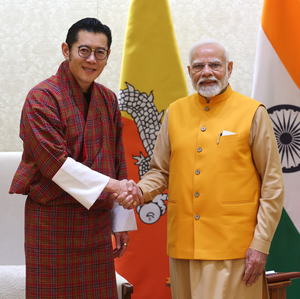
Thimphu, Feb 13 (IANS) Bhutan's bid to attract investors via recent Investment Roadshows held in Delhi, Mumbai and IT city Bengaluru generated a strong interest from the Indian business community, local media in Thimphu reported on Thursday.
According to the country's Department of Industry (DoI), the event successfully showcased Bhutan's investment potential in four key sectors: tourism and wellness, agro-based production, forest-based industries, and IT and IT-enabled services (ITES).
The roadshows were held in collaboration with the Bhutanese Embassy in India and the Confederation of Indian Industry (CII).
"Many Indian investors, particularly in Mumbai and Bangalore, were previously unaware of Bhutan's investment potential. The event served as an introduction to Bhutan's policies, business environment, and opportunities," said a DoI official.
India and Bhutan enjoy special ties of friendship and cooperation which are characterized by mutual understanding and trust. India is also the biggest source of investment in the landlocked country. Traditional high-level exchanges between the two countries are an important hallmark of the special partnership.
In March 2024, Prime Minister Narendra Modi paid a landmark visit to Bhutan, during which he received the Order of the Druk Gyalpo, Bhutan’s highest civilian decoration, from the King of Bhutan Jigme Khesar Namgyel Wangchuck. The award was in recognition of PM Modi’s outstanding contribution to strengthening the India-Bhutan friendship. PM Modi was the first foreign national to be conferred the prestigious award.
In December 2024, King Jigme Wangchuck and Queen Jetsun Pema Wangchuck visited New Delhi, during which they also called on Prime Minister Modi.
The official Bhutanese delegation that accompanied the King engaged with the Indian officials and thanked the Indian government for stepping up the development support under the 13th Five Year Plan (2024-29) and providing support for the Royal Government of Bhutan's Economic Stimulus Programme.
The King of Bhutan shared with Prime Minister Modi the progress in implementation of his vision for the Gelephu Mindfulness City Special Administrative Region. He also elaborated how India and Bhutan can work together on the project for the betterment of the two peoples and the region.
Prime Minister Modi reassured King Jigme of India's continued support for the Gelephu Mindfulness City project, which will bring prosperity and well-being in Bhutan and also the border areas, further strengthening economic and investment linkages between the two countries, the joint statement released after talks stated.
Gelephu is Bhutanese town bordering Assam's Chirang district. It has been a traditional gateway for trade and cultural exchanges between India and Bhutan. The proposed Mindfulness City promises to redefine the economic and environmental landscape of the region. A railway line connecting Gelephu with Guwahati via Chirang is being planned to enhance connectivity. It will open new economic corridors, enhance tourism and strengthen better people-to-people ties.
--IANS
int/as
India’s net direct tax collection surges 15 pc to cross Rs 17.78 lakh crore in 2024-25

New Delhi, Feb 11 (IANS) India’s net direct tax collection, comprising mainly corporate tax and personal income tax, jumped by 14.69 per cent to cross the Rs 17.78 lakh crore mark as of February 10 in the current financial year compared to 15.51 lakh crore in the same period of 2023-24, according to a data released by the Central Board of Direct Taxes (CBDT) on Tuesday.
The gross direct tax revenue surged by 19.06 per cent to surpass Rs 21.88 lakh crore from Rs 18.38 lakh crore in the same period of 2023-24, the figures showed.
The revenue from net non-corporate taxes, which comprises mainly personal income tax, surged by 21 per cent year-on-year to Rs 9.48 lakh crore during this period.
Net corporate tax collection rose more than 6 per cent to over Rs 7.78 lakh crore between April 1, 2024, and February 10, 2025.
Net collections from securities transaction tax (STT), which also form part of direct taxes, shot up by 65 per cent to Rs 49,201 crore so far in the current financial year.
Refunds worth more than Rs 4.10 lakh crore were also issued during the period, a 42.63 per cent increase against the year-ago period.
According to senior officials, this underscores the increasing efficiency of the Income Tax Department in making refunds to taxpayers.
The robust double-digit increase in direct tax collections reflects the increase in corporate profits in a growing economy and rising incomes as more upscale jobs are being created in the manufacturing and services sectors.
The buoyancy in tax collections strengthens the macroeconomic fundamentals of the economy with the government raising more funds to undertake investments in large infrastructure projects to spur economic growth and take up welfare schemes for the poor.
It also helps to keep the fiscal deficit in check. A lower fiscal deficit means the government has to borrow less which leaves more money in the banking system for big companies to borrow and invest. This in turn leads to a higher economic growth rate and the creation of more jobs.
Besides, a low fiscal deficit keeps inflation in check which helps to ensure growth with stability in the economy.
--IANS
sps/uk
US chip company Lam Research to invest Rs 10,000 crore in India: Ashwini Vaishnaw

New Delhi, Feb 11 (IANS) US-based semiconductor company Lam Research will invest Rs 10,000 crore in India, Union Minister for Railways and Electronics and IT, Ashwini Vaishnaw, announced on Tuesday.
Lam Research Corporation last year announced plans to expand its global chip fabrication equipment supply chain to include India.
“One more milestone in our semiconductor journey: Lam Research announces major investment of over Rs 10,000 crore in India,” Minister Vaishnaw posted on X social media platform.
“Big vote of confidence in PM @narendramodi Ji’s semiconductor vision,” he added.
Last year, Lam Research Corporation pledged nearly Rs 241 crore in software licenses to upskill 2,800 students in the country, in collaboration with the Indian Semiconductor Mission (ISM) and Indian Institute of Science, to prepare a future-ready workforce.
The setting up of a semiconductor manufacturing base in the country has been an important part of ‘Make in India’, which India has been attempting to achieve for over six decades.
With the launch of the India Semiconductor Mission and the five major projects which have been approved, starting with Micron, the two projects by Tata Electronics, the one project by CG Power, and the last project by Keynes, a real manufacturing base of semiconductors in this country is being established in India.
India’s semiconductor market is projected to grow to $103.4 billion by 2030, powering the over $400 billion electronics market, according to the Indian Electronics and Semiconductor Association (IESA).
The government’s targeted incentives for fabrication facilities (Fabs) and outsourced semiconductor assembly and testing (OSATs), increased R&D investments and collaborative industry initiatives are key to propelling India’s semiconductor sector forward, with significant investment commitments of over $21 billion by the IESA member companies in last one year.
--IANS
na/
TN govt should operate all thermal power stations for self-sufficiency: PMK

Chennai, Feb 11 (IANS) Pattali Makkal Katchi (PMK) president Anbumani Ramadoss has urged the Tamil Nadu government to take immediate steps to operate all thermal power plants in the state to achieve self-sufficiency in power generation.
The former Union Minister stated that purchasing power at Rs 20 per unit was unacceptable when the state could generate electricity at Rs 6 per unit.
He warned that despite increasing tariffs if electricity continued to be procured at such high rates, the Tamil Nadu Generation and Distribution Corporation (TANGEDCO) would never be profitable.
Ramadoss called upon the government to expedite the construction of thermal power plants on a war footing and further argued that if these projects were completed on time, the state would not need to rely on private companies for electricity at exorbitant prices.
He further alleged that in the last 20 years, only 2,100 MW of thermal power capacity had been added in Tamil Nadu, with no new projects implemented in the last decade.
The PMK had previously accused the state government of deliberately delaying the commercial-scale generation of electricity at the North Chennai Thermal Power Station Stage-3 to justify purchasing power from private firms at higher rates.
Ramadoss pointed out that the plant was constructed at a cost of Rs 10,158 crore and inaugurated a year ago. However, he claimed that Chief Minister M.K. Stalin had hastily opened the plant before the Lok Sabha elections.
He emphasised that typically, such power plants begin generation within weeks of inauguration.
“Thermal power plants are considered operational only if they run continuously for 72 hours. However, the 800 MW plant has not functioned for that duration,” he said.
The PMK President had earlier criticised the Tamil Nadu government for increasing power tariffs three times in just 23 months. He asserted that more than 50,000 micro, small, and medium enterprises (MSMEs) in western Tamil Nadu had shut down, citing the tariff hike as a key reason.
“The power tariff has increased by 33 per cent, affecting all sections of society. This is unacceptable,” he said, urging the government to roll back the hike.
Ramadoss also proposed that if electricity bills were calculated on a monthly basis instead of bi-monthly, consumers could see a reduction in charges by 18 per cent to 20 per cent.
--IANS
aal/dan
India and France can make a difference amid fast-changing global economy: EAM Jaishankar

Paris, Feb 11 (IANS) External Affairs Minister (EAM) S. Jaishankar on Tuesday said that amid the fast-changing global economy, India and France can make a difference, including by motivating the rest of the European Union (EU).
Speaking at the India-France CEO Forum here, EAM Jaishankar said that in the ever-changing world, we need diversified production, reliable and resilient supply chains and deeper business collaborations.
“This applies as much to manufacturing as it applies to health,” he told the gathering.
Stressing that India and France are two nations with a tradition of independent mindsets, he said, “We are also actively working to strengthen each other's position and make our collaboration an important element of contemporary world affairs.”
“The more we strengthen our positions, we help stabilise the global economy in volatile and uncertain times. The ‘Make in India’ initiative has opened up many new possibilities in that regard,” said EAM Jaishankar on the sidelines of the AI Action Summit.
“The Summit is a reminder, in itself, of how much we could be doing in AI, in software development and in cyber security. The year 2026 will be celebrated as the 'India-France Year of Innovation'. So let us use that as a driver,” he told the forum.
“I would say, please do weigh in on our FTA negotiations. Defence, manufacturing and aerospace are well-established areas of our cooperation. Both the nature and the scale of this collaboration are today poised for a big jump, and the challenge before us is, can we make the most of it,” the External Affairs Minister stated.
He also touched upon the clean energy transition that is underway in India, infrastructure that is changing rapidly, digital public infrastructure (DPI) and more.
Earlier in the day, EAM Jaishankar met with his French counterpart Jean-Noel Barrot in Paris, where the two leaders discussed strengthening India-France bilateral ties with a focus on AI, innovation, connectivity, and clean energy.
The AI Action Summit convened global leaders, including Prime Minister Narendra Modi who delivered a motivating speech on AI, and top tech CEOs to deliberate on AI's future, emphasising innovation and ethical development.
--IANS
na/uk
Revised income tax law to eliminate obsolete and redundant provisions: Experts

New Delhi, Feb 9 (IANS) The revised income tax law is expected to be clear, concise, consistent and supplemented with illustrative examples to aid understanding and interpretation by various stakeholders, which will also eliminate obsolete and redundant provisions, according to industry experts.
The ongoing review of the Income-tax Act, 1961, seeks to modernise and simplify India's tax system in line with broader economic goals.
“It aims to enhance the ease of doing business, reduce ambiguity in interpretations, improve tax administration and compliance. This will help increase India's tax-GDP ratio to global levels and support sustainable economic growth,” said Sandeep Chaufla, Partner - Price Waterhouse and Co (PwC).
The review will also foster a transparent and efficient tax system that attracts investments and advances the Government's vision of a Viksit Bharat, he mentioned.
Union Finance Minister Nirmala Sitharaman is hopeful of introducing the new Income Tax Bill in the coming week, which would go to the Parliament's Standing Committee on Finance for scrutiny.
Aiming to put more money in the hands of the middle class and simplify the whole filing process, the bill has been granted approval in the Cabinet meeting chaired by Prime Minister Narendra Modi.
According to FM Sitharaman, all the process is completed and the Parliament passes it, then the government will decide when to roll out the new bill.
The legislation would likely provide directions to widen the tax net, given the contraction in the tax base following the exemption limit being raised to Rs 12 lakh in the Union Budget.
The current Income Tax Act was enforced in the country in 1961 and now, the new Income Tax Act is being made according to the needs of the 21st century to replace the existing law.
The simplification of this bill can be understood in a way that there are about 6 lakh words in the old Income Tax Act, which will be drastically reduced to about 3 lakh in the new bill, easy for taxpayers to comprehend.
—IANS
na/
German shipper mulls placing container ship order with Hanwha Ocean

Seoul, Feb 9 (IANS) German shipping firm Hapag-Lloyd may turn to South Korean shipbuilder Hanwha Ocean Co. for its next batch of container ship newbuildings worth over 1.7 trillion won ($1.2 billion), according to foreign news media.
Hapag-Llyod is considering placing an order to build six liquefied natural gas (LNG) dual-fuel container carriers with Hanwha Ocean, global shipping news source TradeWinds reported, according to Yonhap news agency.
In 2021, the German firm reportedly signed a letter of intent with the Korean shipbuilder, then known as Daewoo Shipbuilding & Marine Engineering Co. (DSME), for the construction of six container ships of the same kind.
Industry people expect the two companies to sign the deal later this month.
Hanwha Ocean said nothing has been decided in regard to the deal.
Hanwha Ocean is a shipbuilding affiliate of South Korea's chemicals-to-aerospace conglomerate Hanwha Group.
Last month, three South Korean shipbuilders were on the list of the world's top 10 companies by new global orders in 2024, while the remaining seven spots were claimed by Chinese shipyards.
Samsung Heavy Industries ranked fifth on the list, based on new orders measured in compensated gross tons (CGTs), and Hanwha Ocean Co. and HD Hyundai Samho Heavy Industries Co. followed in sixth and seventh places, according to the data by London-based Clarkson Research Services.
China's New Times Shipbuilding was on the top, followed by Hudong–Zhonghua Shipbuilding, New Yangzijiang and Hengli Heavy Industry.
Dalian Shipbuilding, Waigaoqiao Shipbuilding and Jiangnan Shipyard placed eighth to 10th. In terms of order backlog, however, South Korean companies led the field
HD Hyundai Heavy Industries Co. ranked first globally with 8.93 million CGTs as of January. Samsung Heavy Industries Co. followed with 8.72 million CGTs and Hanwha Ocean placed third with 8.49 million CGTs. HD Hyundai Samho secured the sixth spot in this category.
—IANS
na/
More RBI rate cuts on the cards, stance likely to change from neutral to accommodative

New Delhi, Feb 9 (IANS) As the RBI embarks upon the rate cut cycle, it can be expected that more cuts are also on the cards, while the timing can be debatable, according to a Bank of Baroda note.
The RBI MPC unanimously lowered the repo rate by 25bps from 6.5 per cent to 6.25 per cent. Stance was kept at neutral to allow the MPC flexibility on future path of policy action.
“Cumulatively, we are pricing in 75bps cut in this calendar year. The April policy would review the economic situation and depending on the growth-inflation dynamics could opt for another cut or change in stance,” said Sonal Badhan, economist, BoB.
At the time of next rate cut, we also expect change in stance from neutral to accommodative, said the note.
This is the first rate cut since Covid-19 period. Stance of the monetary policy was retained at neutral, also by a unanimous vote. On liquidity, the central bank has urged banks to lend in the un-collateralised call market, instead of parking that money with the RBI.
Forward contracts have been introduced in government securities. This will enable long-term investors such as insurance funds to manage their interest rate risk across interest rate cycles.
They will also enable efficient pricing of derivatives that use bonds as underlying instruments. This is expected to improve liquidity to some extent, according to the BoB note.
SEBI-registered non-bank brokers (on behalf of their clients) will now be able to access NDSOM platform. This decision has been taken to widen accessibility, which until now was available to regulated entities and to the clients of banks and standalone primary dealers.
“The RBI will set up a working group, with representation from various stakeholders, to undertake a comprehensive review of trading and settlement timing of financial markets regulated by the Reserve Bank. The Group will submit its report by April 30,” the note said.
The Central Bank will also introduce additional Factor of authentication (AFA) in cross-border ‘Card Not Present’ transactions. This aims to provide safety for online international transactions using cards issued in India.
—IANS
na/