
DRDO unveils quantum technology research centre for defence applications
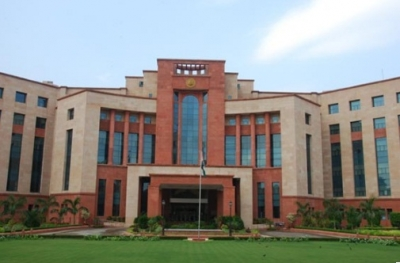
New Delhi, May 27 (IANS) The Defence Research and Development Organisation (DRDO) on Tuesday inaugurated the Quantum Technology Research Centre (QTRC) at Metcalfe House in the national capital.
The facility was inaugurated by Samir V Kamat, Secretary, Department of Defence R&D and Chairman, DRDO with the aim to further strengthen indigenous quantum capabilities for strategic and defence applications.
QRTC is equipped with state-of-the-art experimental set-ups designed to propel research and development in critical quantum domains.
The key capabilities of this centre include Characterisation of Vertical-Cavity Surface-Emitting Lasers and Distributed Feedback Lasers; Test-beds for evaluating single-photon sources; set-up for characterisation of Micro Fabricated Alkali Vapor Cell; and experimental platforms for developing and validating quantum key distribution techniques to enable ultra-secure communication and safeguard national security in the post-quantum era, spearheaded by Scientific Analysis Group (SAG), DRDO.
According to the Ministry of Defence, spearheaded by Solid State Physics Laboratory (SSPL), QTRC also focuses on foundational technologies including an Ultra-Small Atomic Clock based on Coherent Population Trapping for highly precise timekeeping in Global Navigation Satellite System-denied environments, an Atomic Magnetometer using optically pumped magnetometry for ultra-sensitive magnetic field detection, and Cutting-edge solid-state quantum devices and materials.
DRDO continues to lead India's quantum initiatives across verticals such as quantum sensing, secure communications, and post-quantum cryptography.
As a key stakeholder in the National Quantum Mission, DRDO is committed to fostering indigenous innovation and developing sovereign quantum technologies to secure India’s strategic future.
The inauguration ceremony was attended by Director General (Micro Electronic Devices, Computational Systems and Cyber Systems) Suma Varughese, whose vision and leadership were instrumental in conceptualising this cutting-edge facility, said the Ministry of Defence.
—IANS
na/
Centre launches 2 digital platforms to modernise India’s addressing system
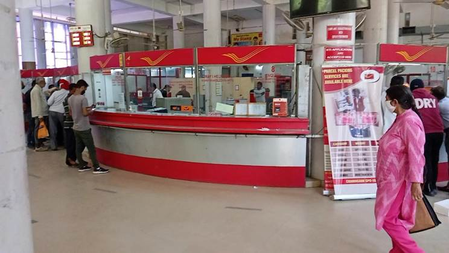
New Delhi, May 27 (IANS) The government on Tuesday launched two transformative digital platforms — ‘Know Your DIGIPIN’ and ‘Know Your PIN Code’ — marking a significant step towards the modernisation of India's addressing system and geospatial governance.
These platforms were launched in alignment with the National Geospatial Policy 2022, which envisions the development of an advanced geospatial infrastructure to support digital governance and public service delivery.
“The launch of these two applications reflects our government’s unwavering commitment to digital transformation and precision governance. DIGIPIN, in particular, will redefine how we perceive addresses, ensuring that every citizen, even in the remotest part of the country, is digitally locatable and serviceable,” said Vandita Kaul, Secretary, Department of Posts.
The DIGIPIN (Digital Postal Index Number) is an open-source, interoperable, geo-coded, grid-based digital address system developed by the Department of Posts in collaboration with IIT Hyderabad and NRSC, ISRO.
It is a cornerstone of the Department of Posts' vision to offer Address-as-a-Service (AaaS) — an array of services associated with address data management to support secure and efficient interactions between users, government entities, and private sector organisations.
The ‘Know Your DIGIPIN’ portal enables users to retrieve their DIGIPIN based on precise geolocation, and input latitude and longitude coordinates to fetch corresponding DIGIPINs and vice versa.
This initiative simplifies location mapping, enhances logistics and emergency response, and ensures last-mile delivery, especially in rural and underserved areas.
The DIGIPIN system, officially reviewed and adopted by the Thematic Working Group on Address under the National Geospatial Policy 2022, is now available to all Ministries, State Governments, institutions for integration into their workflows, and users for their own use, said the Department of Posts, Ministry of Communications.
Incorporating DIGIPIN as an additional address attribute enables the leveraging of GIS capabilities, laying the foundation for future GIS-based digitalisation of service delivery across various organisations in a cost-effective manner.
DIGIPIN will enhance location accuracy across multiple sectors by providing precise geographic coordinates, ensuring accurate service delivery and reducing emergency response times.
The six-digit PIN Code system, introduced in 1972, has served as the backbone of India’s postal delivery.
However, recognising the need to modernise and refine its geographic accuracy, the Department undertook a national geofencing exercise across all postal jurisdictions to geo-reference all the pin code boundaries of the country.
Based on this, the Department of Post has now launched the ‘Know Your PIN Code’ web application which uses GNSS location features to allow users to identify the correct PIN Code based on the location and submit feedback on PIN Code accuracy for continuous refinement of pin code dataset.
The geo-fenced PIN Code boundaries dataset has also been uploaded on Open Government Data Platform under the title “All India PIN Code Boundary geo-json”.
With this dual launch, the Department of Posts advances its role not just as a postal service provider but as a critical enabler of Digital Public Infrastructure (DPI) for India.
--IANS
na/
Centre boosts ease of doing business for leather exporters

New Delhi, May 26 (IANS) The Directorate General of Foreign Trade (DGFT) on Monday issued a notification to remove key procedural restrictions applicable to the export of value-added leather products.
This step is expected to reduce compliance burden and improve ease of doing business for exporters, according to the Ministry of Commerce,
Port restrictions have been withdrawn, allowing export of Finished Leather, Wet Blue Leather, and EI Tanned Leather from any port or Inland Container Depot (ICD).
Earlier, these exports were restricted to specific notified ports. The mandatory requirement for testing and certification by the Central Leather Research Institute (CLRI) for export of Finished Leather, Wet Blue Leather, Crust Leather, and EI Tanned Leather has also been dispensed with.
These procedural requirements were originally instituted to monitor export of value-added leather products and distinguish them from raw hides and dutiable items.
However, with the removal of export duties on such leather categories and the clear physical distinction between processed and raw leather, the existing checks were considered redundant, said the ministry.
The decision follows consultations with stakeholders, including the Council for Leather Exports, Leather exporters and central leather research institute (CLRI). It is expected to streamline export procedures, reduce transaction costs, and benefit MSME exporters in particular.
The reforms also support India’s efforts to enhance export competitiveness in the global leather value chain while maintaining transparency and quality standards under general customs provisions.
India's leather and non-leather footwear exports have seen a significant rise of nearly 25 per cent in the 2024-25 financial year (FY25), reaching $5.7 billion.
The industry is expected to surpass the $6.5 billion mark in the current fiscal year (FY26), according to the Council for Leather Exports (CLE). The CLE, which represents footwear exporters, mentioned that demand from both developed and developing countries remains strong, contributing to the impressive growth.
The footwear industry is labour-intensive, providing employment to approximately 42 lakh people. With an overall turnover of 19 billion dollar, the sector includes $5 billion in exports.
—IANS
na/
Inland waterways to expand to 23 states by FY27: Minister
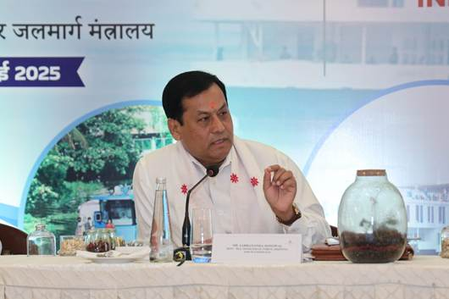
New Delhi, May 26 (IANS) The footprint of inland water transport is expected to expand significantly, from 11 states in FY2024 to 23 states and 4 Union Territories by FY2027, Union Minister of Ports, Shipping and Waterways, Sarbananda Sonowal, said on Monday.
To support this growth, projects worth Rs 1,400 crore were launched or announced during the Inland Waterways Development Council (IWDC) meeting held on January 10.
Chaired a meeting of the Consultative Committee on Inland Waterways Transport in Mumbai, it was revealed that 76 waterways are targeted to be made operational by 2027, with cargo volume expected to surge by 156 million tonnes per annum (MTPA) by end of FY 2026.
The Inland Waterways Authority of India (IWAI), the nodal agency under the Ministry, presented a comprehensive review of major projects, future projections, and the roadmap ahead.
Additionally, the IWAI is conducting 10,000 km of longitudinal survey each month to assess Least Available Depth (LAD) for improved navigability. Cargo volume is likely to make an incremental growth up to 156 MTPA by March, 2026 inching closer towards the ‘Maritime India Vision 2030’ target of 200 MTPA.
“Inland waterways are emerging as the watershed moment in India’s logistics and transport ecosystem. Under the visionary leadership of Prime Minister Narendra Modi, we are witnessing a transformational shift with policy interventions like the National Waterways Act, 2016, the Inland Vessels Act, 2021 and supplemented by multiple programmes like Jal Marg Vikas Project, Arth Ganga, Jalvahak scheme, Jal Samriddhi scheme, Jalyan and Navic, among others,“ said Sonowal.
Through ‘Maritime India Vision 2030’ and the ‘Maritime Amrit Kaal Vision 2047’, these roadmaps are not just policy documents; they are catalysts driving India toward becoming a global maritime powerhouse.
Inland Waterways has major projects in the northeast. A Rs 5,000 crore roadmap is planned over the next five years.
“In line with the ‘Harit Nauka Guidelines’, the Inland Waterways Authority is committed to green and sustainable transport solutions, including the procurement of electric catamarans and hydrogen fuel cell-powered vessels,” said the minister.
—IANS
na/
Pakistan and IMF to hold virtual talks on fiscal budget

Islamabad, May 26 (IANS) Pakistan and the International Monetary Fund (IMF) are expected to hold a virtual round of negotiations and talks for the upcoming fiscal budget 2025-26 later on Monday, government sources have revealed.
Both sides are expected to discuss circular debt of the gas sector and other parts of the next budget with Pakistani officials expected to present a plan for ending the gas sector's circular debt.
During the first round of talks with the IMF delegation in Islamabad, it was demanded of the Pakistan government to provide the data of the gas sector companies. Government sources say that Pakistan is expected to produce the five-year performance of the gas companies to the IMF during the virtual talks.
The IMF has raised serious questions over the towering circular debt of the gas sector, which stands at a whopping Rs 2800 billion.
“The IMF will be briefed about the gas companies' profit, loss data, cash flow and the balance sheet," said a government source.
"Pakistan will also be submitting a plan to the IMF about phasing out the circular debt within the next five years," the source added.
While there is optimism on the Pakistan side, the inconclusive first round of talks with the IMF due to various disagreements over the relief measures proposed, has raised concerns over the strict conditions of the IMF which may reflect in increased taxes on the citizens during the financial budget 2025-26.
“The IMF raised objections to government proposals, particularly on additional power subsidies to domestic consumers. It also rejected the government's plan to reduce electricity tariffs for industrial users, and demanded timely tariff hikes during the next fiscal year," a top official said.
While Pakistan’s Federal Board of Revenue (FBR) has shown its reluctance to increase tax targets, the government’s expenditure continues to rise, prompting the IMF to warn Islamabad that if the spending exceeds the fixed limit, then Pakistan may miss its primary balance surplus target, which is pivotal to the IMF loan programme to Pakistan.
--IANS
int/hamza/as
India’s coal sector makes seismic shift as production jumps 70 pc in 11 years: Kishan Reddy
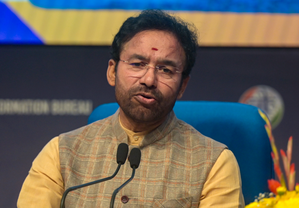
New Delhi, May 26 (IANS) Once dismissed as a corruption-laden, bloated, and an inefficient monolith, India’s coal and mines sector has undergone a seismic shift over the last decade with a 70 per cent leap in production to cross 1 billion tons in 2024-2025, Union Minister of Coal and Mines G Kishan Reddy has stated in an article to commemorate the Modi government’s 11 years in power, on May 26.
This was being pegged as one of the biggest challenges for the newly elected Narendra Modi government. The Supreme Court’s cancellation of 204 coal blocks in 2015 provided an opportunity for the Government to seek transformational change. The introduction of commercial coal mining in 2020 followed, marking a new era of transparency and competition, the article states.
Reddy highlights that 10 years down the line, till March 2025, approximately 150 Coal Mines have been successfully auctioned. Since the launch of Commercial Coal Mining in June 2020 by the Prime Minister of India, 11 rounds have been completed, and the 12th round of commercial coal mine auction, which was recently launched in March 2025, is in progress.
The results speak for themselves: India’s coal production has seen a 70 per cent growth over the last decade—a massive increase combined with transparency, efficiency, and sustainability. State governments have been one of the biggest beneficiaries with close to Rs 2.50 lakh crore in auction premiums and royalties being received into various state government exchequers, Reddy pointed out.
This milestone, however, is not an overnight transformation, but is the result of a decade of deep reforms. In 2014, the coal sector was in complete disarray. There was a severe deficit in coal production compared to its dramatically rising demand. Coal and lignite production saw a modest increase from 566 million tonnes in 2009–2010 to 610 million tonnes in 2013–2014. A cumulative annual growth rate of 1.89 per cent was far from sufficient for our needs as a growing economy, the minister observes.
As we look to the future, with a continued focus on modernisation, international collaborations, and sustainable practices, the journey ahead is bound to witness even greater milestones, solidifying India’s role as a leader in the global mining and resource economy.
Reddy has also highlighted the increased emphasis on addressing environmental and sustainability concerns in the coal sector.
Recognising the environmental advantages of underground mining, like lower land disturbance, reduced emissions and extraction at greater depths, our government is giving it a major push. A clear roadmap to reach 100 MT by 2029–30 is already being implemented with full commitment.
Furthermore, the Ministry is fast-tracking First Mile Connectivity (FMC) projects, ensuring that 90 per cent of coal will be loaded through mechanised and eco-friendly systems including conveyor belts, Silo and Rapid Loading Systems, and water sprinklers, the minister added.
--IANS
sps/uk
India’s mining & construction equipment sector to touch $45 billion by 2030: Report

New Delhi, May 26 (IANS) India’s mining and construction equipment (MCE) sector, currently valued at $16 billion, is projected to grow at a 19 per cent compound annual growth rate to touch $45 billion by 2030, according to a CII-Kearney report released on Monday.
India is now the fastest-growing MCE market among the top six global economies, surpassing even the US, Germany, and Japan, the report states.
The Confederation of Indian Industry (CII) and Kearney's “vision report” has come up with recommendations aimed at making India a global manufacturing hub in the MCE sector.
According to the report, the mining and construction sector, a key enabler of infrastructure, energy, and industrial growth, commands an $18 trillion global market and contributes 16 per cent of global GDP. In India, this sector is central to national development—contributing 22 per cent of GDP, ranking second only to China, and supporting over 70 million jobs.
India's MCE market has recorded a rapid compound annual growth rate (CAGR) of 12 per cent over the past five years, to position the country as a key global player.
The expansion of the MCE sector is projected to contribute over $100 billion to India's economy by FY30 and create 20 million jobs directly or indirectly. This impact is driven by the growth of upstream and downstream industries, job creation, and a boost to tax revenues.
The report presents a bold Vision 2030 to position India as a global leader in India’s mining and construction equipment (MCE) sector and outlines an action plan.
To realise the full potential of Vision 2030, the report recommends structural and policy initiatives. Institutionalising governance via a single nodal agency, production-linked incentive (PLI) scheme tailored for MCE, accelerating MCE exports through FTAs, establishing mutual recognition arrangements for Indian certification standards, and promoting technology adoption and automation.
Rationalising tax and import duties, creating innovation forums including National R&D consortia and start-up accelerators, green incentives and clean-tech R&D support, revamping underground mining and beneficiation regulations to unlock mineral potential are the other key recommendations.
--IANS
sps/vd
No shortage of funds for agricultural research under PM Modi govt: Shivraj Singh Chouhan

New Delhi, May 24 (IANS) There will be no shortage of funds for agricultural research under the Prime Minister Narendra Modi government, Union Minister for Agriculture, Shivraj Singh Chouhan, said on Saturday.
Addressing agricultural scientists here, the minister said his life is dedicated to serving farmers, boosting agricultural production, reducing production costs, ensuring food security, filling the nation's food basket, and safeguarding the agricultural interests of future generations.
He emphasised that balanced use of fertilisers, understanding local conditions, utilising accurate research insights, and access to quality seeds can undoubtedly help farmers enhance their productivity.
Stressing the importance of collaboration, Chouhan highlighted that ‘Viksit Krishi Sankalp Abhiyan’ is a significant step towards connecting scientists, department officials, and farmers an integration that has long been missing.
The minister also urged the country’s scientists to showcase their research capabilities on the global stage, asserting that India’s agricultural institutions possess the strength and excellence that can earn global recognition.
He lauded the dedication of agricultural scientists and stated that the nation would express its gratitude to them following the successful completion of this campaign.
Under the leadership of Chouhan, preparations for the ‘Viksit Krishi Sankalp Abhiyan’ are now in their final stages.
This nationwide campaign will be formally launched on May 29 from Puri, Odisha.
The Indian Council of Agricultural Research (ICAR) and the Ministry of Agriculture and Farmers' Welfare, in collaboration with state governments, are fully engaged in the planning and execution of this massive initiative.
According to Devesh Chaturvedi, Secretary, Ministry of Agriculture, India has 210 million hectares of net cropped area. Even a marginal increase of one quintal per hectare in productivity could lead to a substantial boost in overall agricultural output.
The ‘Viksit Krishi Sankalp Abhiyan’ will be held from May 29 to June 12 across over 700 districts. Scientists will travel village to village, engaging in direct interaction with farmers.
—IANS
na/
Musk-run X suffers outage, users in India unable to login and load new posts

New Delhi, May 24 (IANS) The Elon Musk-run social media platform X on Saturday suffered an outage globally, including in India, as users were unable to load new posts and were unable to login.
According to outage tracking website Downdetector, thousands of users struggled to access X webpages, as well as had issues with the app and login page.
While 41 per cent users said they were unable to login, the same number of users reported problems with the X app and 18 per cent with the website.
The company was yet to reveal the reason behind the outage -- second within 24 hours.
On Friday, X (formerly known as Twitter) suffered a major outage. Millions of users were unable to access the social media app.
Several users in India tried to use the website but were unable to access it. According to Downdetector, more than 5,000 users worldwide reported issues with the microblogging platform.
X Engineering said in a post that they were aware of the incident and the team was constantly working on the issue.
“X is aware some of our users are experiencing performance issues on the platform today. We are experiencing a data centre outage and the team is actively working to remediate the issue,” it posted.
In March, Musk said a massive cyber-attack hit his X social media platform, that disabled millions of users across the globe, including in India, from accessing the popular platform. The X platform went down in a massive global outage as users were unable to access the micro-blogging platform.
“We get attacked every day, but this was done with a lot of resources. Either a large, coordinated group and/or a country is involved. Tracing...,” said the billionaire in a post. “There was (still is) a massive cyberattack against X,” he said, adding that it is an attempt to silence him and his platform.
X was acquired by Musk in October 2022 for $44 billion. After the acquisition, X rarely went off the grid unlike its peers Facebook and Instagram.
--IANS
na/
NTPC’s Q4 net profit surges 22.6 pc sequentially to Rs 5,778 crore

New Delhi, May 24 (IANS) Power major NTPC Ltd on Saturday reported a 22.6 per cent sequential surge in consolidated net profit at Rs 5,778 crore in Q4 FY25.
The revenue stood at Rs 43,903.7 crore, up 6 per cent from Rs 41,368 crore in the third quarter (Q3).
NTPC, which operates under the Ministry of Power, is India’s largest power generation company.
The company also informed that the Board has approved a final dividend of Rs 3.35 per share for its investors. This is in addition to the two interim dividends of Rs 2.5 per share each paid in November and February.
On year-on-year basis, the state-run power major reported a 4 per cent rise in its consolidated net profit at Rs 5,778 crore for the March quarter, compared to Rs 5,556.4 crore in the same period last year.
The shares of the company ended nearly a per cent in the green on Friday.
Earlier this week, NTPC Green Energy, a wholly-owned subsidiary of the state-run power giant NTPC, announced that its consolidated net profit nearly tripled in Q4 FY25, rising by 188 per cent to Rs 233.21 crore compared to Rs 80.95 crore in the same quarter last fiscal (Q4 FY24).
Compared to the previous quarter, the profit soared by an even higher 255 per cent from Rs 65.61 crore in December 2024 (Q3), according to its stock exchange filing. The company’s consolidated revenue from operations also showed strong growth. It increased by 22.4 per cent year-on-year (YoY) from Rs 508.14 crore in the March 2024 quarter to Rs 622.27 crore in the quarter under review (Q4 FY25).
NTPC Green Energy is a company focused on renewable energy projects, pursuing growth through both organic development and acquisitions. As of March 2025, the government held an 89.01 per cent stake in the firm.
--IANS
na/