
2-wheeler segment logs strong growth in India driven by robust exports, domestic recovery
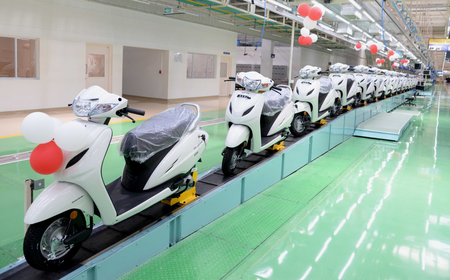
New Delhi, Sep 3 (IANS) India’s automobile industry showed 2.8 per cent year-on-year (YoY) growth in retail sales in August, with robust performance in the two-wheeler segment, a report said on Wednesday.
Two-wheeler manufacturers increased sales by 2.1 per cent primarily through exports and festive-season inventory buildup on the part of dealers, a report from Choice Institutional Equities said.
Passenger vehicle sales improved marginally by 0.8 per cent, led by a healthy demand for the SUV segment. The three-wheeler sales declined by 2.3 per cent YoY as consumers moved towards electric vehicles.
Eicher Motors reported a 54.8 per cent increase in two-wheeler sales year-on-year, while TVS Motor saw a 30.1 per cent rise, driven by strong demand for premium motorcycles.
Hero MotoCorp increased by 8.1 per cent due to rural recovery, while Bajaj Auto saw a 5.0 per cent rise, supported by a 28.6 per cent surge.
The PV segment sales in the domestic market slowed as dealers kept lean inventories in anticipation of GST rate changes. The segment also saw increased CNG penetration, the report said.
Mahindra & Mahindra reported a 9 per cent year-over-year decline in domestic dispatches. Maruti Suzuki saw a 0.6 per cent drop but was supported by strong exports.
Commercial vehicle sales increased by 8.0 per cent, while tractor sales rose by 29.7 per cent due to rural demand. CV inventory, led by Ashok Leyland, showed a decline, easing dealer pressure after a subdued year, the report noted.
The Centre is also expected to lower the tax on entry-level passenger vehicles and two-wheelers to 18 per cent, making them more affordable ahead of Diwali.
Currently, all passenger vehicles based on combustion engines are subject to a GST of 28 per cent plus a compensation cess of 1 per cent to 22 per cent based on engine capacity, length, and body type.
--IANS
aar/na
Apple bets big on India market with 4 own retail stores

New Delhi/Pune, Sep 3 (IANS) Apple on Wednesday previewed its Koregaon Park retail store in Pune -- and its fourth in India -- as the iPhone maker doubles down on the domestic market where it is creating new records on both the domestic production and export fronts.
Located in the heart of a major centre of culture and learning, the new Pune store, which opens on Thursday for the public, invites customers to discover and shop Apple’s full lineup of products, access personalised service and expert support, and learn how to get even more out of their devices with Today at Apple sessions.
“There’s nothing we love more in Apple Retail than connecting with customers, and just days after opening a new store in Bengaluru, we couldn’t be more excited to unveil Apple Koregaon Park in Pune,” said Deirdre O’Brien, Apple’s senior vice president of Retail.
“In a city celebrated for its history and creativity, Apple Koregaon Park introduces an incredible new destination for customers to connect with all things Apple — whether they’re shopping for a new product, looking for support for one they already own and love, or seeking inspiration to bring their next big idea to life,” Deirdre noted.
Apple Koregaon Park brings together 68 team members from 11 Indian states, who are ready to help customers shop for a new device, including the iPhone 16 lineup, iPad Air with Apple Pencil Pro, the M4-powered MacBook Air, and more.
The store team also offers personalised setup and support, step-by-step guidance on how to easily switch to iOS, and Retail services like Apple Trade In and financing programmes.
“Apple is dedicated to supporting and enhancing the lives of students as they pursue their education. At Apple Koregaon Park, this commitment extends to the entire community through Today at Apple, which offers free, daily in-store sessions designed to inspire learning and creativity for all Apple users,” said the company.
Apple Koregaon Park joins store locations in Mumbai, Delhi, and the recently launched Apple Hebbal in Bengaluru, which opened its doors to customers earlier this week.
The company is stepping up its manufacturing push in India, with all models of the upcoming iPhone 17 series, including the high-end Pro versions, being assembled in the country from the start. This is the first time the company will produce every new iPhone variant in India, a move seen as part of its strategy to reduce reliance on China and safeguard against US tariff risks.
Apple’s bet on India has already started to pay off. Between April and July this year, iPhones worth $7.5 billion were exported from India, compared to $17 billion in the entire previous fiscal year. In the financial year ending March, Apple assembled iPhones worth about $22 billion in India -- marking a 60 per cent jump from the year before.
The tech giant is expected to scale up production to 60 million iPhones this year, compared with around 35–40 million in 2024–25.
—IANS
na/
Health Ministry to amend rules for new drug, clinical trials to promote ease of doing business

New Delhi, Sep 3 (IANS) The Union Health Ministry on Wednesday announced plans to amend rules for the pharmaceutical and clinical research sectors to promote ease of doing business.
“The proposed amendments in the New Drugs and Clinical Trials (NDCT) Rules, 2019, aim to simplify the requirements and procedures for obtaining test licences and for submitting applications related to Bioavailability/Bioequivalence (BA/BE) studies,” the Ministry said, noting that it has also published this in the Gazette of India on August 28 to seek public comments.
The initiative underscores the government's commitment to ongoing regulatory reforms in the pharmaceutical sector.
"It forms a part of the broader efforts toward Ease of Doing Business to promote the growth of the Indian pharma industry and align domestic regulations with global best practices," the Ministry said.
"These steps are expected to increase the attractiveness of India for clinical research, thereby strengthening India’s position as a global hub for pharmaceutical research and development," it added.
The amendment proposes that the current license system for test licenses be converted to a notification/intimation system.
“Through this, the applicants need not wait for test licenses (except a small section in the high-risk category drugs) but will need to just intimate the Central Licensing Authority,” the Ministry said.
In addition, the overall statutory processing time for test licence applications will be reduced from 90 days to 45 days.
The proposed amendment also seeks to dispense with the existing licence requirement “for certain categories of BA/BE studies, which may instead be initiated upon submission of an intimation or notification to the Central Licensing Authority”.
These regulatory reforms are expected to benefit stakeholders by significantly reducing the timelines for processing applications, the Ministry said.
It will not only “reduce the number of license applications being submitted by approximately 50 per cent, but also facilitate quicker initiation of BA/BE studies, testing and examination of drugs for research, and reduce delays in the drug development and approval processes”, the Ministry added.
Moreover, the amendments will enable the Central Drugs Standard Control Organization (CDSCO) to optimise the deployment of its human resources, thereby enhancing the efficiency and effectiveness of regulatory oversight.
--IANS
rvt/
CCI approves SMBC acquiring certain shares, voting rights in Yes Bank
New Delhi, Sep 2 (IANS) The Competition Commission of India (CCI) on Tuesday approved the Sumitomo Mitsui Banking Corporation's acquisition of certain share capital and voting rights of Yes Bank.
"The proposed combination relates to the acquisition of share capital and voting rights of YES Bank by Sumitomo Mitsui Banking Corporation (SMBC)," the CCI said.
Earlier last month, private sector lender Yes Bank informed that the SMBC has received the Reserve Bank of India's (RBI) nod to acquire 24.99 per cent stake in the bank.
This approval, which was granted by the RBI on August 22, will remain valid for a year, the private sector lender said in an exchange filing.
However, the RBI had further clarified that with the stake acquisition, the SMBC would not be treated as a promoter of the bank.
On May 9 this year, the stake purchase was first disclosed with SMBC acquiring 20 per cent in Yes Bank through a secondary transaction — including 13.19 per cent from State Bank of India and a combined 6.81 per cent from seven other banks: Axis Bank, Federal Bank, Bandhan Bank, ICICI Bank, HDFC Bank, IDFC First Bank, and Kotak Mahindra Bank.
SMBC, a Japan-based commercial bank, is a wholly-owned subsidiary and a core operating entity of Sumitomo Mitsui Financial Group. Yes Bank, a listed company, is a private sector bank engaged in providing a range of banking and financial services.
In a separate development, the CCI has also approved the proposed combination involving the acquisition of up to 100 per cent shareholding by Manipal Hospitals Private Limited in Sahyadri Hospitals Private Limited.
Manipal Hospitals Private Limited (Acquirer) is a wholly owned subsidiary of Manipal Health Enterprises Private Limited (MHEPL), while Sahyadri Hospitals Private Limited(Target) operates a multi-speciality hospital chain in Maharashtra, offering comprehensive tertiary and quaternary healthcare services.
The proposed combination involves the acquisition of up to 100 per cent shareholding by the acquirer in the target in multiple tranches.
--IANS
aps/vd
Gold prices decline, silver rises amid mixed global trends

New Delhi, Sep 2 (IANS) The prices of silver and gold fluctuated in opposing directions on Tuesday. Silver saw a minor increase in price, but 24-carat gold saw a decrease.
The price of 24-carat gold dropped by Rs 69 over the past day, to Rs 1,04,424 per 10 grams, from Rs 1,04,493 per 10 grams earlier, according to the India Bullion and Jewellers Association (IBJA).
In a similar vein, 18-carat gold fell to Rs 78,318 per 10 grams, while 22-carat gold fell to Rs 95,652 per 10 grams.
In contrast, silver prices rose by Rs 33 to Rs 1,22,833 per kg, up from the previous Rs 1,22,800 per kg.
On the Multi-Commodity Exchange (MCX), gold and silver showed mixed trends. The October 3, 2025 gold futures contract edged up 0.30 per cent to Rs 1,05,100, while the December 5, 2025 silver futures contract slipped 0.12 per cent to Rs 1,24,509.
Internationally, both metals recorded gains. On Comex, gold rose 1.13 per cent to $3,555.82 per ounce, while silver advanced 2.00 per cent to $41.51 per ounce.
"Gold traded volatily with minor gains at $3481, with a broader range seen between $3470–$3500 as profit booking emerged at higher zones. On MCX, gold tested highs of Rs 1,05,340 before slipping toward Rs 1,04,500 on profit booking, largely driven by rupee strength and slight resistance in COMEX near the $3500 mark," said Jateen Trivedi of LKP Securities.
This week’s US data, including ISM services, trade balance, and non-farm payrolls, will be key in guiding sentiment, as Fed policy expectations remain central to the outlook, he added.
A sustained break above $3510 on COMEX or Rs 1,05,500 on MCX could extend the rally, while $3450/$104,000 act as immediate supports, Trivedi said further.
--IANS
aps/vd
Adani Electricity Mumbai Ltd concludes $44.7 million repurchase of its Senior Secured Notes
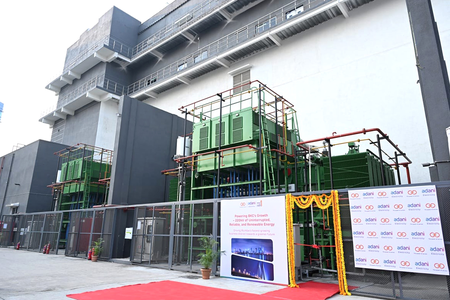
Ahmedabad, Sep 2 (IANS) Adani Electricity Mumbai Limited (AEML) on Tuesday said that it has repurchased and cancelled $44.661 million or 3.86 per cent of its $300 million Senior Secured Notes due 2031.
The buyback, funded through internal cash flows, reduces the outstanding principal to $255.339 million, it said in a statement.
As per the company statement, the development was part of AEML's ongoing capital management plan.
"Earlier, the company completed a $120 million tender offer in November 2023, and a $49.5 million open market repurchase in June 2025 under its $1,000 million 3.949 per cent Senior Secured Notes due 2030," the statement said.
These actions highlight AEML’s strong cash generation and financial flexibility.
AEML, a subsidiary of Adani Energy Solution Ltd (AESL), may consider further liability management exercises, subject to market conditions, which could materially reduce outstanding debt across maturities, the company said.
The firm further clarified that the announcement is not an offer to sell or purchase securities.
Adani Electricity Mumbai Limited is an integrated business of power generation, transmission, and retail electricity distribution. It owns and operates the largest and most efficient power distribution network in India.
AEML serves over 3 million consumers spread across 400 sq. km. in Mumbai and its suburbs, meeting close to 2,000 MW of power demand with 99.99 per cent reliability, which is among the highest in the country.
Meanwhile, Adani Energy Solutions Limited reported an impressive 103 per cent annual profit after tax (PAT) growth in FY25 at an all-time high of Rs 2,427 crore, as the company posted 87 per cent PAT growth at Rs 714 crore in Q4 (January-March).
The Adani Group company also showed strong growth of 42 per cent (year-on-year) in its total income at Rs 24,447 crore in FY25, which is highest ever is driven by the contributions from the recently commissioned transmission projects, robust energy sales in Mumbai and Mundra utilities and contribution from the smart metering business.
PAT witnessed a sharp increase of 103 per cent YoY, resulting from higher EBITDA, and aided by reversal of net deferred tax liability of Rs 469 crore in full year, primarily due to divestment of Dahanu plant in Adani Electricity Mumbai Limited (AEML) and regulatory income of Rs 148 crore, it added.
--IANS
aps/na
Kapas Kisan app will make cotton selling easier for farmers: Union Minister
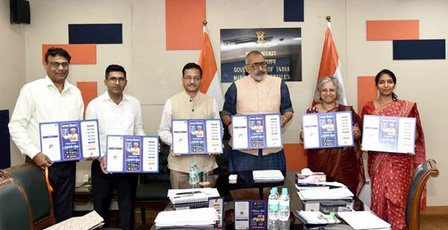
New Delhi, Sep 2 (IANS) Union Minister of Textiles Giriraj Singh on Tuesday launched the ‘Kapas Kisan’ mobile app, calling it a “farmer-first” step that will make selling cotton easier and more transparent for growers.
The app, developed by the Cotton Corporation of India (CCI) under the Ministry of Textiles, aims to digitise the entire procurement process under the Minimum Support Price (MSP) scheme.
“This farmer-first mobile app marks a major step in enhancing ease in selling of cotton by our cotton growers,” the Union Minister stated.
Speaking at the launch, Singh said the app would protect cotton farmers from distress sales and ensure timely and fair MSP operations.
“By digitising key steps -- right from registration to payment tracking -- we are ensuring timely, transparent and fair MSP operations. It reinforces our commitment to safeguard farmers from any distress sales and to accelerate the vision of Digital India,” the minister said.
The ‘Kapas Kisan’ app allows farmers to register themselves, book slots for selling cotton at procurement centres, and track payments in real time.
It also provides updates on quality assessment, accepted quantities, and payment processing.
Available in multiple Indian languages, the app reduces paperwork, cuts waiting time at centres, and gives farmers the option to choose convenient slots for selling their produce.
The government said the move is part of broader efforts to support India’s textile sector, which depends heavily on stable cotton supply.
Farmers’ interests are safeguarded through the MSP mechanism, while industry competitiveness is maintained through measures such as the recently extended cotton import duty exemption until December 2025.
Cotton remains the backbone of India’s textile industry, which employs over 45 million people and contributes significantly to exports.
By combining farmer-friendly digital tools like the ‘Kapas Kisan’ app with policy measures on cotton supply, the government aims to strengthen both cotton growers and textile manufacturers.
--IANS
pk
India’s aim to build 1 million homes in Australia can be biggest housing collaboration in history
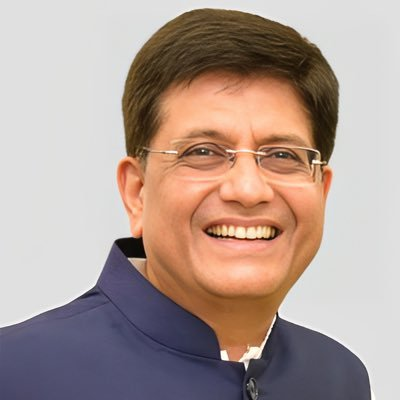
New Delhi, Sep 2 (IANS) Commerce and Industry Minister Piyush Goyal recently said that the government is engaged in “deep negotiations” with Australia regarding a proposal to construct one million homes estimated at $500 billion. If realised, this can herald one of the largest international housing collaborations in recent history.
The minister said the scale of the project requires global partnerships, and he has reached out to the UAE to help on the financial front.
According to a report in The Australia Today on Tuesday, Goyal’s comments place the proposal at the intersection of India’s ambitions to export skilled labour, Australia’s urgent need for new housing, and the UAE’s appetite for global investment.
Master Builders Australia has warned that the National Housing Accord is falling further behind schedule, “with its latest forecasts showing a deepening shortfall in new home construction”.
The national voice of the $200 billion building and construction industry, Master Builders Australia represents eight state and territory Master Builders Associations and 32,000 members nationwide.
Rising costs, falling productivity, lengthy build times and workforce shortages are preventing builders from keeping pace with demand, despite strong willingness from the industry to deliver, the organisation has warned.
“Australian builders are keen to get on with the job, but under current conditions, the Accord’s 1.2 million home goal looks less achievable every day,” said Master Builders CEO Denita Wawn in a statement.
It also revealed that 180,500 homes are expected to be started in 2024–25, nearly 60,000 short of the Accord’s annual target of 240,000. Over the full five-year period, the shortfall has now widened to 180,200 homes compared with the 160,000 projected in April.
Addressing the 'Bharat Buildcon 2026' conference in Mumbai late last month, Goyal drew attention to the acute housing shortage in Australia, where nearly 1 million homes are required.
He invited Indian businesses, workers, and experts to seize this opportunity, stating that Australia is open to financial collaboration, technical expertise, and workforce support from India.
Training and certification opportunities are also being offered so Indian professionals can meet Australian standards. “If we miss this opportunity, we will have only ourselves to blame,” he remarked, calling it a potential game-changer for India’s construction and financial sectors.
--IANS
na/dan
India’s long-term energy demand is expected to grow at 6 pc; EVs, Data Centres to drive growth
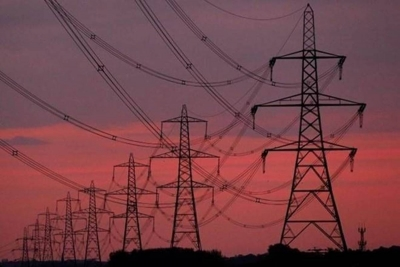
New Delhi, Sep 2 (IANS) The long-term energy demand in India is projected to rise by around 6 per cent per annum till 2030, aided by sustained economic expansion and emerging demand drivers such as electric vehicles, data centres, and green hydrogen, a report said on Tuesday.
"The power sector has witnessed strong demand momentum, with growth between 7.7 per cent and 9.4 per cent during FY22–FY24, supported by a healthy rebound in GDP post-COVID," CareEdge Ratings said in a report.
The Government of India has targeted 100 GW of new thermal capacity by FY32, with 33.2 GW currently under construction.
According to the report, further capacity addition is expected to accelerate with the commissioning of under-construction projects and placement of fresh orders.
“India’s power sector is at an inflexion point—renewable energy and storage will drive future capacity growth, even as the thermal segment provides critical stability to meet rising demand," said Sabyasachi Majumdar, Senior Director, CareEdge Ratings.
With reforms strengthening discom finances, coal supply ensuring fuel security, and storage costs rapidly declining, the sector is positioned for sustainable, reliable, and green growth in the coming decade, Majumdar added.
The power sector is undergoing a significant transformation, with renewable energy poised to drive future capacity additions.
As per the rating agency, while thermal capacity additions will remain critical to support base load requirements until renewable energy with storage solutions scales up, the generation mix is set to evolve rapidly.
"The share of non-fossil sources in total energy generation is expected to rise to over 35 per cent by FY30, compared to 25 per cent in FY25, with new capacity additions led by solar, followed by wind," the report highlighted.
Also, a positive point to note is that domestic coal supply has grown at a 9 per cent CAGR over the last five years, reducing reliance on imports and mitigating fuel cost and forex risks.
Thermal power, however, continues to play a critical role in meeting India’s base-load requirements.
Plant Load Factors (PLFs) have improved from 56 per cent in FY20 to 70 per cent in FY25, backed by robust power demand and healthy domestic coal supply, the report stated.
Nearly 33 GW of thermal capacity is currently under construction, with private players expected to contribute about one-third of future additions.
The report noted that the Aggregate Technical and Commercial (AT&C) losses have declined to 15–16 per cent in FY22–24, compared to 22 per cent during FY19–21.
--IANS
aps/dan
Tesla’s India sales fall short of expectations with around 600 orders
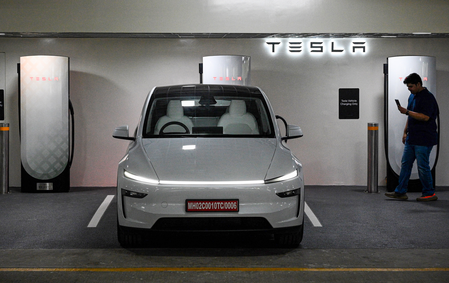
New Delhi, Sep 2 (IANS) US auto giant Tesla's entry into the Indian market fell short of expectations, as the company received just over 600 orders since opening bookings in mid-July.
This figure is significantly lower compared to Tesla's global sales where it delivers the same number of vehicles every four hours, according to multiple reports.
The company now plans to ship 350 to 500 cars to India this year, with the first shipment from its Shanghai factory expected in early September, the report said.
Tesla owner Elon Musk's fallout with US President Donald Trump and changing geopolitical realities, along with Tesla cars' higher prices, weighed down on its sales numbers, according to analysts.
The trade negotiations did not reduce import tariffs, defying expectations. Prospects for a deal have significantly decreased after Trump imposed a 50 per cent duty on Indian exports citing the country's oil trade with Moscow.
The global sales of Tesla also dropped 13 per cent last quarter, raising concerns about a second consecutive year of decline.
Import duties in India raise the cost of Tesla’s entry-level Model Y to over Rs 60 lakh, nearly three times the average price of Rs 22 lakh at which most EVs are sold in the country.
Electric vehicles make up only over 5 per cent of total car sales in India. Within the high-end bracket, just 2,800 EVs priced between Rs 45 lakh and Rs 70 lakh were sold in the first half of 2025.
Tesla is now competing in a narrow slice of market, where Chinese competitor BYD has performed better. BYD sold over 1,200 units of its Sealion 7 SUV in the first half of this year despite facing tariff barriers. The ex-showroom price of the Sealion 7 starts at Rs 49 lakh, providing it a competitive advantage over its rival.
--IANS
aar/