
‘SEMICON India 2025’ showcases India’s rise in global semiconductor ecosystem
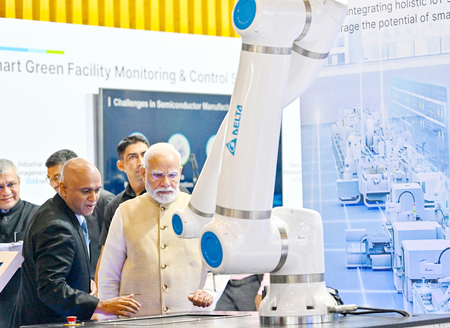
New Delhi, Sep 5 (IANS) The ‘SEMICON India 2025’ event brought together global industry leaders, policymakers, academia, companies and startups -- fostering investment, dialogue, and strategic partnerships, according to the government.
The three-day conference served as a catalyst in advancing India's semiconductor ambitions by enabling cross-border collaboration, commercialisation of research, skill development, and integration into the global semiconductor value chain.
Prime Minister Narendra Modi inaugurated the conference, saying “We are creating a semiconductor ecosystem that makes India self-reliant and globally competitive”.
“The day is not far when India’s smallest chip will drive the world’s biggest change. Our journey began late but nothing can stop us now. India has reached here following the mantra of Reform, Perform and Transform. In the coming times, we are going to start a new phase of next generation reforms. We are also working on the next phase of the India Semiconductor Mission. Our policies are not short-term signals; they are long-term commitments,” PM Modi emphasised.
It marked a significant milestone in India's journey towards making India the next semiconductor powerhouse.
The event brought together over 350 exhibiting companies and participants from 48 countries and regions. Four country pavilions, 6 country round tables and workforce development pavilion was also the part of this event, along with agenda covering different aspects of semiconductor design, fab and display manufacturing, packaging, R&D, State policies, ecosystem development etc.
The event witnessed 35,000 registrations, 30,000 footfalls and 25,000 online viewing, said IT Ministry.
'SEMICON India 2025' was jointly organised by the India Semiconductor Mission (ISM) under the Ministry of Electronics and Information Technology (MeitY) and SEMI, the global semiconductor industry association.
Following successful editions in Bengaluru (2022), Gandhinagar (2023), and Greater Noida (2024), the 2025 edition in Delhi has set a new benchmark by showcasing India’s redefining role in the global semiconductor landscape, according to the IT Ministry.
—IANS
na/
GST reforms can further lower inflation, allow RBI to cut repo rate by another 25 bp this year
New Delhi, Sep 4 (IANS) The GST tax rate cuts can further lower inflation if companies pass on all benefits to the consumers, allowing the Reserve Bank of India (RBI) to cut repo rate once again by 25 bp in the fourth quarter this year, a report said on Thursday.
The GST tax rate cuts can lower headline CPI inflation by 1 percentage point.
"However, if the pass-through is only partial, the inflation fall could be closer to 0.5 ppt. We expect the RBI to cut rates once again by 25bp in 4Q25, taking the repo rate to 5.25 per cent," an HSBC report said.
On the consumption side, several essential items saw a rate cut (toothpaste, shampoo, small cars, air conditioners, and medicines).
On the production side, inputs in several sectors will face a lower tax burden (tractors in the agriculture sector, leather and marble in labour-intensive goods, cement in the construction sector, RE devices in the power sector, medical devices in the healthcare sector).
Some exemptions were added, and individual life and health insurance policies will be exempt from GST.
According to the report, the government's loss is the consumer's gain.
Over a year, led by stronger consumption, GDP growth can rise by 0.2 ppt. But for this to transpire, the government should not run a tighter fiscal policy to offset the consumption boost, it said.
"It is also important to put the GST cuts in a broader context. If we add on the benefits from the income tax cut earlier this year (0.3 per cent of GDP) and a lower debt servicing burden due to repo rate cuts (0.17 per cent of GDP), the overall boost to consumption can be 0.6 per cent of GDP," the report said.
“Of course, a part of this could be saved instead of spent, lowering the net boost," it added.
The GST rate rationalisation was not limited to lower and lesser tax rates.
"Some of the inverted duty problem was corrected for the textiles and fertiliser sectors. Plans were laid out for easier GST registration, pre-filled returns, and quicker refunds. If these improvements are indeed made, it will improve the ease-of-doing-business environment," the HSBC report noted.
--IANS
na/vd
Amidst global turbulence, partnership with India rooted in deep reservoir of trust: Singapore PM
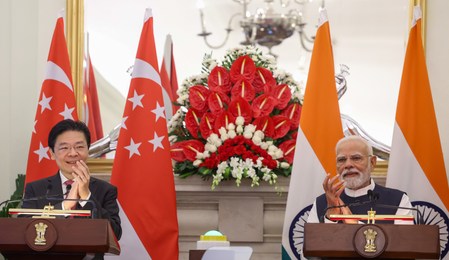
New Delhi, Sep 4 (IANS) Stressing that partnership between India and Singapore is rooted in shared values, mutual respect and deep reservoir of trust, Singapore Prime Minister Lawrence Wong on Thursday said that the partnership between two nations is more important in a world marked by great uncertainty and turbulence.
While addressing joint press meet along with Prime Minister Narendra Modi following their talks at the Hyderabad House in New Delhi, Wong stated that Singapore will continue to support India's skill development journey. The Singapore PM said that he and PM Modi have agreed to enhance people-to-people exchanges, including through closer civil service cooperation.
"Prime Minister Modi and I reaffirmed that people-to-people ties remain the bedrock of our relationship. We agreed to enhance exchanges including through closer civil service cooperation. All of these initiatives reflect the breath and depth of our CSP. And to guide our efforts, PM Modi and I have also agreed on a roadmap, an ambitious and detailed roadmap, to chart the next phase of our relationship.
"In a world marked by great uncertainty and turbulence, the partnership between India and Singapore becomes even more important because this is a partnership rooted in shared values, mutual respect and a deep reservoir of trust. We can draw strength from our shared history and the friendship and trust between our peoples and together we can strengthen resilience, seize new opportunities and contribute to stability and growth in our region and beyond. So, I look forward to working hand-in-hand with Prime Minister Modi to bring the Singapore India partnership to even greater heights in the years ahead," he added.
Stating that the bilateral relationship between India and Singapore has "grown in tandem", he mentioned as an investor, Singapore accounts for around a quarter of India's foreign direct investment inflows and cooperation now spans various sectors.
Lauding the leadership of PM Modi, Lawrence Wong stated, "Over this past decade, India has made remarkable advances under Prime Minister Modi's leadership. India is now the fourth largest economy in the world with a dynamism and influence felt far beyond its borders."
Speaking about his discussions with PM Modi, Singapore PM said, "Last year, PM Modi and I agreed to elevate relations to a Comprehensive Strategic Partnership or a CSP. This morning, we had fruitful discussions on how we can take this CSP forward. Prime Minister has highlighted quite a number of areas and I will reiterate a few of them. Singapore will continue to support India's skill development journey. We are honored to accept India's invitation to be a global partner for the national center of excellence in Chennai which will focus on advanced manufacturing. We will also collaborate with India to set up state level skill centers to meet industry needs in sectors like aviation maintenance repair and overhaul and semiconductors."
He announced that India and Singapore will expand cooperation in manufacturing and industrial development and deepen collaboration in semiconductors. He stated that two nations will strengthen connectivity across the air, sea and digital sectors. He stated that two nations will also enhance digital connectivity between financial systems.
"We will strengthen connectivity across the air, sea, and digital domains. This morning, we exchanged an MoU on cooperation in training, research, and development in civil aviation. This will support the growth of our aviation sectors, facilitate trade and tourism, and create more commercial opportunities. On the maritime side, we just launched phase two of PSA's Bharat Mumbai container terminal in Navi Mumbai, which will become India's largest standalone container terminal," said Wong.
"We will expand cooperation in frontier areas like space. To date, more than 20 Singapore made satellites have been launched by India. Through the MoU on promoting collaboration in the space sector, we will broaden this partnership and push the boundaries of what we can achieve together," the Singapore PM added.
--IANS
akl/as
Indian startups accelerate ‘Aatmanirbhar Chips’ roadmap under DLI Scheme
New Delhi, Sep 4 (IANS) Backed by the government's Design Linked Incentive (DLI) Scheme, domestic chip design and IPR are accelerating across critical sectors, from surveillance and energy metering to networking and motor control, the Ministry of Electronics and IT said on Thursday.
According to the ministry, to date, 23 chip design projects have been sanctioned under the DLI Scheme, with 72 companies gaining access to industry-grade Electronic Design Automation (EDA) tools.
Many of these startups showcased their roadmaps at Semicon India 2025, reflecting India's growing capability and self-reliance in semiconductor chip design.
InCore Semiconductors, founded by the creators of the SHAKTI Processors - the first open-source RISC-V processor in India - has launched an innovative System-on-Chip (SoC) Generator Platform that reduces frontend chip design time from months to just a few minutes.
This automation accelerates development timelines, lowers costs, and minimises design risks, enabling faster innovation cycles for their customers.
A test chip taped out on TSMC’s 40nm process node showcases six heterogeneous RISC-V cores from InCore’s IP portfolio, a custom Network-on-Chip (NoC) with automatic protocol bridging, multiple automatically integrated peripherals, and a fully deployed software stack including a Real Time Operating System (RTOS), underscoring the platform’s robustness, the ministry added.
Aheesa Digital Innovations will make available its SoC along with reference platforms to Original Equipment Manufacturers (OEMs) and Original Design Manufacturers (ODMs) in the first quarter of 2026, enabling them to develop custom networking and broadband solutions using a 100 per cent indigenously designed, Made-in-India SoC.
Four Indian companies, 3rdiTech, Netrasemi, BigEndian Semiconductors, and Mindgrove Technologies, are designing indigenous SoC solutions for critical applications such as surveillance and CCTV cameras, the Ministry added.
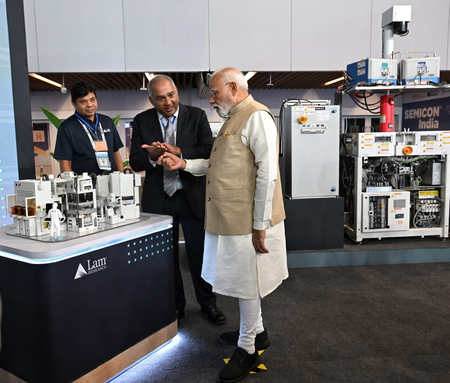
On Day 2 of Semicon India 2025, held at Yashobhoomi in New Delhi, Prime Minister Narendra Modi visited the exhibition stalls.
He was accompanied by Electronics and Information Technology Minister Ashwini Vaishnaw and Minister of State for Electronics and Information Technology Jitin Prasada.
During his visit, the Prime Minister underscored the pivotal role of startups in propelling India’s semiconductor ambitions and the importance of Indian Intellectual Property(IP) creation.
--IANS
aps/vd
Global tariffs to be offset by local markets, exporters to gain new opportunities: Varanasi Professor
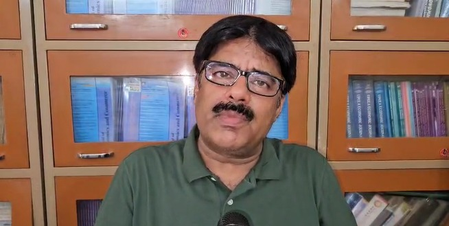
Varanasi, Sep 3 (IANS) As the 56th GST Council meeting, chaired by Union Finance Minister Nirmala Sitharaman, began in New Delhi, Professor Anoop Kumar Mishra, Head of the Economics Department at Varanasi's DAV College (affiliated to BHU) on Wednesday said that the government is attempting to use the domestic market to cushion the impact of global tariff wars on Indian exporters.
"Today’s meeting can be seen from two perspectives. First, the tariff war initiated by US President Donald Trump. Because of this, Indian exporters are facing difficulties. When our products go abroad, nearly 50 per cent additional duty is imposed on them," Professor Mishra told IANS.
The two-day Council meeting, scheduled for September 3-4, is expected to discuss rate rationalisation. Proposals on the table include eliminating the 12 per cent and 28 per cent GST slabs and moving towards a simplified structure of 5 per cent and 18 per cent, along with a 40 per cent slab for so-called "sin goods".
Mishra highlighted the second key context for the meeting - India’s approaching festive season.
“This 56th meeting is taking place just before festivals, when consumer demand traditionally rises. The government is trying to ensure that the losses exporters face from global tariffs can be compensated through the internal market. This is India’s answer to the tariff war,” he added.
He linked the strategy to the government’s push for ‘Vocal for Local.’
"India is promoting indigenous products. The Prime Minister has consistently stressed that self-reliance will come from strengthening local industries. The GST decisions under consideration aim to support that vision," he said.
Mishra added that rationalising GST could boost consumption and simultaneously support government revenue.
“With festivals approaching, consumer numbers will increase. Lower GST rates will make goods cheaper, encouraging demand. When demand rises, government revenue also deepens. It becomes a win-win situation for both consumers and the state. These decisions will be historic,” he added.
He also underlined the benefits for those unable to export their products abroad due to high tariffs.
“Such producers will now find opportunities in the domestic market. This will generate revenue, benefit consumers with lower prices, and allow exporters to reduce their losses. Everyone gains,” he told IANS.
The GST Council meeting brings together the Union and state Finance Ministers with the agenda of structural reforms in GST, including rate changes, simplifying compliance, and exploring new compensation mechanisms for states. A preparatory officers’ meeting was held on Tuesday to lay the groundwork for the key discussions.
--IANS
jk/vd
GST 2.0 reforms to trigger decisive, consumption-led turn in India’s growth cycle
New Delhi, Sep 3 (IANS) The upcoming changes to the Goods and Services Tax (GST), likely to be announced on Thursday, should trigger a decisive, consumption-led turn in India’s growth cycle, a report said on Wednesday.
This adds to earlier stimulus measures like welfare spending and monetary easing, and has secondary benefits like formalisation.
According to Emkay Global Financial Services' report, India’s earnings cycle is bottoming out, and this could be the catalyst for an upgrade cycle to kick in.
"We maintain our September Nifty target at 28,000 and stick to Discretionary as our biggest overweight. The best way to play the cycle is through the auto ecosystem – OEMs, ancillaries, and lenders," the report maintained.
"We expect GST 2.0 to be a game-changing reform and not just incremental adjustments," it added.
The benefits are three-fold -- an immediate boost to consumption, accelerated formalisation of the economy, and greater efficiencies from lower regulatory burden.
The 56th GST Council has begun its discussion on rates rationalisation and on proposals to cut levies on life and health insurance premiums, with rate notifications likely by the third week of September, according to reports.
Consumers and industry are closely watching as the GST Council takes up the long-pending issue of GST rate rationalisation, a move that could sharply reduce prices of daily essentials as well as premium products.
According to market watchers, in the near term, market sentiment hinges on the outcome of the GST Council meeting, with traction on consumption-oriented stocks and sectors.
The upcoming GST 2.0 reforms will boost consumer sentiment, spur demand, and simplify compliance.
According to Ajit Mishra, SVP, Research, Religare Broking Ltd, markets on Wednesday moved higher and gained over half a per cent, supported by optimism around the GST Council meeting.
"With participants awaiting clarity from the GST Council outcome, we continue to view the index as being in a consolidation phase. Any favourable announcements from the GST Council could act as a near-term catalyst," he mentioned.
--IANS
na/vd
Govt unveils India’s roadmap for sustainable aviation fuel

New Delhi, Sep 3 (IANS) The Ministry of Civil Aviation, in partnership with the International Civil Aviation Organisation (ICAO) and with support from the European Union, released the Sustainable Aviation Fuel (SAF) Feasibility Study for India here on Wednesday.
Undertaken under the ICAO ACT-SAF Programme, the feasibility study assesses the potential for producing and utilising drop-in Sustainable Aviation Fuel (SAF) in India. It evaluates domestic feedstock availability, viable production pathways, infrastructure and policy readiness and the enabling conditions needed to establish a robust domestic SAF market. Drawing upon international best practices and tailoring them to India’s socio-economic and environmental context, the report provides a roadmap for sustainable fuel adoption.
Addressing stakeholders at the launch event, Union Civil Aviation Minister Ram Mohan Naidu underscored SAF’s critical role in advancing India’s sustainable aviation growth. He reaffirmed India’s readiness to become self-sufficient in SAF production, targeting 1 per cent blending by 2027, 2 per cent by 2028 and 5 per cent by 2030 in line with the CORSIA mandate.
"SAF is a practical and immediate solution to decarbonise the aviation sector, with the potential to cut lifecycle CO₂ emissions by up to 80 per cent compared to conventional fuel," the minister said, further highlighting that with over 750 million metric tonnes of available biomass and nearly 230 million metric tonnes of surplus agricultural residue, India has the capacity not only to meet its own SAF demand but also to emerge as a global leader and exporter.
The study is being deliberated at a two-day workshop at Udaan Bhawan, with participation from the ICAO, the EASA, the DGCA, industry partners, and multiple government departments, reflecting a whole-of-government approach towards SAF.
Naidu also highlighted the important milestones already achieved, including the designation of COTECNA Inspection India Pvt. Ltd. as the country’s first SAF certification body and the certification of Indian Oil Corporation’s Panipat Refinery as India’s first SAF producer.
He emphasised that SAF production will not only reduce crude imports and cut emissions by 20-25 million tonnes annually, but also boost farmers’ incomes by creating a strong value chain for agricultural residue and biomass.
"Under the visionary leadership of Prime Minister Narendra Modi, India is on track to become the world’s largest domestic aviation market. With a collaborative approach, we are committed to positioning India as a leader in green aviation," Naidu added.
Secretary, Civil Aviation Samir Kumar Sinha, underlined that global warming is a collective challenge and mitigating its impact is a shared responsibility. He reiterated India’s commitment to the UNFCCC framework and emphasised that India already operates one of the youngest and most fuel-efficient aircraft fleets in the world. He also noted that 88 airports have already transitioned to 100 per cent green energy usage, setting benchmarks for global best practices.
The SAF Feasibility Report marks a significant step in the Ministry of Civil Aviation’s commitment to creating a robust SAF ecosystem in India. This vision is anchored in a long-term policy framework that supports both the production and utilisation of sustainable aviation fuels. With strong supply-side dynamics and significant sources of low-carbon-intensity feedstocks such as energy crops, agricultural waste and municipal solid waste, India holds immense potential to emerge as a global leader in SAF production, the statement added.
--IANS
sps/vd
Andhra Pradesh backs GST reforms proposed by Centre
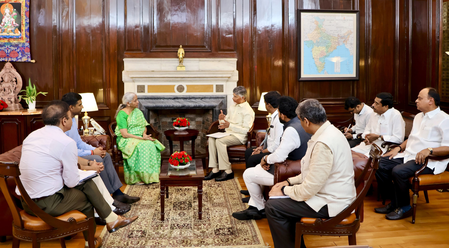
Amaravati, Sep 3 (IANS) The Andhra Pradesh government has asserted its support for next-generation GST reforms proposed by the Centre.
Participating in the 56th meeting of the Goods and Services Tax (GST) Council, chaired by Union Finance Minister Nirmala Sitharaman in New Delhi on Wednesday, Andhra Pradesh Finance Minister Payyavula Keshav stated that the State government fully supports the reforms being proposed by the centre.
He called it a measure taken in the best interest of the ‘poorest of the poor.’
The two-day meeting is expected to take up a major revamp of GST slabs, compliance simplification measures, and next-generation reforms.
Speaking about the Andhra Pradesh government’s stand, Finance Minister and Telugu Desam Party (TDP) leader Payyavula Keshav said the reforms were in line with Prime Minister Narendra Modi’s Independence Day announcement of a “Diwali gift” for the people.
“As an alliance partner, the Andhra Pradesh government supports these reforms in the GST sector being proposed by the Government of India. Most of them are aimed at helping the common man and the poorest of the poor. They cover critical sectors such as food, education, health, steel, cement, and textiles,” Minister Keshav said.
Being a crucial NDA ally, he added, the TDP president and Chief Minister Chandrababu Naidu has also backed the reforms, calling them a significant step toward reviving the economy and improving people’s lives.
“The reforms are aimed at expanding the Indian economy while rationalising the tax rates on items of common consumption, reducing costs for households and providing relief to millions,” the Minister noted.
“The reforms are being suggested with the intention of ensuring benefits are passed on to the customer and end-consumers. From the Government of India to all participating states, including even opposition voices, there is a shared understanding that the consumer must benefit,” the Finance Minister emphasised.
--IANS
ms/dan
Over 2 crore fraudulent phone connections blocked, spoof calls down by 97 pc: DoT Secretary

New Delhi, Sep 3 (IANS) The Union Department of Telecommunication (DoT) has blocked more than 2 crore mobile connections that were being used for fraudulent activities and successfully reduced spoof calls by 97 per cent, according to DoT Secretary Dr. Neeraj Mittal on Wednesday.
Dr. Mittal was speaking during the annual West Zone Conference on security-related matters, which was organised by the DoT in South Goa.
He addressed the gathering through a video link and shared key achievements in the telecom sector’s fight against cyber fraud.
He credited the reduction in spoof calls to the government's ‘Sanchar Saathi’ initiative, a platform launched to tackle misuse of telecom services.
Spoof calls are fake calls in which scammers disguise their identity by manipulating caller ID information to commit fraud or deceive people.
Mittal said that alongside Sanchar Saathi, the department has developed a ‘Digital Intelligence Platform’ to crowdsource information related to frauds, particularly in the financial sector.
This platform helps banks and other financial institutions share and access data about ongoing scams, making the digital ecosystem safer and more secure.
Highlighting the growing importance of telecom, Mittal said that while the number of telecom users has increased rapidly, the misuse of telecom resources -- especially in financial fraud -- has also gone up.
To counter this, the DoT has launched multiple initiatives to strengthen cybersecurity infrastructure.
He noted that artificial intelligence (AI) has played a key role in identifying and eliminating fraud.
With the help of AI, 78 lakh fake mobile connections and 71,000 fraudulent retail points of sale have been disconnected so far.
The department is also expanding its network of telecom testing labs to ensure that high-quality and certified telecom equipment is used across the country.
In another major move, the DoT has introduced a ‘Financial Fraud Risk Indicator’, developed in collaboration with its partners.
This tool helps detect mobile numbers involved in financial frauds more effectively.
Mittal also announced that the DoT is working on upgrading the Centralised Monitoring System (CMS) to keep pace with modern cyber threats and improve real-time surveillance capabilities.
The department is actively collaborating with private players to boost sector-specific and application-level security, ensuring that the telecom infrastructure remains resilient and trustworthy.
With these efforts, the DoT aims to build a safer and more reliable digital environment for millions of mobile users in India.
--IANS
pk
Festive demand, policy changes drove UPI to record high in August: Report

New Delhi, Sep 3 (IANS) India’s real-time digital payment system Unified Payments Interface (UPI) recorded 20.01 billion transactions in August 2025, fuelled primarily by festive demand, advancements in technology, and policy changes, a report said on Wednesday.
The report in India Narrative stated that a seasonal uptick in consumer spending, especially with early festive demand, led to a 34 per cent year-on-year surge and a 3 per cent month-on-month surge in UPI transactions in August.
Further, the Indian government and RBI have promoted UPI adoption through incentives, regulatory support, and ongoing expansion of features such as UPI credit and improved interoperability, all of which have contributed to the surge, the report added.
In August, UPI processed Rs 24.85 lakh crore ($281 billion) through it with an average of 645 million daily transactions.
Another factor is that India now has over 900 million internet users and at least 500 million smartphone users, enabling seamless access to UPI even in semi-urban and rural areas where digital payments are expanding rapidly.
August 2025 also saw growth in FASTag (up 3 per cent from July) and Aadhaar Enabled Payment System (AePS, up 24 per cent to 128.17 million).
The National Payments Corporation of India (NPCI) has enabled interoperability between apps such as PhonePe and Google Pay, allowing instant transfers using UPI IDs or QR codes.
More sectors -- including utilities, e-commerce, transportation, and small merchants -- accept UPI, reflecting its growing relevance for both micro and macro transactions.
The government's Digital India initiative, along with the RBI's regulatory support, introduced UPI Lite for low-value payments and credit integration, broadening use cases.
UPI now accounts for 85 per cent of all digital transactions in India and nearly half of real-time payments globally. UPI’s live rollout in seven countries, including France in 2025, showcases its international influence and adoption.
--IANS
aar/rvt/