
Tata Motors Limited reports Rs 867 crore loss for Q2 FY26
Mumbai, Nov 13 (IANS) Tata Motors Limited on Thursday reported a consolidated loss of Rs 867 crore for the second quarter of the current financial year (Q2 FY26). The company, which now represents the commercial vehicle segment, announced its first quarterly results post demerger
It had posted a profit of Rs 498 crore in the corresponding quarter a year ago (Q2 FY25).
Meanwhile, the revenue from the operation of Tata Motors' commercial vehicle arm for the quarter under review rose nearly 6 per cent to Rs 18,585 crore year-on-year (YoY) from Rs 17,535 crore in the same period last fiscal (Q2 FY26).
According to the firm's exchange filing the company's total expenses for the July-September period jumped 15 per cent to Rs 19,296 crore YoY from Rs 16,777 crore in the same period of the previous financial year.
The commercial automaker's increased material costs and a one-time fair value loss of Rs 2,027 crore from equity investments are the main causes of the quarter's overall expense increase that dragged it into losses.
The one-time fair value loss resulted in a net loss of Rs 900 crore for the quarter and a profit before tax (before exceptional items) of Rs 600 crore.
The automaker saw a loss month over month (MoM) after making a profit of Rs 1,397 crore during the April–June period.
Meanwhile, the shares of Tata Motors (TMCV) ended Thursday's session at Rs 320.25, falling 2.26 per cent from the previous day's closing of Rs 327.65.
Girish Wagh, MD & CEO, Tata Motors Ltd, said, “Yesterday, November 12, 2025, marked a historic milestone for Tata Motors Ltd as we successfully listed on both the BSE and NSE following the demerger, and today, I’m pleased to share that we’ve reported strong Q2 FY26 results."
"Our financial results underscore a resilient performance, driven by a sound and agile business strategy. After a subdued start, the rollout of GST 2.0 and the onset of the festive season catalysed a surge in demand across segments," he added.
We recorded a 12 per cent year-on-year volume growth, led by enhanced product availability, a refined pricing strategy, and intensified market activations, he further said.
--IANS
aps/rad
‘Govt’s new Bill has potential to get better deal for Indians working overseas’
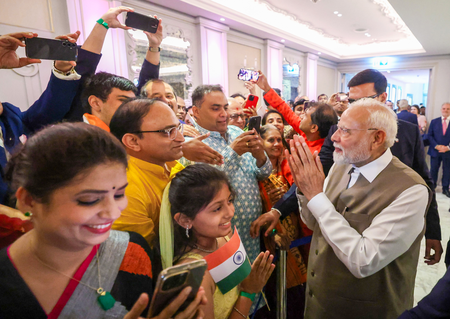
New Delhi, Nov 13 (IANS) The Government’s proposed Overseas Mobility (Facilitation and Welfare) Bill, 2025 holds the potential for getting a better deal for India’s talented skilled workers and professionals and also ensuring that they return home to their country of birth after finishing their work stints abroad. This would strengthen the acceptance of Indian workers overseas amid the growing backlash against immigration in advanced countries such as the US.
According to an article in The Diplomat, “The new Bill represents India’s attempt to reimagine labour mobility as a cornerstone of economic diplomacy.”
“The new Bill signals a paradigm shift. Rather than passively watching its workforce scatter, India is now actively negotiating the terms of their mobility. Since 2014, New Delhi has signed labour mobility agreements with at least 20 countries across Europe, Asia, and the Persian Gulf.
"The proposed legislation would replace the outdated Emigration Act of 1983 with a comprehensive framework that doesn’t just facilitate overseas employment – it ensures workers’ safe and orderly return, and reintegration of returnees,” the article states.
"This is a recognition of a hard truth that while developed economies have shrinking populations and few workers, countries like India have stable populations but few jobs. Migration, which seems like an optimal solution, cannot work anymore due to the political cost of the backlash to immigration. India’s solution is exporting labour with an expiration date," the article further states.
While India’s greatest asset is over 600 million people below the age of 25, developed countries face an acute labour shortage with ageing populations. A Boston Consulting Group study estimated a global shortfall of 45-50 million workers by 2030, up from just 5 million in 2023, the article points out.
It also cites the examples of Germany and Japan actively seeking Indian workers.
The article further highlights that the Indian government is actively pursuing agreements with host nations to maximise national benefits. The India-U.K. Comprehensive Economic and Trade Agreement (CETA) exempts Indian workers temporarily posted in the United Kingdom from paying British social security contributions for up to three years, which will bring an estimated savings of Rs 4,000 crore annually for Indian firms.
The new Bill can further create convergence between different governments, create mechanisms to oversee international migration agreements, and develop data-driven policy management. Most importantly, it focusses on creating frameworks for incentivising the protection and promotion of emigrants’ welfare, it added.
--IANS
sps/rad
MP: Soybean farmers in Neemuch rejoice over govt aid under Bhavantar Yojana
Neemuch, Nov 13 (IANS) As the Chief Minister Mohan Yadav disbursed Rs 233 crores directly into bank accounts of about 1.33 lakh soyabean growers in the state under Bhavantar Bhugtan Yojana, this left the farming community elated and overjoyed – from Dewas to Neemuch and more.
The event, organised in Dewas, reflected the Mohan Yadav government’s resolve to fulfil its promise of state support to soybean farmers for cushioning the impact of sub-standard market prices, and its impact was palpable on the faces of farmers.
Out of the entire allocation, Rs 1.25 crore was transferred into accounts of 1,012 farmers in Neemuch district, under Bhavantar Yojana.
The cash transfer program in Dewas was witnessed by Neemuch MLA Dilip Singh Parihar, District Panchayat Chairman Sajjan Singh Chauhan, ADM Kalesh, SDM and Mandi Administrator (In-Charge) Sanjeev Sahu, and In-Charge Mandi Secretary Sameer Das, along with numerous public representatives, traders, and farmers, were present.
All the public representatives praised the government’s efforts in supporting the soybean farmers, which they said will go a long way in emboldening the state’s ‘soya bowl’ status.
Neemuch MLA Dilip Singh Parihar said that farmers' fields were flooded, particularly in Malwa and Neemuch districts, due to excessive rainfall, making them nervous.
“We commend the Chief Minister’s attempt to mitigate farmers' losses through Bhavantar Yojana. I thank CM Mohan Yadav and Prime Minister Narendra Modi for this,” he said.
Neemuch SDM and Agricultural Produce Market Administrator Sanjeev Sahu told newsmen, “Soybean procurement has been ongoing since October 24th. The model price announced for 15 days was approximately 4,000 rupees, and the MSP rate was 5,328 rupees. Thus, the difference of approximately Rs 1300 has been credited to the accounts of farmers. This amount has been credited to the accounts of approximately 1000 farmers in Neemuch district,” he informed.
Bhavani Shankar Patidar, a beneficiary farmer of the Bhavantar Yojana, said, “The difference in price for 11 quintals and 55 kilograms of soyabean, be weighed under the Bhavantar Yojana, was deposited in my account, amounting to Rs 15,000. I thank the Chief Minister for this. Without this scheme, we would have suffered severely.”
--IANS
mr/dan
It may not be possible to bring petrol, diesel under GST for time being: CBIC chief Sanjay Agarwal
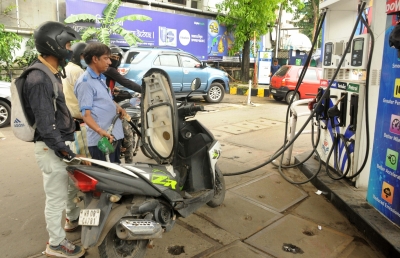
New Delhi, Sep 10 (IANS) As discussions continue to bring petrol and diesel within the ambit of Goods and Services Tax (GST), Chairman of the Central Board of Indirect Taxes and Customs (CBIC) Sanjay Kumar Agarwal said it may not be possible to bring these items under the indirect taxation for the time being.
Asked if petrol and diesel should be brought under GST, Agarwal told IANS that petrol and diesel are presently subject to central excise duty and value-added tax (VAT), as these two petroleum items fetch a substantial revenue to the states by way of VAT and to the Central government by way of central excise duty.
"So, looking to the revenue implications, it may not be possible to bring these items under the ambit of GST for the time being," he added.
The CBIC Chairman's comment came as Finance Minister Nirmala Sitharaman said last week that the Central government intentionally did not include petrol and diesel in the GST Council proposal.
"Legally, we are ready, but this decision must come from the states," she said.
According to her, petrol and diesel were set to figure, "even when GST was implemented, I remember my late predecessor Arun Jaitley talking about it".
"Once the states agree, they have to decide on the rate of taxation in the council. Once that decision is taken, it will be put into the act," FM Sitharaman noted.
In the GST implemented in July 2017, products like petrol, diesel, and alcoholic beverages were kept outside its ambit since then.
These commodities are major revenue sources for both the Central and state governments through excise duty and VAT. For several states, these contribute over 25-30 per cent of their tax revenue. States fear losing control over taxation policy, pricing, and the ability to influence consumption patterns through excise duty and VAT.
--IANS
na/vd
Stock market ends higher over US-India trade deal optimism

Mumbai, Sep 10 (IANS) The Indian equity indices settled the session in positive territory on Wednesday, continuing the positive momentum buoyed by optimism around the India-US trade deal and GST rationalisation.
Sensex ended the session at 81,425.15, up 323 points or 0.43 per cent. The 30-share index opened with a decent gap-up at 81,504.36 against the last session's closing price of 81,101.32 amid buying in IT and FMCG stocks. The index hit an intra-day high at 81,643.88.
Nifty closed at 24,973.10, up 104.50 points or 0.42 per cent.
"Renewed optimism around ongoing trade negotiations between India and the US lifted market sentiment. Anticipation of stronger H2 FY26 earnings, driven by GST rationalisation and the benefits of monetary easing, is providing resilience to valuations," said analysts.
The IT index extended its outperformance on hopes of a potential Fed rate cut next week and a revival in technology spending. Investors remain focused on the progress of India-US trade talks for signals of a constructive resolution to tariff-related issues, he added.
BEL, HCL Tech, Bajaj Finance, Axis Bank, TCS, Tech Mahindra, Infosys, SBIN, L&T, Adani Ports, ITC, Bajaj FinServ and Kotak Bank were the top gainers from the Sensex basket. While Mahindra and Mahindra, Maruti Suzuki, Tata Motors, Ultratech Cement, Eternal, and PowerGrid settled in negative territory.
The majority of sectoral indices ended the session on a positive note. Nifty Fin Services jumped 161.80 points or 0.62 per cent, Nifty Bank escalated 319 points or 0.59 per cent, Nifty FMCG surged 359 points or 0.64 per cent, and Nifty IT soared 927 points or 2.63 per cent. Nifty Auto fell 348.55 points or 1.28 per cent amid profit booking.
The broader market followed suit as well. Nifty smallcap 100 moved 130 points or 0.73 per cent, Nifty midcap100 jumped 535 points or 0.93 per cent, and Nifty 100 ended the session 319 points or 0.59 per cent higher.
--IANS
aps/na
Cabinet gives nod for new 4-lane highway in Bihar at a cost of Rs 4,447 crore
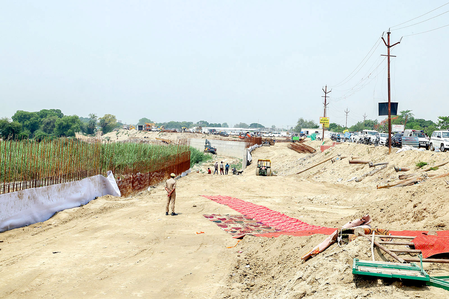
New Delhi, Sep 10 (IANS) The Cabinet Committee on Economic Affairs, chaired by Prime Minister Narendra Modi, on Wednesday approved the construction of the proposed 4-lane greenfield access-controlled Mokama-Munger section of the Buxar-Bhagalpur high-speed corridor in Bihar on hybrid annuity mode, stretching across a length of 82.4 km with an investment of Rs 4,447.38 crore.
The section passes through or provides connectivity to important cities in the state, such as Mokama, Barahiya, Lakhisarai, Jamalpur, Munger, and connects to Bhagalpur.
The Munger–Jamalpur-Bhagalpur belt in eastern Bihar is emerging as a key industrial region focusing on an ordinance factory (existing gun factory and one more proposed as part of the Ordnance Factory Corridor by the Ministry of Defence), a locomotive workshop in Jamalpur, food processing (e.g., ITC in Munger) and related logistics and warehousing hubs.
Bhagalpur stands out as a textile and logistics hub, led by Bhagalpuri silk, while Barahiya is emerging as a region for food packaging, processing, and agro-warehousing. The increased economic activity in the region is expected to drive up the freight movement and the traffic on the Mokama-Munger section in the future.
The 4-lane access-controlled corridor with close tolling, supporting average vehicular speeds of 80 km per hour with a design speed of 100 km per hour, will reduce the overall travel time to approximately 1.5 hours, while offering safer, faster, and uninterrupted connectivity for both passenger and freight vehicles, according to an official statement.
The proposed project with 82.40 km length will generate about 14.83 lakh man-days of direct employment and 18.46 lakh man-days of indirect employment. The project will also induce additional employment opportunities due to an increase in economic activity in the vicinity of the proposed corridor, the statement added.
India’s national highway network has expanded from 91,000 km in 2014 to over 1.46 lakh km today, making it the second-largest road network in the world, according to official data.
The government's spending on road infrastructure has grown 6.4 times between 2013–14 and 2024–25, and the budget allocation for road transport and highways has seen a 57 per cent increase from 2014 to 2023–24 as part of the big push to infrastructure that has been driving economic growth and creating jobs in the country.
--IANS
sps/vd
Novo Nordisk to layoff 11 pc of global workforce, save $1.3 billion by 2026 end
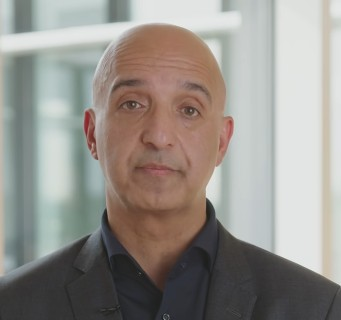
New Delhi, Sep 10 (IANS) In a major restructuring drive, Danish drug major Novo Nordisk on Wednesday announced plans to slash 9,000 jobs or 11 per cent of its global workforce and save ($1.3 billion) by the end of 2026.
The company, in a statement, said that with the restructuring, it expects to simplify, improve decision-making speed, and reallocate resources toward growth opportunities in diabetes and obesity.
Battling rising pressure from US rival Eli Lilly, the maker of blockbuster weight-loss drug Wegovy, announced its third cut of the year to its profit forecast.
The company’s Wegovy and its diabetes treatment Ozempic are reportedly losing market share and slow sales growth, especially in the US market.
"Our markets are evolving, particularly in obesity, as it has become more competitive and consumer driven. Our company must evolve as well," CEO Mike Doustdar, who only took the helm last month, said in the statement.
"This means instilling an increased performance-based culture, deploying our resources ever more effectively, and prioritising investment where it will have the most impact – behind our leading therapy areas," he added.
Novo, which currently has a global workforce of 78,400, said about 5,000 of the job cuts will be in its native Denmark. The move comes after it implemented a global hiring freeze last month for job roles not critical to its business.
“These changes are intended to enable us to do two things simultaneously -- realign resources toward high-impact R&D and commercial initiatives while creating a more agile organisation that can respond faster to the evolving needs of millions of patients with chronic diseases,” Doustdar said in a post on professional networking site LinkedIn.
“Our goal remains unchanged as we work to deepen our leadership in diabetes and obesity, broaden patient access worldwide, and continue our mission to defeat serious chronic diseases.
“Sometimes the hardest decisions are the right ones for the future we're building. I'm confident that this is the right thing to do for the long-term success of Novo Nordisk,” the CEO said.
--IANS
rvt/
Apple’s manufacturing push in India to curb tax leakage, create jobs: Report

New Delhi, Sep 10 (IANS) US tech giant Apple’s decision to manufacture its entire iPhone 17 range in India will enhance supply chain efficiency, reduce tax leakage, and make a stronger case for India as a premium device manufacturing hub, experts said on Wednesday.
The 'Make in India' initiative, bolstered by Apple’s expanded footprint, is expected to generate substantial employment, boost exports, and enhance India’s credibility as a high-tech manufacturing powerhouse, according to Grant Thornton Bharat.
By shifting production to Tamil Nadu and Karnataka through partners Foxconn and Tata Electronics, Apple avoids the 20 per cent Basic Customs Duty otherwise levied on imported, fully assembled devices.
Local assembly also insulates the company from potential tariff escalations in the US, said Krishan Arora, Partner – Tax Planning & Optimisation, Grant Thornton Bharat.
After the US imposed higher tariffs on India, some of the country's exports now face duties as high as 50 per cent, though smartphones remain exempt for now.
The move by Apple also unlocked further gains under India’s Production Linked Incentive (PLI) scheme, which offers 4–6 per cent cash incentives on incremental phone sales manufactured in India over five years, Arora said, adding that the company’s decision may not immediately lower prices for consumers in India.
This has helped Apple’s contract manufacturers surpass $10 billion in iPhone exports in FY 2024–25, with exports surging 53 per cent year-on-year in H1 2025 to reach 23.9 million units, he added.
In the first half of 2025, as much as 78 per cent of iPhones assembled in India were shipped to the US, up from 53 per cent a year earlier.
The Tamil Nadu government has extended capital subsidies, fast-tracked environmental clearances, and dedicated electronics parks, while Karnataka has offered land at concessional rates, power tariff rebates, and skill development grants.
--IANS
aar/rad
India’s resilience stands out as tariffs impact global trade: Report

New Delhi, Sep 10 (IANS) India's economy shows resilience despite global trade and fiscal uncertainty, supported by robust domestic consumption and government spending, a report said on Wednesday.
A report from SBI Capital Market indicated that the Indian markets remained resilient, though the aggressive tariff regime of the United States has become a significant issue globally.
"India remained surprisingly insulated in Q1, clocking an above-par GDP growth. There is recognition that, amidst global headwinds from high tariffs imposed on India, a domestic consumption stimulus is in order. The GST reform is a welcome step in this regard," the report said.
A US appeals court ruling had deemed the tariffs unconstitutional, escalating the issue to the Supreme Court. “Until clarity emerges, trade-policy volatility remains elevated, with key pressure points in autos, electronics, and textiles,” the report added.
Indian exporters encounter reciprocal tariffs reaching as high as 50 per cent, which includes a 25 per cent tariff linked to Russian crude purchases, increasing cost pressures. The report indicated that uncertainty is impacting trade flows and margins.
“Despite a weaker US dollar, the Indian rupee hit a record low, down about 5 per cent year-on-year, with the Reserve Bank of India (RBI) limiting intervention and unwinding forward positions to preserve reserves while letting depreciation aid exports,” the report said.
“Capital flows remain muted, while the current account remains manageable despite weaker merchandise exports from tariff pressures,” it added.
India’s Q1 GDP growth reached 7.8 per cent, and the government’s decision to simplify the GST structure is set to release about Rs 50,000 crore into the economy, boosting domestic consumption, the research wing said.
SBI Capital Markets said fiscal stress in the US and the UK is adding complexity to global trade tensions, with rising debt burdens pushing bond yield curves steeper.
“At the same time, weaker job data in the US has lifted the probability of a rate cut in the September policy review. In India, the curve remains steep as elevated state government borrowing continues to weigh on the long end,” the research wing noted.
--IANS
aar/rad
GST cut a 200 bps demand upshift for 2-wheelers, 100 bps for passenger vehicles
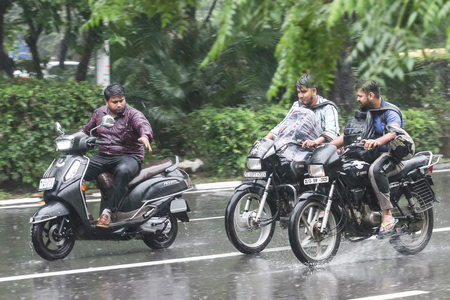
New Delhi, Sep 5 (IANS) Two-wheelers and passenger vehicles (PVs), which together account for 90 per cent of the domestic automobile industry’s volume, are expected to see demand increase by 200 basis points (bps) and 100 bps, respectively, a Crisil report showed on Friday.
As a result, two-wheeler sales volume is expected to grow 5-6 per cent this fiscal, while that of PVs may rise 2-3 per cent.
The Goods and Services Tax Council’s decision to move to a two-rate structure of 5 per cent and 18 per cent, effective September 22, is a timely move that will revive demand for automobiles, according to a Crisil report.
Beyond demand revival, simplified slabs will also streamline compliance and lower logistics costs through smoother interstate taxation, supporting profitability across the value chain.
“With the GST cut fully passed on, vehicle prices are expected to drop 5-10 per cent (Rs 30,000–60,000 on small PVs; Rs 3,000–7,000 on two-wheelers),” said Anuj Sethi, Senior Director, Crisil Ratings.
With the rate cut coinciding with the Navratri and the festive season, sentiment would get a timely boost. Coupled with new launches, softer interest rates and improved affordability, this should drive a stronger second half for the automobile sector, he mentioned.
Under the revised GST structure, rates on small PVs, two-wheelers up to 350 cc (nearly 90 per cent of the segment sales), commercial vehicles (CVs) and three-wheelers will drop to 18 per cent from 28 per cent.
Mid- and larger PVs will also see a 3-7 per cent cut, while tractors will benefit from a reduction to 5 per cent and 18 per cent from 12% per cent and 28 per cent, respectively.
For CVs, the lower GST should offset the cost push from the mandatory AC cabin requirement from October 1, 2025.
In contrast, motorcycles above 350 cc will face a higher levy, moving to a 40 per cent special rate, compared with the current 31 per cent, including compensation cess, making them costlier.
“Higher volume will improve capacity utilisation and operating leverage, translating to stronger cash flows and healthier margins for automakers, reinforcing their already stable credit profiles,” said Poonam Upadhyay, Director, Crisil Ratings.
—IANS
na/