
Gold, silver prices ease after Trump backs off from tariff threats on Europe
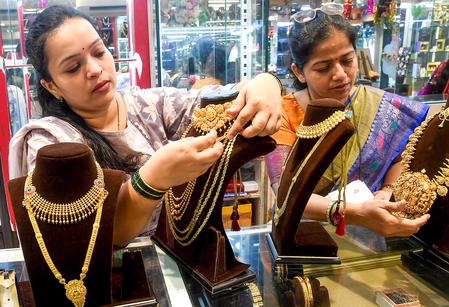
New Delhi, Jan 22 (IANS) Gold futures on the MCX dipped close to 1 per cent on Thursday from record high in the previous session due to profit booking, amid easing geopolitical tensions and strengthening of dollar.
Fears of a US‑EU trade conflict moderated after US President Donald Trump softened his tone on acquisition of Greenland.
MCX gold February futures dipped 0.78 per cent to Rs 1,51,665 per 10 grams. Meanwhile MCX silver March futures dipped 0.62 per cent to Rs 3,16,509 per kg.
Gold rates also dropped in the international futures market, with US gold futures consolidating near $4,790–$4,800 per troy ounce, after registering a fresh record high above $4,887 earlier in the week on COMEX.
The current dip reflects healthy profit-booking amid easing tariff fears, but the broader uptrend remains powerful, analysts said.
Open interest data in the futures market showed a decline in 'OI level', currently at 9870 lots, with price showing upside momentum. According to Aamir Makda, Commodity and Currency Analyst at Choice Broking, this trend indicated a long unwinding by traders, with no addition in long positions.
Meanwhile, COMEX silver traded firm near $92–$93 after recently touching record highs above $95.80.
Analysts said that robust industrial demand in sectors such as solar, EVs, AI, electronics and safe-haven flows amid tightening global supply powers the rally.
US dollar traded in a stable tone after Trump informed that tariffs won't be imposed on European countries over Greenland.
The dollar index rose to 98.81, making gold slightly expensive for overseas buyers.
At the World Economic Forum in Davos, Trump said that force would not be used to acquire the Arctic island, adding that he had “formed the framework of a future deal with respect to Greenland,” with NATO Secretary General Mark Rutte.
Investors also focus on upcoming cues from November Personal Consumption Expenditures (PCE) data, the Fed's preferred inflation gauge, and weekly jobless claims, both due later in the day.
Most market participants expect the US Federal Reserve to maintain interest rates unchanged at its January 27-28 meeting. However, two more cuts are expected later in the year.
—IANS
aar/na
India’s AI adoption to generate $1.7 trillion in economic value by 2035: Report
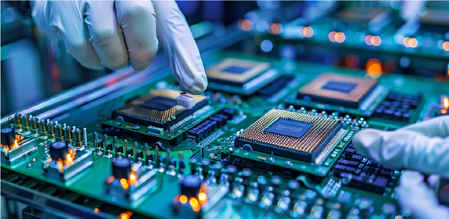
New Delhi, Jan 22 (IANS) As India’s semiconductor industry scales up, its adoption of artificial intelligence (AI) is projected to generate $1.7 trillion in economic value by 2035 and reshape industries across the economy, a new report has said.
A KPMG report, launched at the World Economic Forum 2026 in Davos, said that India’s responsible AI scaling gained support from robust data governance frameworks, sectoral adoption in healthcare, agriculture, education, and defence, and the creation of the IndiaAI Safety Institute.
“India’s emergence as a pivotal force in global trade, technology, and sustainability is underpinned by bold investments in semiconductor manufacturing and rapid adoption of artificial intelligence (AI),” the report said.
The business advisory firm highlighted India's achievement in the sector, such as approval of six semiconductor fabrication plants with an outlay of $1.3 billion and allocation of $2.2 billion for deep‑tech research and development.
Government-supported flagship initiatives such as the India Semiconductor Mission and Semicon India are accelerating chip‑making infrastructure, testing and advanced packaging, the report said.
The report highlighted over 38,000 GPUs deployed under the IndiaAI Mission, over 6 million people employed in the technology and AI ecosystem and that 89 per cent of new startups in 2024 leveraged AI, the report said.
“India’s transformation is remarkable. What we’re seeing is more than economic growth, it’s about building trust and shaping the future of global collaboration. From advanced manufacturing and digital infrastructure to clean energy and AI, India is building an ecosystem that drives resilience and innovation at scale,” said Bill Thomas, Global Chairman and CEO, KPMG International.
“The country’s ability to turn ambition into action is what stands out, delivering real progress that opens new opportunities for businesses worldwide,” Thomas added.
India’s leadership in digital infrastructure, sustainability, and advanced technologies like semiconductors and AI sets new benchmarks, according to Yezdi Nagporewalla, Chief Executive Officer, KPMG in India.
The PLI schemes have attracted $22.2 billion, generating $207.9 billion in incremental production and creating 1.26 million jobs, and India reached a 50 per cent non‑fossil fuel share in installed capacity by June 2025, the report noted.
--IANS
aar/na
Climbdown in Greenland tensions to boost market sentiments, help rupee recover

New Delhi, Jan 22 (IANS) The overnight signs of a climbdown in Greenland-related tensions will provide relief to market sentiments and rupee volatility is likely to persist in the near term but depreciation is expected to be more gradual than the recent sharp moves, a report showed on Thursday.
The rupee rebounded from its all-time low levels to gain 15 paise at 91.50 against the US dollar in early trade on Thursday.
According to Radhika Rao, Executive Director and Senior Economist at DBS Bank, the bearish handover from last year was further fuelled by a confluence of global as well as domestic cues.
“A sharp rise in the global VIX reflected weakness across market indicators, not helped by unfavourable geopolitical developments and jump in global bond yields. In this context, overnight signs of a climbdown in Greenland-related tensions will provide relief to market sentiments,” she noted.
A momentous trade deal with the European Union is within reach (likely to be finalised next week), and some optimism has resurfaced over the US-trade trade negotiations after constructive remarks out of the World Economic Forum (WEF) meeting Davos.
Domestically, the downward pressure on the rupee comes at a time of apparent strength in economic growth, with the 1Q-2QFY average at 8 per cent (on-year) and “our forecast at above 7.5 per cent for FY26”.
A weak currency does cushion rupee earnings for exporters affected by higher tariffs but has caused distortions elsewhere.
“The annual CAD will still look manageable at close to -1.0-1.2 per cent of GDP, but capital flows have been the bigger bother. After net outflows in 2025, equity markets have witnessed $3 billion outflows this year, while bonds attracted tepid interest,” said the DBS Bank report.
Net FDI is faring better than last year but is still at a gap compared to gross FDI due to repatriation pressures.
“The fiscal impulse will be more apparent at the upcoming Budget, as cumulative general government borrowings are expected to rise in FY27,” it mentioned.
—IANS
na/
Defence to space, India’s vibrant startup ecosystem becomes foundation of nation building

New Delhi, Jan 15 (IANS) As the nation marks the decade of the ‘Startup India’ initiative, the revolution is no longer merely an economic phenomenon; it has become a nation-building instrument, reshaping how the India creates capability, opportunity, and confidence for the next century.
‘Startup India’ was launched on January 16, 2016 by Prime Minister Narendra Modi as a transformative national programme to nurture innovation, promote entrepreneurship and enable investment-driven growth, with the objective of making India a nation of job creators rather than job seekers.
Today, the transition from a global “back-office” to an “innovation architect” is not just about sovereignty in defence or technology — it is about reconstructing national institutions, decentralising opportunity, and embedding innovation into the everyday functioning of India.
Under the PM Modi government, what began as ease-of-doing-business reforms has evolved into a capability-building architecture for Viksit Bharat 2047.
For example, defence startups are often viewed through the lens of security, but their deeper contribution is to institutional resilience and industrial depth.
Through iDEX, startups have been integrated into the Armed Forces’ procurement and problem-solving processes, something unprecedented in India’s post-independence history. This has transformed defence from a closed, import-oriented sector into a distributed national manufacturing ecosystem.
The impact is visible and measurable. Defence production has surged, exports are at record highs, and private innovation is finally translating into real orders. Over 788 industrial licenses have been issued to 462 companies, dramatically increasing the private sector participation.
Today, the private sector contributes nearly 23 per cent of India’s total defence production, with more than 16,000 MSMEs integrated into the defence ecosystem. What was once a slogan, Atmanirbharta, has become a nationwide movement.
Before 2014, defence startups in India were virtually non-existent. Today, over 1,000 defence startups operate across the country. These startups are not peripheral players; they are developing mission-critical technologies once sourced from abroad, according to official data.
In a move to end dependency on foreign GPS, India is developing an indigenous Quantum Positioning System (QPS) with the help of startup for the Indian Navy. Indian quantum deeptech startup QuBeats has won the prestigious ADITI 2.0 Defence Challenge with a grant of $3 million to build this tech for our Navy.
Similarly, India’s armed forces have shifted from foreign-component-heavy drones to fully indigenous drone systems, which were deployed during precision strikes in Operation Sindoor, designed and manufactured in India, including hubs like Bengaluru.
The government has taken a new step in unmanned defence, the Indian Army signed a Rs 168 crore contract with Bengaluru-based startup NewSpace Research & Technologies under iDEX for solar-powered surveillance drones.
This marks the first time the Army is inducting solar-powered unmanned aircraft, overcoming endurance limitations of battery- and fuel-based systems.
Notably, expanding the Nation’s Nervous System (space and AI), space and AI startups are extending the sensory and cognitive infrastructure of the country.
The number of space startups was just 1 in 2014. After 2014, opening the space sector to private participation has led to the emergence of over 382 space startups. Today, India’s space startups are strengthening India’s sovereign space intelligence.
Bengaluru-based Pixxel has launched the first satellites of its Firefly constellation, the nation’s first commercial satellite constellation, delivering world-leading hyperspectral imaging.
Similarly, the upcoming launch of GalaxEye’s Mission Drishti will provide the nation with "sovereign eyes" with the world’s first multi-sensor Earth-observation satellite.
In artificial intelligence, the IndiaAI Mission is ensuring India does not merely consume global AI tools but builds its own Sovereign AI ecosystem. Startups like SarvamAI were selected in 2025 to develop India’s first sovereign LLMs, trained on Indian languages and hosted on Indian servers.
To democratise AI innovation, the government has onboarded over 38,000 GPUs, offering subsidised access to startups at just Rs 65 per hour, enabling even small-town founders to train world-class AI models.
Recognising that true nation building requires indigenous “brains,” the government launched the India Semiconductor Mission (ISM) and the DLI scheme. Startups like Netrasemi, supported under the chip design programme, have secured Rs 107 crore in VC funding to develop chips for smart vision, CCTV, and IoT applications.
Simultaneously, in 2021, the government decided to ease the mapping policy and allowed local startups and businesses to collect, generate, store, publish and update geospatial data of the country, but within its territorial boundaries.
This has unlocked innovation across agriculture, infrastructure, and governance. Startups like Satsure are using satellite imagery to provide "Credit Scoring" for farmers. Some startups are using satellite imagery, AI and data science to deliver plot-level farm advisories to smallholders.
Moreover, India’s biotechnology sector has emerged as a key pillar of economic growth and innovation. The sector’s regional landscape is also evolving.
BIRAC’s Incubation network has expanded to comprise 75 BioNEST Centres and 19 E-YUVA Centres, contributing to a cumulative incubation space exceeding 9,00,000 sq. ft. and supporting over 3,000 entrepreneurs and startups, more than 1,300 IPs have been filed by the incubatees, and over 800 products have reached various stages of market deployment.
The dismantling of the Inspector Raj and its replacement with an Innovation Raj did more than reduce friction, it restored agency to Indian entrepreneurs. Through Startup India, startups were formally acknowledged as nation-builders, not regulatory subjects. The result is an ecosystem focused not just on valuation, but on value creation for society.
Meanwhile, according to a Prime Minister's Office (PMO) statement, PM Modi will interact with members of India’s vibrant startup ecosystem on Friday. Select startup representatives will share insights from their entrepreneurial journey. Prime Minister will also address the gathering on this occasion, the statement added.
--IANS
na/
Global backlash forces Elon Musk-led X to disable Grok’s objectionable image generation feature

New Delhi, Jan 15 (IANS) After facing significant global backlash, the Elon Musk-led X social media platform on Thursday disabled Grok's objectionable image generation feature.
The artificial intelligence-enabled chatbot Grok will no longer be able to generate objectionable images of women, regardless of whether the user has a premium account.
“We have implemented technological measures to prevent the Grok account from allowing the editing of images of real people in revealing clothing such as bikinis. This restriction applies to all users, including paid subscribers,” the platform’s safety account said in a post on X.
xAI faced heat from several countries over Grok's "Spicy Mode" feature, which allowed users to create sexualised deepfakes of women and children using simple text prompts such as "put her in a bikini" or "remove her clothes." Multiple countries either blocked access to the chatbot or launched their own probes.
The Ministry of Electronics and Information Technology (MeitY) sought an action-taken report from xAI, and the Attorney General from the US state of California launched an investigation into the developer of Grok.
Further, a coalition of 28 civil society groups on Wednesday submitted open letters to the CEOs of Apple and Google, urging them to ban Grok and X from their app stores amid the surge in sexualised images.
Now, X has also restricted the ability to generate and edit images to paid users. Earlier, Grok had limited the generation of such images only to paid users.
“Image creation and the ability to edit images via the Grok account on the X platform are now only available to paid subscribers,” X said, stating that it “adds an extra layer of protection by helping to ensure that individuals who attempt to abuse the Grok account to violate the law or our policies can be held accountable”.
The platform also noted that it will take action to remove high-priority violative content, including Child Sexual Abuse Material (CSAM) and non-consensual nudity. Appropriate action will be taken against accounts that violate the rules.
In December, the IT ministry had asked X to “remove or disable access, without delay, to all content already generated or disseminated in violation of applicable laws".
The ministry had also directed X to enforce its terms of service and AI usage restrictions, and take “strong deterrent measures”, including suspending or terminating accounts that used Grok to create sexually explicit images of women and children.
X reportedly removed nearly 3,500 pieces of obscene content and sexually explicit images generated using Grok’s image generation capabilities in India. The platform also identified and barred about 600 users who had misused the AI chatbot to generate sexually explicit images.
--IANS
rvt/
Air India, Indigo reroute flights due to Iran airspace closure amid US tensions

New Delhi, Jan 15 (IANS) Major Indian airlines Air India, IndiGo, and SpiceJet on Thursday informed of rerouting some of their international flights as Iran shut down its airspace.
Iran, which is facing widespread protests against its Supreme Leader Ayatollah Ali Khamenei amid growing tensions with the US, had ordered the closure of its airspace to commercial aircraft without any explanation.
As a result, Air India had to cancel its early morning flights, such as Delhi-New York JFK (AI 101), Delhi-Newark (AI 105), and Mumbai-JFK (AI 119). The return flights were also cancelled.
IndiGo’s Baku-Delhi flight, slated for early morning, had to return to the Azerbaijan capital within an hour as it was to overfly Iran after crossing the Caspian Sea.
“Due to the emerging situation in Iran, the subsequent closure of its airspace, and in view of the safety of our passengers, Air India flights overflying the region are now using an alternative routing, which may lead to delays,” Air India shared in a post on the social media platform X.
The company noted that it is cancelling flights "where currently rerouting is not possible".
"Due to the sudden airspace closure by Iran, some of our international flights are impacted. Our teams are working diligently to assess the situation and support affected customers by offering the best possible alternatives,” added IndiGo.
SpiceJet also shared a similar travel update and attributed the impact on flights to airspace closure in Iran.
The airlines noted that “safety of passengers and crew remains top priority” and requested passengers to check the status of their flights on the company’s website.
Other international airlines, such as Lufthansa, have also been impacted, and their flights are also being cancelled.
“Due to the current situation in the Middle East, the Lufthansa Group has decided, after careful evaluation, to operate flights to and from Tel Aviv and Amman as day flights from Thursday, January 15 up to and including Monday, January 19, 2026," according to a Lufthansa spokesperson.
"In some cases, there may also be flight cancellations. In addition, Iranian and Iraqi airspace will be circumnavigated by all Lufthansa Group airlines until further notice,” it added.
Meanwhile, India on Wednesday asked all its nationals currently residing in Iran to leave by available means as the security situation in the country deteriorated further in view of massive anti-government protests and a crackdown on the demonstrators.
"In view of the ongoing developments in Iran, Indian nationals are once again strongly advised to avoid travel to the Islamic Republic of Iran until further notice," the Ministry of External Affairs said in an advisory.
--IANS
rvt/
PLI booster: India’s smartphone exports hit record around $30 billion in 2025

New Delhi, Jan 15 (IANS) India’s smartphone exports likely touched a record $30 billion in 2025, driven largely by the government’s production‑linked incentive (PLI) scheme, according to industry estimates.
The export figure in 2025 represents about 38 per cent of the country’s smartphone exports over the past five years, showed the data.
The data further showed that India’s smartphone shipments abroad totalled nearly $79.03 billion from 2021 to 2025, with 2025 delivering the highest 12‑month export tally on record. Apple’s iPhone consignments accounted for roughly 75 per cent of the total during this period, valued at over $22 billion.
The 2025 exports of over $30 billion marked a 47 per cent increase over the $20.45 billion recorded in the prior 12‑month period. India's total electronics exports have crossed Rs 4 trillion in 2025, Union Minister Ashwini Vaishnaw said, and are expected to expand further due to the semiconductor manufacturing push.
"Electronics exports crossed Rs 4 trillion in 2025, creating jobs and bringing foreign exchange. Momentum will continue in 2026 as four semiconductor plants come into commercial production," Vaishnaw said in a social media post this week.
Official estimates showed that electronic production reached around Rs 11.3 lakh crore in the 2024–25 period.
For the first time since domestic production began in 2021, US tech giant Apple's iPhone exports from India crossed Rs 2 lakh crore in 2025, as per industry data.
Exports of the tech company in 2025 surged nearly 85 per cent over 2024 exports. Apple’s manufacturing footprint in the country includes five iPhone assembly plants—three operated by Tata Group entities and two by Foxconn.
India became the world’s second-largest mobile phone producer, with over 99 per cent of phones sold domestically now Made in India moves up the manufacturing value chain.
The smartphone PLI scheme is scheduled to conclude in March 2026, though the government is reportedly exploring ways to extend support. Under revised rules, companies were allowed to claim incentives for any five consecutive years within a six‑year period.
—IANS
aar/na
Hyundai, Porsche Korea, 2 others to recall over 340,000 vehicles due to faulty parts

Seoul, Jan 15 (IANS) Hyundai Motor, Porsche Korea and two other automakers will voluntarily recall more than 340,000 vehicles in South Korea to fix various component defects, the transport ministry here said on Thursday.
The four companies, including Kia Corp. and Mercedes-Benz Korea, are recalling a combined 344,073 vehicles across 74 models, according to the Ministry of Land, Infrastructure and Transport, reports Yonhap news agency.
The recalls were issued to address several defects, including a faulty continuously variable transmission system in Hyundai Motor's Avante compact car, software problems in the infotainment control system of Mercedes-Benz's E200 sedan and a defective surround-view camera system in the Porsche Cayenne sport utility vehicle, the ministry said.
Vehicle owners can check whether their vehicles are subject to the recall by visiting the government website at www.car.go.kr or by calling 080-357-2500.
In September last year, Hyundai Motor, Ford Sales Service Korea and three other automakers will voluntarily recall more than 40,000 vehicles to address a range of safety defects, the transport ministry said. The five companies, which include DNA Motors, Mercedes-Benz Korea and Stellantis Korea, are recalling a combined 40,380 units across 16 models, according to the ministry.
The recalls involve a weak hood latch in Hyundai's Palisade sport utility vehicle (SUV), defective seat belt buckle bolts in Ford's Explorer SUV and a faulty sensor in DNA Motors' UHR125 motorcycle. Loose steering system parts in Mercedes-Benz's GLC 300 4MATIC and faulty antenna cables in the Jeep Wrangler were also cited for the automakers' recalls, the ministry said.
In June, Hyundai Motor, Jaguar Landrover Korea and two other companies voluntarily recalled more than 14,000 vehicles to address faulty components.
The four companies, including trading firm GS Global Corp. and GM Asia-Pacific Regional Headquarters, the South Korean subsidiary of General Motors Co., recalled a combined 14,708 units across 19 different models.
—IANS
na/
Elon Musk denies Grok generated sexualised images of minors

New Delhi, Jan 15 (IANS) Tesla CEO and founder of AI firm xAI, Elon Musk, has said he is unaware of any instances where Grok, xAI’s chatbot, generated sexualised images of underage individuals.
Musk posted on X platform that “I not aware of any naked underage images generated by Grok. Literally zero. Obviously, Grok does not spontaneously generate images, it does so only according to user requests."
Musk's comments come after regulatory scrutiny on reports that Grok had complied with requests to digitally undress images of real people, including alleged cases involving minors.
He argued Grok only generates images in response to user prompts and is designed to refuse illegal requests, saying it “obeys the laws of any given country or state".
"When asked to generate images, it will refuse to produce anything illegal, as the operating principle for Grok is to obey the laws of any given country or state," the tech baron said.
"There may be times when adversarial hacking of Grok prompts does something unexpected. If that happens, we fix the bug immediately," he added.
X implemented new restrictions that barred Grok from editing images of real people in revealing clothing and limiting image creation and editing via the Grok account to paid subscribers.
Musk was replying to a thread which claimed “only left wing and Labour MPs and supporters" had encountered the images that triggered the outrage asking, "why are their algorithms sending it to them?". Musk dismissed suggestions that the chatbot could independently produce illegal content.
The Ministry of Electronics and Information Technology (MeitY) earlier cracked down on X Corp for failing to prevent the generation and circulation of obscene, nude and indecent content on its platform.
The government directed X Corp to send an action taken report (ATR) “towards immediate compliance for prevention of hosting, generation, publication or transmission, sharing or uploading of obscene, nude, indecent and explicit content through the misuse of Al-based services like ‘Grok’ and xAl’s other services”.
—IANS
aar/na
Indian stock markets remain closed for Maharashtra civic elections
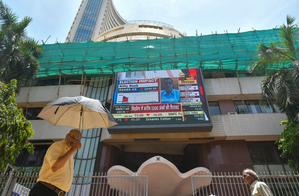
Mumbai, Jan 15 (IANS) The Indian stock markets remain closed on Thursday on account of municipal corporation elections in Maharashtra.
In an earlier notification, the BSE said there will be no trading in the equity segment, equity derivatives, commodity derivatives, and electronic gold receipts on that day. It also said that equity derivative contracts originally scheduled to expire on January 15, 2026, expired a day earlier. These revisions will be reflected in the end-of-day contract master files.
The NSE also said that January 15 will be a trading holiday in both the capital market and futures and options segments.
The decision follows the Maharashtra government’s declaration of a public holiday on January 15 to ensure the smooth conduct of elections in 29 municipal corporations, including the Brihanmumbai Municipal Corporation (BMC) in Mumbai.
Trading on the NSE and the BSE will resume on Friday.
On Wednesday, domestic stock markets ended lower after a highly volatile trading session, as losses in IT and realty stocks weighed on investor sentiment. Rising geopolitical tensions and uncertainty surrounding the US-India trade deal also capped any meaningful recovery during the day.
Sensex slipped 0.29 per cent, or 244.98 points, to close at 83,382.71, while Nifty ended 0.26 per cent, or 66.70 points, lower at 25,665.60.
Broader markets performed better than the frontline indices. The Nifty SmallCap 100 index rose 0.67 per cent, while the Nifty MidCap 100 index settled 0.29 per cent higher. On the sectoral front, IT and realty stocks faced selling pressure, with the Nifty IT index falling 1.08 per cent and the Nifty Realty index declining 0.92 per cent.
Market sentiment continued to be influenced by persistent foreign institutional selling and heightened geopolitical and trade-related uncertainties, which kept overall risk appetite subdued.
Although there was some early optimism around key support levels and progress in trade discussions, the absence of sustained follow-through and broader macro uncertainty led to a cautious, stock-specific trading environment, said analysts.
—IANS
na/